
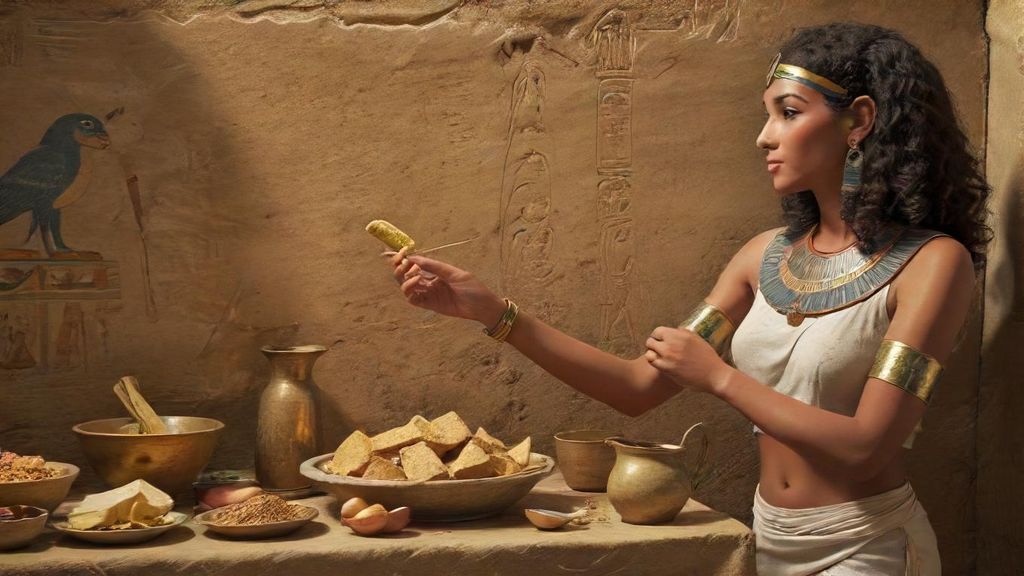
When most of us think about ancient Egypt, we often picture pharaohs enjoying fancy feasts with exotic fruits and roasted meats. But for the vast majority of people living along the Nile, from the earliest settlements in the Early Dynastic Period all the way through the building of the huge pyramids in the Old Kingdom, everyday meals were a totally different story. The simple truth is, their diet was incredibly focused and, dare we say, pretty much the same day in and day out. Yet, what’s really cool is how these basic foods were not only super healthy but also the very energy that powered one of history’s greatest civilizations. Imagine if your daily bread and beer weren’t just a choice, but the absolute most important things you needed to survive – that’s pretty much how it was for the ancient Egyptians.
So, what truly kept them going? It wasn’t grand feasts, but the clever ways they used their environment, especially the mighty Nile River. Think of the Nile as more than just a waterway; it was like the ultimate natural grocery store and watering system all rolled into one. Every year, its predictable flooding brought a fresh layer of rich, fertile mud to the riverbanks. This basically reset the soil for a new growing season. This yearly gift meant farming was super productive, making it easy to feed a huge population even with simple farming tools. The river also acted as a kind of ancient superhighway, making it simple to move food from where it grew to where people needed it.
How Did the Nile Shape Their Menu?
The rhythm of Egyptian life, and what they ate, totally revolved around this yearly flood. Once the waters went down, farmers quickly planted their most important crops: emmer wheat and barley. These two grains were the absolute kings of the ancient Egyptian kitchen, giving them most of their daily energy. Simply put, these weren’t just ingredients; they were the fuel for their economy and their bodies. Digs have found huge fields dedicated to these grains, showing how they transformed the landscape into a human-made breadbasket.
What did they do with all that grain? They turned it into two absolute must-haves: bread and beer. Bread, often coarse and flat, was the main thing they ate. It wasn’t the soft white bread we enjoy today. Instead, imagine something closer to a dense, chewy sourdough. Women usually ground the grain using simple stone tools called querns. This process often added tiny bits of grit and sand to the flour. Over a lifetime, this probably caused a lot of tooth wear, which we see in countless ancient bones. This simple grinding, however, was essential. After mixing the flour with water and a starter culture, they shaped the dough and baked it, often directly on hot stones or in simple clay ovens. This was the food that literally built pyramids and fed families day after day.
Then there was beer. And no, this wasn’t quite the clear, fizzy beer you might grab today. Ancient Egyptian beer was thick, murky, and often had a consistency more like a thin soup. They brewed it from barley, partially baked into loaves, then crumbled, mixed with water, and left to ferment. It was a drink packed with good stuff like carbohydrates, vitamins, and even some protein, making it a super important part of the daily diet for everyone, even children. For many, it was also a safer choice than drinking potentially unsafe water, making it truly essential. Think of it less as an alcoholic drink and more as a daily nutritional boost and thirst quencher, much like a hearty soup or a smoothie might be for us.
How Do We Know What They Ate?
Our understanding of ancient Egyptian food isn’t just a guess; it’s built on strong proof gathered over hundreds of years. Here’s what we’ve discovered from various sources. Archaeological digs have uncovered a treasure trove of direct evidence. We find actual burnt grains that got saved by accident, offering a direct peek into their crops. We’ve also found countless grinding stones and ovens, showing us the tools and methods they used to prepare food. Perhaps most fascinating are the food offerings found in tombs. For instance, in the tomb of Tutankhamun, though from a later period, actual baskets of emmer wheat, barley, and even loaves of bread were found, meant to feed the pharaoh in the afterlife.
But it’s not just the physical remains. Tomb paintings and carvings from the Old Kingdom give us incredibly detailed “snapshots” of daily life. These scenes show farmers working in fields, women grinding grain, and workers brewing beer. For example, carvings from the mastabas (a type of ancient Egyptian tomb) at Saqqara show the entire farming year, from planting to harvest, giving us visual proof of how much they relied on these basic crops. We also have ancient texts, like official papers and lists of what they gave workers. These records consistently show rations of bread and beer as the main forms of payment and daily food.
Beyond grains, the average ancient Egyptian’s diet included a good variety of vegetables and legumes. Gardens, often near homes or alongside the Nile, grew onions, garlic, leeks, and lettuce. These weren’t just for flavor; they were important sources of vitamins and minerals. Legumes like lentils, chickpeas, and beans were also widely grown. These plant-based proteins would have been crucial, especially for those who couldn’t often afford meat. They were typically eaten in simple stews or boiled dishes, giving essential nutrients in a filling, hearty way.
As for protein, the Nile once again played a super important role. Fish was an abundant and easy-to-get source of protein for most people. The river was full of various types of fish, and fishing was a common activity. Fish was often dried or salted to preserve it, making it available all year round. While meat from cattle, goats, and sheep was certainly eaten, it was usually saved for the wealthier people or for special events and religious festivals. The average household might keep some poultry, like ducks, geese, or pigeons, for eggs and occasional meat. So, while meat might have been a luxury, a combination of fish and legumes gave the general population a solid protein base.
What makes this historical diet so compelling is how surprisingly effective it was. Despite its seeming simplicity, based mostly on whole grains, legumes, and fresh produce, it was incredibly well-balanced and nutritious. This diet provided the steady energy and essential nutrients needed for a highly active population to build incredible monuments, develop complicated ways of living together, and do well for thousands of years. It reminds us that often, the most basic solutions are the ones that last the longest.
This careful farming and eating of basic foods not only fed a civilization but also shaped its daily routines and how people lived together. It shows how much their lives depended on the natural gifts and yearly cycles of the Nile. But while we’ve laid the groundwork for what kept them going, the next question naturally turns to how this food made it from the fields to their plates, and who controlled this vital supply chain. In our next chapter, we’ll look at how ancient Egyptians managed their food, from farming techniques to distribution networks, revealing how they managed to feed so many people, so effectively.
Did the dinner plate of an ancient Egyptian pharaoh look different from a common laborer’s?
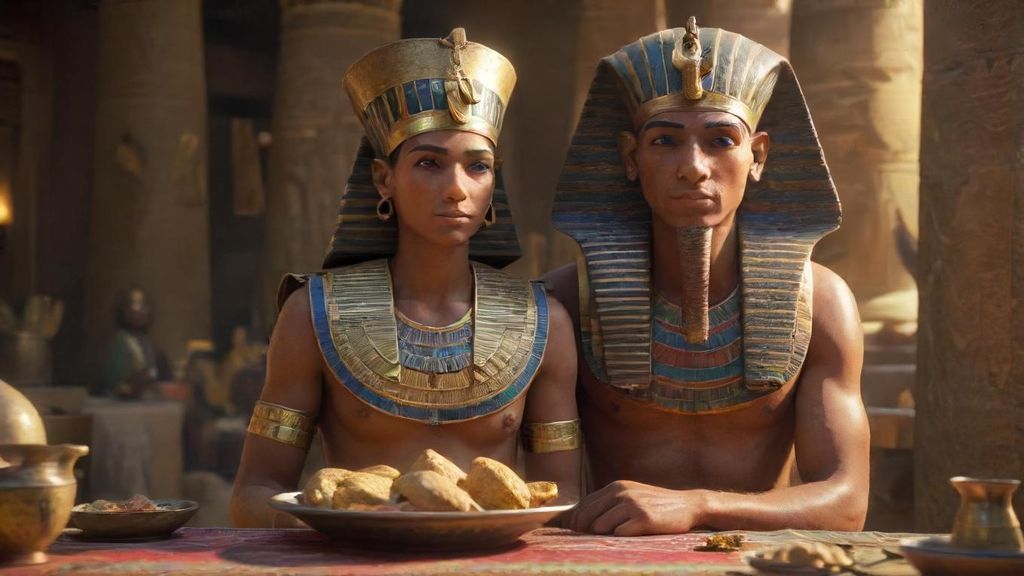
Yes, absolutely! The dinner plate of an ancient Egyptian pharaoh looked vastly different from that of a common laborer. Your place in society decided everything, from your home to every single bite you took. While the working class ate simple, plant-based meals, the pharaohs and nobles enjoyed a dazzling array of meats, imported luxuries, and gourmet dishes.
From roughly 2055 BC to 1070 BC, during the powerful Middle Kingdom and even grander New Kingdom, Egyptian society grew much more complicated. This wasn’t just about building huge pyramids; it also affected what ended up on your dinner plate. The main reason for this huge difference was the social hierarchy – a strict pecking order where pharaohs and nobles sat at the very top, and common laborers were at the bottom.
For most Egyptians – the farmers, artisans, and laborers who built those incredible pyramids and temples – life revolved around a remarkably consistent, plant-based diet. Their daily bread was, quite literally, their main food. They ate a lot of coarse but filling emmer wheat bread, washed down with plenty of beer. This wasn’t like modern beer; it was thick, nutritious, and a bit like a liquid meal, often consumed by everyone, even children. Beyond these basics, their diet included onions, garlic, lentils, chickpeas, and various seasonal vegetables grown along the fertile Nile. Meat was a luxury, usually saved for special occasions or religious festivals. Imagine a modern fast-food worker trying to afford a fancy dinner every night – the difference was just too big for daily eating.
Now, let’s peek into the dining room of a pharaoh or a high-ranking noble. Their tables literally groaned under the weight of an astonishing variety of foods. Clues from old digs show the elite enjoyed a diet rich in animal protein. They regularly ate beef, a highly prized meat often roasted or stewed. Lamb, goat, and a wide array of poultry – ducks, geese, and pigeons – were also common. Unlike commoners who might eat fish as their main source of protein, the elite had access to the choicest cuts of farmed and hunted animals, turning meals into grand displays of wealth.
How Do We Know This Actually Happened?
It’s fair to ask, “How do we know all this?” The answer comes from a fascinating mix of historical clues. We’re not just guessing. Archaeologists and historians piece together this dietary puzzle from several sources. Tomb paintings, for instance, are incredibly revealing. They often show elaborate banquet scenes or offerings to the dead, with tables laden with roasted geese, cuts of beef, baskets of exotic fruits, and jars of wine. These weren’t just decorations; they were meant to ensure the deceased enjoyed such abundance, reflecting their earthly status and wealth.
Another strong piece of evidence comes from the remains found in tombs and ancient settlements. Food residues in ancient pots, animal bones from trash heaps, and even dried-out food offerings give us direct insights. For example, grave goods from royal burials often include jars that once held expensive oils or wines. Furthermore, written records, like old government papers or the wills of wealthy individuals, sometimes list food provisions or cooking instructions, giving us a peek into their daily lives. These documents are like ancient shopping lists or menus for the very rich.
One compelling piece of evidence comes from the tomb of Rekhmire, a vizier (like a prime minister) during the reign of Thutmose III in the New Kingdom. His tomb paintings aren’t just art; they’re like detailed instruction manuals. They show scenes of food preparation, banquets, and even how agricultural goods were processed. These scenes vividly illustrate the vast resources available to someone of his stature, including herds of livestock, flocks of birds, and an array of plant foods far beyond the common laborer’s reach.
What makes this fascinating is how much effort the elite put into their meals. They employed skilled chefs and used advanced cooking techniques. While commoners primarily boiled or baked their simple meals, the wealthy enjoyed roasted meats, richly spiced stews, and finely prepared pastries. Think of the difference between a simple home-cooked meal and a gourmet restaurant experience today – the techniques, ingredients, and presentation were worlds apart, showcasing wealth and refined taste.
The elite also had access to luxury items that were completely out of reach for commoners. Olive oil, for instance, was imported and highly valued, used for cooking, cosmetics, and even lighting. It’s like today’s premium extra virgin olive oil compared to basic vegetable oil – a clear mark of status. Dairy products, such as milk, butter, and cheese from cows and goats, were also status symbols, showing they owned valuable livestock. Wine, often from specially grown vineyards, flowed freely at banquets. This was a stark contrast to the common laborer’s everyday beer, and wine was key to their social gatherings.
And then there were the spices! While basic seasonings like salt and herbs were common, the elite had access to imported spices. Cumin, coriander, and even pepper, which would have been incredibly expensive as it traveled long distances, found their way into their dishes. These weren’t just about making food taste better; they were about showing off wealth, power, and connections to far-off lands, much like splurging on rare, exotic ingredients today.
The variety of fruits and vegetables also differed dramatically. While commoners relied on seasonal basics, the elite enjoyed a broader spectrum, including dates, figs, pomegranates, melons, and grapes. Their elaborate gardens, meticulously tended, would have yielded a constant supply of fresh produce. This contrasted with the often more utilitarian crops of the common farmer. It’s like the difference between someone growing a few basic vegetables and someone with a full-blown orchard, ensuring a bounty year-round.
The truth is, the dinner plate of a pharaoh or a high-ranking official was a vibrant tapestry of luxury, variety, and culinary sophistication. It was a world away from the consistent, plant-based, yet nourishing, meals of the working class. This distinction wasn’t just about taste or sustenance; it was a powerful symbol of status and power, a clear visual reminder of who was at the top of Egyptian society. It helped reinforce the social structure, literally putting pharaohs on a pedestal of gourmet food.
This stark division in diet was a fundamental part of ancient Egyptian life, reflecting not just economic differences but deeply ingrained social structures and expectations. As we’ve seen, access to diverse foods, expensive ingredients, and sophisticated cooking methods was a privilege earned by birth or position. But what about the bigger picture? How did these eating habits impact the health and daily lives of these ancient people? And how did their broader food system function, from the Nile’s fertile banks to the pharaoh’s opulent table, ensuring this steady flow of sustenance?
How did food play a role in ancient Egyptian rituals, banquets, and the afterlife?
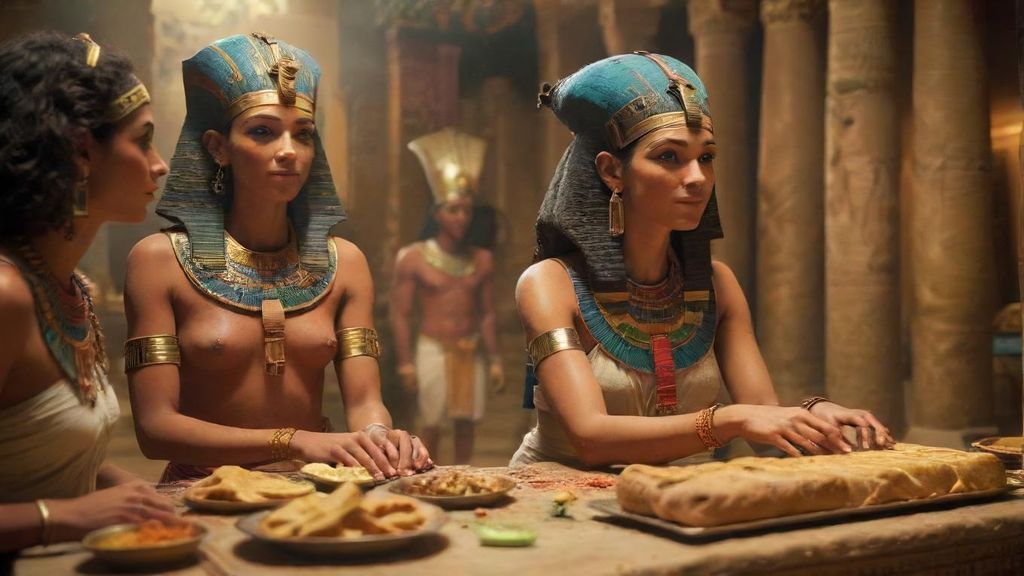
Imagine throwing a huge, important party today where every single dish, from appetizers to dessert, wasn’t just yummy, but also had a deep spiritual meaning, acted as a prayer, and was meant to power someone’s soul through eternity. That’s a bit like how ancient Egyptians thought about their food. For them, especially later in their history (from the Late Period onwards), food was much more than just what you ate for dinner. It was a powerful tool, deeply connected to their religion, how their society worked, and what they believed about life after death. Simply put, food wasn’t just something to eat; it was a way to connect with the gods, a sign of wealth, and a vital supply for a never-ending journey.
The reason for this lies in how closely their world was tied to the gods and the spirit world. Ancient Egyptians believed that every good thing, especially food, was a gift from their gods. So, giving some of that gift back was a key part of worshipping them. Think of it like a thank-you note, but instead of words, it was a perfectly roasted duck or a basket of fresh figs. These offerings were left in temples for gods like Ra or Osiris. Priests would present carefully made meals on altars, believing the god would consume the ‘spiritual part’ of the food, leaving the actual leftovers for the priests themselves. We know about this practice from countless temple writings and discoveries at places like Karnak. It shows us a constant, real conversation between people and their divine protectors. This wasn’t just a symbolic gesture; it was a true act of connection, meant to keep the world in order and make sure the gods kept favoring Egypt.
How did food sustain souls in the afterlife?
Perhaps the most fascinating use of food was in preparing for the afterlife. The Egyptians believed that death was just a change, a new journey that needed proper supplies, much like packing for a long trip. They carefully planned special meals for funerals, not for the living to eat during the ceremony, but specifically for the person who had died. The goal was to feed the deceased’s ka – their life force or spiritual twin – making sure it had everything it needed to thrive in the Field of Reeds, which was their version of paradise.
We know this because archaeologists have found countless “food lists” carved on tomb walls. These lists detail everything from bread, beer, and wine to cuts of meat, vegetables, and fruit. These lists weren’t just for decoration; they were like endless grocery orders for the dead. In places like the Valley of the Kings, tombs were often stocked with actual food items, or very realistic models, placed near the sarcophagus. For example, in the tomb of Tutankhamun, archaeologists found jars of wine, baskets of dates, and even joints of beef, all prepared and sealed thousands of years ago. Imagine putting so much effort into someone’s spiritual pantry! It truly challenges what most people think they know about ancient Egyptian burial practices, showing they weren’t just about mummification, but about making sure the soul was fed constantly. The idea was that the deceased would “eat” these offerings daily, continuing a familiar pattern of life in the next world.
Beyond temple rituals and supplies for the dead, food played a huge role in the social and political lives of important people. Grand banquets weren’t just parties; they were crucial social and political events, much like today’s state dinners or business networking meetings. These were chances for powerful individuals to show off their wealth, strengthen friendships, and boost their status. Picture an important noble hosting a feast, with tables loaded with exotic dishes, fine wines, and rare fruits. Guests would relax on comfortable couches, entertained by musicians and dancers. Old records tell us these feasts were incredibly lavish, sometimes lasting for days. The atmosphere was one of celebration, but beneath it all, power struggles were always happening. The food itself, how much there was and how good it was, directly reflected the host’s influence and resources. These weren’t just meals; they were carefully planned shows of power and importance.
What makes this fascinating is not just how big these events were, but the special meanings linked to certain foods. For example, dates and figs were common, but honey, a rare and precious sweetener, suggested purity and a connection to the gods. Grapes, beyond wine, were symbols of new life and growth. Even the colors of food could matter. Lettuce, surprisingly, was linked to Min, the god of fertility. Recent discoveries show that certain foods were also valued for their healing properties. Honey was used as a disinfectant, garlic and onions were thought to boost immunity, and various herbs were used in remedies for different sicknesses. So, their pantry was also their medicine cabinet!
The truth is more interesting than you might think: ancient Egyptian cooking traditions didn’t just disappear with their civilization. Their focus on bread and beer, their use of certain herbs, and even some cooking methods, like using ovens, quietly influenced later times and nearby cultures. Think about how bread-making continued in the Mediterranean world. The Roman Empire, for example, adopted many Egyptian farming practices and staple foods. This helps us see their food not just as a historical curiosity, but as a key part of a cultural heritage that still has an impact today.
Here’s what we discovered: food in ancient Egypt was a dynamic, important part of their society. It was a bridge between everyday life and the divine, between life and the afterlife. It powered their gods, fed their deceased, and helped their political system run smoothly. Their thoughtful, symbolic use of food gives us a richer, deeper understanding of their world. Next, we’ll dive into the everyday kitchens and markets, uncovering the reality of what ordinary Egyptians really ate for dinner.