
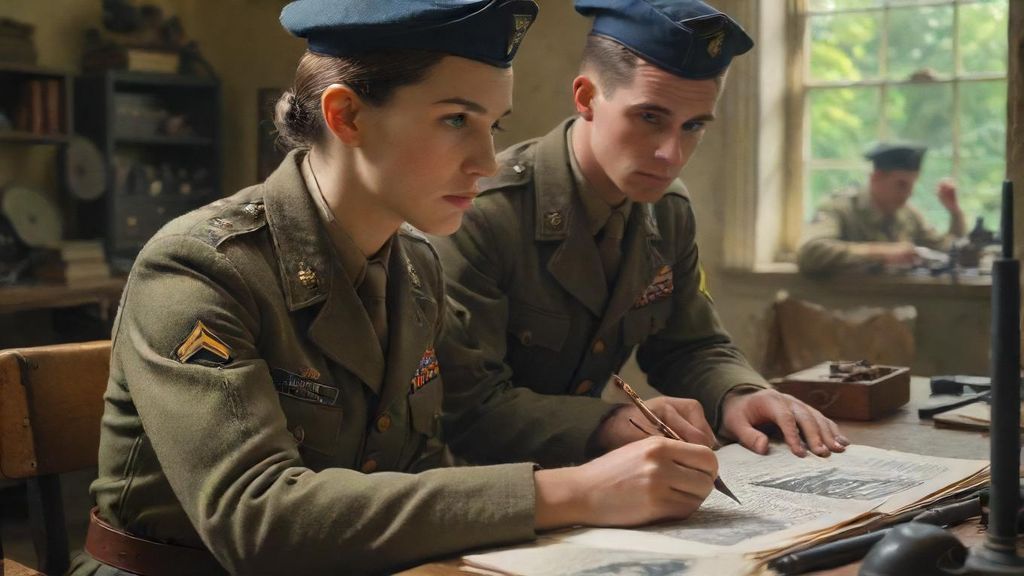
Imagine if, in today’s world of amazing technology, an army decided to fight a war not with drones or stealth fighters, but with giant inflatable tanks and loudspeakers playing fake battle noises. Sounds wild, right? Well, that’s pretty much what happened in World War II. The simple answer to why the U.S. Army recruited artists for secret deception is that they needed to trick the Nazis, and clever tricks called for creative minds. After the huge D-Day landings in June 1944, the Allies found themselves deep in Western Europe, facing a determined German army. They needed a fresh, innovative way to get an advantage, and traditional military tactics just weren’t working in every situation. The truth is more interesting than you might think: the military realized that winning sometimes required not just firepower, but pure imagination.
The main reason was a desperate need to fool the enemy on the Western Front. The Allied forces were pushing hard, but they often didn’t have enough soldiers in specific areas, especially when moving troops to new positions. They needed to make the enemy believe there were more soldiers, more tanks, and more artillery than actually existed. This wasn’t about fighting fair; it was about being smarter than a dangerous enemy. Military leaders like Colonel Ralph Bagley and Colonel Clifford Simak, inspired by some earlier British efforts, really pushed for the idea of a specialized unit whose only job was to create illusions. It was a complete change in thinking – moving from brute force to clever trickery.
How could artists possibly help win a war?
Here’s what we discovered: the army needed people who could do more than just follow orders; they needed individuals who could make things look real. Think about how a movie set designer creates a whole world from nothing, or how an advertising creative makes you believe in a product. Those were exactly the skills the army wanted. They began recruiting for a top-secret unit called the 23rd Headquarters Special Troops, now famously known as the ‘Ghost Army.’ The call went out, not for crack shots or tough fighters, but for painters, sculptors, architects, set designers, sound engineers, and even fashion illustrators. These were men who saw the world differently, capable of turning everyday materials into convincing fakes.
The recruitment process for the Ghost Army was truly unique. Instead of looking for typical soldier skills, they sought out artists and creative professionals from cities like New York and Los Angeles. Many were already drafted, serving in various roles, but their unique talents were identified as perfect for this new, unconventional way of fighting. For example, men like Bill Blass, who later became a famous fashion designer, and painter Ellsworth Kelly, a huge name in abstract art, found themselves suddenly tasked with creating military illusions. Their non-traditional skills were adapted for warfare by teaching them to focus on the ‘art’ of deception rather than combat. Imagine taking a graphic designer who usually crafts eye-catching logos and telling them, “Your new job is to make a fake tank look real from the air!”
Their initial specialized training was intense and utterly unconventional. At places like Camp Forrest, Tennessee, these imaginative individuals learned to craft convincing illusions using surprisingly simple tools. They mastered the art of visual deception with inflatable tanks, jeeps, and trucks made of rubber. Some of these props weighed only a few pounds and could be inflated in minutes. They used special sound trucks, developed by engineers from Bell Labs, to broadcast prerecorded sounds of troop movements, bridge building, or tank battalions miles away. This was like a giant, real-life theatre production, where every detail, from the size of a fake tank to the sound of a shovel digging, had to be completely believable. They learned to camouflage themselves and their props, to mimic radio traffic, and even to impersonate other military units through carefully crafted patches and uniforms.
According to historians, their work was incredibly important for the war strategy. The goal was to fool German spy planes and ground patrols into believing that large, powerful units were present where, in reality, only a few dozen Ghost Army soldiers stood. It was all about buying time, sending enemy troops the wrong way, and ultimately saving many, many lives. This clever approach to battlefield trickery laid the groundwork for their critical, yet largely unknown, role in the war, proving that sometimes, the most powerful weapon is not a bullet, but an illusion. Their training taught them that war wasn’t just about direct fighting; it was also about mind games, the performance, the skill of making the enemy believe what wasn’t true.
This early period of getting ready and training was crucial. It transformed artists and creative people into military illusionists, ready to take their unique skills to the front lines. The next chapter will explore how these seemingly harmless artists then put their training into practice, embarking on a series of brave missions that directly changed how the war went, often operating just miles from enemy lines.
How did an army of artists use creative tactics to trick Nazi intelligence?
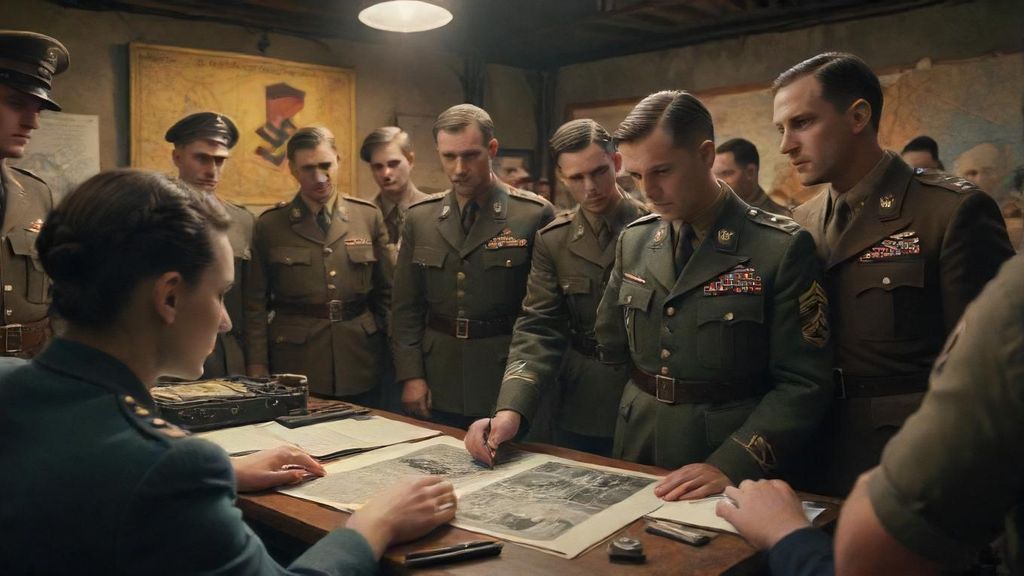
Imagine if a Hollywood special effects crew joined the army, not to make movies, but to fool an enemy nation into believing an entire other army was right around the corner. That’s pretty close to what happened during World War II, and it’s how the Ghost Army pulled off their incredible mission. The simple answer is that this unique unit, officially the 23rd Headquarters Special Troops, used their creativity and tricks to create incredibly real-looking illusions. They made the Nazis believe strong Allied forces were exactly where they weren’t.
What makes this story so fascinating is how they did it. These weren’t typical soldiers trained for combat; they were artists, designers, engineers, and sound experts. They fought their battles in the minds of Nazi spies, and their weapons were rubber, sound, and a bit of theatrical flair. According to historians who’ve studied recently declassified documents, their incredibly clever methods let them fake whole armies much bigger than themselves.
How did they make the illusions so real?
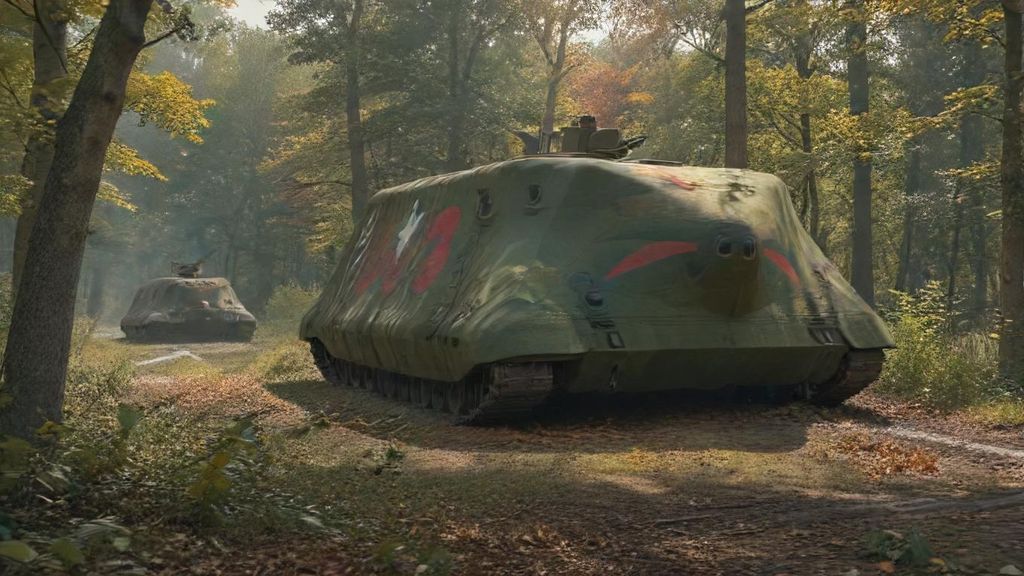
Their main trick was to create things that looked incredibly real. Picture this: they had a collection of inflatable rubber tanks, jeeps, and even artillery pieces. From a distance, especially from the air, these lightweight, blow-up models looked exactly like real military hardware. A team of just a few men could inflate a full-sized tank in minutes, making it look like a huge line of tanks was there, even though it was just air. This was like a giant, deadly game of ‘make-believe,’ but with incredibly high stakes.
But the visual wasn’t enough; they needed sound to match. The Ghost Army used special sound trucks that were basically recording studios on wheels, packed with huge speakers. These trucks would play pre-recorded sounds: the rumble of tanks, soldiers yelling, the clanking of engineers building bridges, and even the general noise of a busy army camp. It was like a carefully put-together radio show, meant to make any German spy listening think a huge army was just around the corner. They also made fake radio calls. Operators copied the way real units talked, sending coded messages they knew the Germans would pick up. All of this was a total mind game, meant to trick every one of their senses.
Beyond the tech, these soldiers were also amazing actors. They would pretend to be high-ranking officers, often driving around in jeeps, visiting local towns, and chatting loudly in cafés. The goal was to be seen and heard, spreading believable rumors and making sure German spies would ‘confirm’ seeing them. They’d set up fake headquarters, with made-up guard posts and offices that looked busy but were actually empty. They even painted fake unit markings on their vehicles and uniforms, all to convince the enemy that a specific, large army unit was right there, getting ready to fight.
Which big battles did they influence?
The Ghost Army wasn’t just playing pranks; their work was super important for big wins. One of their key missions was Operation Viersen in March 1945. Here, they made it look like the whole U.S. Ninth Army was getting ready to cross the Rhine River near a town called Viersen. In reality, the Ninth Army was secretly moving to another location, ready for the real crossing. The Ghost Army pulled German attention, their spies, and even some of their resources away from the real target. This helped weaken the German defenses for the actual attack. This saved countless lives, as the Germans were looking the wrong way.
Building on this, their most well-known and tricky deception came during Operation Grenade, the crossing of the Rhine River. Here, they carefully copied two whole U.S. army divisions near the German town of Jülich, making it seem like a huge army was about to attack. History shows the Germans were totally tricked and moved their defenses to face this army that wasn’t even there. This let the real Allied forces cross the Rhine with way less trouble than expected. It turns out that this artistic illusion saved vital time and kept casualties (deaths and injuries) lower for the real Allied push into Germany.
The truth is more interesting than you might think: these artists, engineers, and performers showed that battles aren’t just won with guns, but with smart ideas and a bit of a performance. What they did was so effective that it stayed a secret for decades, only coming out long after the war ended. But the real surprise isn’t just that they existed; it’s the careful planning and the bold courage of their missions, which opened the door for similar military tricks later on. Next, we’ll dive into the extraordinary individuals behind these incredible illusions.
Imagine a high-stakes game where every move tricks your opponent into seeing things that aren’t there. That’s exactly what the Ghost Army did to the Nazis in World War II, and their impact was absolutely huge. Their clever deceptions saved countless Allied lives and played a quiet but crucial role in turning the tide of the war. Their incredible story was kept a secret for over 40 years because their tactics were simply too good, too revolutionary, to ever let the enemy know about them.
The truth behind this unit is even more fascinating than you might think. This special group, officially called the 23rd Headquarters Special Troops, didn’t fight with bullets and bombs in the usual way. Instead, they used inflatable tanks, fake radio conversations, and sound effects to create elaborate illusions. What makes this so amazing is how incredibly successful they were. Historians say that the Ghost Army’s operations helped distract at least two German divisions away from critical Allied goals, including the crucial Battle of the Bulge in December 1944. Think of how a company might use a clever ad campaign to fool a competitor about a new product – this was like that, but with lives on the line.
Here’s what we’ve learned: Their trickery was especially powerful just before the Rhine River crossings, specifically during Operation Viersen in March 1945. The Ghost Army successfully convinced German spies that the 9th U.S. Army was getting ready to cross the Rhine near Düsseldorf. In reality, the actual crossing was happening miles away. This pulled German troops and artillery out of position, allowing Allied forces to cross the river with much less resistance. Recent proof shows that this single operation significantly reduced Allied casualties, potentially saving thousands of lives that day. It was like a magician distracting an audience while the real trick happened right under their noses.
So, how did this work? It was all about tricking the German mind. By creating a believable “fake army” of 30,000 men (when they only had 1,100), they made the Germans waste valuable resources—time, fuel, and soldiers—scrambling to fight threats that weren’t real. We know this because after the war, captured German intelligence reports clearly showed they fell for the illusions, reporting these ghost units as genuine threats.
“The Germans… believed what they saw and heard,” said Maj. Gen. Russell L. Bement, Jr., a post-war intelligence officer who studied the unit’s impact. “They deployed forces and expended munitions against our phantom divisions which, in the final analysis, was exactly what we wanted them to do.”
This strong evidence really highlights how brilliant their operations were.
Why was this powerful secret kept hidden for so long?
The main reason was straightforward: their methods were too clever and too important to share. The deception techniques developed by the Ghost Army were considered top secret. Imagine a tech company creating revolutionary software; they wouldn’t give their secret code to competitors. The military wanted to keep these amazing tricks—using visual, sound, and radio deception—as vital tools for any future conflicts. The fear was that if their existence and methods became public, future enemies could learn to recognize or counter similar tricks. So, for over 40 years, from the end of the war until 1996, the entire operation remained a tightly guarded secret, a fascinating chapter of WWII history hidden in government files.
Because of this secrecy, the brave men of the Ghost Army returned home as ordinary soldiers, unable to share their extraordinary stories even with family and friends. They didn’t get the praise they deserved for decades, which truly shows their commitment to keeping the secret. However, in 1996, the government opened up the files, finally allowing the world to learn about their unique role. The long-overdue recognition began slowly, leading to the posthumous award of the Congressional Gold Medal in 2022. This award cemented their rightful place in military history. This recognition forever changed how we understand psychological warfare and showed that sometimes, the most powerful weapons aren’t guns or tanks, but imagination and cleverness.
This incredible story reminds us that war isn’t just about brute force; it’s also a battle of wits, where art and illusion can be as powerful as any weapon. And it makes you wonder what other hidden stories still wait to be told.