
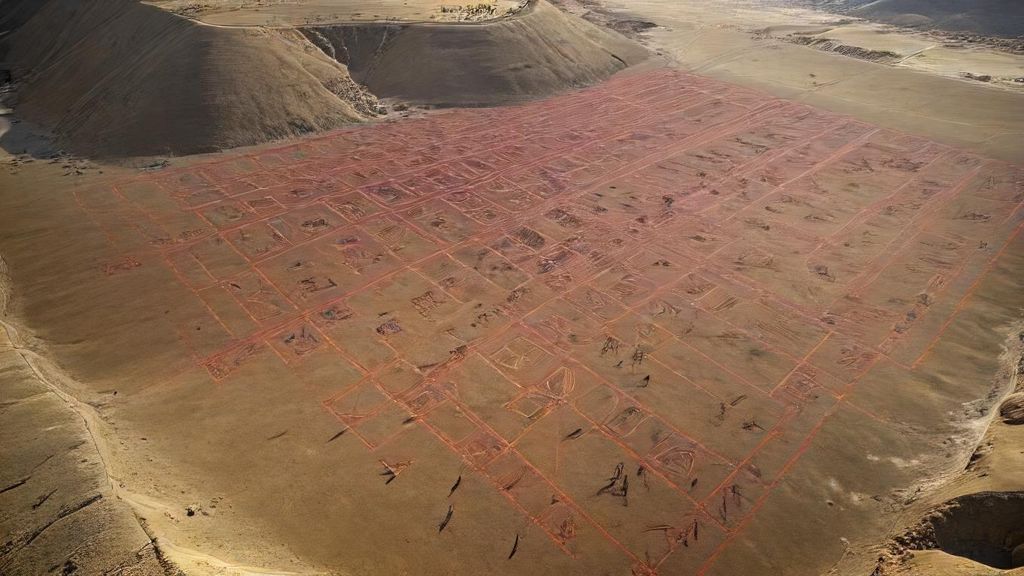
Imagine you’re flying high over a huge, flat desert, and suddenly you spot massive drawings carved into the ground. These figures are so enormous, they only make sense when you’re looking down from above. It’s like finding a secret message meant for someone far, far away, but this isn’t science fiction – it’s the real Nazca Lines in Peru. These amazing designs were made by an ancient group we call the Nazca people. They lived in the dry valleys of southern Peru long before the famous Inca Empire, roughly from 200 BC to 600 AD. So, who were the Nazca people? They were a clever, artistic culture who thrived in a challenging desert. And what are the Nazca Lines? They are their incredible, mysterious masterpieces, etched right into the earth itself.
The Nazca people made their home in a harsh, dry landscape—the Nazca Desert. This is one of the driest places on Earth! Even with such a tough environment, they built a strong society. They had clever farming methods, smart city plans, and, of course, their famous art. Their amazing creations, often simply called the Nazca Lines, spread across hundreds of square miles of the high plateau, or pampa, between the towns of Nazca and Palpa. What makes these designs so truly mind-boggling is just how huge they are. Many of these figures are bigger than football fields, with some reaching over a thousand feet long.
The Nazca Lines aren’t just one type of drawing; they fit into a few main groups. First, there are the amazing animal figures, known as zoomorphic designs. These show things like hummingbirds with wingspans over 300 feet, huge monkeys with spiral tails, grand spiders, lizards, pelicans, and even killer whales. Then, you have purely geometric shapes: big triangles, rectangles, trapezoids, and perfectly straight lines that stretch for miles across the land, sometimes looking like they lead nowhere. Finally, some rarer, more human-like figures, sometimes called biomorphic designs, or even abstract patterns, seem to be watching from above. The sheer number of different designs and how exact they are is truly astonishing.
How Did They Create Such Huge Art?
The real story is actually more interesting than you might think. The Nazca didn’t use any fancy tools or super advanced technology. Instead, they had a surprisingly simple, but incredibly smart method. The desert ground in this area has a top layer of dark, reddish-brown rocks and pebbles. Underneath this, there’s a lighter, yellowish-grey clay soil. The Nazca artists essentially “drew” by carefully taking away the dark top layer to show the lighter soil beneath. They would mark out the shape of their design using stakes and cords, much like a huge blueprint. Then, they carefully cleared away the darker stones. The edges of these lines were often bordered with the rocks they removed. This helped the figures stand out even more and also acted like a natural wall to keep them from eroding.
Here’s something cool: these lines have lasted so long mainly because of the desert itself. The Nazca Desert gets very little rain, and its special climate—hot, still air that works like an incubator—has kept these delicate drawings safe for nearly 2,000 years. It’s truly like finding a message in a bottle that’s been perfectly preserved for centuries. Researchers like Maria Reiche, a German mathematician and archaeologist, spent over 50 years studying and protecting these lines. She believed the Nazca people had a deep understanding of geometry and surveying to make such accurate designs on such a huge scale.
What’s really fascinating is the big puzzle at the center of the Nazca Lines: they are huge works of art, a landscape made by humans, yet you can only fully understand them from high up. If you stand on the ground, you often can’t tell what you’re looking at; it just seems like shallow ditches or scattered stones. It’s only when you get high enough, flying over them in a plane, that the detailed designs show themselves in all their glory. Imagine spending years creating a painting that could only be truly appreciated if viewed from space! This core mystery—all that effort for something only seen by someone flying above—really leads us to our main question: why did the Nazca create drawings only gods could see?
This amazing display of ancient engineering and artistic skill introduces us to a civilization deeply connected to their land and perhaps to something more. The mystery of the Nazca Lines isn’t just about how they were made. It’s also about who they were made for, and what strong beliefs pushed them to create such a huge, lasting project. Next, we’ll dive into the world of Nazca religion and their understanding of the universe to explore the surprising reasons behind these magnificent drawings.
Why Did the Nazca Create Drawings Only Gods Could See?
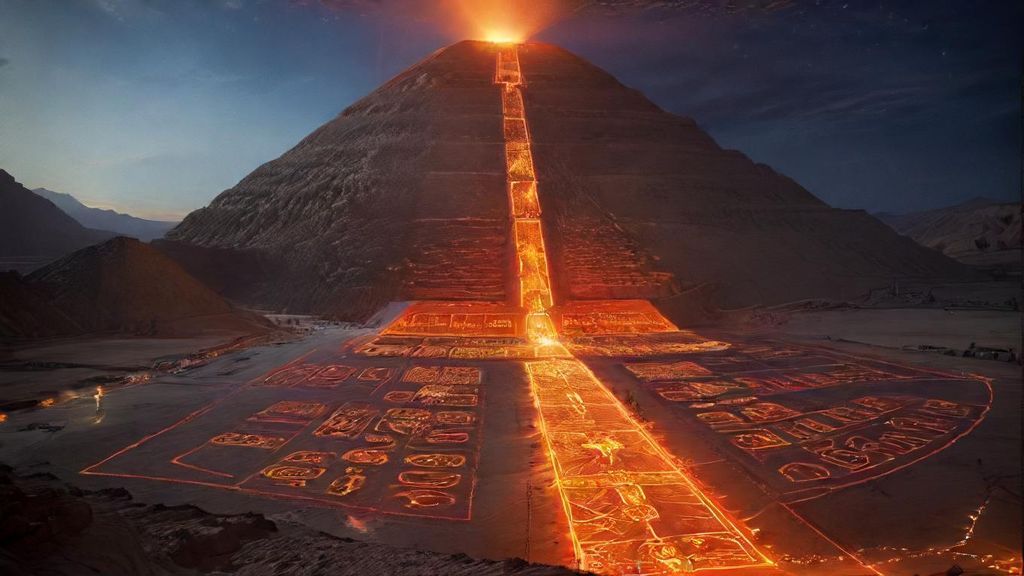
Imagine spending years, maybe even generations, carving a giant message into the ground. A message so big that you could only truly see its full design from hundreds of feet up. Now imagine that you, the creators, didn’t even have airplanes or drones to view your amazing artwork from that height. Sounds pretty wild, right? Well, the Nazca people, an ancient culture in Peru, did exactly that with their famous desert lines.
The simple answer to why they created drawings only gods could see comes from their spiritual world: these weren’t meant for human eyes. Instead, they were for the powerful, unseen gods they believed controlled their very lives.
For the Nazca, their world was full of spirits and powerful forces. They deeply respected their sky gods and mountain spirits, believing these beings were the ones who gave them life, especially in a dry desert where water was like gold. Think of it like a community today putting up a huge, detailed billboard—not for cars driving by, but for an audience in the sky. They believed these enormous figures, known today as geoglyphs, were a way to talk directly with these powerful beings, to make offerings so grand that they simply couldn’t be ignored.
Historians and archaeologists say the Nazca’s main religious beliefs were all about keeping their gods happy and making sure they received much-needed water. They saw the mountains as living things, homes to spirits that brought rain from the clouds. The vast, flat Nazca plain became their special canvas, a holy place where their deepest prayers could be carved right into the earth. These messages were meant to be seen by the heavens. It was a completely different way to worship; instead of building temples up to the gods, they drew down into the earth for them.
What Evidence Supports This?
Here’s what we’ve discovered that suggests these drawings were meant for a heavenly audience. Many of the designs show animals and plants that were vital for their survival: hummingbirds, monkeys, lizards, and various crops. These weren’t just random drawings. They were symbols directly linked to fertility, water, and good harvests. For example, the spider geoglyph is sometimes connected to rain because certain spiders appear before it rains. The monkey, with its grasping hands, might symbolize a plea for water or a link to the rainforests where rain begins. This is strong proof that these designs were more than just art; they were special requests to their gods.
Archaeologists have found that many of these lines aren’t just pictures; some are perfectly straight lines or wide, trapezoid shapes that stretch for miles. Some experts think these pathways were used for special ceremonies, walked by priests and villagers during rituals. Imagine a massive outdoor cathedral, where the path you walk is part of a prayer, leading to an invisible altar in the sky. These giant prayer symbols, visible only from above, would have been a truly deep spiritual act, a physical way to show how much they respected their gods.
The famous German mathematician and archaeologist Maria Reiche, who spent most of her life studying the Nazca Lines, often talked about how they lined up with stars or planets. While some lines might point to specific events in the sky, most top archaeologists agree that the main reason for the lines was religious communication. The Nazca believed their gods, living in the sky and mountains, could see these enormous drawings. They saw them as holy messages, big requests for good harvests, and, most importantly, for water in their dry land. It’s like sending a super-sized message, knowing only the intended recipient has the best view to read it.
What makes this so fascinating is the huge amount of work involved. Creating these massive figures, some over 1,000 feet long, required amazing teamwork and planning. This was not an easy task; it was a deep part of their culture, a huge act of faith. The commitment to these massive projects shows how important these connections to the gods were for their society. They weren’t just hoping for divine help; they were actively creating ways to interact with their gods.
Ultimately, the Nazca Lines were more than just drawings; they were a profound way to show their beliefs, a bridge connecting their lives on Earth with the powerful, invisible forces they depended on. The truth is more interesting than you might think: they created these lines because they truly believed their gods were watching and listening. This makes us wonder how these complex beliefs affected their everyday lives and their whole society.
Most people picture the Nazca Lines as just spiritual messages, huge designs meant only for the gods above. And yes, as we’ve discussed, the gods were certainly their main audience. But here’s what we’ve learned: The real story is even more interesting than you might think.
While these enormous earth drawings were definitely prayers made visible from the sky, they also served incredibly important, everyday purposes for the people who created them. Far from being just mysterious art, these sprawling designs often acted like a crucial guide for survival, helping the Nazca navigate their dry world and keep their society strong.
How Did the Nazca Lines Function for People on the Ground?
The simple answer is that the Nazca Lines are an amazing example of how religious beliefs and practical needs often went hand-in-hand in ancient cultures. Imagine living in a desert where every drop of water is precious. For the Nazca, water wasn’t just necessary; it was a sacred gift. This brings us to one of the strongest theories about the lines’ earthly purpose: finding and managing water.
How Did They Find and Manage Water?
Archaeological digs show us that the Nazca were incredibly clever when it came to finding water. They built an elaborate system of underground canals, known today as puquios. These were truly massive construction projects, tunneling deep to tap into the water underground and bring it to the surface through open spiral shafts. Recent discoveries reveal that many lines and geometric shapes are found near these puquios or ancient riverbeds.
What makes this fascinating is the idea that some lines might have acted as markers, pointing to these hidden water sources, or even as special pathways for ceremonies to ask for rain. Think of it like a community-wide, spiritual GPS system for survival. Dr. David Johnson, a geographer who has studied the Nazca region a lot, has suggested that the lines could be directly related to these water systems, guiding people to valuable resources or symbolizing the flow of water itself. This wasn’t just ‘clever town planning’; it was a matter of life and death in a harsh environment.
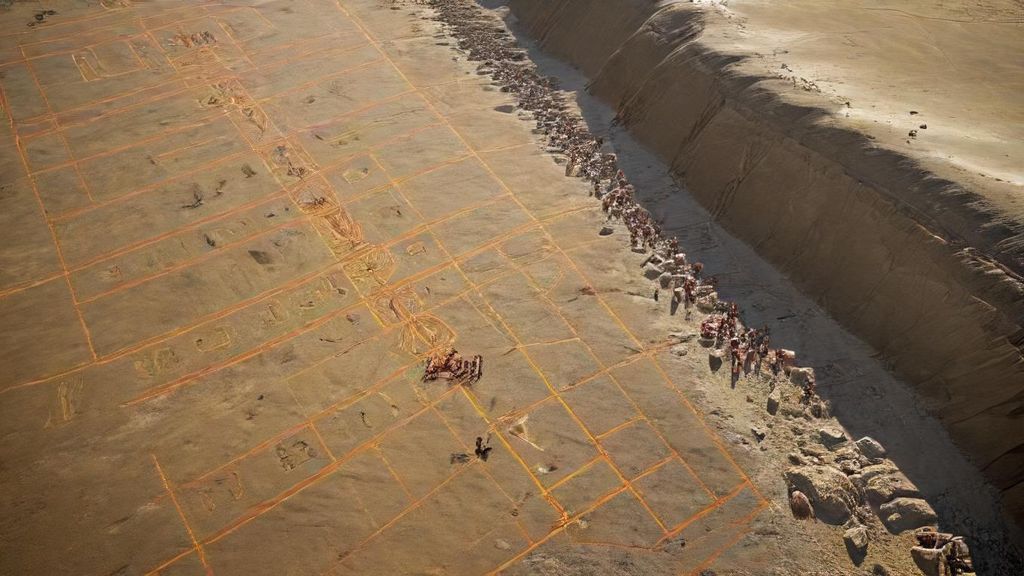
Beyond water, the lines likely set the stage for community life. Picture this: The Nazca people would walk along these carefully cleared pathways during religious ceremonies or important social gatherings. These weren’t just random marks; many lines were perfectly straight and wide enough for groups of people to walk side by side. We know this because archaeologists have found pottery shards and footprints along some of the geoglyphs, clear proof that people actually walked on them, not just viewed them from afar.
Imagine the scene: processions winding their way across the desert floor, perhaps performing rituals to honor the mountain gods who brought rain, or celebrating a successful harvest. These processional routes would have reinforced their shared beliefs and strengthened community bonds, much like a huge national festival or a major sporting event brings people together today. The communal effort involved in creating the lines – meticulously clearing vast stretches of dark rock to reveal lighter soil underneath – was itself a way to unite everyone, fostering a deep sense of shared purpose and identity.
Another intriguing possibility is that some of the geoglyphs worked like astronomical calendars. While much of this would still be tied to their gods and agricultural cycles, the practical help for those on the ground is clear. Certain lines appear to align with important celestial events, such as the rising or setting of the sun during solstices and equinoxes. For a society that relied on farming, knowing the precise timing for planting and harvesting was crucial. It’s like having a giant, open-air farmer’s almanac or a complex sundial that helped them track the seasons. This blend of spiritual observation and practical timekeeping shows just how deeply connected the Nazca were to both their land and the sky.
So, while the Nazca Lines were certainly designed for a divine audience, their creation and use were deeply rooted in the everyday struggles and triumphs of the Nazca people. They were more than just art; they were tools for survival, pathways for worship, and threads that helped weave a complex society together.
As we look closer at these layers, we see a people who were incredibly resourceful and devout, leaving behind a legacy that continues to challenge our understanding. Next, we’ll dive even deeper into the mysteries surrounding the Nazca, exploring the true scale of their efforts and what happened to the civilization that built them.