
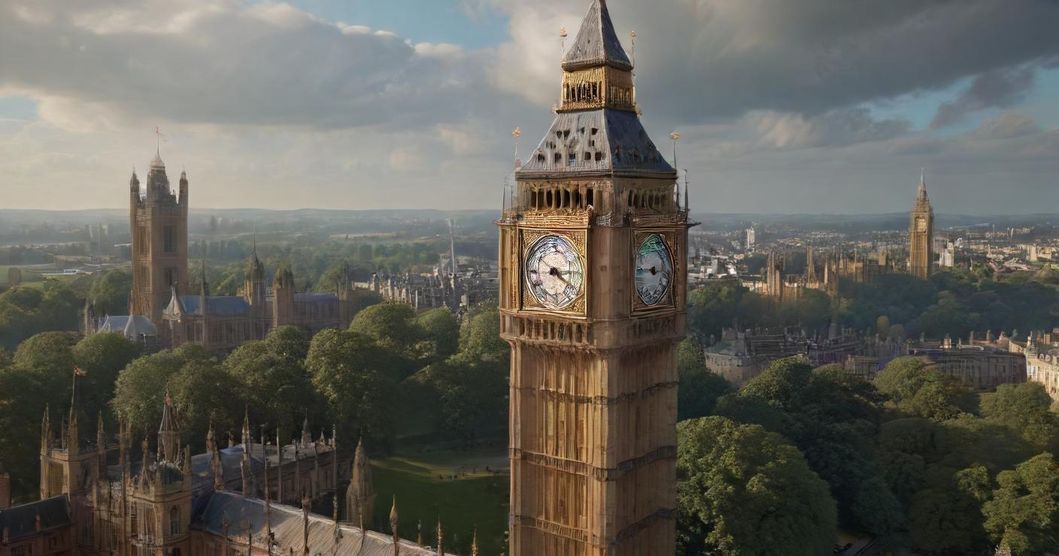
Test your knowledge of british history quiz with this comprehensive history quiz! This interactive quiz features 30 carefully crafted questions that will challenge your understanding of key historical facts, dates, and events.
Instructions: Select the best answer for each question. Your score will be calculated automatically at the end.
Interactive Quiz
Ready for the interactive challenge? Take the quiz below and get your score instantly:
When did William the Conqueror successfully invade England, leading to the Norman Conquest?
Quiz Questions & Answers
Prefer to see all questions at once? Here’s the complete list with answers and explanations:
Question 1
When did William the Conqueror successfully invade England, leading to the Norman Conquest?
Explanation:
The Battle of Hastings in 1066 marked the decisive victory of William, Duke of Normandy, over the English forces, leading to his coronation as King of England and the beginning of Norman rule.
Question 2
What was the primary significance of the Magna Carta, signed in 1215?
Explanation:
The Magna Carta was a charter of liberties signed by King John, primarily establishing that the king was not above the law, thereby limiting his absolute power and protecting certain rights of his subjects, particularly the barons.
Question 3
What was a significant long-term effect of the Black Death on English society in the 14th century?
Explanation:
The Black Death drastically reduced the population, creating a scarcity of labor. This empowered the surviving peasants and laborers, leading to increased wages and a weakening of the traditional feudal obligations.
Question 4
What was the primary motivation behind King Henry VIII's break with the Roman Catholic Church?
Explanation:
Henry VIII's primary motivation was to secure a male heir. When the Pope refused to annul his marriage to Catherine of Aragon, Henry declared himself Supreme Head of the Church of England, initiating the English Reformation.
Question 5
Which monarch successfully defended England against the Spanish Armada in 1588?
Explanation:
Queen Elizabeth I famously rallied her forces and the English people against the invading Spanish Armada, leading to a decisive victory that bolstered England's Protestant identity and naval power.
Question 6
What was the main conflict during the English Civil War (1642-1651)?
Explanation:
The English Civil War was fundamentally a conflict over sovereignty, pitting King Charles I's belief in the Divine Right of Kings against Parliament's demands for greater control and accountability.
Question 7
Who led the Parliamentarian forces (Roundheads) to victory in the English Civil War and later became Lord Protector of the Commonwealth?
Explanation:
Oliver Cromwell was a brilliant military leader who commanded the New Model Army to victory against the Royalists. After the execution of Charles I, he became Lord Protector, effectively ruling England, Scotland, and Ireland.
Question 8
In what year did the 'Glorious Revolution' occur, leading to the overthrow of James II and the ascension of William and Mary?
Explanation:
The Glorious Revolution of 1688 saw the largely bloodless overthrow of the Catholic King James II by his Protestant daughter Mary and her husband William of Orange, leading to a constitutional monarchy.
Question 9
What was the direct result of the Acts of Union in 1707?
Explanation:
The Acts of Union legally joined the Kingdom of England and the Kingdom of Scotland into a single sovereign state, the Kingdom of Great Britain, creating a unified Parliament.
Question 10
What concept best describes the profound economic and social changes that transformed Britain from an agrarian society to an industrial one starting in the late 18th century?
Explanation:
The Industrial Revolution was a period of rapid technological advancement, particularly in textiles and steam power, leading to urbanization, factory systems, and significant social restructuring.
Question 11
Which British admiral is famously associated with the decisive victory at the Battle of Trafalgar in 1805?
Explanation:
Admiral Lord Horatio Nelson led the Royal Navy to a stunning victory over the combined French and Spanish fleets at Trafalgar, though he was mortally wounded during the battle. This secured British naval supremacy for over a century.
Question 12
Which long-reigning monarch presided over an era of significant industrial growth, colonial expansion, and social reform in Britain during the 19th century?
Explanation:
Queen Victoria's reign from 1837 to 1901 defined an era of unprecedented British power and influence, marked by the height of the British Empire and significant domestic changes.
Question 13
What was the primary goal of the British Suffragette movement in the early 20th century?
Explanation:
The Suffragette movement, led by figures like Emmeline Pankhurst, used militant tactics to campaign for women's right to vote, eventually leading to partial suffrage in 1918 and full suffrage in 1928.
Question 14
While complex, what was a major *contributing cause* to Britain's entry into World War I in 1914?
Explanation:
Britain had a treaty obligation to protect Belgium's neutrality. When Germany invaded Belgium as part of the Schlieffen Plan, Britain declared war on Germany, citing this violation as a primary reason.
Question 15
Who served as Prime Minister of the United Kingdom during most of World War II, famously rallying the nation with his speeches?
Explanation:
Winston Churchill became Prime Minister in May 1940 and led Britain through its darkest hours of World War II, delivering powerful speeches that inspired resistance and resilience.
Question 16
What significant event in 1940 involved the Royal Air Force defending the UK against large-scale attacks by the German Luftwaffe?
Explanation:
The Battle of Britain was a crucial aerial campaign where the RAF successfully defended the UK from widespread German air attacks, preventing a planned German invasion (Operation Sea Lion).
Question 17
After World War II, the Labour government introduced a system of universal services like the National Health Service (NHS) and social security. What concept does this best represent?
Explanation:
The establishment of the Welfare State was a landmark achievement, providing comprehensive healthcare, education, and social security 'from the cradle to the grave' based on the Beveridge Report.
Question 18
What was a major effect of the post-WWII era on the British Empire?
Explanation:
Weakened by the war and facing growing nationalist movements, Britain gradually dismantled its empire, granting independence to India, Pakistan, and many African and Caribbean nations.
Question 19
Which British Prime Minister, known as the 'Iron Lady,' introduced significant economic reforms, including privatization and reduced trade union power, in the 1980s?
Explanation:
Margaret Thatcher's Conservative government enacted radical economic policies, often referred to as 'Thatcherism,' which reshaped Britain's economy and society during her time in office (1979-1990).
Question 20
What was the primary significance of the Domesday Book, commissioned by William the Conqueror in 1085?
Explanation:
The Domesday Book was an exhaustive record of land ownership, value, and resources across England, used by William to consolidate his power, assess taxes, and understand his new kingdom.
Question 21
What was the main cause of the Wars of the Roses (1455-1487)?
Explanation:
The Wars of the Roses were a series of civil wars fought between two rival branches of the royal House of Plantagenet – the House of Lancaster (red rose) and the House of York (white rose) – over the control of the English throne.
Question 22
In what year did the Great Fire of London largely destroy the medieval city?
Explanation:
The Great Fire of London in September 1666 consumed much of the walled city of London, including St Paul's Cathedral, leading to extensive rebuilding efforts.
Question 23
Which significant colonial conflict, largely fought overseas, led to Britain losing its thirteen American colonies in the late 18th century?
Explanation:
The American War of Independence (1775-1783) saw the American colonies successfully rebel against British rule, leading to the formation of the United States of America.
Question 24
What was the primary significance of the Great Reform Act of 1832 in British politics?
Explanation:
The Great Reform Act addressed corruption and inequalities in the electoral system, most notably by eliminating 'rotten boroughs' and increasing the electorate to include a wider section of the middle class, though still excluding working-class men and all women.
Question 25
What decisive battle in 1815 marked the final defeat of Napoleon Bonaparte by a coalition led by the Duke of Wellington?
Explanation:
The Battle of Waterloo, fought near Brussels, was the final and decisive engagement of the Napoleonic Wars, leading to Napoleon's second and final exile.
Question 26
What term describes the United Kingdom's withdrawal from the European Union, following a referendum in 2016 and subsequent negotiations?
Explanation:
Brexit is a portmanteau of 'British' and 'exit' and refers specifically to the UK's departure from the European Union, a process that concluded in January 2020.
Question 27
Which Anglo-Saxon king is celebrated for his successful defense against Viking invasions and for promoting learning and law in the 9th century?
Explanation:
Alfred the Great, King of Wessex, famously halted the Viking advance, negotiated peace, established a strong defense, and sponsored the translation of Latin works into Old English, laying foundations for English identity.
Question 28
Which significant Roman structure, built across northern Britain, marked the northern frontier of the Roman Empire and served as a defensive fortification?
Explanation:
Hadrian's Wall, built on the orders of Emperor Hadrian in the 2nd century AD, was a massive defensive fortification protecting Roman Britannia from the Picts and other tribes to the north.
Question 29
What was a key significance of the English Bill of Rights (1689)?
Explanation:
The Bill of Rights, following the Glorious Revolution, codified many rights for Parliament and individuals, asserting Parliament's supremacy over the monarch and laying the foundation for a constitutional monarchy.
Question 30
What was a major effect of the Cold War on Britain's international role and defense policy?
Explanation:
During the Cold War, Britain was a staunch ally of the US, a founding member of NATO, and developed its independent nuclear capability, positioning itself as a major Western power against the Soviet bloc.
About This british history quiz Quiz
This british history quiz quiz covers essential historical knowledge that every history enthusiast should know. Whether you’re a student preparing for exams or simply someone who loves learning about the past, this quiz will test your understanding of important historical events, figures, and dates.
What You’ll Learn
- Key historical facts about british history quiz
- Important dates and chronology
- Significant historical figures and their contributions
- Major events and their historical impact
Challenge yourself and see how much you really know about british history quiz! Share your results with friends and challenge them to beat your score.