Did the Late Bronze Age really end in one massive, sudden disaster? For a long time, people thought so. They pictured a thriving world, much like our own today, suddenly crashing into a ‘dark age’ of chaos and forgotten knowledge. This dramatic idea of a “Bronze Age Collapse” was the accepted story for how the vibrant era from around 1600 to 1200 BCE ended. But what if that popular story isn’t the full picture? What if it wasn’t as sudden or as dark as we’ve been told? Recent discoveries are actually showing us a much more detailed and interesting story, challenging that old, stark idea.
Actually, what really happened is even more fascinating. The Late Bronze Age wasn’t just a collection of separate kingdoms; it was a truly global scene. Think of it as a huge, ancient version of today’s worldwide supply chain, but for kings and their empires. From the majestic Nile Valley, where powerful pharaohs ruled Egypt, to the mountainous heartlands of the Hittite Empire in what’s now Turkey, and across the shimmering Aegean Sea to the wealthy Mycenaean kingdoms of Greece, goods and ideas traveled constantly. Valuable metals like copper and tin—the very ingredients for bronze—were shipped over vast distances. So were luxury items like exotic spices, fine textiles, and colorful pottery. These weren’t just random exchanges; they were carefully managed networks that kept the economies of these great powers humming along.
How Connected Was This Ancient World?
What makes this so captivating is just how much these ancient people interacted. It wasn’t only about trade; it was about complicated political alliances and rivalries, very much like how world leaders navigate complex international relations today. We know this thanks to amazing discoveries, like the Amarna Letters found in Egypt. These are clay tablets, written in Akkadian, which was the go-to language for international talks back then. They hold actual letters between Egyptian pharaohs and other mighty kings, such as those from the Hittites, Babylonians, and Assyrians. These letters discuss everything from requests for gold and marriage proposals between royal families to complaints about unruly vassals and agreements for mutual defense. Imagine messages flying between modern heads of state, but instead of emails, they were carefully crafted clay tablets carried by messengers across deserts and seas.
These documents, along with archaeological evidence of shared art styles and technologies across different cultures, paint a clear picture of a sophisticated, intertwined world. The kingdoms of the Late Bronze Age weren’t just neighbors; they were partners, rivals, and even family through royal marriages, forming a kind of ancient “club of great powers.” Their economies relied heavily on each other, especially for essential resources. Imagine if, all of a sudden, every major shipping route closed down, or communication between every country stopped. That’s the kind of massive shock that historians traditionally believed ended this vibrant period.
So, how did the idea of a sudden, devastating “Dark Age” become the main way we understand this time? The biggest reason was the dramatic lack of evidence from the period right after this grand era. Archaeological sites that had once been bustling cities with huge building projects, royal palaces, and extensive archives suddenly showed signs of destruction, abandonment, or a big drop in population. For instance, many Mycenaean palaces in Greece were violently destroyed, and we see a sharp decline in reading and writing, as well as in grand art. When archaeologists first uncovered these layers of ash and rubble, followed by centuries of much simpler settlements, it was easy to conclude that something truly awful must have happened. It felt like the lights just went out.
Here’s why: because written records largely disappear from many regions after about 1200 BCE, and the complex trade networks seem to vanish, historians and archaeologists initially saw this as a complete breakdown of civilization. They called it a “dark age” because, for a long time, we simply didn’t have much information about what came next. It was a blank slate, filled by assumptions of total collapse and widespread catastrophe. This idea came from the stark contrast between the glittering, well-documented Late Bronze Age and the quiet, fragmented period that followed, naturally leading to the dramatic story of a sudden plunge into darkness.
This traditional view became deeply ingrained in history books, solidifying the idea of a universal, simultaneous, and devastating end to an entire era. It’s a gripping story, one that makes us picture a world brought to its knees. But the truth, as we’ll begin to explore, is rarely that simple. The story of what really happened during this tumultuous time is far more intricate than a single, global catastrophe, and it sets the stage for us to rethink one of history’s greatest puzzles.
What Evidence Do We Have That So Many Civilizations Collapsed Simultaneously?

Imagine if, one day, the internet suddenly broke down everywhere. Not just for an hour, but for years. Global trade would stop cold, communication would become almost impossible, and many countries would find themselves scrambling for basic resources. That feeling of sudden, widespread chaos is a lot like what happened around 1200 BCE. A whole network of powerful civilizations across the Eastern Mediterranean and Near East seemingly collapsed at the same time. But how do we know this wasn’t just a series of unrelated bad events? The answer comes from a huge amount of evidence we’ve carefully put together.
The truth is more interesting than you might think. We’re not talking about just one city falling; we’re talking about a domino effect across an entire super-region. This wasn’t just one isolated problem; it was a widespread, simultaneous breakdown. Recent discoveries show that major centers like the Mycenaean palaces in Greece, the Hittite Empire in Anatolia (modern-day Turkey), and the bustling city-states of Ugarit and Emar in Syria all met devastating ends within a short time.
How Do We Know This Actually Happened?
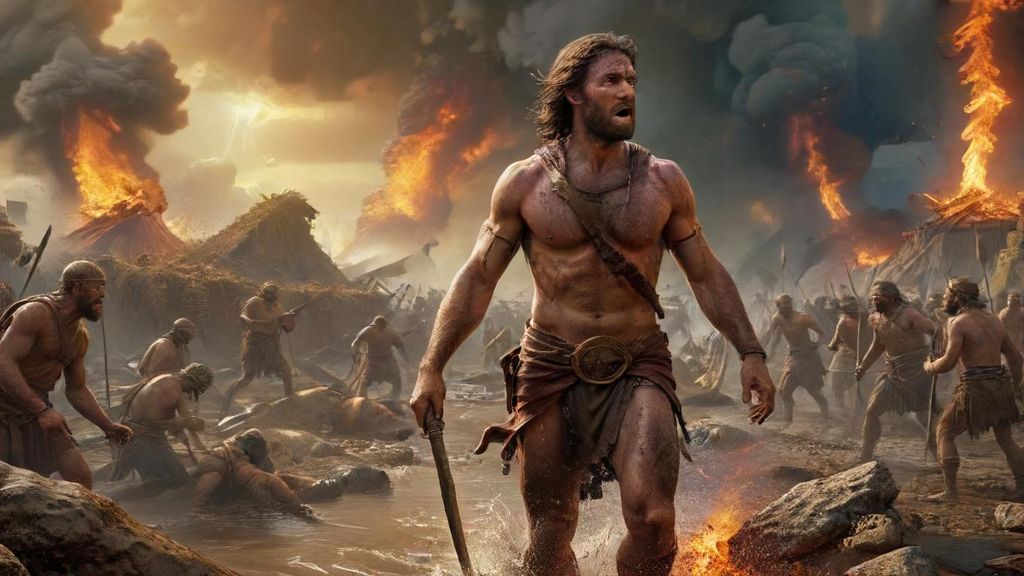
Archaeological finds show a chilling pattern. Think of it this way: when archaeologists dig, they often find layers, much like pages in a history book. At sites all across the region—from Greece to Mesopotamia—we find clear “destruction layers” from around the same time. These aren’t just signs of an ordinary fire; they show widespread burning, rubble, and often, clear signs of violent attack. Cities like Hattusa, the Hittite capital, were simply abandoned. The magnificent Mycenaean palaces, known for their clever city design and huge building projects, were destroyed and never rebuilt to their former grandeur.
Then there’s the textual evidence, which gives us direct, albeit frantic, voices from the past. Historical records tell us of desperate pleas and approaching disaster. Perhaps the most famous example comes from the city of Ugarit on the Syrian coast. We have clay tablets—ancient letters—that paint a vivid picture of panic. One letter, sent from the King of Ugarit to the King of Alashiya (modern Cyprus), dramatically warns:
“My father, behold, the enemy’s ships came (some) of my cities (?) they burned, and did evil things in my country. Does not my father know that all my troops and chariots (?) are in the Land of Hatti, and all my ships are in the Land of Lukka? …Thus, the country is abandoned to itself. May my father know it: the seven ships of the enemy that came from the sea have inflicted damage upon us.”
This letter, from Ugarit’s final days, shows a civilization under direct attack, with its defenses far away. It’s like a corporate CEO sending out a frantic email about invaders, only to realize the entire security team is out of town.
But military attacks weren’t the only cause. Recent evidence shows that big environmental changes played a huge role. Climate studies, which look at things like ancient tree rings and layers of sediment, point to a severe, long-lasting drought that hit the region for decades. Imagine massive crop failures and widespread hunger across lands that were already struggling to feed huge populations. This would have put immense strain on trade routes, supply chains, and political stability, creating a terrible cycle of hunger and unrest.
And then there are the mysterious Sea Peoples. Mentioned in Egyptian records, these groups were described as raiding invaders, sailing into the Eastern Mediterranean and causing widespread destruction. While their exact origins are still debated, they clearly played a part in this ‘perfect storm’ of many problems happening at once. Their attacks, combined with climate-caused famine and trouble from within society, led to a complete change in how society was organized. It was like multiple things going wrong all at once for the ancient world: a natural disaster, a foreign invasion, and internal conflict.
This widespread timing of destruction—cities burning, writing systems disappearing, complex trade networks grinding to a halt, and powerful empires vanishing—across such a vast geographical area is what makes the Late Bronze Age collapse so compelling. It wasn’t just bad luck for one kingdom; it was a complete breakdown of an entire globalized world. What makes this fascinating is how such advanced, interconnected societies could fall apart so completely, forcing a total restart. Next, we’ll dive into what life was like for those who survived this monumental collapse.
Was the Bronze Age Collapse Truly a Global Dark Age for Everyone?

Here’s a surprising truth about the famous Bronze Age Collapse: it didn’t plunge the whole world into darkness for everyone. Sure, some powerful kingdoms fell apart, and important trade routes stopped working. But picturing a complete “dark age” across the entire ancient world is like thinking every country suffers the same way during a global economic crisis today. The real story is much more complex. Some places managed to adapt, invent new things, and even set the stage for amazing future developments. So, while many societies faced huge problems, others showed incredible strength. It proves that people often find their best solutions when things are toughest.
How Did Some Places Survive the Storm?
How did they do it? Well, it came down to their unique situations and how well they could change course. Imagine a massive, interconnected global supply chain suddenly collapsing. For areas that depended heavily on this network, it was a complete disaster. But for others, especially those with strong local resources or different ways of governing, it felt more like a really bad economic downturn – difficult, but not the end of everything. Take Egypt, for instance. Even though it struggled with problems inside its borders and faced dangers from outside invaders like the “Sea Peoples,” its mighty New Kingdom didn’t just disappear overnight. The Pharaohs continued to rule, though their power was weaker, and the basic government structures stayed in place, especially along the Nile Valley. This wasn’t a total breakdown; it was more like a really tough period, letting their civilization carry on, even if it wasn’t as grand as before.
Another fascinating example comes from Assyria, located in what is now northern Iraq. Instead of completely falling apart, the Assyrians smartly pulled back to their main homeland. Imagine a big company cutting back its operations and focusing on what it does best during a tough economic time. They retreated, kept their government running, and protected their borders. While they weren’t the leading power they once were, this clever move helped them survive the difficult period. Centuries later, they famously rose again as the powerful Neo-Assyrian Empire. Old records show they kept their way of managing things going, even if on a smaller scale, patiently waiting for their chance.
Along the coast of the Levant, in what’s now Syria and Lebanon, a different story was unfolding. Instead of huge empires, we saw the growth of smaller, more flexible city-states, like the Phoenicians. These smart sea traders didn’t need enormous palaces or complicated government systems. They were quick to adapt, focusing on building ships and trading goods across the Mediterranean when bigger powers were struggling. It’s a bit like a group of quick, independent startups succeeding when large, slow older companies have failed. They even created a simple, easy-to-learn alphabet. According to historians like Eric Cline, this was a huge step forward for communication and keeping records – much easier to use than the tricky cuneiform writing of the Bronze Age.
What New Ideas Came From This Turbulent Time?
The truth is actually more interesting than you might think: this messy period of disruption actually led to amazing new inventions. One of the biggest changes was everyone starting to use iron. For hundreds of years, bronze was the main metal – but making it meant you needed a complicated system to get copper and tin, often from far away. When those systems broke down, iron, which is much more common and found almost everywhere, became the new go-to. At first, it was harder to work with, but people soon learned how. This meant tools, weapons, and everyday items could now be made right where people lived, by more people, without needing complex international trade. It was a total shift in how things were done, moving from an economy that relied on central control and faraway resources to one that was more local and self-reliant.
Beyond new metals, different ways of organizing societies also appeared. Instead of big, often shaky empires, we began to see smaller, tougher kingdoms and city-states. These new groups were often more spread out in their power and better at adapting. The focus moved from huge economies controlled by palaces to more varied local production and trade. This time of big changes was a vital stepping stone. It wasn’t just about making it through; it was about creating something new. These fresh ideas, born out of necessity, eventually prepared the ground for the early Iron Age and the famous civilizations that came later, like the Greek city-states and the Roman Republic. They took what they learned during these difficult years and built upon it.
So, the idea that the Bronze Age Collapse was a worldwide “dark age” for everyone misses a rich story of human toughness and smart adjustments. Many societies, instead of falling into darkness, found clever ways to get through the tough times. They set the stage for completely new ways of living and ruling. Next, we’ll explore in more detail how these groundbreaking changes truly transformed the world, making it look very different from how it was before.