
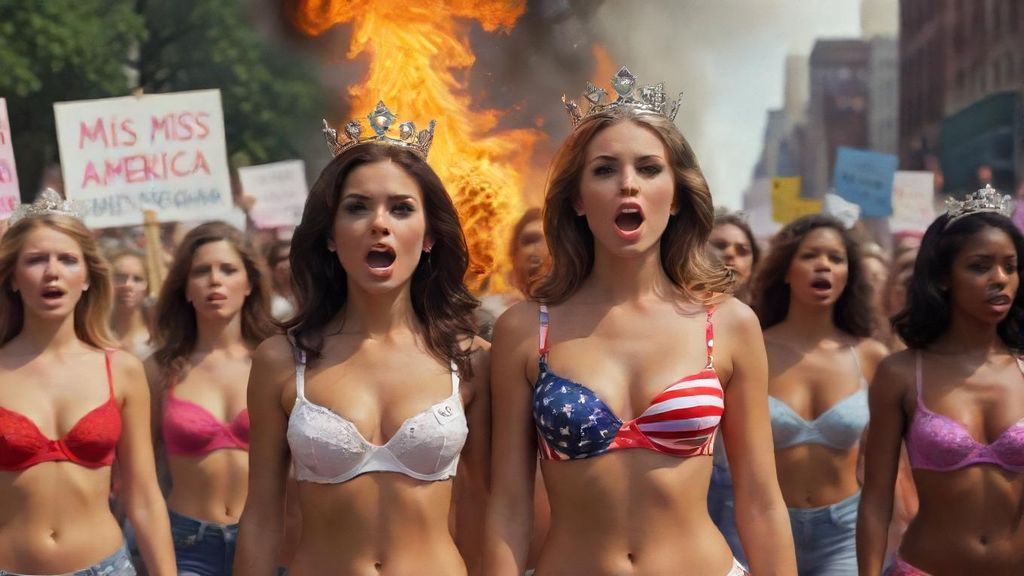
You know that famous picture of 1960s feminists throwing bras into a burning barrel? It’s become a really strong image. But guess what? The real story is actually way more interesting than you might imagine. While the idea of “bra burning” grabbed headlines, the women protesting the 1968 Miss America Pageant in Atlantic City didn’t actually set any undergarments on fire. This widely circulated story is a classic example of a historical myth that grew bigger than the truth, shaping how many people still see the early women’s liberation movement. So, the simple answer is no, they didn’t burn their bras.
The actual events unfolded on September 7, 1968, right outside the Atlantic City Convention Center. A group called New York Radical Women (NYRW), along with other feminist groups, organized a powerful protest against the pageant. They weren’t just upset about beauty standards. They were criticizing the whole system, angry about how women were judged, treated like objects, and forced into tiny, restrictive roles. They even called the pageant a “cattle auction,” saying it paraded women for male approval, much like how products are advertised today. Think of it this way: imagine a huge public event designed solely to judge people based on how they look, then imagine a group showing up to question why anyone would do that.
What really went into the “Freedom Trash Can”?
Instead of a bonfire, the protesters brought a big garbage can. They symbolically named it the “Freedom Trash Can.” Here’s what they tossed inside: items they felt were tools of female oppression. This included bras, yes, but also girdles, high heels, hair curlers, false eyelashes, women’s magazines, and mops. They threw these items in not to burn them, but to publicly cast them off. It was a way to reject these symbols of the tight expectations placed on women. It was like a very public “decluttering” session, getting rid of things that literally and figuratively squeezed women into uncomfortable roles.
The atmosphere was electric. Protesters shouted slogans like “No More Miss America!” They even crowned a live sheep “Miss America” to make fun of how superficial the pageant was. They handed out leaflets that explained their concerns. These ranged from the pageant pushing impossible beauty ideals to its role in racism (there had only been one Black finalist in its history by that point) and the way it exploited women commercially. All these actions were meant to symbolize freedom and a clear rejection of the male-driven standards that dictated women’s looks and worth. They wanted to take back control of their bodies and identities from the male gaze. It’s a bit like how people today might protest against exploitative advertising or unrealistic social media filters.
According to historians and people who were actually there, including feminist activist Carol Hanisch (who helped organize the protest), the decision not to burn anything was very practical. They had a permit for the protest, but it didn’t allow for an open flame. Setting fires would have been illegal and could have easily led to arrests. That would have pulled attention away from their important message. So, while the idea of a dramatic blaze certainly sounded appealing for shock value, it simply didn’t happen. The “bra burning” part was a sensational detail added by the media, probably because it made for a more exciting headline and made it easy to dismiss the protesters as crazy or irrational.
The actual events of the 1968 Miss America protest show us how powerful symbolic actions can be. They also highlight the media’s big role in shaping what the public believes. Even though no bras were burned, the act of publicly throwing these items into the “Freedom Trash Can” sent a clear, unmistakable message of defiance and liberation. This moment challenged deeply rooted societal norms. It forced people to start talking about women’s roles, conversations that are still happening today. This iconic protest truly laid important groundwork, setting the stage for future debates about gender equality and how women are shown in the media. We’ll explore these topics next.
Why did the ‘bra burning’ myth become so famous and symbolic?

Most people “know” that 1960s feminists famously burned their bras during protests. But here’s the surprising truth: it never actually happened. So why did this powerful, fiery image become such a universally recognized symbol, even without a single bra going up in flames? It turns out, the answer points straight to sensational media coverage and how easily a simple undergarment became a symbol for a whole new way of thinking for a generation.
So, how did this myth get so famous? It all comes down to the media. In September 1968, a group called New York Radical Women protested the Miss America pageant in Atlantic City. They pulled a smart move: they set up a “Freedom Trash Can” right outside the convention hall. Into this bin, women threw items they felt represented strict beauty standards and male control. We’re talking about things like high heels, false eyelashes, women’s magazines, girdles, and, yes, bras. But here’s the kicker: nobody actually lit the bin or its contents on fire. They couldn’t get fire permits, and as responsible activists, the women followed the rules.
How did the media twist the story?
So, if no one burned anything, why did the myth start? Imagine this: a journalist named Lindsy Van Gelder from the New York Post wrote about the protest. She jokingly compared throwing bras into the trash to burning draft cards during the Vietnam War. She even called bras “instruments of female torture.” This comparison, even though it was a joke, sparked a powerful idea. Think about how a catchy headline or a shocking video clip goes viral today. Back then, newspapers and TV news loved the “bra burning” idea because it was so dramatic and easy to grasp. It was like an early version of a viral meme, but once it spread, it was much harder to set the record straight.
This dramatic picture of women destroying their bras said a lot, even if it wasn’t true. For the growing feminist movement, the bra symbolized something holding women back physically. For years, women felt pushed to wear bras that lifted, separated, and shaped them into an “ideal” look – often uncomfortably. Getting rid of this garment, even just as a symbol, showed a desire to break free from these beauty standards. It was a way to say no to being judged only on how they looked. It was a clear statement: women wanted to control their own bodies and who they were, not just follow what others expected.
But this symbol worked both ways. For people who criticized feminism, the “bra burning” myth quickly became a quick way to talk about everything they worried about: radical ideas, a supposed hatred of men, and an attack on traditional womanhood. They didn’t see it as freedom, but as a harmful act, an angry outburst by “man-hating” women trying to flip society upside down. It was much simpler for many to ignore feminism as just a group of angry bra burners than to really listen to its deeper, more complex arguments about equal pay, women’s health choices, or fair treatment at work. The simple, striking image made feminists seem extreme, creating a negative stereotype that, as historians like Susan J. Douglas explain, deeply affected how the public saw them.
What’s really interesting is how this powerful, yet untrue, story kept spreading through popular culture. Movies, TV shows, and even everyday jokes used “bra burning” as a fast way to talk about 1960s feminism. It was catchy, easy to remember, and became a quick cultural shortcut. This made-up event actually became more famous than the real protest, which successfully highlighted how women were treated unfairly in beauty pageants. The myth stuck because it was dramatic, sparked arguments, and appealed to both its fans (as a sign of freedom) and its critics (as a sign of dangerous radicalism).
In the end, the story of the “bra burning” myth really shows how much power the media has to shape what people believe, sometimes even over the truth. It proves that one exaggerated image can become the main symbol for a whole movement, changing how generations view 1960s feminism. But as we’ll see next, the real struggles and successes of these early feminists went far beyond just symbolic undergarments.
What were 1960s feminists actually fighting for, and how did ‘bra burning’ shape their image?

The popular story often says 1960s feminists were just angry women burning bras, but the real truth is much more interesting and important. Imagine if a big social movement today, like one for climate change or fair wages, was reduced to a single, easily mocked image – that’s pretty much what happened to the women’s movement back then. These women had incredibly serious goals. They wanted fundamental changes in society, affecting everything from how women were treated at work to their roles at home. Simply put, they were fighting for true equality, aiming for a world where women had the same chances and respect as men.
When we look past the sensational headlines, here’s what we find: These feminists were tackling huge problems. A main reason for their activism was the widespread unfairness women faced every day. For example, they fought for equal pay, because women were often paid much less than men for doing the exact same job – a problem they called the “wage gap.” They also pushed hard for reproductive rights, arguing that women should control their own bodies and families. This included access to birth control and, later, safe and legal abortion, a struggle that reached a big moment with the important Roe v. Wade court decision in 1973. It was like fighting for basic healthcare access today – it was all about having personal control over one’s own life.
Beyond money and medical choices, these women also challenged old ideas about what men and women should do. Women were often expected to stay home as wives and mothers, with very few chances outside the house. Feminists spoke out against this “cult of domesticity,” pushing back against advertising and cultural rules that confined women to specific roles. They pushed for women to have more say in politics and more jobs in important fields like law and medicine, places mostly run by men. This wasn’t just about personal dreams; it was about making sure women’s ideas helped shape society. Historical records show that groups like the National Organization for Women (NOW), founded in 1966 by people like Betty Friedan, formed to fight for these very changes. They often pointed out how women were treated unfairly in jobs and at school.
What makes their fight even more fascinating is how deep it went. They also tackled hidden problems like domestic violence and sexual harassment. Before this time, domestic violence was often seen as a private family matter, not a crime. Feminists worked tirelessly to show how big this problem was. They pushed for safe places (shelters), legal protections, and a complete shift in how people thought about women’s safety in their own homes. This was a huge change, forcing society to admit that violence against women was a serious public issue, much like how awareness about mental health has grown in recent years.
How Did the ‘Bra-Burning’ Story Stick So Hard?
The truth here is more interesting than you might guess: the famous “bra burning” event was mostly a myth. It came from a protest at the 1968 Miss America pageant in Atlantic City. There, activists threw items like bras, girdles, high heels, and makeup into a “Freedom Trash Can” to make a point. No bras were actually set on fire, mainly because of fire safety rules on the pier. But the image of women burning their bras was exciting and easy for news outlets to latch onto, much like a catchy but misleading viral meme today.
This exaggerated image, however, had a long-lasting and often hurtful effect. It quickly became a quick way to sum up feminism itself, making activists look angry, anti-men, and silly. Think about how a complex political issue can be reduced to a single, often overstated, soundbite on social media. This “bra-burning” stereotype made the movement’s main message seem unimportant. It made their serious calls for equal pay and reproductive rights seem less important than women’s clothing. This image hid their deep and important demands for social and political change, giving a wrong idea of their goals for many years. This misunderstanding made it easier for people against feminism to ignore their points, shifting attention from real unfairness to what looked like extreme ideas.
Despite the media’s focus on trivial things, the movement actually made big progress. The Women’s Strike for Equality in 1970, for example, brought thousands of women nationwide to demand fair chances in jobs and schools, free child care, and the right to choose about abortion. These were powerful, organized demonstrations about basic human rights, not just about fashion. The lasting impact of the “bra-burning” myth means that many people still don’t fully understand the serious, life-changing issues these women were truly fighting for. It’s a reminder of how powerful, and often misleading, a single image can be in shaping how the public thinks.