
Imagine, for a moment, you’re a successful, ambitious young politician today. You’re on your way to a top university overseas to get even better at your craft. You’re sailing across the Mediterranean, maybe on a luxury yacht, when suddenly, you’re ambushed, kidnapped, and held for ransom by modern-day cybercriminals or international gangs. That’s a bit like what happened to Julius Caesar way back in 75 BC, though his captors were definitely more old-fashioned: actual pirates. The story everyone knows about his capture isn’t just dramatic; it’s actually even wilder than most people realize. Here’s what we understand about how this famous incident traditionally played out.
Ancient historians tell us that Caesar was indeed captured by pirates near the island of Pharmacusa, located off the coast of modern-day Turkey. At the time, he was a relatively young man, about 25 years old, and already showing great promise in Roman politics. He was headed to the famous island of Rhodes, a renowned center for learning, to study public speaking under a celebrated teacher named Apollonius Molon. It was a common path for young Roman leaders who wanted to succeed, much like a young politician today might attend a prestigious leadership course.
Piracy in the Mediterranean was a big problem back then, especially from the region of Cilicia. These pirates weren’t just ordinary criminals; they were well-organized and incredibly bold, often targeting ships carrying wealthy passengers or valuable cargo. Caesar, even though he was important, traveled with only a few personal servants and no military escort, which made him an easy target. When the pirates seized his ship, they quickly figured out he was important and decided how much to demand. They initially asked for twenty talents of silver for his release.
This is where the story gets really interesting, and frankly, a bit hard to believe, which explains why people later wondered if there was more to it. Far from being scared, Caesar was supposedly furious about the low ransom sum. He found it insulting! According to historians like Plutarch and Suetonius, Caesar famously declared that he was worth far more than that. He reportedly insisted that the pirates raise the ransom to fifty talents of silver, a huge sum today, perhaps the value of a professional sports team. Think about that: a captive negotiating up his own price.
During his roughly thirty-eight days of captivity, Caesar didn’t just sit around feeling sorry for himself. He treated his captors with a strange mix of looking down on them and acting like he was one of them. He would order them around, as if he were still in charge. He’d participate in their games and exercises, but always with a superior attitude. He reportedly wrote speeches and poetry, which he would then read aloud to the pirates. And if they didn’t appreciate his writing enough, he would call them “illiterate barbarians” and jokingly (or maybe not so jokingly) threaten to have them all crucified once he was free. These weren’t empty threats, either. Imagine a captive today making such bold statements to their captors, correcting their grammar and threatening to get back at them later.
What Evidence Supports This Traditional Story?
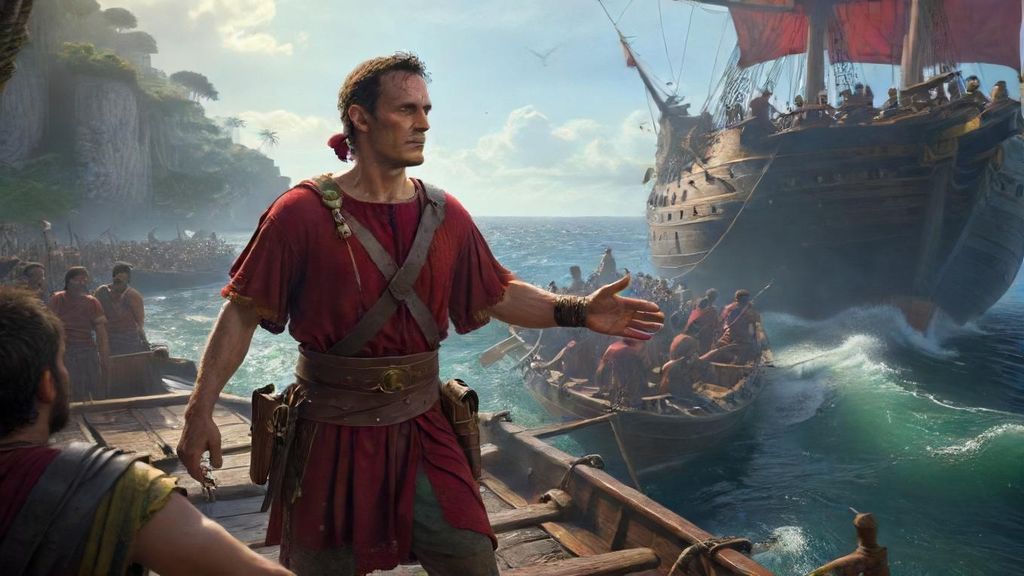
The main reason we know this amazing story is thanks to the writings of ancient Roman and Greek historians. The clearest accounts come from Plutarch, a Greek biographer who wrote in the late 1st and early 2nd centuries AD, and Suetonius, a Roman historian from around the same period. They both included lots of interesting stories about Caesar’s life, with the pirate incident being a very memorable part. These accounts are not eyewitness reports, of course, but were put together from older histories and spoken stories. They offer us a window into what people believed about Caesar back then. They painted a picture of a young Caesar whose boldness and self-belief were already clear, even in the most dangerous times.
Eventually, Caesar’s friends and family managed to gather up the huge ransom money. His friends arrived, paid the fifty talents of silver, and Caesar was set free. The pirates, no doubt pleased with their sudden good fortune, let him go without any trouble. But Caesar was a man who kept his word. The truth is more interesting than you might think.
Immediately after his release, Caesar acted quickly. He gathered a small fleet of ships, tracked down the pirates who had held him, and captured many of them. He brought them back to Pergamum and had them executed, supposedly by crucifixion, just as he had promised them during his captivity. This swift and brutal revenge confirmed his reputation as someone who took action and never gave up.
This exciting story, mostly from these ancient writings, is our starting point. It’s a fascinating tale of bravery and revenge that has been retold for centuries. But what if this isn’t the whole story? Or what if there’s more to this bold kidnapping than we think?
Did Julius Caesar Really Orchestrate His Own Pirate Kidnapping?

What if the most famous pirate kidnapping in history wasn’t just bad luck, but a carefully planned career move? Imagine a young, ambitious politician, short on cash and eager for attention, who secretly welcomed being captured. The simple answer is: we can’t say for sure if Julius Caesar truly set up his own pirate kidnapping, but the idea is incredibly tempting. It turns out that many historians and curious people have long wondered if this dramatic event, which happened around 75 BC off the coast of Asia Minor, was more than just an unfortunate incident for the rising Roman leader. The theory suggests Caesar might have pulled some strings, or at least greatly exaggerated the whole thing, to kickstart his political journey.
Why Would Caesar Have Done Something So Bold?
To see why this conspiracy theory holds so much interest, we need to picture Caesar at this point in his life. He wasn’t the powerful general or ruler we know him as. He was a young man, barely in his twenties, on his way to study public speaking in Rhodes. Think of it like a young person today trying to make a name for themselves in a tough industry – every opportunity, even a risky one, counts. Caesar’s family, while important, wasn’t rich, and politics in Rome was incredibly expensive. You needed money for everything: to win over voters, host big parties and games, and build support. So, suddenly needing a huge amount of money for a ransom (historical records tell us the pirates demanded 20 talents of silver, which was an enormous sum) might look like a disaster. But for someone as clever as Caesar, it could have been a chance.
What makes this whole idea so gripping is Caesar’s famous ambition and love for drama. He didn’t just want to slowly climb the ranks; he wanted to leap ahead. A dramatic escape, a brave capture, or a bold challenge to power could instantly make him famous. It’s like a startup founder today creating a viral marketing stunt that gets everyone talking, even if it’s a bit controversial. This event gave Caesar an amazing personal story he could tell for years, showing everyone how brave and clever he was. According to historians like Plutarch, Caesar reportedly charmed and even gave orders to his captors. He treated them less like pirates and more like an audience for his public speaking skills. He even warned them he’d crucify them later – a promise he actually kept!
What Makes This Theory So Intriguing?
The reason this ‘orchestration’ theory is so tempting comes from a few strange details in the old stories. First, there’s the ransom money itself. The pirates first asked for 20 talents. But Plutarch says Caesar himself demanded they ask for 50, basically saying he was worth more. Why would someone being held hostage do that? It doesn’t sound like a desperate captive at all. It suggests he was either very bold or had a hidden reason. Could he have been trying to make the event seem grander, or was he just genuinely arrogant?
Then there’s the surprisingly friendly vibe described during his captivity. Reports say Caesar exercised, wrote speeches, and even gave lessons to the pirates. They were supposedly amused by him, but they didn’t seem to guard him very closely. This unusually friendly relationship makes some people wonder if they had a secret understanding, or if the whole thing was just a show. Imagine a reality TV show where the participants are supposedly isolated but are actually in on the joke. These pirates, who were famous for being ruthless, seemed oddly patient and entertained by their valuable prisoner.
The political situation back then also adds to this theory. The Mediterranean Sea was full of pirates, but Rome often reacted slowly and without much organization. Maybe Caesar saw this as a way to show off his own leadership. He could rescue himself and punish the pirates when Rome couldn’t. That’s a strong story, especially for a young man who needed to show he could lead. While there’s no definite proof, no ancient email showing they were working together, the pieces do fit in a way that makes you really think.
The truth is more interesting than you might guess, because even without clear proof that he planned it, Caesar certainly knew how to turn a bad situation into a good one. He wasn’t just a victim; he was the main character, writing his own dramatic story. This leads us to what happened after the kidnapping, a bold aftermath that cemented Caesar’s legendary status and showed his fierce ambition like never before.
What Did Julius Caesar Do After His Pirate Kidnapping?

After being freed from a terrifying hostage situation, most people would rush home, hug their family, and probably take a long vacation to recover. But not Julius Caesar. The truth is, the moment his ransom was paid and he stepped back onto solid ground, Caesar didn’t pause for a second. What makes this story so fascinating is that he immediately sprang into action. He turned what could have been a traumatic escape into a stunning show of power and a clear warning. Caesar didn’t just want his freedom; he wanted justice, on his own terms. This set the stage for the determined and effective leader he would become.
The simple answer to what Caesar did next is this: he went straight for revenge. But it wasn’t a sudden, angry reaction. It was a careful, thought-out plan that showed everyone what kind of leader he was becoming. According to the ancient historian Plutarch, who wrote about Caesar’s life much later, the young Roman wasted no time. He quickly sailed to the nearest Roman-controlled city, Miletus, on the coast of Asia Minor. Instead of resting or heading back to Rome, Caesar did something incredibly bold for someone who was just a private citizen at the time.
How Did Caesar Pull This Off So Quickly?
The answer lies in Caesar’s amazing network and his sheer determination, even when he was quite young. Think of it like a clever startup founder who, after a setback, immediately uses all their contacts and resources to fight back. Caesar, though not yet a powerful general, was a well-connected Roman nobleman. He managed to get a small fleet of ships almost instantly from the Roman authorities in the province. These weren’t huge warships, but they were enough to chase the pirates who had held him captive. He recruited a few willing sailors and soldiers, likely using his personal charm and the Roman expectation that criminals should be dealt with quickly.
With this hastily put-together force, Caesar, still a relatively junior figure in Roman politics, took charge and set off. He knew exactly where the pirates were because he’d spent weeks with them, memorizing their routes and their base on the island of Pharmacus. The pursuit was fast and relentless. He surprised them, catching them largely off guard near their hideout. The sea battle, if you can even call it that, was short. Caesar’s makeshift fleet quickly overwhelmed the pirate ships. They were captured, along with the very treasure—the ransom money—that had just been paid for Caesar’s freedom. It’s like finding the stolen goods in the getaway car right after the robbery.
But the story doesn’t end with their capture. Remember how Caesar had reportedly joked to his captors that he would one day crucify them? Well, he wasn’t joking. After securing the pirates, Caesar faced a choice. He could hand them over to the Roman governor of Asia, a man named Marcus Junius, for official punishment. But Junius was known for being a bit slow and easygoing. Caesar, however, had made a promise, and he wasn’t about to let official paperwork get in the way of his own kind of justice. So, he went ahead and did it himself.
Why Was Crucifixion Such a Big Deal?
Crucifixion in the Roman world wasn’t just a brutal execution; it was a deeply symbolic act. It was usually reserved for slaves, non-citizens, and the worst criminals like bandits and traitors. It was meant to be a public, agonizing, and humiliating death, a stark warning to anyone who defied Roman authority. By personally ordering the crucifixion of the pirates, Caesar was sending an unmistakable message: he was a man of his word, and those who disrespected him or Roman power would pay the ultimate price. He essentially delivered a judgment that usually required a full legal process.
What makes this even more striking is that Caesar first had the pirates’ throats cut to spare them the prolonged agony of crucifixion. This wasn’t an act of mercy as we understand it today, but rather a final, calculated gesture that showed his personal involvement while still fulfilling his threat. This incident showcased his ruthless efficiency, his strategic thinking in immediately organizing a response, and his unwavering resolve to follow through on a threat. These were qualities that would become hallmarks of his later rise to power as a military genius and political heavyweight.
This whole episode significantly contributed to Caesar’s growing public image. He became known as a man of decisive action, someone who didn’t just talk but delivered. It set a powerful precedent for his future military and political moves, signaling that he was not to be messed with. It left a lasting mark on his legend, laying the groundwork for the fearsome and respected leader he would become. This wasn’t just a pirate story; it was a public relations masterclass, establishing Caesar as a formidable force to be reckoned with. The question of whether he orchestrated the kidnapping might be complicated, but what he did after, that’s clear as day, and it’s a story that echoes through history, shaping our understanding of the man. Next, we’ll delve deeper into how this early display of power propelled Caesar onto the larger political stage in Rome.