
Imagine trying to write a detailed biography of your favorite celebrity, but all you had to go on were a few birth certificates, some property deeds, and a couple of mentions in other people’s social media posts. That’s a bit like the situation we face when we try to understand the actual life of William Shakespeare.
The simple answer about the man from Stratford-upon-Avon is this: we have a surprising number of official records confirming he existed, who his family was, and what his business dealings were. But we have very little that tells us about his inner thoughts, his schooling, or how he came up with his amazing plays. This interesting mix of clear facts and frustrating gaps is exactly what has kept the greatest literary mystery alive for centuries.
How Do We Know This Actually Happened?
The truth is more interesting than you might think. We know William Shakespeare existed because he left behind records, just like anyone else back then who owned land, paid taxes, or had a family. Historical records tell us he was born in Stratford-upon-Avon in 1564, the son of John Shakespeare, a successful glove-maker and town official, and Mary Arden. We have his baptism record, confirming his birth, and his marriage license from 1582 to Anne Hathaway. They quickly had three children: Susanna, and twins Hamnet and Judith.
Historians believe Shakespeare would have gone to the local grammar school in Stratford. This wasn’t like a modern university; it focused a lot on Latin, public speaking (rhetoric), and classic literature. It was a good education, but it definitely didn’t include exotic travel or deep studies of foreign laws or how to behave in a royal court. Then, from about 1585 to 1592, Shakespeare basically vanishes from history. This time is famously called his “lost years” – a period where we have no documents telling us what he was doing or where he was living. It’s like someone going completely off the grid today, with no digital footprint, for almost a decade.
Here’s what we discovered next: he eventually showed up in London as a successful actor and playwright. By the 1590s, he was a big name in London’s theater world, a part-owner in the acting company known as the Lord Chamberlain’s Men (later the King’s Men), and co-owner of the famous Globe Theatre. He bought property, invested in local businesses, and eventually retired to Stratford as a wealthy man, dying in 1616 and leaving a detailed will. These strong records paint a clear picture of a successful businessman and theater professional from Stratford.
What Evidence Supports This?
The main reason we have such strong proof of Shakespeare’s life comes from these everyday official papers. Think of it this way: when a farmer long ago bought a field, there was a record. When a merchant owed taxes, there was a record. For Shakespeare, we have records of his:
- Birth (baptism record)
- Marriage (license)
- Children’s baptisms
- Property purchases in Stratford and London (deeds)
- Tax payments
- Legal disputes (both when he sued others and when others sued him)
- Involvement in his theater company (company records)
- His last will and testament
- His burial record
These are not personal diaries or letters talking about his creative work. They are the kinds of boring, factual papers that just prove he was around and what he did in society. For instance, the scholar E. K. Chambers carefully put together many of these records in his important book, William Shakespeare: A Study of Facts and Problems. It’s like gathering all the public records of a modern-day CEO: you’d know their company, their salary, and where they live, but not necessarily what they think about or how they come up with their ideas.
What makes this fascinating is the big gap. We have a clear, documented life for William Shakespeare of Stratford—a respected, driven man who made a fortune in the fast-growing theater world. Yet, when we look at the amazing plays and poems said to be his, with their huge vocabulary, deep understanding of law, court life, noble customs, and even foreign places, some people started to wonder. They questioned how a man whose known life seemed so ordinary and small-town could produce such a huge and worldly collection of writings. This apparent difference is exactly where the questions first began to stir, setting the stage for the big debate about who really wrote them.
This huge amount of official details clearly proves the existence and career of the “man from Stratford.” But these records, while strong proof of his life, are surprisingly silent on where his genius came from. They don’t give us clues about what inspired him or the huge amount of knowledge we see in his plays. This silent gap in his life story, right where his amazing writings came from, is what we will explore next.
What if everything you thought you knew about William Shakespeare, the world’s most famous writer, wasn’t the whole story? It might surprise you, but for a long time, the idea that Shakespeare definitely wrote all those plays wasn’t as solid as we tend to imagine today.
The simple answer to why people started to doubt his authorship and point to other writers comes from a growing sense of curiosity and, frankly, a bit of disappointment. This happened when people started digging into the historical records of the man from Stratford-upon-Avon.
The truth is more interesting than you might think. For about 150 years after Shakespeare died in 1616, no one really questioned his authorship. But then, as the 18th century turned into the 19th century, things began to change. Think of it like a new wave of detective work.
During the Age of Enlightenment and the Romantic era, people became really interested in the lives of great artists. They wanted to understand the genius behind the art, expecting a grand, inspiring story. It’s like when we look closely at a beloved celebrity’s background today, hoping their life story matches the public image they project.
Here’s what happened: when historians and scholars looked at the known facts about William Shakespeare of Stratford, they found a bit of a mismatch. We know he was a successful businessman, property owner, and an actor. But for someone whose plays showed incredibly deep knowledge of law, foreign cultures, classical literature, and courtly life, there was surprisingly little in his personal history to explain it.
The main reason for doubt came from these perceived gaps. Critics, often called ‘anti-Stratfordians,’ started to ask, “How could this man, with his seemingly ordinary background, have written such extraordinary works?”
What Kind of Evidence Made People Question This?
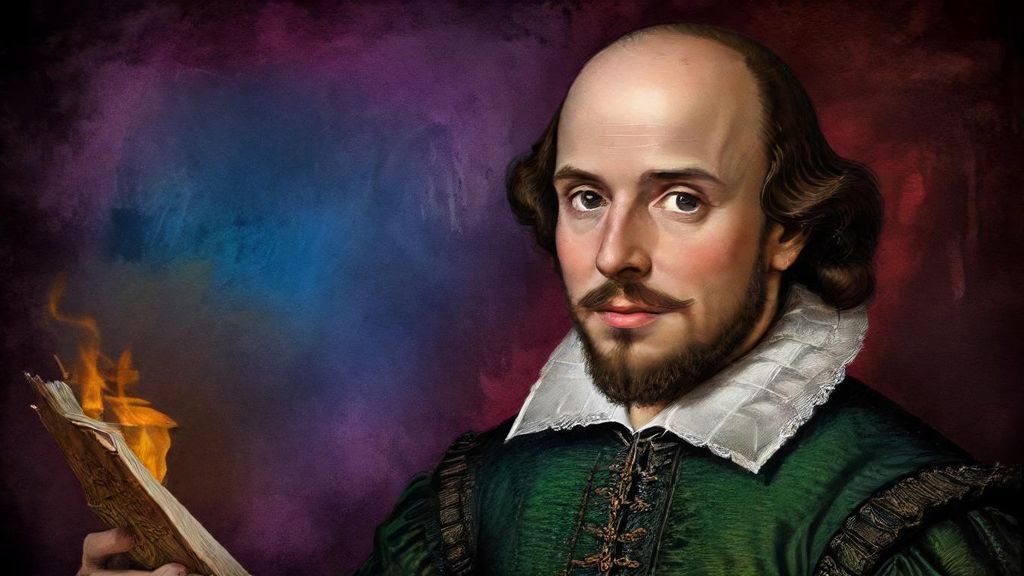
The arguments raised by those who doubted Shakespeare’s authorship were pretty consistent. First, there was the issue of education. The plays are full of references to Roman and Greek classics, philosophy, medicine, and legal terms that would require a lot of schooling. Yet, records suggest Shakespeare likely attended the local grammar school in Stratford. While it was a good school, it wouldn’t typically provide the broad, university-level learning seen in the plays. He also left school early, which seemed odd to some.
Then there was the question of travel. Many of Shakespeare’s plays are set in distant lands like Italy and France, with vivid descriptions of their customs and geography. Yet, there’s no documented evidence that Shakespeare himself ever left England. Imagine a modern filmmaker creating a blockbuster set in a remote jungle without ever leaving their studio – it’s possible, but it makes you curious.
Another point was his deep understanding of courtly life, royal sports like falconry, and aristocratic manners. Shakespeare was a commoner, an actor, and a businessman. How did he know the inner workings of the English court and nobility so well?
What also struck people was the lack of personal papers. For a writer of such fame, there are no original manuscripts in his own handwriting. His will, a very important document, mainly lists property and household items. It mentions nothing about books, literary connections, or even ink and paper. It felt strangely un-literary.
As the great American writer Ralph Waldo Emerson once put it, referring to the lack of personal documents:
It is incredible that not a school-boy’s letter, not a farm-bailiff’s letter, not a scrap of writing should remain.
This scarcity made people wonder if the true author was someone else.
This led to considering other people, candidates whose lives seemed to perfectly match the knowledge and experiences you see in the plays. One of the earliest and most prominent names to emerge was Francis Bacon.
Bacon was a brilliant philosopher, a lawyer, a scientist, and a statesman – a true intellectual giant of his age. Supporters argue his huge knowledge, his known interest in coded messages, and his profound thoughts about life perfectly match the smart and wide-ranging ideas of the plays. It’s like finding out a brilliant tech CEO, known for their innovative mind, secretly wrote a series of complex novels under a different name.
Another strong contender was Edward de Vere, the 17th Earl of Oxford. He was a nobleman, a poet, someone who supported artists, and he loved to travel, spending significant time in Italy. His life was full of drama and secrets in the court, duels, and passionate relationships, which seemed to reflect many of the themes and character types in Shakespeare’s plays.
The facts show he had the “inside track” on the aristocracy and classical education, and many of his personal experiences seem to be like scenes in the plays. The main claim is that a nobleman of his high social position might have used a commoner’s name to publish plays, as writing for the public theater was considered improper for someone of high birth.
Finally, there’s the intriguing case of Christopher Marlowe, a brilliant playwright who was actually more famous than Shakespeare in the early part of their careers. Marlowe was known for his strong poetry, sharp wit, and a life surrounded by spying and controversy. What makes this fascinating is the idea that Marlowe, officially reported to have died in a tavern brawl in 1593, might have faked his death.
People who support this idea suggest he then continued writing under the fake name “Shakespeare,” perhaps to escape political trouble. It’s a bit like a modern-day rock star faking their own death to escape the pressures of fame and continue creating art in secret.
So, the doubt surrounding Shakespeare’s authorship largely comes from the feeling that the life of the man from Stratford-upon-Avon didn’t quite line up with the incredible depth and amazing range of the works said to be his. These alternative candidates offered strong, though not direct, proof that their lives provided a much better fit. In our next chapter, we’ll dive into the traditional view, exploring the strong arguments and evidence for William Shakespeare of Stratford as the true author, and how historians have pushed back against these alternative theories.
Did William Shakespeare truly write all his own plays? Many people wonder, often picturing him as a mysterious figure we know little about. It feels like trying to learn about an old celebrity from centuries ago – you might find a few mentions, but not a daily diary or social media posts. However, here’s the surprising truth: for someone living in the late 1500s, we actually have a truly remarkable amount of solid, real-world information about Shakespeare from Stratford-upon-Avon.
The real question isn’t whether proof exists, but what kind of proof we should expect from Shakespeare’s time. Imagine trying to show someone owns a house today. You wouldn’t look for their personal letters about it, right? You’d check for property deeds. And that’s exactly the kind of strong proof we have for Shakespeare.
What’s the Evidence That William Shakespeare Actually Wrote All His Own Plays?
The answer comes from many historical records that directly link William Shakespeare to his plays and his everyday life. We’re talking about the simple, practical details of his existence – documents that show he was a very real person, actively involved in the world. Historians agree these aren’t just poetic thoughts or vague hints, but strong, legal, and financial papers.
For example, we have records of Shakespeare buying property, like his large home, New Place, in Stratford. We also have tax records proving he paid his taxes, legal papers about his involvement in lawsuits (both as the one suing and the one being sued), and even receipts for him buying malt for his family. These aren’t the actions of a secret writer hiding away; they show a well-known, financially successful person. It’s like finding someone’s mortgage statements and utility bills today – boring, maybe, but clear proof they existed and were doing well financially.
How Do We Know This Actually Happened?
Beyond these personal money matters, strong evidence directly links Shakespeare to the London theatre world. Old records show he wasn’t just a playwright, but also an actor and, very importantly, a part-owner in the most successful theatre company of his era: the Lord Chamberlain’s Men (which later became the King’s Men). This was a major business, much like owning a piece of a successful startup today, with all the money risks and benefits that come with it.
We know this because people living at the same time as Shakespeare, who knew him personally, mentioned him by name. Ben Jonson, a well-known playwright and poet from that era, knew Shakespeare well. While Jonson sometimes joked about him, he famously praised Shakespeare in print, saying he was “not of an age, but for all time.” Jonson wrote this in the introduction to the First Folio, which was the first big collection of Shakespeare’s plays, published seven years after Shakespeare died. This wasn’t some secret praise; it was a clear thumbs-up from a fellow writer.
“I remember the players have often mentioned it as an honour to Shakespeare, that in their writing (whatsoever he penned) he never blotted out line. My answer hath been, would he had blotted a thousand.”
— Ben Jonson, Timber, or Discoveries Made Upon Men and Matter
This quote, and many others like it, paint a clear picture of a well-known playwright working alongside other writers and actors. What makes this so interesting is how specific these mentions are. They come from people who knew him personally, performed with him, and even competed against him.
Here’s the often-overlooked truth: the idea that there’s a “lack of evidence” for Shakespeare actually misunderstands what historical records from the Elizabethan era usually look like. Most people back then, even famous ones, didn’t leave behind a bunch of personal diaries or letters for us to read. We simply don’t have many personal papers for most important figures from that time. Shakespeare left exactly the kind of records you’d expect from someone in his position and job: legal papers, money transactions, and mentions in the theatre and writing world he was part of. The missing parts of his personal story aren’t unusual at all; they fit perfectly with what’s normal for that historical period.
When people suggest other writers for Shakespeare’s plays, they often have to ignore this huge amount of proof we have for Shakespeare. At the same time, they need to accept very uncertain connections for other possible authors. This way of thinking requires a much bigger leap of faith than just accepting the many records that already exist.
So, most experts agree: the proof, while not like a modern autobiography, is strong. It clearly points to William Shakespeare of Stratford-upon-Avon as the real author of his plays. This is the most historically sound and logical explanation, even though the romantic idea of a secret author still fascinates people. Thinking about what this means for understanding the plays themselves, and how they connect to the world their creator lived in, is a story worth looking into more.