
Imagine playing a high-stakes game of chess, but your opponent has twice as many pieces and can see your every move. What would you do? You’d try to trick them! That’s exactly what the U.S. Army had to do during World War II. They didn’t just try to fool the enemy; they absolutely needed to, often using clever illusions instead of brute force. This approach reveals a fascinating, often forgotten side of warfare where smart thinking sometimes won over sheer power. This chapter will explore why Allied leaders had to get so creative, setting the stage for some truly amazing deceptions.
Why Did the U.S. Army Try to Fool the Enemy During World War II?
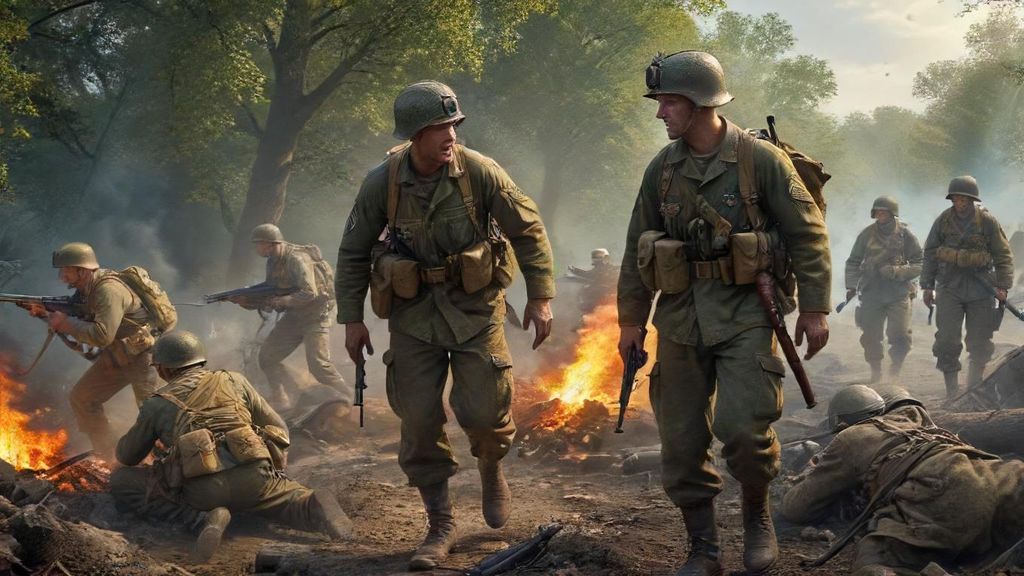
The main reason the U.S. Army, and the Allies generally, used tricks was simply to survive. In the early days of World War II, especially when America entered the fight, the challenges felt huge. The enemy, particularly Nazi Germany, often had more soldiers and gear in important places. Picture this: you need to cross a river guarded by a massive army, but you only have a fraction of their soldiers. You can’t just charge in; you’d be defeated. This meant finding ways to make the enemy believe you were stronger than you were, or planning to attack somewhere else entirely.
Historically, armies have always tried to outsmart each other. From ancient Greek armies hiding in the Trojan Horse to Sun Tzu’s timeless advice in The Art of War about making your forces appear weak when strong, using tricks in war is nothing new. But the sheer size and speed of World War II made this need much, much bigger. It wasn’t just about a clever trick here and there; it required a whole new level of really smart spy work and ways to trick the enemy’s spies. The fighting covered huge areas across continents, and everything was on the line. Losing a battle meant losing countless lives and potentially the war itself. The focus wasn’t just on direct combat; it was a complicated game of giving out true and false information, taking careful chances.
One of the biggest headaches for Allied commanders was making sure they had more soldiers than the enemy in one spot to surprise them. Think of it like a business launching a new product: you want to hit the market strong and catch competitors off guard. If the enemy knew exactly where and when an attack was coming, they could simply move their forces and crush it. Keeping the “flanks” safe – that’s the sides of your army – was another huge worry. If one side was exposed, it was like leaving a door unlocked for an enemy to walk right through. As military historian Rick Beyer explains:
“Deception became a critical weapon in World War II because the numbers were so stark.”
The answer to these huge problems lay in creating fake setups and fooling the enemy. This wasn’t just about small battlefield tricks; it was about big, grand illusions meant to control what whole enemy armies did. We’re talking about making an enemy believe a whole division was ready to attack in one place, when in reality, the real attack was planned for somewhere else. These operations were really complicated, involving not just spies and secret messages, but also visual and audio tricks. The goal was simple: get the enemy to waste their supplies, spread their soldiers too thin, or make big errors based on false information. It’s like when you’re playing a sports game, and you fake a pass to draw defenders away, creating an open lane for the real play.
How Did They Even Begin to Fool an Entire Army?
The huge effort needed to trick a powerful enemy like Nazi Germany was incredible. It wasn’t enough to just send a fake radio message. You had to create a believable, living, breathing illusion. This meant making fake versions of everything: soldiers moving, vehicle convoys, whole army camps, and even radio chatter. According to old records that were recently made public, military planners understood that the tricks had to be complete, covering everything. It needed to fool not just enemy spies, but also their spy planes, their code-breakers, and even local civilians who might report troop activities. It required a special mix of art, engineering, and mind games.
The need for such clever plans became clear in every major campaign. Whether it was covering up the true location of the D-Day landings or drawing enemy forces away from important targets in North Africa, the need for smart spy work and ways to fool enemy spies was constant. What makes this fascinating is how ordinary people, often artists, engineers, and even actors, were pulled into this secret world. Their mission: to put on a believable show on the biggest stage of all – the battlefield. This set the stage for a truly remarkable and unusual army unit, one designed to make illusions appear out of nowhere and confuse the toughest enemies. It was about to become a vital, though secret, weapon for the Allies.
This urgent need for new ideas beyond just fighting led to some of the war’s boldest and most top-secret tricks. And in the next chapter, we’ll begin to uncover the specific, almost unbelievable, methods they employed to pull off these amazing deceptions.
Did the U.S. Army Really Use Inflatable Tanks and Fake Radio Chatter in World War II?

For decades, the idea of American soldiers fighting World War II with inflatable tanks and phantom armies sounded like something out of a spy novel or even a cartoon. But the surprising truth is even wilder and more important than any made-up story. The simple answer to this head-scratching question is a resounding yes. The U.S. Army really did have a top-secret unit whose whole job was to trick the enemy. They used everything from rubber tanks to carefully planned fake radio chatter. This special group, officially called the 23rd Headquarters Special Troops – but better known as the ‘Ghost Army’ – managed one of the war’s most amazing magic tricks. They literally made entire army divisions appear out of thin air, when really it was just a small team of artists and engineers.
What’s amazing is how cleverly these young men tricked one of the smartest spy networks of all time. They did it with pure cleverness and a mission that was totally unique. Formed in 1944, their main goal was to pretend to be much bigger Allied armies. This tricked German scouts, spies, and commanders into believing powerful units were in one spot, while the real troops were actually somewhere else. Think of it like a grand, high-stakes illusion show, where the stage was the battlefields of Europe and the audience was the unsuspecting German army.
How Did This Secret Unit Work Its Magic?
The ‘Ghost Army’ used many different tricks to fool the enemy, making sure their illusions looked real from every direction. First up was their incredible visual deception. Picture this: huge inflatable tanks, jeeps, trucks, and artillery pieces, all made from lightweight rubber and canvas. These weren’t flimsy party toys; they were carefully made to look exactly like real military equipment from above and even from far away on the ground. A single soldier could inflate a full-sized Sherman tank in minutes using compressed air. Putting out these rubber copies, along with camouflaged vehicles and even moving them to make fake tire tracks, made it look like a huge, heavily armed division was setting up camp.
Besides what people could see, the Ghost Army also became masters of sonic deception – using sound to trick the enemy. They used powerful sound trucks, which were basically huge speaker systems on wheels, to play prerecorded battlefield noises. Imagine the rumble of tank convoys, the roar of trucks getting into place, or the sounds of engineers building bridges – all played at night. This made the Germans think huge numbers of troops were moving. It’s like a Hollywood sound stage on wheels, making the Germans believe a huge military force was preparing for an attack in a specific area, keeping them busy while the real units were elsewhere.
But the trick wouldn’t be complete unless the Germans believed these fake units were talking to each other. This is where radio deception came into play. Skilled radio operators, some of whom loved amateur radio before the war, copied the special ways real units talked on the radio. They’d send fake messages, use made-up call signs, and generally create a busy stream of radio chatter to make it seem like whole divisions were working together. Historians and declassified documents show that German intelligence often picked up these fake signals and reported them as real. This wasted their valuable time and resources trying to figure out what these non-existent units were up to.
We now know that the Ghost Army carried out over twenty missions in Europe, especially after D-Day and during the important advance through France and into Germany. For example, in March 1945, during Operation Viersen, the Ghost Army had to pretend to be two U.S. army divisions. They set up their inflatable tanks and played their fake radio chatter near the Rhine River, right opposite a strong German position. Strong proof shows this big trick made the Germans focus their guns and attention on the fake positions. This let the real Allied forces cross the Rhine upstream much more easily than they would have otherwise. Historical records tell us this saved many lives and helped win important battles.
Simply put, these sound, sight, and radio tricks successfully made it seem like there were much bigger Allied forces, often at very important times. The effect was huge: German attention, resources, and spy efforts were pulled away. This bought time and created chances for actual Allied attacks. The Ghost Army’s work was kept top secret for decades after the war. This meant their story stayed hidden until it was finally made public. Their smart mix of art, science, and pure courage proved that sometimes, the most powerful weapon isn’t a bullet, but a brilliant lie.
The story of the Ghost Army is truly one of the most surprising and hidden parts of World War II, showing how creative thinking could change how a battle turned out. But while these soldiers were master tricksters on the ground, the war was also happening in the skies. There, a different kind of secret work and trickery was taking place. Next, we’ll explore the shadowy world of aerial reconnaissance and how it played its own pivotal role.
What Was the True Impact of the Ghost Army and Why Was It Kept Secret for So Long?
Did the U.S. Army really use inflatable tanks in WWII? Yes, they did! Imagine a small, creative team that could trick an entire enemy army into looking the wrong way, saving thousands of lives. That’s exactly what the 23rd Headquarters Special Troops, better known as the Ghost Army, pulled off during World War II. Their impact was truly amazing: they became experts at battlefield illusions, drawing enemy fire and attention away from where real troops were moving. They acted like a silent, invisible shield for Allied forces. These clever tricks clearly saved many lives, hid important advances, and played a big, quiet role in turning the tide of key battles, especially as the Allies pushed through France and into Germany.
How Do We Know This Actually Happened?
The story of the Ghost Army isn’t just a cool tale; it’s backed up by old military records and what experts found out after the war. One of their most important operations happened during Operation Brittany in June 1944. As the real Sixth Armored Division was secretly getting ready to capture the port of Brest, the Ghost Army stepped in. They pretended to be the entire division – fake tanks, artillery, trucks, and all – in a completely different spot. Using their inflatable tanks, fake radio chatter, and even sound effects played from huge speakers, they convinced German intelligence that the Sixth Armored was still miles away. This brilliant trick allowed the actual division to move without anyone noticing, directly helping Operation Brittany succeed.
Another amazing example comes from before the Battle of the Bulge. In December 1944, the Ghost Army had to make the Germans believe the 12th Army Group, a huge force, was still in Luxembourg. In reality, these troops were moving north to help other soldiers. The Ghost Army pulled off this trick perfectly, even making it look like there was a hospital and a place where troops were gathering. Later, as the Allies got ready to cross the important Rhine river in March 1945, in an operation called Viersen, the Ghost Army faked two full divisions. This made German forces go north, keeping them busy while the real Ninth Army crossed the Rhine almost completely unopposed further south. Think of it like a magician using misdirection: you’re watching one hand while the other is doing the real work. These weren’t small stunts; they were huge, planned deceptions that fooled experienced German intelligence officers.
So, if their impact was so huge, why did nobody hear about them for decades? The answer lies in how incredibly secret the unit was. The operations of the 23rd Headquarters Special Troops were so new and effective that the military decided to keep their existence and methods completely Top Secret. This secrecy lasted for over 50 years after the war ended, finally being lifted in 1996. The main reason was simple: their tactics were so successful, the military wanted to keep them hidden as a potential playbook for future wars. Revealing how they pulled off these illusions would have made the tricks less useful if they were ever needed again. It was a purposeful choice to protect a very valuable military tool, even if it meant these brave men couldn’t get the public thanks they deserved for half a century.
It turns out that many of the veterans themselves didn’t even know the full effect of what they had accomplished. They were told not to talk about their wartime service, even to family, for fear of putting the country’s secrets at risk. Imagine serving your country so well, only to have to keep it a secret for the rest of your life. Their dedication to silence says a lot about how committed they were.
Recent evidence, mostly because the secrets were finally revealed, shows that the Ghost Army’s work is estimated to have saved between 15,000 and 30,000 American lives by distracting the enemy. What makes this so fascinating is the mix of artistic talent and war planning. These were artists, designers, engineers, and sound technicians using their creative skills as weapons. It’s like a Hollywood studio turning its production know-how into a battlefield advantage, creating illusions that literally saved lives.
Finally, the long-awaited recognition for these forgotten heroes has been a powerful moment in military history. For years, the veterans quietly carried their secret. But once declassified, their story began to come out, first through books and documentaries, and eventually leading to the highest civilian honor. On February 1, 2024, the Congressional Gold Medal was given to the 23rd Headquarters Special Troops, a strong showing of their cleverness and patriotism. This long-overdue honor acknowledges their special place in military history, proving that sometimes, the most effective weapons aren’t guns or bombs, but imagination and a clever trick. Their story makes us rethink how wars are fought, showing how powerful faking things and mind games can be, even though people often don’t realize it. The truth is more interesting than you might think.
This remarkable unit’s journey from a top-secret group of unknowns to national heroes teaches important lessons, not just about World War II, but about how war keeps changing. Knowing what they did helps us better appreciate all the brave and clever ways victory was won. It also makes us think about how these ideas are still important today, when what people think and know can be just as strong as any physical force.