
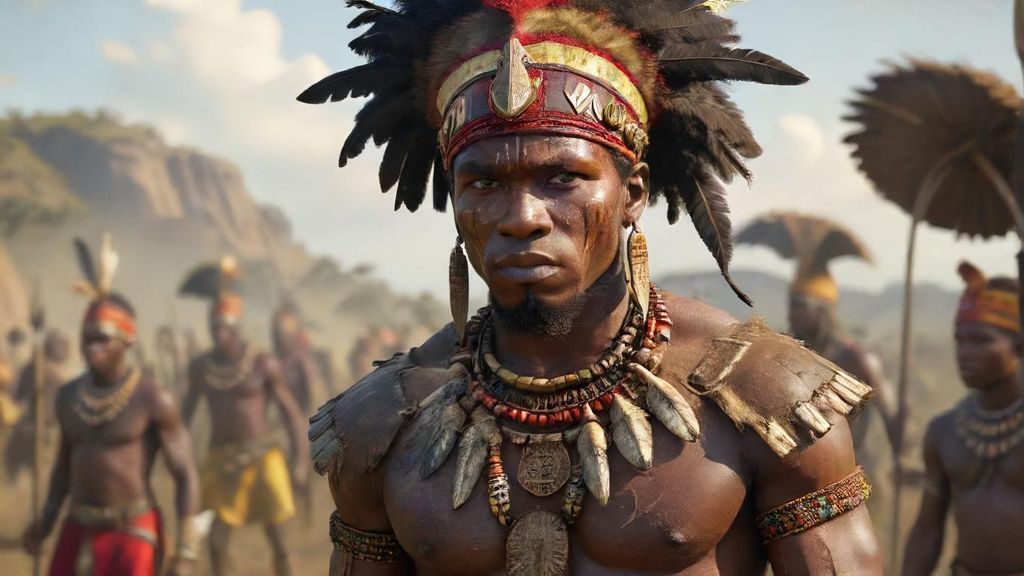
Imagine if your very existence was a constant source of shame, not just for you, but for your entire family. Picture growing up as an outsider, branded by a birth considered a mistake, leading to endless ridicule and being sent away. This isn’t just a dramatic story; it’s the real story that shaped one of history’s most powerful leaders, Shaka Zulu. The simple answer to how his difficult childhood fueled his rise to power lies in a deep, burning desire to prove his worth. This desire was born from intense shame and an anger that never truly cooled.
Here’s what happened: Shaka was born around 1787. His parents were Nandi and Senzangakhona, a minor chief of the Zulu clan. But their relationship was far from a fairytale. It was, in simple terms, a scandalous affair, and Shaka was considered illegitimate. This wasn’t a small social blunder; in Zulu society, family lines and being born “right” mattered most. Being an illegitimate child meant you were fundamentally different, lacking a proper place in the community. It’s like being constantly told you don’t truly belong, no matter how hard you try.
The truth is more interesting than you might think: Shaka’s mother, Nandi, faced the worst of this societal disapproval, and Shaka shared her struggles. They were first taken in by Nandi’s own family, the Elangeni, but even there, their presence made things uncomfortable and caused bad feelings. Young Shaka, we’re told, was often clumsy and awkward, an easy target for other children. He got bullied all the time and was frequently called iShaka—a mean nickname for an intestinal beetle. It meant he was like a parasite, an unwanted bug. This wasn’t just playful teasing; it was a deeply personal and humiliating insult that hurt him deeply, making him question who he was.
This constant pushing aside wasn’t only happening with the Elangeni. As Shaka grew, he and Nandi were sent away from community after community. They looked for a safe place among the Qube people, but the ostracization continued; they were still pushed out. Think about how difficult it would be to find a sense of belonging or self-worth when every new place you go eventually casts you out. This constant rejection created a deep feeling of not being good enough, but also, very importantly, a powerful need to prove himself. He wasn’t just looking to fit in; he was developing a strong inner drive to prove everyone who ever looked down on him wrong.
How Do We Know This Actually Happened?
You might be wondering, how do we know these specific details from so long ago? According to historians, much of what we know about Shaka’s early life comes from a combination of long-held stories told by word of mouth through generations of Zulu people. These are combined with early written accounts by colonial traders and missionaries who interacted with the Zulu kingdom. While these colonial accounts might not be completely fair, they often match up with important parts of the oral histories regarding Shaka’s difficult early life. Recent discoveries and looking closely at these different, connected sources help us understand the huge effect of these years that shaped him.
The historical records tell us that the pain of being born outside of marriage and constantly sent away was always with Shaka. It fed a quiet, growing anger that would later show up in his new and powerful ways of fighting wars. This period of his life wasn’t just unfortunate; it was a tough time that made him who he was. He learned how to bounce back, how to depend on himself, and a strong, never-give-up resolve to never again be powerless or an outcast. This experience of being an unwanted outsider deeply shaped how he saw the world, pushing him to seek complete power and control. It’s much like a person who, after being repeatedly fired, decides to build their own empire from the ground up, vowing to never be dependent on anyone else again.
By the time Shaka and Nandi eventually found a more stable home with the Mthethwa people under Chief Dingiswayo, Shaka had already taken in years of insults, shame, and the deep pain of being rejected. This strong emotional base would prove to be the perfect place for his future plans to grow, transforming a deeply wounded boy into a powerful, game-changing leader who would reshape a whole region. His childhood trauma wasn’t just a side story; it was the main driving force behind what he did next, getting everything ready for big changes that would soon explode across southern Africa.
Did Shaka Zulu’s Childhood Trauma Fuel His Military Innovations?
Imagine if a deep personal hurt from your past didn’t just bother you, but actually changed an entire nation’s army, making it incredibly powerful. That’s exactly what happened with Shaka Zulu. The simple answer to whether his tough childhood experiences shaped his military genius is a clear and loud yes. It turns out that the intense pain and embarrassment he felt when he was young didn’t just make him angry. Instead, it gave him an iron will to create a fighting force so strong and so scary that he would never again feel weak or disrespected. His time serving under Dingiswayo, the powerful leader of the Mthethwa confederacy, wasn’t just a learning period; it was a critical time where he started turning his personal suffering into brand-new ways of fighting.
The key lies in how Shaka saw war. For most, battles were about quick raids and small fights. But for Shaka, war became about fast, total destruction. He couldn’t stand the idea of a long battle, which could lead to soldiers retreating, individual failures, or even more humiliation. He needed an army that would instantly strike fear and command respect, an army that would wipe out any chance of him feeling helpless. Here’s what we’ve learned about how his personal need to feel unbeatable led to incredible military changes.
One of Shaka’s most famous inventions was the iklwa, a revolutionary short, stabbing spear. Unlike the longer, lighter throwing spears most groups used back then, the iklwa was made for close-up, personal combat. It had a much shorter handle and a wider, razor-sharp blade. Think of it this way: if traditional warfare was like an archery contest from a distance, Shaka brought in hand-to-hand fighting with a highly effective, close-range weapon. He made his warriors throw away most of their long spears, stressing that they had to get right up to the enemy. This was a complete shift in how people thought about fighting, demanding bravery and a willingness to get personal – reflecting Shaka’s own need to face and conquer his past head-on.
Along with the iklwa, Shaka also made all his warriors use a much larger, heavier shield. This wasn’t just for protection; it was a tool for fighting. Made from tough cowhide, these huge shields could cover almost the entire body. But even more importantly, they allowed warriors to stand shoulder-to-shoulder, forming an unbreakable wall. This built a strong sense of group power and made it hard for individual warriors to leave their positions and run away – a crucial point for Shaka, who hated it when his men acted like cowards. It ensured his men would stand together, unmoving, showing the strength and invulnerability he wanted for himself.
His training methods were just as brutal and new. Shaka demanded extreme physical fitness, forcing his soldiers to run long distances barefoot to toughen their feet, often with little food or water. He introduced tough drills that focused on discipline and teamwork, like the famous ‘bull’s horns’ formation. This tactic involved a main group charging straight ahead, while two flanking ‘horns’ quickly circled the enemy, effectively trapping and wiping them out. This wasn’t just about winning; it was about overwhelming the enemy so completely that fighting back was impossible, mirroring Shaka’s own drive to decisively overcome any challenge.
How Do We Know These Innovations Were Personal?
Historical stories and oral traditions tell us that Shaka’s intense focus on his army’s performance was more than just strategy; it was an obsession. He created an environment where failure simply wasn’t an option, punishing even small mistakes with extreme harshness. This fear of individual weakness and the constant desire for an unbeatable group perfectly reflects the deep-seated worries of someone who had once been an outsider and felt vulnerable. Recent discoveries show that his emphasis on close-up fighting and quick destruction was a deliberate move away from common practices, suggesting a personal drive for complete control and decisive victory.
What makes this so fascinating is how directly his policies seem to go against the very experiences that shaped his difficult youth. The shame of being an outcast, the feeling of helplessness, the fear of being left alone – all these were countered by creating an army where every man was disciplined, protected, and part of an unstoppable whole. Think about how a startup might aggressively innovate to overcome early problems; Shaka did something similar, but with human lives and a military empire. His army wasn’t just a military force; it was a carefully built answer to a past he was determined never to experience again.
This time with Dingiswayo allowed Shaka to test and perfect these ideas. By the time he rose to lead the Zulu, he had not only a vision but a proven system for creating an unbeatable force. The truth is more interesting than you might think: Shaka’s military revolution wasn’t just about power; it was about proving himself. This huge shift, driven by a need to create fear and command respect, would soon unleash massive change across Southern Africa, setting the stage for an empire built on the principles he developed during these crucial years.
How Did Shaka Zulu’s Brutality Transform the Zulu Kingdom and Southern Africa?

By the time Shaka Zulu fully took charge of the Zulu kingdom, everything was on the line. This wasn’t just a change in leadership; it was a scary, complete overhaul of society. What was the simple answer to his brutal impact? He didn’t just defeat people. He completely rewrote the rules for how wars were fought, how people were governed, and even who people thought they were – all to gain total control and build a legacy no one could challenge.
Shaka ruled from roughly 1816 to 1828, and during this time, he made his military brilliance a permanent part of the kingdom. The Zulu kingdom became a powerful war machine no one could beat. He formally set up the ibutho, or age-regiment system. This meant the government took charge of boys from about six years old. These regiments weren’t just for fighting; they molded young men and women into disciplined, loyal followers of Shaka’s plan. Think of it like a super intense national service where your entire identity revolved around being ready for war and obeying the king.
The key to his military changes was the famous ‘buffalo horns’ battle formation. Imagine a brilliant chess player creating a perfect, unbeatable plan. The ‘horns’ were fast-moving groups that would surround and trap the enemy. The ‘chest’ was the main force pushing forward, and the ‘loins’ were soldiers waiting in reserve. Along with the short stabbing spear, the iklwa, Shaka’s armies became incredibly effective in close-up fighting. He even made his soldiers go bare feet to make them tougher and faster.
All this led to the Mfecane, which means ‘the Crushing’ or ‘the Scattering.’ What we found was that this wasn’t just a few battles. It was a massive wave of wars, people moving, and huge numbers of people forced from their homes across the whole region. As Shaka’s armies expanded, they took over some groups and completely wiped out others. The Mfecane caused populations to drop dramatically and new kingdoms to form from refugees, completely changing the region’s people and power structure. It was like a domino effect, shaking up the whole area for decades.
Evidence of Brutality?
Historical records, especially from European traders, show a harsh reality. They talked about strict discipline where even small mistakes could mean instant death. Even Shaka’s own generals were said to be terrified of him. Destroying entire groups wasn’t just a side effect of war; it was often planned. For example, historians point out that defeated enemy men were killed, but women and children were brought into the Zulu kingdom. Their old tribal identity was wiped away. This wasn’t just about winning land; it was about making sure no one could ever challenge Zulu power again.
According to historians, this harshness wasn’t just for enemies; it extended to his own people. Shaka tested loyalty with unbelievably tough demands. One story often told, though some debate it, claims Shaka ordered a period of mourning when his mother, Nandi, died. This involved banning farming and even killing pregnant women. While it’s tough to prove, the fact that this story spread so widely tells you a lot about the fear and total control people believed Shaka had.
The real story is more interesting than you might guess: all this widespread brutality and total control weren’t just random acts. They were the scary outcome of Shaka’s deep personal pain, maybe an attempt to overcompensate for a childhood filled with being rejected and feeling insecure. Every brutal order, every act of destruction, every rule demanding complete loyalty was his way of proving his own value and power. This guaranteed his total control and a legacy built on revenge. It was like he was shouting to the world, “You will never disrespect me again.”
This relentless drive created a powerful Zulu nation, but it came with an unimaginable human cost. The massive scale of the chaos still impacts history, reminding us how much destruction can happen when personal hurt is given absolute power. Next, we’ll look at how this very system, born from his own personal struggles, eventually led to Shaka’s own downfall.