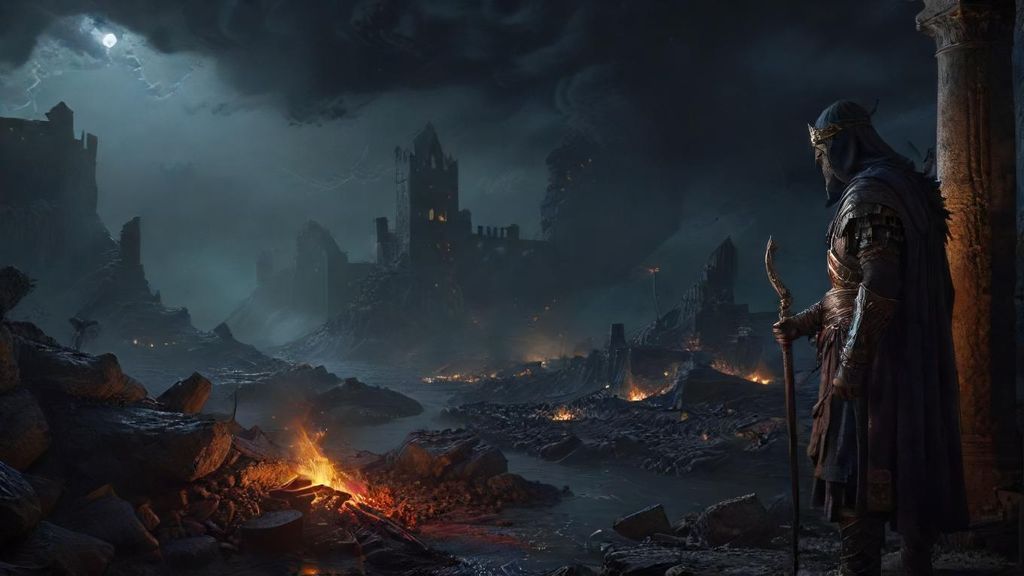
Imagine waking up one morning to a sun that’s dim, like it’s always in a partial eclipse, or the world is covered in smoke from a never-ending wildfire. The light is there, but it’s faint, almost spooky, making everything look sad and dark. This wasn’t a scene from a science fiction movie; it was the frightening reality for people worldwide starting in 536 AD. For centuries, old stories hinted at this strange time. But now, incredible new discoveries show the truth: a huge, mysterious volcanic eruption threw the entire planet into an age of darkness and cold, setting off a chain of problems that changed human history forever.
So, what caused this global dimming? The simple answer is a massive volcanic eruption. But the full story is far more fascinating and had a much bigger impact than you might realize. This wasn’t just one bad day; it was the start of a long and terrifying environmental disaster that affected almost every part of the world.
How Do We Know This Actually Happened?
For hundreds of years, the strange stories of 536 AD were just that: old legends, often mixed with myths and religious beliefs. Writers from different countries, living thousands of miles apart, all seemed to describe the same weird things happening. But it wasn’t until scientists started looking in some truly surprising places that the puzzle pieces began to fit, giving us strong proof of what really happened.
The clues are hidden deep within the planet’s frozen records and the rings of ancient trees. Imagine Earth as a giant recorder. When volcanoes erupt, they don’t just spill lava; they also shoot tiny particles, called aerosols, high into the atmosphere. These particles, especially sulfur, act like a mirror, reflecting sunlight back into space. Eventually, some of these aerosols settle. In places like Greenland and Antarctica, they get trapped in layers of ice, leaving a chemical signature that scientists can read like a timeline. Geologists and climate scientists drill deep into these ice sheets, pulling up long tubes of ice. Each layer tells a story about the past, a bit like reading the stacked pages of a very old book.
What did these ice cores reveal? Scientists found a distinct, thick layer of volcanic sulfate particles that dates precisely to 536 AD. This wasn’t just a small burp from a volcano; it was one of the largest and most widespread signs of volcanic material in the last 2,000 years. This powerful evidence immediately pointed to a major volcanic event.
Then there are the trees. Every year, trees grow a new ring. How wide these rings are tells us a lot about the growing conditions. A wide ring means a good, warm year with plenty of water; a thin ring means a struggle. Tree ring information from places as far apart as Scandinavia, Siberia, and the Andes all showed that trees suddenly grew much slower, starting in 536 AD and lasting for over a decade. In some areas, growth almost stopped completely. What’s amazing is that all these different clues, from different parts of the world, perfectly align on the same date, creating a clear picture of a sudden, global environmental shock.
While scientists are still looking for the exact volcano that caused this, new findings suggest a strong candidate: a massive eruption, likely in Iceland. Iceland isn’t just one volcano; it’s an area with lots of volcanic activity. An eruption there could easily send enough material into the air to create a huge “dust veil” that spread across the Northern Hemisphere and beyond.
What Did People Think Was Happening?
With no scientific answers for hundreds of years, people tried to make sense of their suddenly dark world. Imagine the fear and confusion! The sun, usually a steady source of life and warmth, was now weak and strange. It felt like the natural order was breaking down. Old records show us how people reacted, and it was immediate and powerful.
The Byzantine historian Procopius, writing from Constantinople, described it clearly in his History of the Wars:
“And it came about during this year that a most dread portent took place. For the sun gave forth its light without brightness, like the moon, during this whole year, and it seemed exceedingly like the sun in eclipse, for the beams it shed were not clear nor such as it is accustomed to shed.”
This wasn’t just a quick note; Procopius pointed out that it lasted for the entire year and how the sun lacked its usual brightness. He wasn’t alone. Writers from different continents reported similar things. In Mesopotamia, the Syriac writer Michael the Syrian noted that “the sun was dark for 18 months.” Chinese records mentioned “yellow dust rain” and a sun that “only gave off faint light.” These accounts, gathered from places thousands of miles apart, paint a scary, consistent picture.
The main thing that happened right away because of this dust cloud was a huge drop in global temperatures. Simply put, the sun’s warmth couldn’t reach the ground properly, so the world became much colder. This sudden chill, combined with the dim light, was disastrous for farming. Crops failed all across Europe, Asia, and beyond. People who depended on regular seasons and good harvests suddenly faced starvation. The air itself might have felt hazy, like a constant, low cloud, everywhere you went. The time for planting and growing got shorter, springs were colder, and summers never really warmed up.
For communities that relied on the rhythm of the seasons for survival, this felt like the end of the world. It was seen as a curse from above, a sign the world was ending, or a punishment from angry gods. How else could anyone explain such a sudden and profound change to the most fundamental part of their lives – the sun itself? This idea, born out of fear and not knowing the real reason, led to widespread panic and hopelessness. Unlike a drought or flood in just one area, this was a worldwide event, meaning there was nowhere to hide from the cold grip of the dust cloud.
The world, as people knew it, had changed completely in an instant. The mysterious darkness of 536 AD wasn’t just an interesting historical fact; it was a harsh, physical blow to human civilization. It started a time when farms failed everywhere and people suffered, preparing the way for even bigger problems and changes in the years that followed. But how did societies handle this long crisis, and what big changes came next? That, my friend, is a story for our next chapter.
Imagine if, almost overnight, the world’s weather completely turned against us. Not just a bad summer, but years of cold, dark skies, and seasons where nothing could grow. That’s pretty much what happened after a massive volcanic eruption in 536 AD. The immediate chill was shocking, but the real disaster wasn’t just the cold. It was the slow, agonizing chain reaction that followed. The simple, heartbreaking truth of how this led to widespread famine and plague is this: the climate chaos shattered life’s delicate balance, causing empty fields, starving people, and a world perfectly vulnerable to disease.
The sun’s dimming in 536 AD, which we’ve mentioned before, wasn’t just a quick problem. It actually kicked off what historians now call the “Late Antique Little Ice Age.” Picture this: sunlight, the very thing plants need to grow, was significantly reduced for well over a year. The bad effects lingered for decades. This meant a dramatic drop in temperatures, especially when crops were supposed to be growing. Farmers all over Eurasia, from the chilly lands of Scandinavia to the sunny fields of the Byzantine Empire and the fertile crescent of the Near East, suddenly faced an impossible situation.
The biggest problem was crop failure on a scale that’s hard to imagine today. We’re talking about essential grains like wheat and barley, which were the main food for most people, simply failing to ripen or even sprout. Old records tell us stories of widespread hunger. For example, the Byzantine historian Procopius, writing at the time, famously described the sun as giving “light without its brilliance.” He also wrote about a year when “the fruits were not ripened.” This wasn’t an exaggeration; it was his firsthand account of a terrible crisis. Think about how much we rely on our modern food supply chains; back then, if your local crops failed, you starved.
This long period of failed harvests plunged huge regions into desperate famine. People didn’t just feel hungry; they suffered extreme malnutrition. Their bodies, starved of vital nutrients, became incredibly weak. Their immune systems, which usually fight off sickness, barely worked at all. This brings us to a crucial, terrifying link: the weakened global population became a perfect breeding ground for disease. It turns out that hungry people are sick people, and this vulnerability paved the way for one of history’s deadliest outbreaks: the Justinian Plague.
How did the weakened population invite the Plague?

The real story is more interesting than you might think. The Justinian Plague, caused by the bacteria Yersinia pestis, first appeared around 541 AD, only a few years after the volcano’s initial impact. It didn’t just show up randomly; it spread incredibly fast because the conditions were absolutely perfect. Imagine a superhighway for disease, and the volcanic winter had essentially opened all the lanes. Recent discoveries show that the plague likely started in Central Asia and traveled along established trade routes. But here’s the thing: those same routes also became pathways for human suffering.
Archaeological evidence, like studies of ancient burial sites and even DNA analysis from plague victims, confirms just how devastating it was. The plague reached the Byzantine Empire, specifically its capital Constantinople, by 541 AD. It arrived on grain ships from Egypt. Why Egypt? Because even though other regions struggled, Egypt was a key place for growing food for the empire. The very ships bringing food to desperate cities accidentally carried plague-infested rats and their fleas. It was like a modern-day airport, but instead of people carrying suitcases, ships were carrying disease and death.
This wasn’t just a local outbreak; the plague wiped out populations from the Mediterranean all the way to the Near East, spreading into parts of Europe and possibly even further. We know this because historical accounts from many different cultures mention a terrible sickness. For example, the Syriac chronicles speak of “a stench of death” and entire towns being left empty. It wasn’t just the immediate deaths; it was the psychological terror and the complete breakdown of everyday life.
Building on this wave of death and disease, the established trade routes—the very arteries of ancient economies—began to seize up. Think of them like today’s global supply chains. When harvests failed, there was less to trade. When people were sick or dying, there were fewer hands to produce goods or transport them. This led to huge economic problems. Prices for the little food that was available shot through the roof, making it impossible for ordinary people to survive. Cities, once busy centers of commerce, saw their markets empty and their workshops silent. The Byzantine Empire, in particular, was severely impacted, losing vast amounts of tax money and people.
This perfect storm of famine, plague, and economic collapse triggered an initial wave of social and political unrest that spread through empires and new kingdoms. Weakened rulers struggled to stay in control. People, desperate and starving, might have moved in search of food, possibly clashing with existing communities. We know this because historical texts talk about more banditry, revolts, and challenges to imperial authority. For instance, the strained resources and reduced populations undoubtedly made it harder for rulers like Emperor Justinian I to maintain his vast empire or fund his ambitious building projects and military campaigns. The very foundations of society were shaking.
What makes this so fascinating is how a seemingly distant natural event—a volcano half a world away—could so completely unravel the fabric of civilization. It directly led to widespread death and societal chaos. It set the stage for profound transformations. The immediate shock of the climate crisis quickly gave way to the grinding despair of hunger and the swift terror of disease, leaving behind a vastly altered world, both physically and politically. Next, we’ll see how these devastating events didn’t just end with suffering, but actually reshaped the world, leading to new powers and unforeseen changes.
Imagine if a huge global event suddenly made it impossible for a superpower to achieve its biggest dream. That’s essentially what happened to the ancient world after the devastating volcanic eruption in 536 AD. The climate crisis that followed didn’t just cause a few bad years; it completely changed the whole world. It weakened powerful empires and, surprisingly, made room for new ones and entirely new ways of life. The truth is more interesting than you might think: this single, powerful natural disaster helped push the world out of antiquity and into the tough but important time we now call the Early Middle Ages.
One of the first and biggest hits was on the Byzantine Empire, especially for their ambitious emperor, Justinian I. Picture this: Justinian had a grand vision. He dreamed of bringing back the old Roman Empire, which had split centuries before. He was already making progress, with his armies taking back parts of North Africa and Italy. But the climate crisis totally messed up these plans. The sun grew dim, harvests failed across his huge lands, and people starved. This wasn’t just a minor problem; it was like trying to run a massive company during a global money crisis. The empire was already spending a lot on wars. Now, it just didn’t have enough to cope.
Here’s what happened: Lots of people were starving, which made everyone weak and easy to get sick. Then came the horrifying Plague of Justinian, which historians think started around 541 AD, just a few years after the climate disaster. This huge sickness, like the Black Death that happened much later, swept through the weakened empire, killing millions. Experts say the plague might have wiped out a quarter to a third of the population in some areas. The famous historian Procopius, who lived through this period, described the suffering. He noted how the sun “gave forth its light without brightness” in 536 and later detailed the terrible damage of the plague in the imperial capital, Constantinople. With so many people gone, Justinian’s ability to raise armies, collect taxes, and rebuild was much harder. His dream of a reunited Roman Empire faded away, becoming just a ‘what if’ in history, not something he actually achieved.
The climate crisis also left huge areas where fewer people lived, making them easy targets. Imagine shelves empty today because of delivery problems; now picture that on a huge scale where entire fields go barren and whole villages disappear. In Western Europe, which was already broken up after the Western Roman Empire collapsed, things got much, much worse. These lands, already struggling, now faced even fewer people, less food, and the few trade routes left completely fell apart. It’s like a quiet neighborhood suddenly losing its few remaining shops and services. These empty spaces and weakened defenses were ready for new groups to settle. This sped up a time of trouble and new movements of people, changing the continent even more.
How Do We Know This Actually Happened?

Recent evidence shows us how far-reaching this event was. We know this because scientists have looked at things like ice cores from places like Greenland and Antarctica, and even the rings inside really old trees. These natural records are like nature’s own history books. The ice cores show a clear layer of ash and sulfur from a volcano from 536 AD, showing a huge eruption happened. The tree rings from that period are surprisingly thin, meaning very cold and tough growing seasons across huge parts of the Northern Hemisphere. These scientific findings really back up the old stories and writings, which spoke of dimmed suns and failed harvests, proving the climate crisis was real and affected the whole world.
Moving east, the powerful Sasanian Empire in Persia, a long-time rival of the Byzantines, also suffered from the climate crisis. Their own historical records aren’t as complete as the Byzantines’, but digs have shown that farm production fell a lot during this time. Fewer harvests and the money problems that followed made the Sasanian government weaker. They struggled to control their huge lands and protect their borders. They, too, were hit by the plague and the widespread chaos. This meant two of the ancient world’s biggest powers were both facing huge dangers at the same time. Imagine two big rival companies, both trying to be number one, suddenly hit by the same terrible global problems. Their ability to dominate the market is really hurt.
This weakening of the two superpowers had an unexpected outcome, particularly for the Arabian Peninsula. This area had always been a key spot where trade routes met, linking the Byzantine and Sasanian Empires. When these empires got weaker and their economies struggled, these important trade routes took a hit too. The old ways of power and the general mess created an empty space. People were looking for answers, for a sense of order, for new ways to live and trade. It turns out that this time of huge change might have, by accident, set the perfect stage for the rise of Islam. The old rules and stable economy that kept people together broke apart. This cleared a path for a powerful new force to unite people.
The speeding up of what people call the ‘Dark Ages’ in Western Europe is another clear impact. With governments losing power, trade routes vanishing, and huge numbers of people dying, the fancy roads, buildings, and organized rule from Roman times kept falling apart. Instead of big empire-wide projects, local lords and small communities just tried to get by. It’s like a complex national railway system suddenly reverting to isolated local bus routes – much less connected, much slower, and far more focused on immediate, local needs. This wasn’t a sudden plunge into darkness, but rather a long, hard time where learning, trade, and strong central governments had a tough time coming back.
So, the answer lies in a chain of connected disasters. The 536 AD climate crisis caused widespread hunger. This made people weak and vulnerable to terrible diseases like the plague. This, in turn, seriously hurt the money and military power of big empires like Byzantium and the Sasanians. The lack of strong leaders, empty lands, and broken trade routes meant the old ways of life couldn’t continue. Instead, new social, political, and religious ideas could start to grow. What makes this fascinating is how a single, powerful volcanic eruption, seemingly a distant natural event, completely changed the ancient world, pushing it into a new, unknown future.
Ultimately, the years following 536 AD were a huge turning point. The climate crisis didn’t just cause hardship; it was a big spark that started a chain reaction. It sped up the fall of ancient ways and prepared the world for the huge changes that would shape the Early Middle Ages. We’ve seen how empires faltered and new opportunities arose from the ashes of the old world. Next, we’ll look more closely at how these changes in power and society truly created a new world order.