Imagine not being able to visit your family just a few miles away, or seeing the world beyond your hometown – for your entire life. That’s exactly how it felt for East Germans for decades. The intense unrest that built up before the Berlin Wall fell came from this deep, painful feeling of being trapped. People simply wanted freedom, especially the freedom to travel, but their government wouldn’t give an inch. This story will uncover the everyday struggles and hidden tensions that turned East Germany into a pot about to boil over.
The truth is, East Germany, officially called the German Democratic Republic (GDR), was built on strict control from the very start. For almost 30 years after the Wall went up in 1961, regular people simply couldn’t travel to the West. Think about it: families were torn apart overnight, with grandparents on one side and children on the other. They could wave, but never touch. This was more than just inconvenient; it was a constant, painful reminder of lost family connections and chances they missed out on. This super strict travel ban became a powerful symbol of everything broken in their system.
Besides the travel ban, everyday life itself was often a struggle. The government often talked big about its planned economy, but East German stores usually had empty shelves. This was a stark contrast to the amazing displays in West Berlin, which people could even see on Western TV. Imagine living in a small, isolated town with only one shop that rarely has what you need, while across an invisible line, you can watch commercials for a huge, fully stocked superstore. Goods were hard to find, cars were incredibly difficult to get, and the overall quality of life was far worse than in the West.
Why couldn’t people just leave?
The government also kept a tight grip on what people could know and say. The infamous secret police, called the Stasi, had spies everywhere. They listened to conversations, read mail, and made sure no one dared speak out against the government. This created a suffocating feeling of fear and distrust. It felt like everyone was being watched, making any open protest incredibly risky. But even with all these dangers, people’s frustration just kept growing.
By the late 1980s, that frustration finally started to boil over. Small groups of people, often connected through churches, began to gather and demand change. These protests, small at first, were a brave challenge to the government. They showed that people were slowly losing their fear. The truth is, people had simply had enough of the government’s broken promises and the lack of basic freedoms.
The real turning point, however, came from beyond East Germany’s borders. In the summer of 1989, some of its socialist neighbors, especially Hungary, began to ease their border controls. This was a massive deal. It was like a tiny crack appearing in a huge dam. Suddenly, thousands of East Germans saw their chance. They packed their bags, pretended they were just going on holiday to Hungary or Czechoslovakia, and then, instead of heading home, they made a desperate dash for freedom through those countries’ newly opened borders to Austria and West Germany.
This huge exodus of people was a massive embarrassment for the East German government and its aging leader, Erich Honecker. It showed the world, and more importantly, its own citizens, just how desperate people were to get out. Tens of thousands left in just a few months, and this massive wave of departures put immense pressure on the government, both from inside the country and from around the world. It became clear that the old ways simply couldn’t last. Even the Soviet Union, led by Mikhail Gorbachev, was pushing for big changes and made it clear they wouldn’t use military force to support the East German government this time.
So, everything was now in place. For decades, there had been harsh rules, a struggling economy, a terrifying spy state, and then, a dramatic escape route suddenly opened up, leading to a flood of people abandoning their homes. This immense pressure meant the East German government had to do something – anything – to calm its people and stop them from leaving. The clear answer was, they had to talk about new travel regulations. But as we’ll soon discover, what they planned and what actually happened were two very different things entirely.
How did a live TV mistake accidentally open the Berlin Wall?

What if one simple mistake on live TV could suddenly change history? Most people imagine the Berlin Wall came down after months of protests and careful planning, like a big, organized government move. But the real story is much more surprising. It happened almost by accident, playing out like a sudden, unexpected viral moment we might see online today. It all came down to desperate times in politics, an official who wasn’t properly informed, and a critical memo read incorrectly live to millions on November 9, 1989. This wasn’t a planned take-down; it was an accident that turned into an unstoppable wave.
Here’s exactly what happened: East Germany’s communist government, known as the SED, was under huge pressure. Citizens were protesting daily, and many were already escaping through neighboring countries. To try and calm things down, the government quickly decided to make travel rules easier. This was supposed to be a carefully managed, slow process, where people would apply for visas to leave or visit. Think of it like a company announcing a new policy without fully working out the details and expecting everyone to understand it perfectly.
The tough job of announcing this “new policy” fell to Günter Schabowski, an important government official from the ruling Politburo. The tricky part? He hadn’t been at the meeting where the final decision was made. He was handed the important memo just moments before he stepped in front of the cameras. He arrived late to the press conference, looked visibly nervous, and had barely glanced at the paper. It was like a spokesperson today trying to announce a major company change based on a crumpled note handed to them seconds before going live.
Around 6:53 PM, an Italian journalist, Riccardo Ehrman, asked a pointed question: when would these new travel rules start? Schabowski, looking through his papers, found the memo. He read aloud that East German citizens could now apply for permission to travel abroad. Then came those important words, the ones that sent shockwaves through a divided nation: “sofort, unverzüglich.” In plain terms, he declared it would be implemented “immediately, without delay.” He completely missed the hidden part of the memo that said the full details would be worked out the next day, requiring applications and a structured process.
“I read it aloud word for word… when I got to the passage about the immediate implementation, the journalists immediately understood what that meant.” — Günter Schabowski, looking back later.
The media instantly jumped on this. Reporters, understanding the huge consequences, pushed him for more details. Schabowski, still looking confused, confirmed the immediate effect. West German news channels, which many East Germans watched every evening, immediately broadcast this stunning announcement. The news spread like wildfire, much like a breaking story going viral across social media today, amplified instantly and without full context.
How Do We Know This Actually Happened?
Recent discoveries and historical records clearly show this sequence of events is well-documented. Footage of the actual press conference still exists, showing Schabowski’s bewildered expression as he fumbled with his papers. Historians have carefully studied the original memo, confirming the crucial missing details and that Schabowski wasn’t properly briefed. We know this because countless testimonies from journalists, government officials, and citizens who watched the broadcast all confirm the story. It’s strong proof that a single misstatement, rather than a planned government announcement, started everything that followed.
Within minutes of the broadcast, people across East Berlin began to gather. They told their friends, family, and neighbors. They rushed to the border crossings, fully expecting them to open. It was an immediate, collective reaction, driven by immense hope and disbelief. This rapid rush to the Wall, not some pre-arranged agreement, truly began the process of its accidental opening.
This incredible mistake set the stage for an unforgettable night, one that truly changed the world. The Wall wasn’t just opened; it was forced open by a wave of public expectation created by a single, poorly communicated phrase. What makes this so fascinating is how such a seemingly small error could trigger such an immense and irreversible change in history. Next, we’ll explore how ordinary citizens then confronted the border guards and the Wall itself.
What happened at the Berlin Wall the night it officially opened?

The Berlin Wall didn’t officially open with a grand plan; instead, it fell on the chilly evening of November 9, 1989, due to a mix of confusion, intense public pressure, and a brave, unauthorized decision by overwhelmed border guards, particularly at the Bornholmer Strasse crossing. Imagine being one of those guards: you’d just heard a confusing announcement on state TV from an official, Günter Schabowski, suggesting East Germans could now travel freely. Yet, you had no orders. Suddenly, quiet gave way to crowds – a few people, then dozens, then hundreds, all wanting to cross.
Here’s how it unfolded: After Schabowski’s vague TV statement suggested immediate changes to travel, a few East Berliners started showing up at border crossings. They were curious and hopeful, but cautious. The guards, just like everyone else, had watched the press conference live. But they had received no specific instructions. Lieutenant Colonel Harald Jäger, who was in charge at Bornholmer Strasse, frantically called his bosses. He either got confusing answers or couldn’t reach anyone at all. It was like a company announcing a huge new rule on social media without telling its own staff first – pure chaos and disbelief.
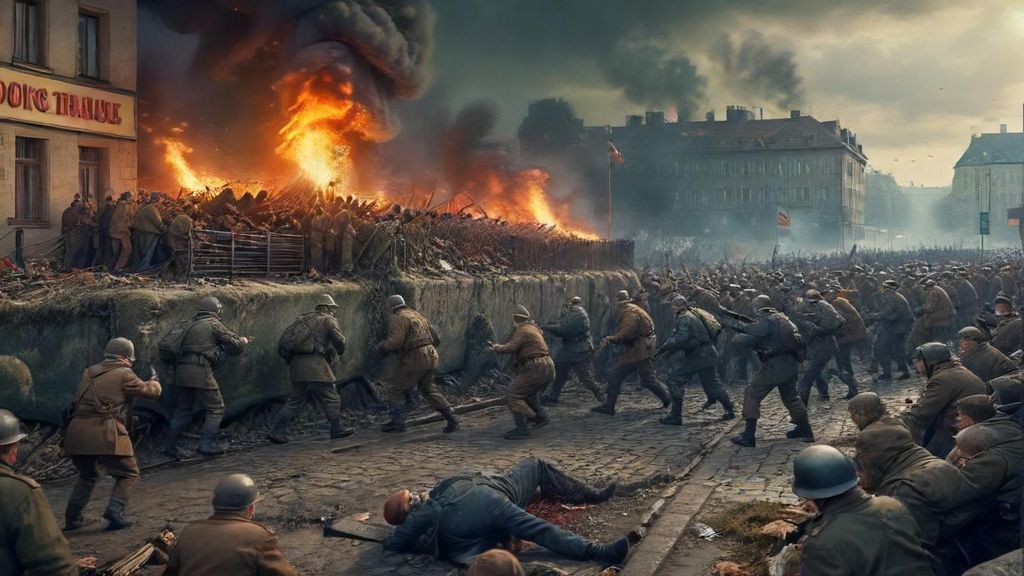
As minutes passed, that trickle turned into a flood. Thousands of people, encouraged by the news and the growing crowds, swarmed the checkpoints. They weren’t angry or violent. Instead, their sheer numbers and determination became overwhelming. They chanted, “Tor auf! Tor auf!” (“Open the gate! Open the gate!”) and “Wir sind das Volk!” (“We are the people!”). The pressure on the guards was enormous. These weren’t battle-hardened soldiers; they were ordinary men. Many of them even had family in West Germany. They faced an impossible decision: defend a failing, unpopular system, or risk a stampede that could turn deadly.
What evidence supports this extraordinary claim?
We now know just how confused the guards truly were. Historians say that internal reports from the border guard units confirm they had absolutely no clear orders. For instance, Lieutenant Colonel Jäger later shared his experience in many interviews. He recalled saying,
“I said to them: ‘You have no right to open it!’ And they said: ‘But we are the people!'”This shows a deep moral problem. The guards had live ammunition and strict orders to stop unauthorized crossings, even by force. But faced with a peaceful, determined crowd of their own citizens, shooting into them was simply unthinkable. Imagine a security guard at a concert trying to keep everyone out when the whole stadium of ticket-holders suddenly decides to rush the gates – what would you do?
At Bornholmer Strasse, Jäger saw the crowd getting thicker, pushing forward, demanding to cross. He knew that if he didn’t open the gates, the pressure from so many people could cause injuries or even worse. He had no official permission, but he felt a strong moral duty. Around 11:30 PM, Jäger made his unauthorized call. He ordered his guards to open the barrier, essentially making the decision himself to end Berlin’s division. Other checkpoints soon did the same, facing the very same impossible choices.
The instant the gates swung open was a moment of pure, raw joy. East Berliners poured through, many crying with happiness, into the open arms of West Berliners. Strangers hugged, champagne corks popped, and people even danced on top of the Wall itself. This wasn’t just a political shift; it was a deeply emotional homecoming, a sudden burst of freedom not felt in almost three decades. What’s truly amazing is that a system built on strict control fell apart, not because of an invasion or a revolution, but because of an official blunder and the simple kindness of a few regular guys under immense pressure.
The changes that night were instant and couldn’t be undone. Once the Wall was open, it couldn’t be closed again. The division of Germany was effectively over. The Cold War, symbolically, ended in a dramatic and unexpected way – not by politicians, but by ordinary people’s demands and the actions of a few overwhelmed guards. This one unplanned moment cleared the path for Germany to become one country again. It also shook the Soviet bloc to its core, setting the stage for huge changes across Eastern Europe.