
Imagine for a moment: instead of building a magnificent skyscraper upwards, what if architects decided to dig a huge, intricate building downwards from solid rock? It sounds like something out of a fantasy story, right? Yet, this is exactly what Ethiopians did with their rock-hewn churches. The main reason for this incredible feat was far more profound than just wanting to build something impressive. The real story is more interesting than you might think.
So, what truly inspired Ethiopians to carve giant churches out of solid rock? It came down to a powerful blend of deep religious faith, an urgent political need, and a desire to create a safe spiritual haven when the outside world became dangerous. This chapter will uncover the surprising motivations behind these amazing structures, especially in the famous town of Lalibela, revealing a story of vision, isolation, and profound devotion.
Here’s what we discovered: Christianity wasn’t just another religion in Ethiopia; it was woven into the very fabric of society, arriving in the 4th century AD. Long before Lalibela, the powerful Axumite Kingdom had already built impressive stone monuments, showing a long tradition of huge building projects. But by the 12th century, the political scene had changed a lot. The Axumite rulers were gone, replaced by the new Zagwe Dynasty. These new rulers needed to prove they were legitimate, to show they were truly chosen leaders. Think of it like a new company trying to establish its brand and authority in a tough market.
The situation in the wider world was also really important. The Holy Land, including Jerusalem, had become increasingly difficult and dangerous for Ethiopian pilgrims to visit, especially after various conflicts in the region. Ethiopia felt cut off, like an island of Christianity surrounded by changing political and religious powers. This feeling of being isolated fueled a desperate longing for a strong spiritual anchor.
Why Did King Lalibela Dream of a ‘New Jerusalem’?
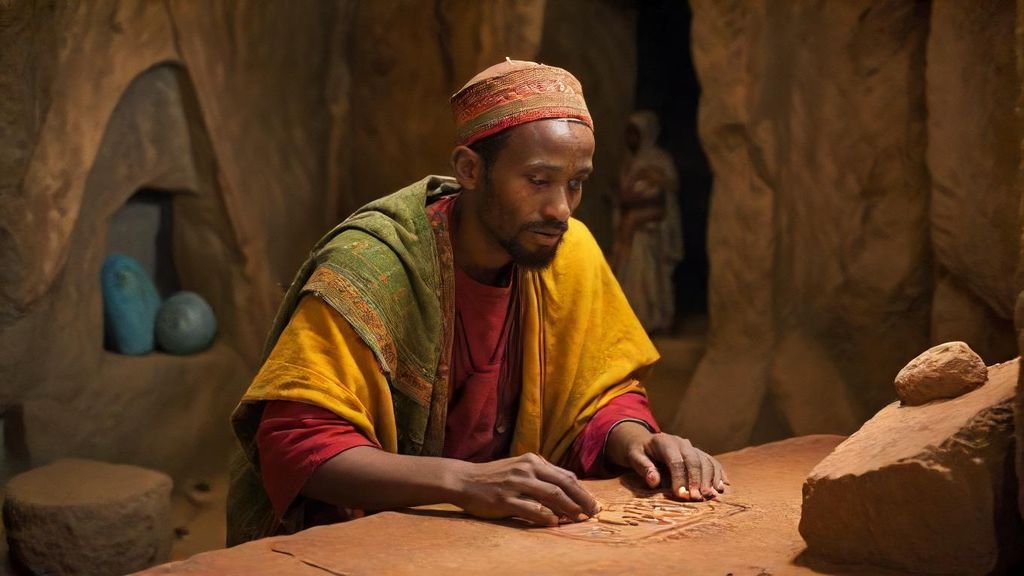
This is where King Lalibela enters our story, a visionary ruler who reigned around 1181 to 1221 AD. He faced a huge challenge: uniting his kingdom and giving his people hope. According to historians, his solution was incredibly bold: to create a ‘New Jerusalem’ right there in Ethiopia. This wasn’t just a clever city design; it was a complete shift in thinking, a spiritual insurance policy against a turbulent world. He pictured a site that would mirror the holy places of Jerusalem, even complete with its own Jordan River (which they actually named the Yordanos).
Recent discoveries show that this wasn’t just a legend; it was a deliberate, monumental project. The churches of Lalibela were carefully planned to resemble the sacred geography of Jerusalem, creating a tangible spiritual pilgrimage site for his people who couldn’t make the difficult journey abroad. Strong proof for this comes from detailed architectural layouts and ancient texts. For example, a 15th-century Ethiopian text describes Lalibela’s project as a divinely inspired mission to reproduce the holy sites:
He wanted to build a new Jerusalem, for the salvation of all believers.
So, the answer lies in this powerful combination: the deep, ancient roots of Ethiopian Christianity, the Zagwe Dynasty’s need for political and religious legitimacy, and King Lalibela’s incredible vision to create a secure, spiritual refuge. He wasn’t just building churches; he was building hope, identity, and a spiritual lifeline for his kingdom. These motivations set the stage for the extraordinary engineering feats that followed, demanding unparalleled skill and dedication from those who literally carved faith into stone.
What makes this truly fascinating is how such profound reasons led to an architectural style unlike almost anything else on Earth. It wasn’t about adding bricks; it was about subtracting rock, revealing the sacred hidden within the solid earth. How they actually managed to pull off such an impossible task is truly astounding, and that’s precisely what we’ll explore next.
Imagine trying to build a huge church. Now, picture doing it not by stacking bricks or pouring concrete, but by starting with a giant mountain and digging the church out of it. Sounds impossible, right? Yet, this is exactly what medieval Ethiopians did. They carved amazing churches straight out of solid rock, a truly mind-boggling feat of skill and engineering that still amazes us today.
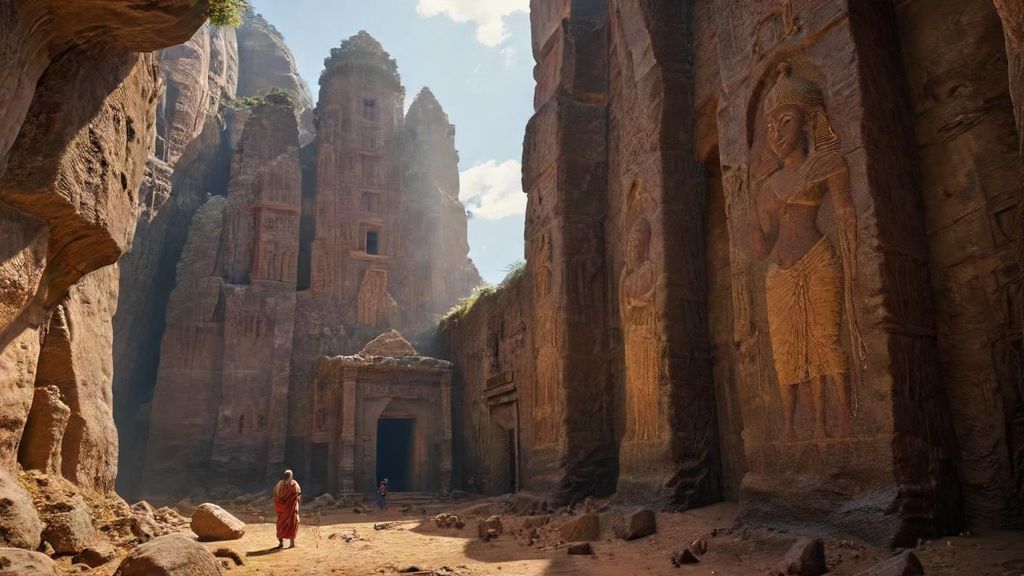
The truth is, these ancient builders were incredibly clever. They actually worked in reverse! Instead of putting materials together, they started with a massive piece of rock and carefully removed everything that wasn’t part of the church. The simple secret to their success was amazing planning and a detailed, top-down approach.
Here’s what we’ve learned from incredible places like Lalibela. First, they picked the perfect spot: a huge, stable rock formation. Often, this was a softer volcanic rock, easy enough to carve but still very strong. Then, the real work began. Teams of workers and skilled stone carvers started by cutting out a huge block of rock from its surroundings. They did this by digging deep, narrow trenches all around what would become the church. Think of it like a giant quarry, but one designed to leave a single, massive block standing alone.
Once this enormous rock block was separated – which was a huge job on its own – the carving began, always working from the top down. The roof and the upper outside parts were the first things to take shape. Using surprisingly simple iron tools like different kinds of chisels, strong hammers, and sharp picks, they patiently chipped away. This took incredible precision. They had to imagine the entire church in their minds, shaping the roof’s slope, fancy edges, and decorative carvings before moving further down.
As they worked their way down, the church’s outer walls, or facades, slowly appeared. This is where their artistic talent truly shone. They carved out perfectly straight windows, detailed doorways, and even sculpted arches and pillars directly into the rock itself. It was like a sculptor creating a statue, but on the scale of a building! One wrong move could ruin weeks or months of work, and there were no do-overs. Old tool marks show us just how carefully and deliberately these masons worked.
With the outside mostly finished, they focused on digging out the huge insides. Imagine working in tighter and tighter spaces, often with very little natural light, relying only on torches or lamps. Inside, they carved grand aisles, strong pillars, tall arches, and even elaborate altars and pulpits. No detail was too small. Intricate decorations like crosses, figures, and geometric patterns cover the walls and ceilings, all painstakingly chiseled from the solid rock.
What’s truly amazing isn’t just how big these churches are, but how smart the builders were. They knew these churches needed to last for centuries, exposed to rain and sun. So, they built clever drainage systems right into the rock. This meant carving complex gutters, channels, and sometimes even small pools around the roofs and foundations. These directed rainwater away from the vulnerable rock. It wasn’t just about building; it was about protecting their creations from nature’s constant wear and tear. This remarkable foresight kept these structures safe for a thousand years.
Historians say that the entire planning process required a totally new way of thinking compared to normal building. Instead of adding things, they took them away, essentially working with a “reverse plan” in their heads. This ancient Ethiopian method, using basic tools and amazing cleverness, is powerful proof of human determination and artistic vision. It challenges what many people think they know about old construction, revealing a hidden story of architectural genius.
The evidence shows these churches were more than just buildings; they were three-dimensional puzzles solved with unmatched skill. The immense effort, the brilliant planning, and the sheer dedication to carve these sacred places directly from the earth itself are truly astounding. But why did they go to such extreme lengths? What drove a civilization to undertake such a difficult and unique architectural journey? That’s what we’ll explore next.
How Have Ethiopia’s Iconic Rock-Hewn Churches Endured for Centuries?
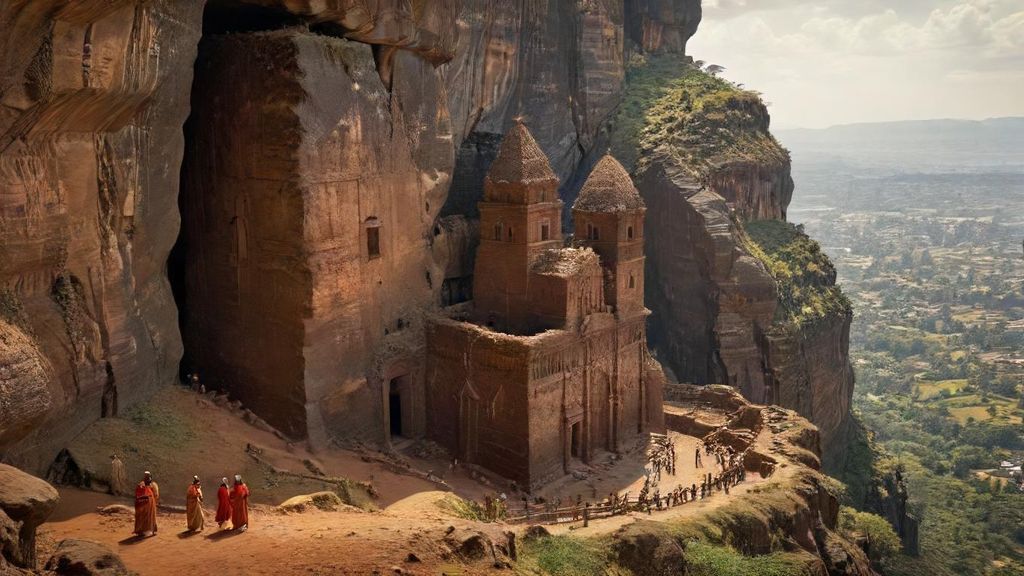
It’s incredible to look at Ethiopia’s ancient rock-hewn churches, carved deep into the earth ages ago, and wonder how they’ve managed to simply stay standing. The simple answer is actually quite profound: they never stopped being used. Unlike many old ruins around the world, these amazing structures aren’t just monuments from the past. They’re still vibrant, active places of worship and pilgrimage, day in and day out, year after year. This constant, living faith, passed down through generations, is the main reason they’ve lasted so long, along with important and ongoing efforts to protect them.
The truth is even more interesting than you might guess. Imagine a church that has hosted services, celebrated holidays, and welcomed pilgrims for over 800 years without ever closing its doors. That’s the reality for many of these sites, especially in Lalibela, a name that perfectly describes these carved wonders. This constant activity creates an incredible spiritual meaning. For Ethiopian Orthodox Christians, these churches are sacred ground, direct links to the saints and kings who first inspired them. They are a physical sign of strong faith, a place where history and everyday devotion come together.
What Exactly Keeps Them Going?
So, why exactly are they still standing strong? It’s a powerful mix of deep spiritual connection and global recognition. What makes this even more fascinating is that these churches aren’t just local treasures. In 1978, the churches of Lalibela were named a UNESCO World Heritage site. This international recognition brought a new level of protection and funding. It highlighted their “outstanding universal value,” which just means they’re so incredibly important that they belong to everyone on Earth, not just Ethiopia. Think of it like a global team effort for culture, where the world helps keep these unique places alive.
But beyond the official titles and international help, it’s the local communities and the clergy who truly look after these churches. Since they’re still active places of worship and pilgrimage, any problems or damage are quickly noticed and often fixed, even with old-fashioned, simple methods. Pilgrims flock to these sites, especially during big festivals like Genna (Ethiopian Christmas), filling the rock-hewn spaces with hymns and prayers. This constant human presence, this living tradition, means the churches are continuously cared for, not just admired from afar.
How Do We Protect Such Ancient Wonders Today?
Keeping these ancient structures safe is a constant battle against powerful forces: nature and time itself. The churches face big challenges from erosion, as wind and rain slowly chip away at the soft volcanic rock. Changing temperatures cause the rock to expand and shrink, creating cracks. And, a bit ironically, the increase in tourism that helps fund their preservation also brings its own problems, like more foot traffic and the need for better facilities, which can impact delicate parts of the churches. It’s like trying to protect a priceless old book while also letting millions of people read it every year.
Conservation efforts have changed a lot over the centuries. For hundreds of years, local priests and communities did their best, often with basic repairs and clearing debris. They understood what was immediately needed. However, today’s challenges require modern solutions. Now, international groups like the World Monuments Fund work with Ethiopian authorities to use scientific ways to preserve them. This includes detailed geological studies, improving drainage systems to keep rainwater away from the foundations, and carefully fixing damaged sections using special techniques that perfectly match the original rock.
You might notice some big, even futuristic-looking shelters now covering some of the most famous churches, like Bet Giyorgis (Church of St. George). These “umbrellas,” as some call them, are some of the most visible – and sometimes debated – modern ways we’re trying to protect them. They’re designed to shield the churches directly from rain and sun, buying crucial time for more delicate conservation work inside. It’s a bit like putting a temporary, high-tech roof over a priceless outdoor sculpture to keep it safe from the weather, showing just how seriously preservation is taken.
Ultimately, these churches represent something truly special in Ethiopia’s culture. They show how incredibly clever ancient people were, able to carve huge buildings with simple tools. They also stand as a testament to an unshakeable faith that has ensured their survival. They are more than just buildings; they are stories etched in stone, continuing to inspire wonder and devotion. Next, we’ll dive into the amazing stories and legends surrounding how these churches were first created, revealing the mythical and historical figures believed to have brought these wonders to life.