If you’re like most people, you probably picture Hiram Bingham heading into the Andes with a map, specifically trying to find the famous lost city of Machu Picchu. But here’s a surprising truth that might make you do a double-take: he wasn’t. Not even close! The simple answer to what Bingham was originally looking for in Peru is this: he was searching for Vilcabamba, the very last hideout of the Inca Empire. This chapter will reveal that real, often forgotten story, setting the scene for how he accidentally stumbled upon one of the world’s greatest archaeological treasures.
To understand Bingham’s mission, we first need to look back at a chaotic time in South American history. Imagine this: the powerful Inca Empire, known for its clever roads and city designs, suddenly fell apart in the 16th century because of the Spanish conquest. It was like a huge, well-organized business crashing overnight. After their first big defeat, a group of Incas, led by different emperors over time, escaped deep into the Amazon jungle. There, they built a secret stronghold, a final, desperate capital called Vilcabamba. This was their last stand against the invaders.
For decades, Vilcabamba stood as a symbol of their fight. But eventually, even this hidden city fell to the Spanish in 1572. Once it was captured, its exact location became a mystery to the outside world, turning into myth and legend. It was like the ultimate cold case in history, a secret whispered about for centuries, much like a forgotten treasure map everyone wants to find.
Now, let’s jump forward to the early 1900s. This was a time of grand exploration, when adventurers and scholars alike dreamed of ‘discovering’ ancient ruins. Into this exciting era stepped Hiram Bingham. He wasn’t an archaeologist at first, but a historian and lecturer from Yale University, very interested in South American history and the life of Simón Bolívar. His first trip to Peru in 1909 wasn’t even about ancient cities; it was more of a scouting trip, a chance to explore. But during that journey, he heard exciting rumors and old stories about these ‘lost cities’ hidden in the thick jungle. The stories captivated him, sparking a new, specific quest.
The main reason Bingham organized the Yale Peruvian Expedition of 1911 was specifically to find Vilcabamba. He believed he could be the one to finally dig up this legendary lost city, a place mentioned in old Spanish records but never truly found by modern explorers. It was a serious history project, driven by a desire to complete a big missing piece of the Inca puzzle.
This clear goal guided everything he did on his expedition. Bingham carefully studied old Spanish writings and local stories, searching for clues that would lead him to Vilcabamba. He wasn’t just wandering aimlessly; he was following a very specific plan based on historical information. His journey through the Urubamba Valley and into the nearby mountains was a direct result of his idea that Vilcabamba was hidden in that region, in hard-to-reach places.
How Do We Know This Actually Happened?
We know Bingham’s intentions weren’t about Machu Picchu because he wrote a lot about it. In his own words, from his journals and books like Inca Land, he always talked about his search for Vilcabamba. For example, when he eventually arrived at Machu Picchu, he initially thought he had found the real Vilcabamba, showing his singular focus. He even gave an earlier, smaller site (Espíritu Pampa) the name “Vilcabamba Viejo” (Old Vilcabamba) because he believed it was an older settlement.
What makes this really fascinating is that while Bingham was on this specific history mission, the local Quechua people living in the region had known about Machu Picchu for generations. They called the mountain ‘Machu Picchu,’ meaning ‘Old Peak’ in their language, and had a simple path leading to the ruins. For them, it wasn’t a “lost city” but simply an important, ancient place in their ancestral lands. It’s like finding a secret garden you think no one knows about, only to realize the family living next door has been tending it for years.
So, the stage was set. Bingham was a focused scholar, pulled in by the idea of a legendary lost capital. His expedition was specifically meant to find Vilcabamba, the last strong sign of Inca power. He was not looking for what we now know as Machu Picchu. The truth is more interesting than you might think, and his actual ‘discovery’ would be a delightful, and entirely unexpected, twist of fate.
This strong desire to find Vilcabamba would guide Bingham’s every step, leading him into dangerous valleys and cloudy mountain peaks where destiny, and a very different ancient city, awaited. Next, we’ll see how this single-minded pursuit accidentally led him to something much grander.
How did Hiram Bingham actually stumble upon Machu Picchu?
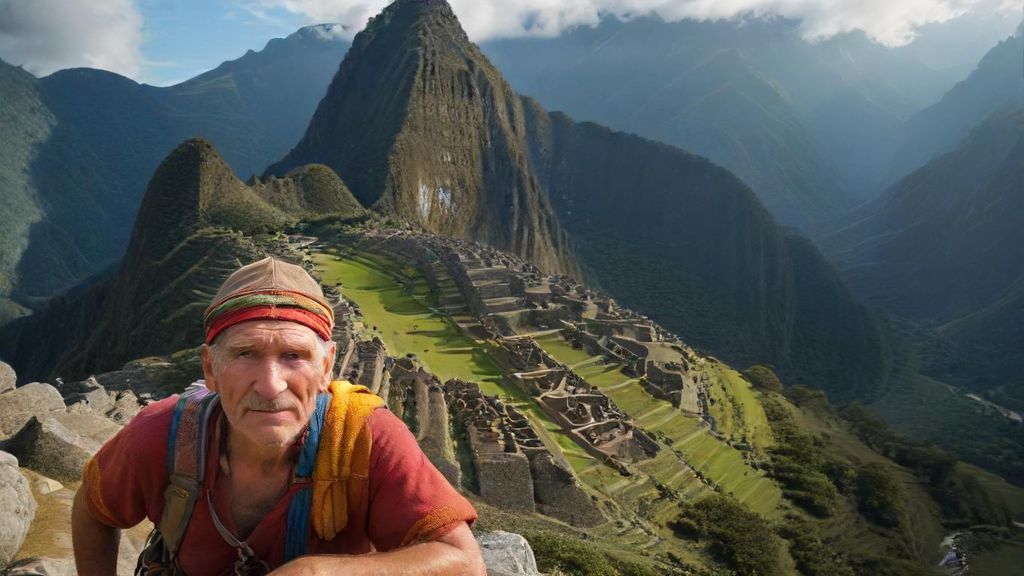
The popular story of Hiram Bingham “discovering” Machu Picchu often makes you think of a brave explorer cutting his way through thick, untouched jungle, showing a lost city to the world for the very first time. But the truth, as it often is with history, is far more interesting and a little less about one person doing it alone. It turns out that Bingham didn’t so much discover Machu Picchu as he was shown the way directly to it by local people who had known about its existence, and even lived there, for generations. Imagine if someone claimed to “discover” your backyard, even though you’d been gardening in it for years; that’s a bit closer to what actually happened.
The real journey began in July 1911, with Bingham, a Yale lecturer, deep in Peru’s incredibly challenging Urubamba Valley. He wasn’t just on a casual hike; his main goal was to find Vilcabamba, the legendary last capital of the Inca Empire, a place hidden from Spanish conquest. The valley itself was a wild, often impassable landscape filled with thick plants and steep mountainsides, making any progress a really hard job. It was like trying to navigate a remote Amazonian rainforest, but with the added challenge of dizzying altitude and sheer drops.
What evidence supports Bingham’s reliance on local guides?
Bingham’s party, which included his assistant and a small military escort, found themselves more and more dependent on what the local Quechua-speaking farmers knew. These were the true experts of the rugged terrain. One crucial meeting happened near a small settlement called Mandor Pampa. Here, Bingham met a local farmer named Melchor Arteaga. Arteaga told Bingham about some old ruins high up on a mountain ridge known as Machu Picchu – literally “Old Peak” in Quechua. He even offered to guide Bingham there, for a small fee, of course. This was not a random guess; Arteaga knew exactly what he was talking about because people lived nearby and used the ancient terraces.
On July 24, 1911, Bingham, accompanied by Arteaga and a local policeman, began the steep, slippery climb. It was a miserable, rainy morning. They had to cross a rickety bridge and then climb a near-vertical path, pushing through dense jungle vines. Bingham later wrote in his journal,
“We plunged downward into a canyon and started up the side of the next mountain on a little path which looked as if it had not been used for many years.”This quote shows how incredibly hard the climb was and makes it clear that without local help, he probably wouldn’t have found anything. It wasn’t about cutting-edge technology or maps; it was about human grit and local wisdom.
What makes this fascinating is what they found at the top. Instead of an empty, ‘lost’ city, they found two families – the Richarte and Alvarez families – living in simple grass huts, growing corn, sweet potatoes, and beans right on the old Inca farm terraces. The children were playing among the huge stone buildings, their guinea pigs running around what we now see as amazing, sacred Inca structures. The families were probably quite surprised to see a foreigner suddenly appear, but they were certainly not “discovering” anything; they were just living their lives.
Bingham was astonished. As the mist occasionally lifted, showing the huge granite walls and amazingly built stone craftsmanship, he described being “partially covered with a dense growth of trees and moss, but in places quite clear.” His first glimpse wasn’t a perfect, untouched city, but a ruin swallowed by the jungle, yet clearly used and lived in by people. He knew immediately that he had found something extraordinary, something on a scale far beyond anything he had seen before.
However, even though he was amazed, Bingham made a guess that made sense at the time, but turned out to be wrong. Based on his initial mission to find Vilcabamba, and seeing how impressive Machu Picchu was, he immediately believed this was it. It would take more trips and studies by experts to figure out that Machu Picchu was a different, but equally important, Inca place – maybe a royal home or a special holy site, not the last capital. But for that fateful day, his conviction was firm.
The truth is more interesting than you might think: Bingham didn’t “rediscover” a city that was entirely forgotten. He was led to a well-known (to locals) and even inhabited site, thanks to the super important knowledge of local people like Melchor Arteaga. Without them, and their millennia-old connection to the land, Machu Picchu might have remained hidden from the wider world for much longer. This incredible journey shows how vital local wisdom is for any big trip, breaking the idea of a single hero explorer, and bringing up important questions about cultural history and who owns it, questions that would come up later.
What happened after Hiram Bingham ‘rediscovered’ Machu Picchu?

After Hiram Bingham ‘rediscovered’ Machu Picchu in 1911, his initial visit was just the beginning of a much bigger story. He quickly launched large-scale expeditions to excavate and study the ancient city, leading to the removal of thousands of artifacts to Yale University for research. This sparked long-lasting debates about who truly owned these valuable historical treasures and how Bingham’s legacy should be viewed.
Right after Bingham’s initial discoveries, things really picked up. He quickly put together more expeditions, most notably the Yale Peruvian Expeditions in 1912 and another big one from 1914 to 1915. These weren’t just quick trips; they were massive projects. Dozens of porters, surveyors, and archaeologists worked together, digging up and learning about Machu Picchu and other nearby Inca sites. Their main goal was to fully uncover and record everything they found, slowly piecing together the story of this mysterious city in the mountains. For its time, the sheer size of this operation was truly amazing.
Who really owned Machu Picchu’s treasures?
As the Yale teams dug deeper, they uncovered a huge amount of artifacts: pottery, tools, human remains, and beautifully carved stone pieces. These weren’t just pretty objects; they were everyday items and special ceremonial pieces that shared the story of Inca life, death, and beliefs. The big question was, what would happen to all these valuable items?
Historians say that Bingham made a deal with the Peruvian government back then. This agreement allowed him to take thousands of artifacts back to Yale University in the United States for study, with the clear understanding that they would be returned eventually. It was like borrowing a priceless collection for a museum exhibit, but that “temporary” loan ended up lasting for decades. Over 40,000 artifacts, including pottery, bronze, silver, and stone objects, traveled from the Andes mountains to the Yale Peabody Museum. Even though this removal was initially allowed, it quickly started big arguments about ownership and whether the items should be sent back – arguments that are still heard today.
Imagine a big company taking resources from a developing country, promising future benefits, but the actual return takes forever, or sometimes never fully happens. This is a strong, even if uncomfortable, comparison for what went on. The disagreement wasn’t just for academics; it became a huge point of friction between Peru and Yale. It highlighted bigger ethical questions from an era when foreign institutions often decided what happened to another country’s cultural treasures.
How did our understanding of Bingham’s legacy shift?
Machu Picchu, once truly unknown to most of the world, quickly fascinated everyone. Photos of its stunning ruins, perched dramatically between sharp mountain peaks, instantly became famous. It perfectly captured the thrill of discovery and the mystery of ancient civilizations, becoming a lasting symbol of archaeological success. Bingham, himself, became a celebrated figure, often praised as the “scientific discoverer” of the “Lost City of the Incas.”
However, newer information tells a more complicated truth. More and more people now question the idea that he “rediscovered” the site. We know this because historical records and local stories confirm that local farmers, like Melchor Arteaga, and families, such as the Richarte and Alvarez families, knew about Machu Picchu and even lived on its terraces long before Bingham got there. In fact, they acted as Bingham’s guides, leading him straight to the site. The real story is more interesting: Bingham “discovered” it for the Western academic world, but it was never truly “lost” to the people who lived nearby.
This more balanced view questions the classic “hero” story and has sparked a complete rethink of archaeological ethics. It emphasizes how important it is to recognize local knowledge that existed beforehand. It also highlights the problems with claiming “discovery” in places where people already live. This change in thinking, combined with ongoing diplomatic efforts, eventually led to the return of many artifacts to Peru in the early 21st century. This shows how much the discussion about who owns cultural heritage has grown. Ultimately, Machu Picchu becoming a UNESCO World Heritage site and a global tourist hot spot isn’t just about its ancient stones. It’s also a story about changing attitudes toward history, ownership, and respecting native cultures. This developing story shapes how future generations will connect with this incredible place.