
Imagine a summer so cold and dark that people huddled indoors, telling ghost stories by flickering candlelight. This wasn’t some ancient myth; it was the real-life setting of 1816. And it was during a dramatic, storm-lashed scene near Lake Geneva that a brilliant young woman named Mary Shelley, then just 18, found the spark to create Frankenstein, a book that essentially invented science fiction.
So, how did it happen? The simple answer is that a mix of her unusual childhood, an unconventional love story, and a truly bizarre summer created the perfect storm – both literally and figuratively – for this revolutionary idea to come to life.
Mary Shelley didn’t just stumble into brilliance; her amazing parents shaped her mind from a young age. Her mother was Mary Wollstonecraft, a champion for women’s rights and the author of A Vindication of the Rights of Woman. Her father was William Godwin, a famous philosopher with radical ideas who believed people could use their brains to make society better.
Growing up, Mary was always hearing new, advanced ideas and deep discussions. Her parents believed humans could explore new limits in what we know and what’s right. Imagine a kid today growing up in a house full of tech innovators and political activists – always exposed to fresh ways of thinking and challenging the usual rules. This upbringing made Mary a person who questioned everything, imagined new possibilities, and saw the world not just as it was, but as it could be.
Her personal life was just as unusual and filled with fascinating ideas. At 16, she met the passionate and rebellious poet Percy Bysshe Shelley. He was already married, but they connected immediately and intensely because they both loved freedom and learning new things.
They ran away together, which was a huge scandal. This pushed them even further away from traditional society, but it also made their bond stronger because they both loved challenging the usual rules. This exciting, often dramatic relationship, full of deep talks about big ideas and shared dreams of writing, was key to how Mary saw the world. It made her brave enough to write about topics others wouldn’t touch.
How did a freak summer weather event fuel this creative fire?
The year 1816 is what historians call “The Year Without a Summer.” It turns out that a massive volcanic eruption in Indonesia, Mount Tambora, had shot so much ash into the air that it made the whole world colder. Europe got stuck in a long cold spell, with endless rain and gloom. A normal sunny summer became something dark and unsettling. Imagine months of non-stop, gray, miserable weather that forces everyone indoors – not exactly vacation weather!
This strange weather gathered an amazing group of people at the Villa Diodati, a big house right on Lake Geneva. There was Mary; her lover, Percy Shelley; the charismatic and super famous poet Lord Byron, who was like a rockstar back then; and Byron’s personal physician, John Polidori.
Stuck inside by the never-ending rain and cold, they spent their evenings discussing poetry, philosophy, and the latest scientific discoveries. They talked about electricity, bringing dead body parts back to life (a popular, if creepy, experiment known as galvanism), and even what life itself really is. These chats, full of big questions about how things are made and what humans can and can’t do, were perfect for Mary, who was already so curious.
It was during one stormy evening that Lord Byron, probably bored and looking for something fun to do, suggested a challenge: “We will each write a ghost story.” Mary, despite her brilliant mind, couldn’t think of an idea for days.
Then, after listening to discussions about the latest experiments to bring dead bodies back to life, and thinking deeply about what life and death truly are, she had a clear, terrifying “waking dream.” She later wrote:
“I saw the pale student of unhallowed arts kneeling beside the thing he had put together. I saw the hideous phantasm of a man stretched out, and then, on the working of some powerful engine, show signs of life, and stir with an uneasy, half vital motion.”
This chilling vision, born from her scientific curiosity and a kind of deep philosophical fear, was the exact moment the main idea for Frankenstein burst into her mind. It wasn’t just a simple ghost story; it was a tale that dared to imagine what would happen if science went too far.
This special mix of intense thinking, personal drama, and bizarre weather created the perfect conditions for a truly game-changing idea. Mary Shelley didn’t just write a horror story; she dared to explore the right and wrong of scientific ambition, and in doing so, created a whole new kind of story.
Next, we’ll explore how this powerful first idea grew into the full novel and why it still speaks to us so powerfully today.
Imagine if today’s news was full of scientists almost bringing dead things back to life. Think of the huge arguments about playing God and what it truly means to be human. That’s exactly the world Mary Shelley lived in. It’s how she managed to write Frankenstein, a novel that was more than just a spooky tale. It was a new kind of story, mixing the latest science with big questions about life. Shelley wasn’t just making things up; she was cleverly using the most exciting—and sometimes scary—science experiments and ideas of her time. She crafted a story that still feels relevant today, especially with things like artificial intelligence and genetic engineering.
The truth behind Shelley’s genius is fascinating. She took real scientific experiments and turned them into a scary, but totally believable, story. In the late 1700s and early 1800s, everyone was talking about something called galvanism. An Italian doctor named Luigi Galvani discovered he could make a dead frog’s legs twitch by applying electricity. People were amazed! They thought they’d found the very spark of life. Later, Galvani’s nephew, Giovanni Aldini, pushed this even further. He did public experiments on the bodies of executed criminals, making their limbs move and even their eyes open. Sounds like something straight out of a horror movie, right?
What new ideas inspired Shelley’s creation?
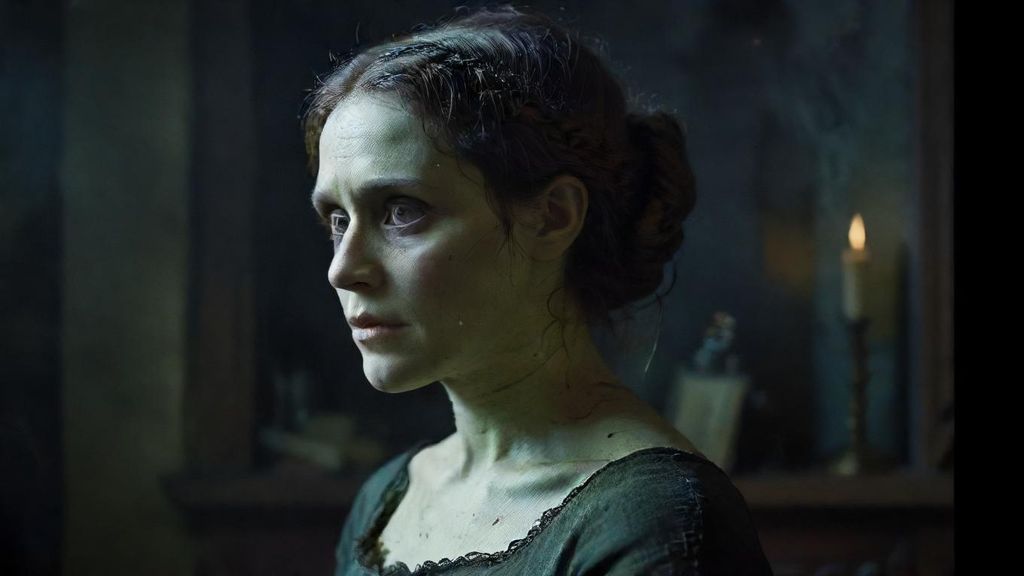
Here’s what we’ve learned: Shelley and her brilliant friends—including her husband, the poet Percy Bysshe Shelley, and the well-known Lord Byron—were super interested in these experiments. They talked about them a lot during that famous rainy summer in 1816 at Villa Diodati, which is where the idea for Frankenstein was born. Historians say these weren’t just casual chats. They were serious talks about what defined life and if electricity could really bring dead tissue to action. Victor Frankenstein’s secret work in his lab, bringing his creature to life, wasn’t just fantasy. It was an imaginative step forward from real science happening back then.
But it wasn’t only science. Big questions about life and meaning were also part of Shelley’s story. Her time was marked by two big ideas bumping heads. On one side, Enlightenment thinkers believed in human logic and scientific progress. On the other, the new Romantic movement warned against being too ambitious without thinking. It also stressed the importance of feelings and nature. Shelley cleverly asked big questions about creation. She wondered what responsibility a creator has to their creation. Victor Frankenstein plays God, but then he abandons his “child,” leading to sad results. This makes us think about what it means to be human: Is the creature evil because of how it was born, or because of how it’s treated? It’s like asking today whether an AI can truly be conscious, or if we’re responsible for the unexpected problems of our advanced technologies.
We know now that Shelley read a lot of books by Enlightenment thinkers like John Locke, who wondered how people become who they are. She also read Jean-Jacques Rousseau, who talked about the idea that people are naturally good, but society can spoil them. These weren’t just details in a book; they were what helped shape the creature’s journey to understand himself and his sad requests to be understood. Shelley didn’t just invent a monster. She created a story where science and philosophy came together. It went beyond just a scary story to truly explore what science could do and the right and wrong of it. This helps us consider not just what she wrote, but how she managed to create such an important story from what she saw and felt.
How did Frankenstein launch a new literary genre and influence generations of storytellers?

Imagine trying to explain the internet to someone from the 18th century. That’s a bit like trying to describe Mary Shelley’s Frankenstein when it first came out in 1818. Most people think of science fiction as spaceships and laser guns, right? But the truth is even more fascinating: this incredible novel, written by a teenager, actually invented the genre we now call science fiction. It wasn’t about aliens, but about asking deep human questions sparked by scientific “what ifs.” So, how did it start a whole new genre? By bravely mixing the newest scientific ideas with a serious look at what happens when humans try to play God.
Here’s the cool part: Frankenstein was truly special because it wasn’t just a spooky ghost story. Instead of magic or supernatural creatures, Shelley based her monster on the science of her time. Think about scientists like Luigi Galvani, who made frog legs twitch with electricity. This was an era when scientists debated the very spark of life itself, a concept called “vitalism.” Shelley took this big question and asked, “What if we could actually create life?” This mix of scientific possibility and very real human struggles – like ambition, being rejected, and feeling hopeless – was totally new. It showed how new science could lead to amazing progress or terrible destruction, long before we even had the word “technology.”
What Made It So New and Influential?
What makes this story so captivating is how Shelley focused on the tough choices involved in creating something new. Dr. Victor Frankenstein doesn’t just build a creature; he abandons it, completely failing to take care of his invention. This immediately brings up a huge question: What responsibility do creators have for what they bring into existence? It’s just like today’s talks about artificial intelligence or gene editing. We’re constantly asking, “Just because we can do something, should we?” Frankenstein was the first story to ask that question so powerfully through the lens of science.
People reacted to the novel with a mix of wonder and fear. Published without an author’s name at first, it was quickly recognized for its unique power. Readers were scared by the monster, but also fascinated by the deep ideas it explored. Think of it this way: before Frankenstein, stories might feature ghosts or mythical beasts. After it, authors had a whole new world to explore: the “what if” of human cleverness, both brilliant and terrifying. Historical records show it quickly became a sensation, inspiring stage plays and spoofs, and becoming a big part of popular culture almost immediately.
This brings us to its lasting impact. Frankenstein set up basic ideas and themes that are still important in today’s science fiction. Every time you see a “mad scientist” pushing the limits, or a created being fighting for its identity, or a discussion about the right and wrong of a new discovery, you’re seeing Frankenstein‘s influence. It’s in films like Blade Runner and Ex Machina, books like Jurassic Park, and serious discussions about cloning or AI rights. It taught us to question the true cost of progress and what it truly means to be human.
Mary Shelley’s genius at just 18 years old was giving us a story that wasn’t just for fun. It was a warning, a mirror, and a blueprint for a whole new way of telling stories. It completely changed how we think about our relationship with scientific breakthroughs. And the truth is, we’re still wrestling with the same questions about creation and responsibility that Shelley so brilliantly raised over 200 years ago. Next, we’ll dive into the amazing story of how a young woman came up with such a timeless and profound tale.