
Picture this: you’re getting ready for an emergency so big that you might be totally cut off from everything for six months, maybe even a year. No grocery deliveries, no running water from the city, no way to restock your medicine cabinet. Well, that’s exactly the tough situation medieval castles prepared for when they expected an attack. How did these huge stone buildings, which just look like big piles of rocks, get ready to survive such brutal, months-long attacks? The simple answer is: incredible foresight and a deep understanding of both people and how to build things.
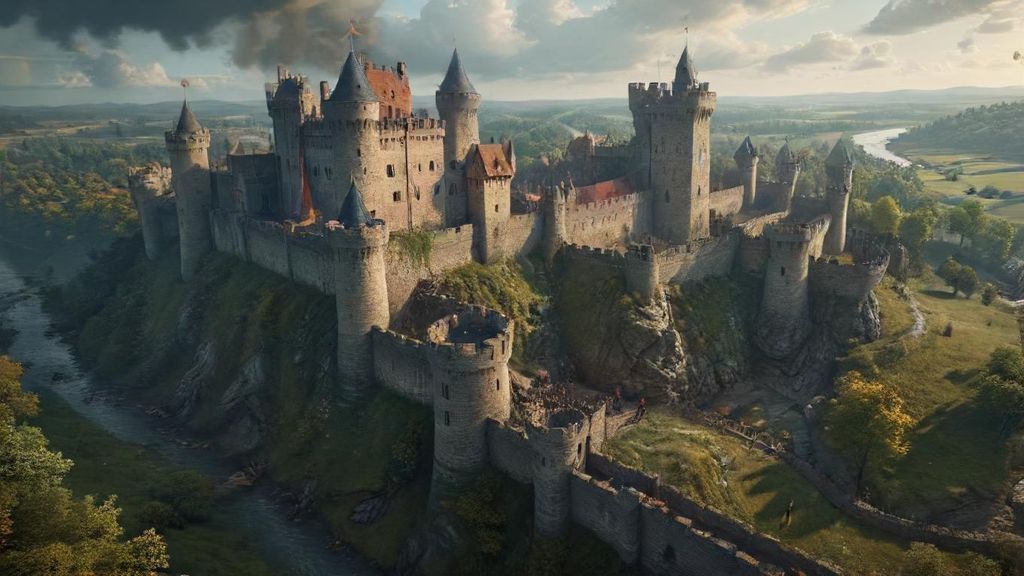
Turns out, surviving a long siege wasn’t only about thick walls. The real story is much more interesting: it was all about getting ready long before any enemy even showed up. Historians say the first big secret to a castle’s strength was its smart location. These castles weren’t just plonked down anywhere. Medieval builders were amazing at choosing spots, using the natural land to their advantage.
Think about it: if a castle was built on a steep hill, a rocky peak, or inside a river’s curve, it was naturally tougher for enemies to get close, let alone dig tunnels or climb over. Using the natural land so cleverly gave the castle a huge head start, making Mother Nature itself its first shield. It’s like choosing the highest ground in a game of capture the flag – you immediately have a better view and a tougher spot to attack.
Beyond location, the castle’s design kept getting better and better, acting like a constantly improving shield. From the first simple motte-and-bailey castles – basically a big dirt hill (the motte) with a wooden tower and a fenced area (the bailey) – all the way to massive stone fortresses, the main goal was always to scare off attackers and handle their assaults. Later designs, like the concentric castles built in the 1200s, were like a set of Russian nesting dolls. Imagine walls within walls, each one protecting the next. This created deadly traps and narrow spots that slowed down any attacking army. A great example of this is Caerphilly Castle in Wales, which had many rings of defense.
These stone buildings weren’t just huge; they were planned down to the smallest detail. Walls were super thick, often ten feet or more, built to simply bounce off early battering rams and soak up the impact of stones flung by catapults. Towers were placed so that defenders could shoot at attackers from many different angles, covering each other. It was a huge shift from basic defenses to really smart, multi-layered systems.
What Was Their Secret to Enduring Starvation?
But besides where they were built and how they looked, the secret weapon for surviving a siege was careful planning of supplies. This is where their amazing foresight really shows. Long before any fighting started, the castle’s boss, called the castellan, acted like a medieval general manager, making sure huge amounts of supplies were stored up. We know this from old records, like lists of items found in castles such as Dover Castle in England, which show truly massive stores.
They weren’t just saving a couple of bags of grain. We’re talking about mind-blowing amounts of food: preserved meat, salted fish, dried peas, cheese, and enough grain to make bread for hundreds, sometimes even thousands, of people for months on end. It’s like today’s emergency kits, but on a massive scale. Water was just as important. Castles had wells or big water tanks built inside their walls, sometimes even fed by secret springs. This guaranteed fresh water no matter what was happening outside.
On top of that, a weapons store was crucial. Arrows, crossbow bolts, stones for catapults, even boiling water or oil to dump on enemies – all of it had to be ready. Blacksmiths often lived right there, able to fix weapons or make new ones. This huge level of preparation meant a castle could truly run itself, like a survival bubble in a dangerous world. The whole point was to just outlast the enemy’s patience or their supplies.
We’ve recently learned that some castles even had their own mills and bakeries inside the walls. This let them turn raw grain into fresh food during an attack. This meant they didn’t have to rely as much on food that spoiled quickly. This smart stockpiling and ability to stand on their own gave them precious time. It forced the attackers to use up huge amounts of their own supplies and suffer through months of hardship themselves.
The cleverness behind these medieval preparations is what makes their staying power so amazing. It wasn’t magic, but a mix of smart design and incredible planning that turned a simple building into an active, waiting defense. Next, we’ll look at the harsh truth of what happened when the attackers finally showed up, and how well all this preparation actually worked under extreme pressure.
How Did Castle Defenders Actively Resist Attackers During a Siege?

Imagine being trapped inside your home, maybe for weeks or even months, while an enemy army surrounds you, constantly trying to break in. It’s like a never-ending, high-stakes game of defense, where every decision could mean life or death. So, how did medieval castle defenders manage to survive those scary, long sieges? The simple answer is, they didn’t just sit and wait; they actively fought back every single day, making life incredibly difficult for the attackers.
From the moment a siege began, a castle turned into a busy center of strong, focused resistance. Defenders used every advantage their stone fortress offered, especially its height. Archers, armed with powerful longbows, and crossbowmen, whose bolts could pierce armor, stood ready on the battlements. They would rain down thousands of arrows and bolts onto the enemy, targeting engineers trying to build siege engines or soldiers digging mines. It was a constant, deadly game of hide-and-seek, where finding cover was extremely important for everyone involved. Historical records from sieges, like the famous defense of Rochester Castle in 1215, describe endless showers of projectiles that kept attackers away.
But ranged weapons were just one part of their strategy. When attackers got closer, maybe trying to climb walls or smash down gates, the defenders unleashed a truly messy and brutal defense. Picture this: huge rocks, sometimes even grinding stones, were dropped from high up, crushing anything below. Large timbers, heavy enough to kill men, were thrown down. And yes, the stories about boiling oil aren’t entirely myths, though boiling water or heated sand were much more common. These painful obstacles were poured onto attackers, causing severe burns and panic. It was a terrifying, up-close fight designed to make every bit of ground the enemy gained incredibly painful and costly.
How Did They Keep Everyone Alive and Fighting Inside?
Beyond the actual fighting, one of the biggest challenges for a besieged castle was simply keeping everyone alive and healthy. This meant incredibly strict management of supplies. Food and water were rationed, sometimes down to tiny amounts, stretched to last as long as possible. Think of it like a modern-day survival mission, where every calorie and drop counts. They relied on stored grains, salted meats, and whatever fresh water sources were inside the castle walls. We know this because old inventory lists and reports from castle managers, like those found in the English Exchequer rolls, sometimes detail the provisions gathered before a siege.
Keeping things clean was another important, often overlooked, part of castle defense. In crowded conditions, disease could spread quickly, weakening the castle’s fighters faster than any enemy attack. Defenders worked hard to manage human and animal waste, often through clever drainage systems or by simply tossing it over the walls – a disgusting but effective way to discourage close-quarter attacks. The truth is, many sieges ended not because of a direct attack, but because sickness wiped out many defenders. Keeping spirits high amidst constant fear, dwindling supplies, and the stench of siege warfare was perhaps the most challenging task for castle leaders.
What makes this fascinating is the mind games that went on. Both sides tried to break the other’s spirit. Defenders would shout insults, display captured enemy banners, or even stage fake feasts to show they still had plenty of food, hoping to make the hungry attackers lose hope. Attackers, in turn, would parade captives or shoot arrows carrying messages of surrender into the castle. Leadership was absolutely vital here. A strong commander, like Sir William Wallace during certain Scottish sieges, could inspire his men to amazing acts of courage. They used communication networks within the castle – messengers running between towers, flag signals, or even horn blasts – to coordinate defense and spread important news.
Recent archaeological discoveries, like layers of medieval arrowheads and crossbow bolts found around castle ruins, strongly support the idea of these active, intense defenses. This evidence reveals the huge number of projectiles fired and the desperate struggle that took place. The toughness of these defenders, managing both physical and mental battles for weeks or months, is truly amazing.
These constant, active efforts bought precious time. But as vital as they were, they rarely won a siege outright. Instead, defenders often relied on something else: the hope of outside help. Next, we’ll explore how these besieged castles communicated with the outside world and the role of relief forces in breaking a siege.
How Did Medieval Sieges Actually Come to an End?

Forget those dramatic movie scenes where a medieval castle always falls after one final, heroic battle. The truth about how sieges ended is much more interesting and, frankly, quite surprising. It turns out that a direct, bloody attack that broke through the walls was actually one of the rarer ways a siege concluded. Instead, these long, drawn-out standoffs usually ended through a careful mix of patience, clever plans, and sometimes, just plain bad luck for the attackers.
Most of the time, sieges didn’t finish with a spectacular collapse. They often just faded away, either because something big happened outside the castle or because one side simply ran out of steam. The most important outside factor, and often the castle’s biggest hope, was the arrival of a relief army. Imagine playing a intense board game, and just as your opponent is about to win, a powerful ally suddenly appears on the board, completely changing everything. That’s what a relief army did. It often forced the attackers to stop what they were doing and either fight a new battle, or simply pack up and leave quickly to avoid getting trapped themselves.
How Did Defenders Fight Back From Inside?
But castles weren’t just waiting patiently for outside help. Defenders had all sorts of smart ways to turn the tables. One popular move was the sally – a sudden, aggressive charge out of the castle gates. These weren’t desperate suicide missions; they were carefully planned raids. Their goals? To smash enemy siege machines, burn down temporary camps, grab desperately needed supplies, or simply annoy and discourage the attackers. Think of it like a quick, coordinated counter-attack in a sports game, designed to mess up the opponent’s rhythm and cause a bit of chaos.
Another clever defense, especially against the threat of enemy tunnels trying to collapse walls, was counter-mining. Here’s how it worked: castle defenders would dig their own tunnels from inside, trying to find and stop the enemy’s digging. When their tunnels met, the fight would often happen underground in the dark, cramped spaces – truly terrifying stuff. If the defenders succeeded, they might collapse the enemy’s tunnel, effectively stopping the threat to their walls. History shows this was a tricky and dangerous job, needing expert miners and some serious building know-how.
Sometimes, defenders even used tricks. They might pretend to have plenty of food by tossing bread over the walls, or send fake messages to fool attackers into thinking help was on the way. It was a battle of brains, not just muscle.
What About When Attackers Just Gave Up?
You might be surprised to learn that many sieges ended with the attackers simply throwing in the towel. Why? Mostly because of attrition. Sieges cost a fortune and took a huge toll on the attacking army. Feeding, paying, and keeping thousands of soldiers healthy for months was a massive headache. Sickness, like dysentery or plague, often killed more soldiers than any castle defense. Attackers often lost more men to illness and hunger than to actual fighting.
New findings also show that attackers might give up if their leader lost interest or had other, more urgent things to deal with. Imagine a company pouring millions into a new product, only to realize the market has shifted, or a better opportunity has popped up elsewhere. Leaders might get news of a bigger threat in another part of the kingdom, forcing them to pull back. The high cost, dwindling supplies, and low morale often meant the castle just wasn’t worth it anymore.
Of course, some sieges ended with a chat. If a castle was clearly starving or running out of water, defenders might talk things over to get good surrender terms, often meaning they could walk away freely. And yes, sometimes, the walls were broken, and a castle was taken by force. But these were usually last-ditch efforts after months of trying everything else, and they cost the attackers a lot of lives.
So, a medieval castle’s survival wasn’t just about strong stone walls. It was about getting help in time, clever defenses, and the attackers’ own fight against the clock, sickness, and dwindling supplies. Knowing all this helps us truly understand how tough these castles were, and how their everyday struggles decided their future.