
Imagine losing a tiny wedding ring in the middle of a giant football stadium, in the dark, during a snowstorm. Now, picture that stadium two and a half miles underwater, with crushing pressure and freezing temperatures. That’s a lot like the impossible task of finding the Titanic after it sank in 1912. The main reasons it stayed hidden for so long were simple: a huge ocean, old technology, and incredibly high costs. For decades, the ship wasn’t just lost; it was practically impossible to find.
Why Couldn’t They Just Go Get It?
As soon as the “unsinkable” ship disappeared, everyone became completely fascinated. People were shocked, but also captivated by the idea of getting it back. Wild ideas for recovery poured in, often sounding like something from a science fiction book. Some suggested using huge electromagnets, filling the wreck with ping-pong balls to float it, or even freezing the ocean water around it to lift it like an ice cube. These imaginative plans, while well-meaning, totally ignored the harsh reality of the deep ocean. It turned out that what people thought they knew about the seabed was very different from the truth.
The truth is actually much more incredible. When the Titanic sank, it didn’t just go into deep water; it plunged into the abyss, the deepest part of the ocean. We’re talking about nearly 12,500 feet down, or about 2.5 miles. Imagine this: the pressure at that depth is roughly 6,000 pounds per square inch. That’s like putting a dozen jumbo jets on every single square inch of the ship. This incredible force would crush even the strongest modern submersibles, unless they were specially built for such extreme depths. Older diving bells and early submersibles, which were only made for shallower work, would have been instantly flattened. On top of that, the water temperature stays just above freezing. Sunlight completely disappears after only a few hundred feet, leaving an environment of total, never-ending darkness.
Think about how easy it is to navigate today. Our phones have GPS that can tell us our exact location within a few feet. Now, go back in time to the early 1900s. There was no GPS. Ships at sea used celestial navigation, which meant looking at the stars. They also used “dead reckoning,” guessing their position based on their speed and direction. This meant the recorded sinking spot for the Titanic was, at best, a very rough guess. We know this because the first distress signals and later rescue attempts actually reported slightly different locations. This created a search area that wasn’t a tiny spot, but an enormous, several-hundred-square-mile stretch of the North Atlantic. It was like searching for a needle in an impossibly huge haystack on a flat, muddy seabed with nothing to guide them.
Even if you had a general idea where to look, how would you search it? The sonar technology available for decades after the sinking was very basic. It was known during wartime as ASDIC (Anti-Submarine Detection Investigation Committee). This technology was designed to find submarines, not to search a huge, bumpy ocean floor for a relatively small wreck that might be buried in mud or broken into pieces. There was simply no good way to “see” underwater at such depths. It was like trying to find that needle in a giant haystack while blindfolded, unable to feel anything, and only allowed to shout every now and then to see if anything sent back a faint echo. The right tools simply didn’t exist.
This brings us to the huge cost. Imagine trying to pay for a search trip into this crushing, dark, empty underwater world. You’d be using technology that was barely invented, looking across an area the size of a major city, with no guarantee of success. The money problems were enormous. Who would pay for what many saw as a pointless mission? History shows that many people and groups suggested searching over the years. These included wealthy oil tycoons and unusual inventors. But they all eventually failed because they couldn’t get enough money or find the right technology to handle the deep ocean. For 73 years, the powerful ocean, what people could do at the time, and the huge expense kept the Titanic a secret of the deep.
What makes this whole story so fascinating is how different this challenge was compared to finding something lost on land today, with drones and satellite maps. Because people lacked basic tools and understanding for exploring the deep sea, early attempts never really had a chance. This failure paved the way for a completely new way of thinking that finally solved the puzzle. Next, we’ll look at how one man started to think differently about this “unfindable” ship and why his unique vision finally paid off.
How Did Robert Ballard’s Secret Mission Help Him Find the Titanic?
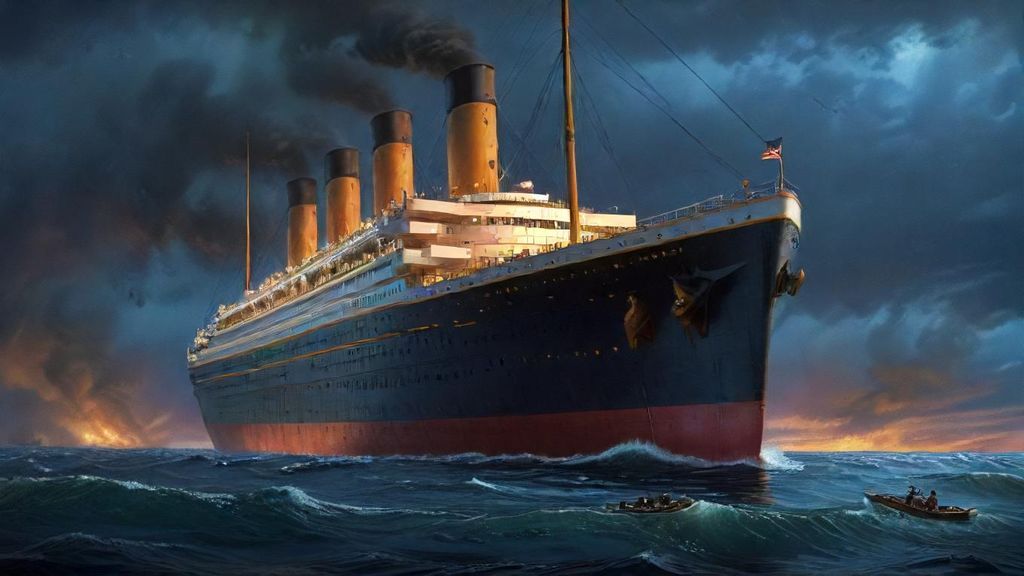
Many people imagine finding the Titanic was just a simple science project by a dedicated ocean explorer. But the real story is much more exciting, full of Cold War secrets and a surprise deal that changed everything. So, how did Robert Ballard actually find the Titanic after 73 years? It wasn’t just his amazing brain. He also completed a secret, critical mission for the U.S. Navy. Think about trying to get money for a huge, risky deep-sea trip today—it’s super hard! Ballard was brilliant because he figured out a way for the Navy to fund the exact technology and experience he needed, all without anyone really knowing why.
Ballard was an amazing ocean explorer, a true visionary who dreamed of going to the very bottom of the ocean. He didn’t just want to see the seafloor; he wanted to understand what stories it held. His big challenge wasn’t just building the right tools, but getting someone to pay to create them. He knew that finding a lost ship like the Titanic wasn’t just like looking for a needle in a haystack. It was more like finding a trail of scattered breadcrumbs that led to the needle. His idea was to search for the “debris field”—the scattered trail of smaller items, luggage, and bits of the ship that spread out when a vessel breaks apart and sinks. This was a totally new way of thinking, very different from the earlier tries that failed to find the wreck.
Ballard’s clever approach centered on his amazing deep-sea exploration system. It had two main parts: Argo and its smaller, attached partner, Jason Jr. Imagine Argo as a huge, tough underwater drone, like a high-tech flashlight with a strong camera, pulled far behind a ship. It could handle incredible pressure and send live video from the deep, letting researchers “see” the ocean floor right away. Then there was Jason Jr., a smaller, more agile robot designed to be sent out from Argo. It was like a tiny camera drone that could zoom in on interesting things for a close look, going into tight spots Argo couldn’t get to. Together, these tools gave them an unmatched ability to scan huge areas of the seafloor and then get a close-up view of anything they found.
How Do We Know This Secret Mission Was Real?
This is where the story gets really interesting. In the early 1980s, Ballard went to the Navy with his plan to find the Titanic, hoping they’d pay for his advanced equipment. But the Navy had a big problem of its own: two lost nuclear submarines, the USS Thresher and the USS Scorpion. They had disappeared in the Atlantic in 1963 and 1968. The Navy wanted to know why they sank and to keep an eye on their nuclear reactors. They needed to do this without anyone else knowing exactly what they were after.
As it happened, the U.S. Navy made a secret deal with Ballard in 1982. They agreed to pay for his deep-sea search gear and give him the time and tools he needed. But there was a big condition: he first had to use his new system to find and check out the two lost submarines. Here’s the fascinating truth: the search for the Titanic was actually just a cover story, a public reason for a secret military mission. Later declassified, Ballard himself explained:
I couldn’t tell anybody. It was a secret mission. I got the money to go look for the Titanic, but if I found the Titanic, I was supposed to use the rest of the time to go back and look for the subs.
This secret task gave Ballard and his team priceless experience. Searching for the Thresher and the Scorpion forced Ballard and his team to make Argo even better, perfect their strategy for finding debris fields, and learn to navigate huge, dark underwater plains in extreme conditions. They learned how ocean currents spread wreckage and how to understand the tiny visual hints from the seafloor. It was like getting to practice with the best equipment and endless resources on two similar, tough projects before taking on the big, public one. The two sunken submarines had also broken apart, leaving behind debris fields that were, in some ways, much like what Ballard expected from the Titanic.
When Ballard finally focused on the Titanic in 1985, he had only twelve days left on his Navy contract. Then he had to report back to keep checking on the submarines. The skills and improved technology from those secret missions were perfect for the Titanic search. He knew exactly what to look for, how to use Argo to cover ground quickly, and how to spot the tiny clues of a debris field. This knowledge, gained under pressure and secrecy, was his ultimate secret weapon. It allowed him to find the famous liner’s debris field, and eventually the wreck itself, during those intense final days. This crucial funding and secret goal, long hidden, explains how his seemingly impossible dream came true. It shows us that big discoveries often have complicated, surprising stories behind them.
This surprising link between Cold War spy missions and ocean exploration made finding the Titanic possible. Next, we’ll look at the exciting moment of the discovery itself and what happened right after, which amazed the whole world.
What Happened in the Exact Moment Robert Ballard Discovered the Titanic?

Picture this: You’re in the middle of the ocean, thousands of feet above the seabed. You know the world’s most famous shipwreck is down there somewhere, but you have no idea where to look. That’s exactly how Robert Ballard and his team felt on their research ship, the Knorr, during the last, tense days of their 1985 search. But the moment they actually found the Titanic wasn’t a sudden, clear view of the ship itself. Instead, it was something much quieter, yet deeply meaningful. They found a long, thin trail of scattered pieces – like a silent scar on the ocean floor. This trail finally revealed where the famous liner had rested for decades.
Here’s how it unfolded: For weeks, they had been dragging their secret weapon, a remotely operated vehicle called Argo, across the cold, dark ocean floor. Argo was like a high-tech underwater bloodhound, using powerful lights and sensitive cameras to send back blurry images of endless mud. Ballard’s clever plan wasn’t to look for the ship directly. Instead, he looked for the “debris field”—all the countless items that had spilled from the Titanic as it broke apart and sank. Think of it like a trail of dropped items leading to a lost backpack; the backpack itself is harder to spot than its scattered contents.
The crew was exhausted, working day and night. Their time was almost up, with a deadline for their secret Navy mission fast approaching. Then, in the early hours of September 1, 1985, just after midnight, something unusual appeared on the monitors. It wasn’t the ship, not yet. Instead, a series of small, unidentifiable objects began to dot the otherwise empty seabed. First, a piece of metal, then another, and another. It was faint, but it was definitely there—a clear line of human-made junk. This pattern held the answer: they had found the debris field.
How Did They Confirm It Was Really the Titanic?
The mood on the ship changed from weary dread to electrifying excitement. They kept following the trail, like detectives on a case, moving inch by agonizing inch across the ocean floor. About an hour later, a massive, unmistakable shape materialized on the screen. It was round, with clear rivet lines. Someone shouted, “That’s a boiler!” For anyone familiar with the Titanic‘s story, those enormous, unique boilers meant only one thing. This wasn’t just any debris field; this was the debris field.
The emotions in the control room were overwhelming. What makes this story so fascinating is that Ballard himself described the discovery not with cheers, but with a quiet, almost respectful hush. He later recalled,
“There was a moment of silence. Everyone was afraid to say it, but we knew it was her.”It was a deep, somber realization that they were looking at the final resting place of 1,500 souls. The first images captured by Argo showed the ship’s massive bow section, standing eerily upright, almost defiant, in the darkness. It was an incredible sight, perfectly preserved by the deep-sea cold and lack of light.
This discovery wasn’t the end of their work, but just the beginning. The 1985 expedition mostly used Argo for broad surveys. The next year, in July 1986, Ballard returned with a new, smaller robot called Jason Jr. This tiny submersible, connected to Argo by a cable, could actually “fly” into the ship’s interior. It provided breathtaking close-up photos and videos. It was like sending a drone into a huge, dark building, allowing them to see details no one had ever imagined possible – railings, portholes, even a chandelier.
From the very start, Ballard saw the wreck not as a treasure trove but as a sacred memorial. He immediately pushed for its preservation, arguing that the site should remain untouched as a grave. This idea was revolutionary at the time, challenging the old belief that shipwrecks were fair game for salvage. His find didn’t just spark public interest in the Titanic again; it completely changed deep-sea exploration. It pushed the boundaries of robotics and how we explore ancient sites underwater without disturbing them. Think about how modern documentaries show us underwater worlds today; Ballard’s work laid much of that foundation. It’s like when a new app completely changes how we use technology.
The discovery of the Titanic remains a landmark moment in history. It combines scientific cleverness, pure persistence, and deep human emotion. It proved that even the most hidden mysteries of the deep could be solved, forever changing how we understand the ocean and our place within it. Ballard’s legacy continues to inspire, drawing us closer to the untold stories held within the vast, silent depths, and shaping future discussions on how best to honor such sacred places.