
Imagine your car breaking down on a long road trip. Now, instead of calling a tow truck, picture it slowly getting swallowed by the very ground you’re on, over nine whole months. That’s a bit like what happened to Sir Ernest Shackleton and his crew aboard the Endurance starting in January 1915. Trapped deep in the Antarctic ice, their ship wasn’t just stuck; it was caught in a frozen grip that would eventually crush it to splinters. So, how did these men survive after their floating home vanished beneath them, especially during those incredibly tough first months living on the ice?
The answer comes down to amazing leadership, strict rules, and a constant drive to adapt. Here’s what happened: The Endurance got hopelessly stuck in the thick, dense ice of the Weddell Sea on January 19, 1915. For months, the men lived aboard, hoping the ice would let them go. They tried everything, from sawing through massive chunks of ice—a truly back-breaking job that was physically exhausting and rarely worked—to running the engines in reverse. But the ship stayed stubbornly locked in place. Shackleton knew a long wait was coming, so he focused on keeping spirits up and maintaining a routine, turning the trapped vessel into a temporary home and even a science station.
What was life like aboard a frozen ship?
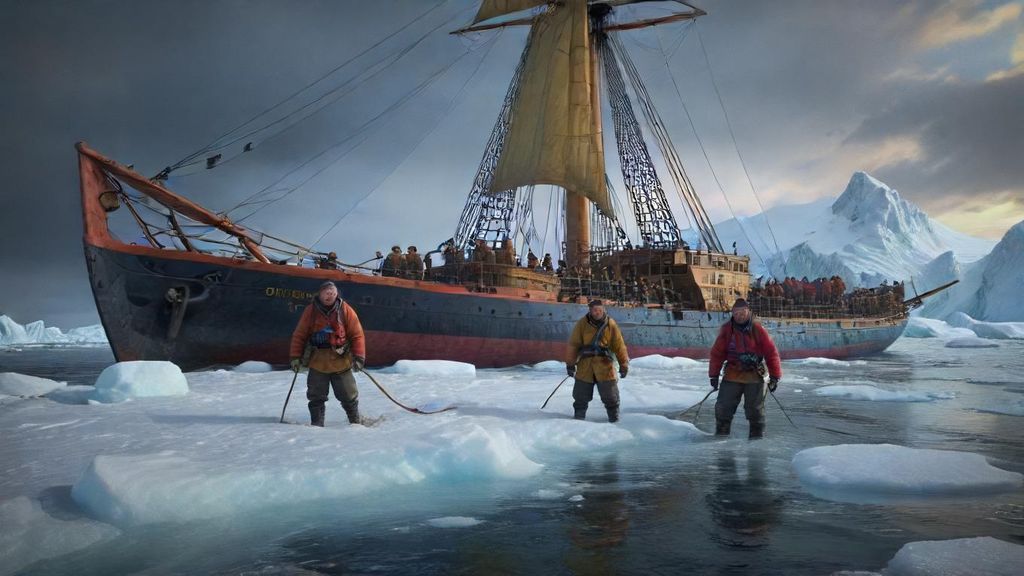
Life on the trapped ship quickly settled into an unusual rhythm. It wasn’t just about waiting; it was about living with a purpose. The crew stayed busy with scientific observations, taking depth measurements, and recording weather data. They played football and hockey on the vast expanse of ice surrounding the ship, turning a desperate situation into a kind of frozen playground. This wasn’t just a quirky detail; historians like Roland Huntford, who wrote a famous biography of Shackleton, point out that staying mentally and physically active was absolutely crucial. It stopped the creeping despair that could easily take hold when facing such a lonely and uncertain future. Even in the middle of nowhere, Shackleton made sure there were regular duties, shared meals, and even entertainment like sing-alongs and plays. Think of it like a long-term remote work camp, but with polar bears, no internet, and the constant threat of your only way home disappearing.
But the pressure on the ship, both real and emotional, was immense. The Endurance began to groan and shudder under the ice’s relentless squeeze, a sound that must have echoed in the men’s nightmares. Frank Worsley, the ship’s surgeon and a sharp observer, often wrote about these terrifying sounds in his diary, describing the ship’s agonizing death. It turns out that listening to your home slowly die around you, day after day, takes an incredible toll on anyone’s spirit. By October 1915, the situation became unbearable. On October 27, Shackleton gave the somber order to abandon ship. The ice had finally won, crushing the Endurance‘s hull beyond repair, forcing the men to scramble onto the ice, carrying whatever supplies they could save, watching their ship slowly sink beneath the frozen surface.
How did they survive on a giant ice raft?
With their ship gone, the crew found themselves stranded on an enormous, drifting ice floe. This marked the start of their nomadic life on what they called “Ocean Camp,” and later “Patience Camp.” Their immediate challenge was finding food and fuel. They hunted seals and penguins, relying on the fresh meat not just for sustenance but also for its blubber, which they burned to provide heat and cook food. It was a complete change in thinking, moving from a well-stocked ship to living directly off the desolate land. Shackleton, always the practical leader, made sure every part of an animal was used, much like ancient people would utilize every aspect of their prey to survive in harsh environments.
Rationing was incredibly strict. Each man received a precise amount of food, and discipline was crucial to prevent hoarding or arguments, especially when facing constant hunger. What makes this fascinating is how Shackleton, with his trusted second-in-command Frank Wild, actively managed everyone’s mental well-being. They held lectures, organized sports, and even competitions to keep minds sharp and spirits up. This was essential, as the renowned polar explorer Apsley Cherry-Garrard later noted about polar expeditions:
“The worst privations are not the physical ones, but the mental.”
Staying positive and busy was a key survival strategy against the extreme Antarctic environment, a place utterly indifferent to human life and completely unforgiving.
The historical records tell us that the men drifted for months on these ice floes, their hope dwindling with each passing day. The crushing of their ship was a devastating blow, but it forced them to adapt to an even more basic existence. The courage and ingenuity they showed during this period, facing down starvation, frostbite, and soul-crushing boredom on a giant, unstable raft of ice, set the stage for the extraordinary journey that was yet to come. This initial period tested their limits, preparing them for the next terrifying phase of their incredible escape.
Why did Shackleton embark on a perilous 800-mile journey across the Antarctic Ocean in a small lifeboat?

Shackleton and his 27 men were stranded on a tiny, desolate rock called Elephant Island in April 1916, facing certain death if they stayed. After their ship, the Endurance, was crushed by ice and they drifted for months, their ice floe finally broke apart. This forced them into three small lifeboats, paddling desperately through dangerous waters until they reached Elephant Island. Shackleton undertook this insane journey because they had no other choice. It was a desperate gamble for survival, a final, bold attempt against the overwhelming odds of the Antarctic. Their situation was far more serious than most people realize.
Elephant Island was nothing more than a barren rock, incredibly remote and harsh. It was completely uninhabited, with no wood for fires or good shelter, and miles away from any shipping routes. Imagine being stuck on a small rock in the middle of the Pacific, but instead of warm sun, you face freezing blizzards and killer whales. The men soon realized no one would ever find them there. They had no radio, no way to signal for help, and no one in the world knew exactly where they were. Time was running out, and winter was fast approaching, which would make any rescue attempt impossible.
How could rescue be so impossible from Elephant Island?
The problem was the extreme isolation and terrible conditions of the region. Elephant Island sits right on the edge of the Antarctic Circle. Any ship trying to reach them would have to navigate through miles of thick pack ice, which was growing thicker by the day. Plus, the closest human outposts, like whaling stations, were thousands of miles away. Shackleton knew that if they simply waited, they would starve, freeze, or get sick and die. His only real option was to somehow reach civilization and send back help. This knowledge led to one of the most unbelievable sea journeys in history. He made the gut-wrenching decision to take a small crew and try to sail 800 miles across one of the stormiest oceans on Earth.
On April 24, 1916, Shackleton picked five men, leaving the rest under the command of Frank Wild on Elephant Island. His plan was to take the sturdiest of their three lifeboats, the 22.5-foot long James Caird, and sail north to the whaling stations on South Georgia Island. This wasn’t just a trip; it was an incredibly dangerous mission. The James Caird was an open boat, built for calm coastal waters, not the giant waves and hurricane-force winds of the Southern Ocean. For context, imagine trying to cross the Atlantic Ocean in a large rowboat today, but without any modern navigation or safety gear, and in freezing temperatures. That’s what they were up against.
The problems they faced during that 16-day journey were truly terrifying. They didn’t have good maps for finding their exact way. Instead, they had to guess their position (called ‘dead reckoning’) and hoped to spot the sun or stars when the sky wasn’t cloudy – which wasn’t often. Their navigator, Frank Worsley, a true hero, used a tool called a sextant to figure out where they were. But the boat was rocking so much, he often had to guess the exact moment to take a reading. The freezing temperatures meant their clothes were constantly soaked and frozen stiff. Ice regularly built up on the boat, which could easily flip them over.
They faced huge waves, sometimes called “liquid mountains.” One of these waves almost swallowed their tiny boat whole. They were always thirsty and hungry, with very little food and only able to chip ice from the boat for water. Mentally, it was incredibly tough. Imagine sharing a tiny, open space with five other men, always wet, cold, and fearing for your life with every crashing wave. History books tell us they went through days of such terrible storms that they could barely move. They just clung to the boat, praying that the next giant wave wouldn’t be the one to finally sink them. In his book, South!, Shackleton himself described seeing “the greatest wave I had seen in twenty-six years at sea.” This shows just how bad the conditions were and makes their survival even more amazing.
Even with these impossible challenges, Shackleton’s leadership kept his small crew going. His calm presence, endless grit, and knack for making tough choices when it mattered most were key. They finally spotted South Georgia on May 8, 1916, but their ordeal wasn’t over. After landing, they still had to trek across the uncharted, icy interior of the island to reach the whaling station. And believe it or not, this incredible boat trip was just one part of their much larger struggle. This amazing feat of navigation and sheer willpower made rescue possible, setting up the next desperate part of their fight to survive and get home.
The simple answer to how Ernest Shackleton rescued every single one of his men from Elephant Island is truly incredible. He did it through an amazing mix of pure guts, brilliant navigation, and a stubborn refusal to give up. This determination pushed human limits.
After leaving most of his crew stranded on the lonely Elephant Island, Shackleton’s journey began with a desperate gamble. He and five companions squeezed into a tiny lifeboat called the James Caird. They then endured an unimaginable 17-day journey across some of the stormiest seas on Earth. Finally, they landed on South Georgia. But reaching South Georgia was just the start of another impossible challenge.
Crossing the Uncharted Interior

They landed on the uninhabited side of an island famous for its wild, unmapped mountains. Their goal, the Stromness whaling station, was still miles away, hidden behind icy peaks and glaciers. Getting off the boat offered only a brief break from the constant cold and hunger. Shackleton, along with navigator Frank Worsley and seaman Tom Crean, knew they couldn’t wait.
Leaving the others to recover, these three men started what many historians call one of the boldest treks in exploration history. They set out to cross South Georgia’s interior. This was a truly wild, mountainous landscape that no human had ever crossed before. Imagine trying to navigate a vast, unknown mountain range like the Swiss Alps without maps, proper climbing gear, or even enough food, all while fighting blizzards and extreme cold. That’s exactly what they faced.
For 36 grueling hours, they climbed, slid down snow-covered slopes, and found their way across dangerous glaciers—all without sleep. It was like attempting a marathon triathlon across an uncharted, freezing wilderness after weeks of near-starvation. What’s even crazier? They actually slid down a mountain on a makeshift rope, a move so risky it’s hard to believe.
The Relentless Rescue Efforts
Against all odds, on May 20, 1916, the trio stumbled into the Stromness whaling station. They looked more like ghosts than men. The whalers, completely astonished, helped them get back on their feet. But Shackleton wasn’t thinking about rest; his mind was entirely focused on the 22 men still stranded on Elephant Island.
He immediately began to organize a rescue. This task proved almost as difficult as his own incredible journey. The problem? The powerful ocean currents and huge ice fields around Antarctica made reaching Elephant Island incredibly dangerous. His first three attempts to reach his men failed. Each time, thick ice or brutal storms turned them back. It was like trying to send a ship through a constantly moving, frozen minefield without modern navigation tools.
Success: The Yelcho Reaches Elephant Island
Each failure brought Shackleton a fresh wave of worry, but he never gave up. He constantly pleaded with governments and individuals to lend him a suitable ship. History tells us he even approached the Chilean government, who kindly lent him a small steam tug, the Yelcho. This tough little vessel, captained by Luis Pardo Villalón, became their last hope.
What’s truly amazing is how quickly they prepared. On August 30, 1916, the Yelcho, reinforced with timber, finally broke through the ice to reach Elephant Island. The sight of all 22 men alive, huddled under their overturned boat, brought a moment of pure, overwhelming relief for everyone.
It’s clear that Shackleton’s incredible leadership, his careful planning, and his unwavering promise to leave no man behind solidified his place in history. This dramatic rescue of every single one of his men aboard the Yelcho, after enduring nearly two years trapped in the ice, stands as one of history’s greatest survival and leadership stories. The secret to his success was his absolute commitment. This amazing rescue not only showed incredible toughness but also highlighted the strong bond of teamwork forged in the harshest environment on Earth, turning Shackleton’s expedition into an enduring legend of Antarctic exploration.