
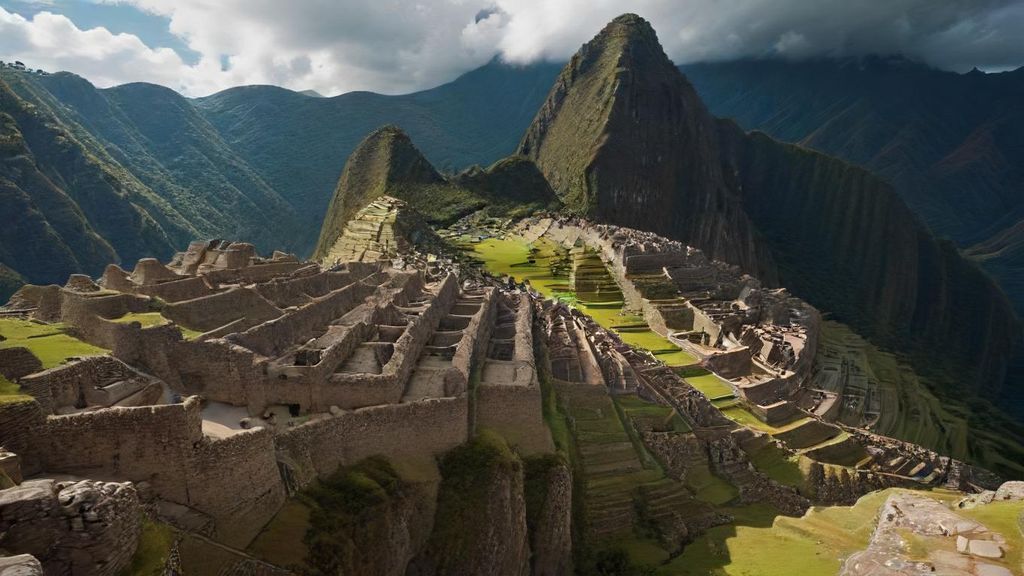
Imagine if today’s architects had to build huge structures in an earthquake zone, but without steel, concrete, or even mortar. Sounds impossible, right? Yet, this was the everyday challenge for the Inca in the towering Andes Mountains. The amazing way they built their cities wasn’t just about clever building skills. It turns out their unique style, which created incredibly strong, mortarless stone cities, was deeply influenced by their tough environment and their strong spiritual beliefs. The main reason the Inca built with such incredible care and precision was a powerful mix of what they needed to do, their deep religious faith, and a very clear message about their power as an empire.
How Did the Land Itself Shape Their Cities?
The Andes, while stunningly beautiful, are a land of extremes. The Inca homeland was (and still is) an earthquake hotspot, meaning tremors were a constant danger. Most people think of ancient buildings as crumbling ruins, but many Inca walls have stood strong for centuries, even through powerful quakes that have damaged newer buildings from colonial times. Here’s what we discovered: Inca builders knew that stiff walls filled with mortar would simply crack and fall apart during an earthquake. So, they perfected a technique called “dry fitting.” This meant they cut huge stones with such amazing accuracy that they fit together like puzzle pieces, without any sticky glue holding them. This allowed the stones to shift slightly when an earthquake hit, absorbing the shock, and then settle back into place. It’s like how modern flexible buildings are designed to sway instead of break. This smart city design wasn’t just a choice; it was how they survived.
This strong connection to the earth also played a big part in their spiritual world. The Inca deeply respected Pachamama, the Mother Earth, seeing her as a living, sacred being. Building with natural stone, carefully shaped to fit the land’s natural curves, was an act of worship. They weren’t just putting up walls; they were creating a conversation with the mountains, rivers, and sky. The sheer effort and precise work involved in carving and placing each stone showed their respect for the sacred landscape and their place within it. Digs by archaeologists show that some stones were even shaped to look like mountain peaks or rock formations, literally bringing the landscape into their architecture.
What makes this even more fascinating is how their building projects also served a political purpose. The ability to dig out, move, and perfectly shape these enormous stones for cities like Cusco (their capital) and Machu Picchu was a huge display of the empire’s amazing organization and control. Think of it like a modern government building a huge project, such as a high-speed rail network or a new space station. It needed massive resources, skilled workers, and incredibly well-planned coordination. These monumental buildings showed off their power and cemented the Inca’s authority over newly conquered lands. Historians say these huge building projects were a physical way to show that they had a divine right to rule.
The truth is more interesting than you might think: the Inca didn’t invent this technique on their own. They actually learned from earlier Andean civilizations. Groups like the Wari and especially the people of Tiwanaku (a powerful culture that existed long before the Inca, around 500 to 1000 CE, near modern-day Bolivia) had already experimented with precise stonework. The Inca learned from these earlier cultures, making their methods even better and taking them to an incredible new level during their empire’s peak from roughly 1400 CE to 1532 CE. They took what was good and made it perfect, turning practical skills into an art form that showed strength, devotion, and an unmatched understanding of their challenging environment.
This amazing mix of smart engineering, deep spiritual belief, and a desire for imperial power completely shaped how the Inca approached building. It wasn’t just about having a roof over their heads; it was about survival, worship, and making a powerful statement in stone. The next chapter will explore the incredible tools and techniques they used to achieve this seemingly impossible precision.
The Inca perfectly shaped and fit massive stones without mortar by using an incredibly patient ‘cut-and-try’ technique, combined with clever engineering and a highly organized labor force. They painstakingly quarried, moved, and then ground each stone to fit precisely, creating structures in cities like Machu Picchu and Cusco that have stood for centuries. This wasn’t magic; it was the result of immense human effort and a deep understanding of materials and physics.
The whole process started far from the cities, often in quarries like those near Ollantaytambo. The Inca builders didn’t just grab loose rocks; they carefully broke huge pieces from solid rock. First, they looked for natural cracks in the stone. Then, they chipped small grooves along these cracks. They would push wooden wedges into these grooves, soak them with water, and let the wood expand. This expansion created a lot of force, splitting massive stone blocks right off the rock face. After that, they used harder stones like hammers, chipping and pounding to give the blocks a rough shape. This made them lighter for the incredibly tough journey ahead.
Moving these giant stones, some weighing many tons, over the steep Andean mountains was another amazing feat. Imagine trying to pull a small car up a steep hill; now picture that car as a boulder the size of a house! The Inca built clever systems of dirt ramps, often winding around the building sites. They used strong wooden levers to gently push and guide the stones. Thick ropes, made from natural materials like maguey cactus or alpaca wool, were crucial. Hundreds, sometimes thousands, of workers pulled these ropes. It was like a giant human chain, powered purely by organized strength and a good grasp of how things move, helping them spread the weight and beat gravity with amazing skill.
What Evidence Supports This Incredible Effort?

Once a stone arrived, the true magic started. The Inca used a method often called the ‘cut-and-try’ technique, which sounds easy but was anything but. Imagine this: a huge stone is gently moved next to one already in place. Skilled workers would carefully look at the gap, finding any spots that stuck out. Then, they would move the giant stone away again. They used harder rocks, often with sand and water, to grind down those high spots. This wasn’t a fast job; they repeated this process—moving, marking, grinding, and trying again—sometimes hundreds of times. They kept going until the fit was so perfect you couldn’t even slide a knife blade between the stones. This careful work amazed Spanish writers in the 1500s, like Pedro Cieza de León. He wrote about the stones in Cusco:
The stones are so well fitted that in many places the joint can scarcely be distinguished.
That’s how tight they were!
The way these stones joined together was both varied and practical. You’ll often see what’s called polygonal masonry. Here, stones have many odd shapes and angles but fit together flawlessly, creating a strong, interlocked wall that’s almost completely earthquake-proof. Other buildings use exact ashlar masonry, where rectangular blocks are laid out in neat, even rows. Then there’s the distinct pillow-faced masonry, where the stones stick out, looking soft and rounded, but the connections beneath are still super tight. These different styles weren’t just for show; they helped spread out the pressure during the area’s frequent earthquakes, letting the whole wall “sway” with the shaking instead of falling down.
The sheer size of these building projects tells us they had a highly organized workforce, guided by talented craftspeople and clever engineers. It wasn’t just about raw muscle; it was about smartly using simple tools and having a deep knowledge of rocks and how things work. These head builders were like the project managers of their time. They supervised huge teams of special workers, each person playing a key part in turning rough rock into stunning buildings. Their work is a massive win for engineering, creating structures that have lasted hundreds of years, surviving both earthquakes and the passage of time.
The amazing cleverness behind these techniques—from using nature’s power to the super careful ‘cut-and-try’ method—shows a society truly connected to its surroundings and dedicated to perfection. Their lasting impact isn’t just beautiful cities. It’s proof of what human creativity and teamwork can accomplish without any modern tools. But building these perfect cities was only one piece of the puzzle. What did the Inca actually do with these amazing places, and how did they run such a massive and complicated empire?
What makes Inca dry stone architecture so incredibly strong and earthquake-resistant?

Imagine living somewhere the ground often shakes hard enough to knock down buildings. That was daily life for the Inca in the Andes. What’s amazing is that their cities, built with huge stones and no sticky mortar, still stand today, famously surviving centuries of powerful earthquakes. The simple secret to their incredible strength and ability to bounce back? A clever, almost surprising idea: they designed their buildings to be flexible, not stiff.
It turns out, by skipping mortar, the Inca allowed their perfectly shaped stones to actually “dance” during an earthquake. Think of it this way: when the ground moves, these huge stones, often weighing tons, can slightly shift and then settle right back into place. This movement spreads the earthquake’s energy around, stopping it from piling up in one spot and causing a crack or collapse. It’s totally different from a modern brick wall, where stiff mortar cracks under pressure, often making the whole thing fall apart. The Inca realized that allowing their buildings to bend and sway was the key to survival.
How Did They Achieve Such Precision Without Modern Tools?
This amazing earthquake-proof design wasn’t just good luck; it was super smart engineering. The Inca cut each stone with such incredible precision that they fit together like a perfect puzzle. Seriously, you often couldn’t even slide a thin knife blade into the gaps! This snug fit, plus the heavy weight of the stones, created a strong grip, holding the walls steady even as they swayed. Historians who’ve studied these places say many Inca buildings have survived earthquakes that completely knocked down newer buildings in nearby towns.
But these interlocking stones were only one piece of their clever city design. The Inca used a few other smart building tricks to make their structures even stronger. For instance, look at their doors and windows. They’re usually not square or rectangular. Instead, they’re trapezoidal – wider at the bottom and narrower at the top. This shape naturally spreads out weight and pressure more evenly, making the openings much tougher against side-to-side pushes, like those from an earthquake.
Another smart move was the slight inward slope of their walls. If you look closely at taller Inca walls, you’ll notice they lean inward just a little from the bottom to the top. This small lean makes them much more stable and less likely to fall over – kind of like how a pyramid is more stable than a tall, skinny tower. And then there were the foundations. They weren’t just shallow ditches; Inca builders often dug deep, well-drained foundations, sometimes even carving them into the solid rock below. This careful base provided a steady platform that could soak up the ground’s shaking, much like a good suspension system on a car helps it handle bumpy roads.
What Does This Teach Us About Enduring Design?
The lasting impact of Inca engineering is truly amazing. When you visit places like Machu Picchu, which is right in an earthquake zone, you’re seeing buildings that have stood strong for over 500 years. Think about other ancient wonders, like the Roman Colosseum, which used a lot of stiff concrete and mortar. While super strong, Roman buildings often got damaged much worse in earthquakes than Inca ones, simply because they couldn’t bend.
What makes this so amazing is that the Inca didn’t have steel, complex math, or modern building machines. Yet, they came up with clever, long-lasting construction methods that teach us so much about design, how to recover from setbacks, and how to work with nature. They understood that sometimes, going with nature’s powerful forces, instead of fighting against them, is actually the stronger way. Their buildings aren’t just incredible structures; they’re lasting lessons in being adaptable and solving problems smartly when facing constant earthquake threats.
It’s clear the Inca builders weren’t just expert stonemasons; they were expert earthquake engineers. But knowing how they built structures that moved like a living thing during an earthquake only makes you wonder even more about the huge human effort involved. How did they actually manage to cut, move, and perfectly fit these massive stones without wheels, iron tools, or the modern lifting equipment we rely on today? That, perhaps, is the most incredible part of their story.