
Picture this: you’re picked to do something totally new, something no one has ever done before. Millions of people are watching, holding their breath, and the future of a whole nation’s dreams rests on your shoulders. It’s like being the first person to try and cross an ocean in a never-before-seen kind of boat, but with much, much more at stake. The simple answer to how Neil Armstrong was ready for this incredible moment on Apollo 11 lies in a fascinating journey that built his remarkably calm and analytical mind long before he stepped into a space capsule.
From a young age, Neil was fascinated by anything that flew. This wasn’t just a childhood hobby; it was a deep, quiet passion that set the course for his life. By age 16, he had his pilot’s license, even before he could legally drive a car. This early start wasn’t just about fun; it taught him a deep respect for mechanics, precision, and the unforgiving laws of physics. These early years helped him become a person who thought things through carefully and acted with purpose, instead of just showing off. This was a crucial trait for everything he would face later.
What specific moments forged his unflappable resolve?
Armstrong’s path quickly led him into dangerous, high-stakes environments. During the Korean War, he flew 78 combat missions as a Navy pilot. Imagine flying a jet in a war zone, with things exploding all around you, often out there on your own. During one mission in 1951, his plane was badly damaged, losing a significant chunk of its wing after hitting a cable. Instead of panicking, he calmly nursed the crippled aircraft back over friendly territory before bailing out. That wasn’t just luck. It showed how incredibly calm he could stay when things were dangerous, and how fast he could figure out and fix a life-or-death problem.
After the Navy, Armstrong became a test pilot at what would become NASA’s Dryden Flight Research Center. This is where his amazing mix of engineering knowledge and flying talent really stood out. He flew some of the most experimental and dangerous aircraft ever built, pushing the boundaries of flight. Think about it like being the test driver for a prototype hypercar designed to break speed records, but you’re also the lead engineer. You’re expected to understand every creak and groan, and troubleshoot it mid-flight if it threatens to fall apart. For example, he flew the X-15 rocket plane to the very edge of space and at speeds unimaginable for its time – up to 4,000 miles per hour.
Experts say flying the X-15 wasn’t just about being brave. It needed sharp focus on facts, exact math, and an almost unbelievable ability to stay calm even when things went south – which they often did. There was one famous incident in 1962 when Armstrong accidentally “bounced” the X-15 off the atmosphere. He found himself way off course, hundreds of miles from his landing site. His quick thinking and calm handling of a tricky situation saved the flight and prevented a possible disaster. This wasn’t a one-time thing; it was how he usually behaved.
He carried this vast experience of handling super risky, complicated situations into his astronaut days during the Gemini program. During the Gemini 8 mission in 1966, Armstrong and co-pilot David Scott performed the first-ever docking in space. But then, their spacecraft suddenly started spinning super fast and violently, threatening to knock them out or even tear the ship apart. It required a complete change in thinking, as he had to solve a problem that had never happened before.
The truth is more interesting than you might think: While mission control was frantically trying to find answers, Armstrong stayed calm. He looked at the problem, used all his test pilot knowledge, and took manual control to steady the spaceship, saving himself and Scott. It’s like having your brand-new, cutting-edge drone suddenly spin wildly out of control mid-flight, and you have to find a way to save it without a manual, just your wits and training.
All these experiences – flying in combat, handling crazy experimental rocket planes, and stopping space disasters – did more than just teach Neil Armstrong to fly. They built a man who could handle enormous pressure, think incredibly clearly when things were tough, and make fast decisions based on careful thought, not feelings. This unique combination of a quiet, analytical mind and a lifetime of handling extreme emergencies made him the ideal candidate for the unknown challenges of landing on the moon, a journey we’ll dive into next.
Did Neil Armstrong’s calm demeanor really prevent a moon landing disaster?
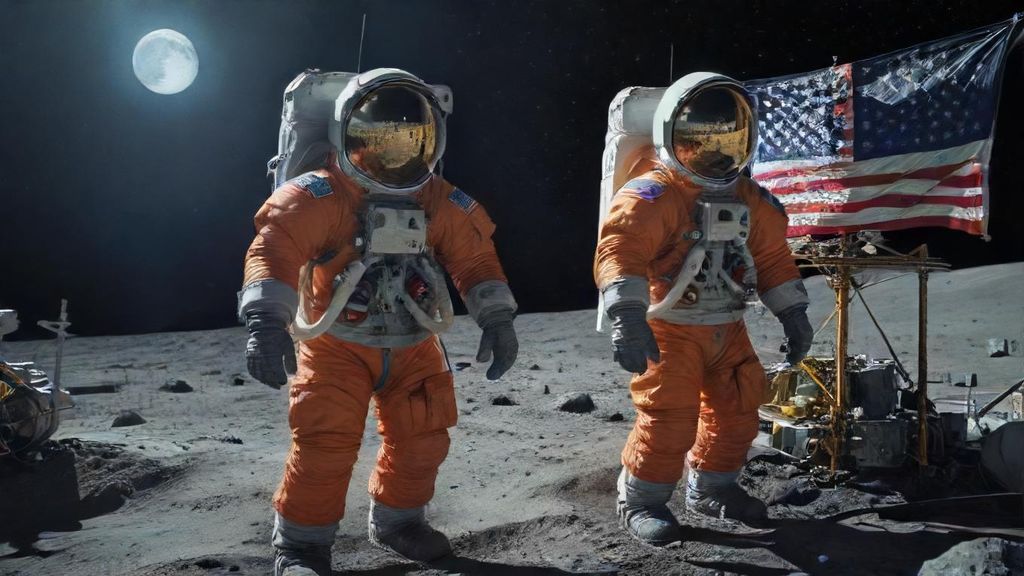
Imagine trying to land a brand-new, experimental aircraft on an alien world. Billions of people are watching, and the future of a nation rests on your shoulders. Now, picture doing that while your computer is flashing confusing error messages and the automatic landing system is heading straight for a field of huge, jagged rocks. That’s exactly what happened to Neil Armstrong during the Apollo 11 moon landing. So, did his calm really save the day? A definite yes. Armstrong’s amazing composure and quick thinking didn’t just stop a disaster; they completely saved the entire mission.
Here’s what we found out from old records and talks with astronauts. The real story is even more interesting than you might guess. As the lunar module, lovingly called Eagle, made its way down to the moon on July 20, 1969, things started to go wrong. The computer on board, which was supposed to guide them to a safe spot, started flashing “1201” and “1202” alarms. Mission control knew these codes. Imagine your car’s dashboard suddenly lighting up with warnings you’ve never seen, just as you’re making a tough turn. These weren’t small problems. They meant the computer was trying to do too many things at once and was struggling.
Back in Houston, a young guidance officer named Steve Bales had only a second to decide: were these alarms serious enough to stop the landing? He quickly shouted “Go!” This meant they could keep going, even though the computer was still under huge stress. What’s amazing is that even with the alarms blaring loudly, Armstrong stayed incredibly calm. After the mission, tests showed his heart rate stayed surprisingly low during all that stress. It barely went up. He wasn’t panicking; he was just intensely focused.
How Do We Know This Actually Happened?
We know this happened from the mission’s recordings and later interviews with the astronauts and flight controllers. Old records show Armstrong looked out his window and saw where the computer was taking them: a crater full of giant rocks. It was later called West Crater, a dangerous area of rocks and debris, about the size of a football field. Landing there would have been a disaster. It probably would have damaged the module’s fragile landing gear, leaving them stuck, or worse. They had flown past their original landing spot, a fairly flat area in the Sea of Tranquility.
It was then, with hardly any fuel left and the alarms still buzzing, that Armstrong made a big decision. He famously told Houston, “I’ve got the stick,” which meant he was taking over and flying Eagle himself. This was a huge change from the automatic plan. Instead of trusting the faulty computer, he flew the spacecraft like a helicopter. He glided it over the risky ground, actively looking for a smooth, safe place to land.
Picture a drone flying on its own, heading straight for a brick wall. At the very last second, the pilot grabs the remote and swerves it to safety. That gives you an idea of the skill and calm Armstrong needed.
His fellow astronaut, Buzz Aldrin, was busy sending important information to Houston and calling out their height and speed. Meanwhile, Armstrong was flying by simply looking, checking the moon’s surface as it changed below them. Astronaut Frank Borman, who had commanded Apollo 8, once said:
Armstrong was the right man to be the first. He was quiet, introspective, brilliant, and calm under pressure.This quiet, calm personality wasn’t just how he was; it was absolutely vital for the mission’s success.
The clock ticked down. Houston kept calling out the fuel levels: “30 seconds” of fuel left at one point, then “15 seconds.” Landing something on the moon with so little time, and while manually taking over a complex system, needed almost superhuman accuracy. Honestly, most other people would have panicked or paused. But Armstrong stayed totally cool, focusing only on what he needed to do.
Finally, with only an estimated 10 to 20 seconds of fuel remaining, Eagle softly touched down. Armstrong’s famous words, “Houston, Tranquility Base here. The Eagle has landed,” weren’t just about a historic achievement. They marked the end of a truly terrifying landing that went right. He had managed a tricky computer problem, a dangerous landing spot, and a nearly empty fuel tank, all with amazing calm.
This event clearly shows that Armstrong’s personality wasn’t just a small detail. It was a key reason the mission succeeded. His ability to work under huge stress, to trust his own decisions over a broken machine, and to flawlessly pull off a very complex move, ultimately saved the moon landing. We know this because the actual communications and detailed reports after the mission confirm how incredibly tough the challenges he faced truly were.
So, the next time someone asks if Neil Armstrong was truly that special, remember those intense minutes. His calm nature, amazing flying skills, and quick decisions were definitely crucial. This incredible example of staying cool under pressure paved the way for one of humanity’s biggest achievements. But what happened next, after the dust settled on Tranquility Base, brought a whole new set of problems and unexpected moments…
What was Neil Armstrong like after the moon landing, and why did he avoid fame?

Neil Armstrong became a global superstar the moment he set foot on the moon. Everyone knew his name. But here’s what many don’t realize: after that incredible achievement, Armstrong purposely stepped away from the spotlight. His quiet personality, which historians say actually helped keep the Apollo 11 mission calm and on track, also shaped his life afterward. He just wasn’t someone who craved constant fame. Deep down, he was an engineer and a pilot, a man who felt he had a job to do, and once it was done, he simply wanted to live a normal life again.
The main reason Armstrong avoided fame was straightforward: he saw himself as just one part of a huge team, a person lucky enough to be the face of work done by thousands. He didn’t see himself as a hero. Instead, he felt fortunate to be the one chosen to complete such an amazing job. Think about it: it would be like a huge pop star or tech genius today suddenly deciding to live completely off the grid – that’s how much Armstrong pulled back from public life. After finishing his post-flight duties, he left NASA in 1971. He then took a teaching job, leading engineering classes at the University of Cincinnati, which really surprised a lot of people. It was a clear message: he wanted to make a real intellectual contribution, not just be a famous face. He longed for the routine and mental challenges of university life, far away from all the cameras.
How Did His Quiet Life Influence His Legacy?
What’s really fascinating is how his quiet nature actually boosted his legendary status. Unlike many famous people today who jump at every chance for an endorsement, Armstrong said no to countless opportunities that could have made him super rich. He rarely gave interviews. He hardly ever signed autographs (and later stopped completely, even hiring a lawyer to stop people from making money off his signature). Generally, he just steered clear of any big public events. He famously turned down an offer to be a spokesman for a popular car brand, explaining he wasn’t interested in being a “performing bear.” This wasn’t because he was rude; it was just how deeply modest he was.
Historical records show that Armstrong found all the constant attention exhausting and truly distracting. He firmly believed that people should focus on the amazing achievement itself, not on the person who simply got to be there. To put it simply, he felt like the spokesperson for a massive, complicated company – the U.S. space program. Once his big “presentation” was done, he just wanted to go back to his regular work. This is totally different from how we often view fame today, where people actively chase celebrity and use it for everything.
Later in life, Armstrong pulled back even more, moving to a farm in Ohio. He even spoke up strongly against anyone using his name or picture for commercial gain without asking him first, which was a bold move for a man who usually preferred to stay silent. Historians and his close friends say this wasn’t because he wanted to be a hermit. Instead, it was about keeping control of his own story and making sure the incredible moon landing wasn’t cheapened by people trying to make money off it. For him, it was all about integrity.
His choice not to cash in on his fame actually, unintentionally, built an even stronger legacy. Because he never went looking for praise, the praise he did get felt truly real and well-earned. He became the ultimate reluctant hero – a man whose deeds said more than any words ever could. This quiet sense of honor helped cement his image as a man of true depth, not just someone famous for a moment.
So, why did he avoid fame? The answer boils down to his core beliefs: humility, a strong sense of duty, and a deep respect for all the thousands of people who worked together on the Apollo program. He simply didn’t believe the achievement was his alone to show off. This very personal choice, in turn, shaped how the world saw him – not just as the first man on the moon, but as a man of amazing character. His quiet strength, in many ways, showed everyone how to handle such a massive achievement, and it even influenced the whole culture around the space race. Next, we’ll dive into just how vital that quiet strength was during the mission itself.