
Imagine your powerful neighbor, who already owns most of the block, suddenly deciding your garden is vital for their “neighborhood security plan.” They then demand you change everything about how you live. That’s a bit like the huge pressure the Zulu Kingdom faced right before the terrible Anglo-Zulu War. King Cetshwayo kaMpande and his Zulu nation were caught in a tough spot, squeezed between the unstoppable British Empire and the strong need to keep their own unique traditions alive.
The main reason for this growing pressure was the British Empire’s big, but ultimately flawed, plan for southern Africa. They wanted to create a Confederation – basically, one giant, unified country controlled by the British, made up of all the independent states and colonies in the region. Think of it like a huge company trying to buy up all the smaller businesses to create a monopoly. The Zulu Kingdom, being powerful and independent, was seen as the biggest obstacle to this plan. Its very existence, with its strong army, was viewed as a threat to British power, even though King Cetshwayo always said he wanted peace.
What Sparked the British Demand for War?
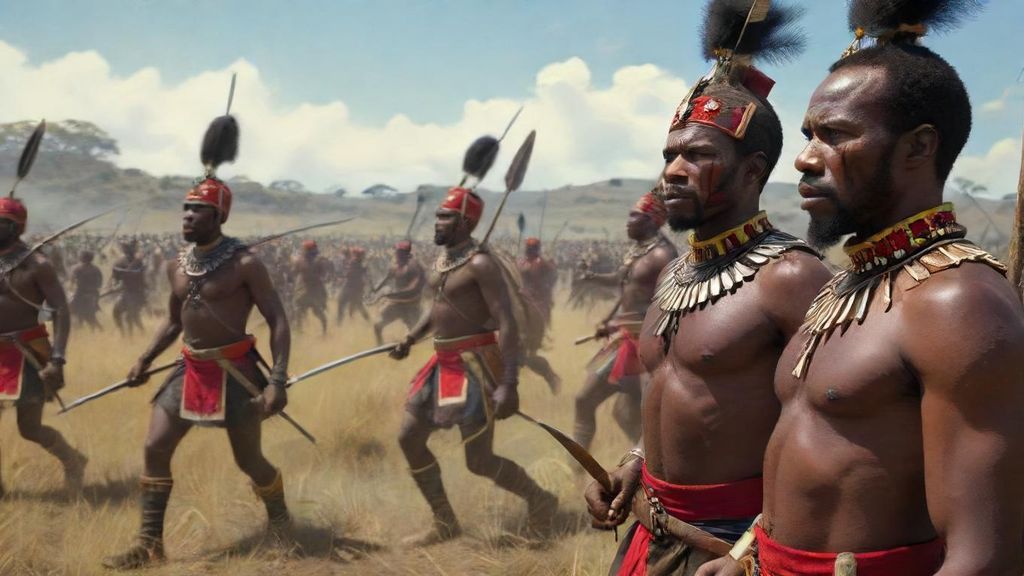
It turns out the British were actively looking for an excuse to break up the Zulu army and take over the kingdom. They came up with a series of impossible demands. It started with a disputed strip of land between the Zulu territories and the Boer republic of the Transvaal, which the British had recently taken over. The Zulus claimed this land, and an independent boundary commission actually agreed with them! But the British High Commissioner, a man named Sir Bartle Frere, simply ignored the findings. Frere was convinced that the Zulu nation, with its strong military traditions, posed a real danger to British settlers and their plans for confederation. He believed war was necessary to ‘civilize’ the region and protect British interests.
The facts show that Frere gave King Cetshwayo a final warning, or ultimatum, in late 1878. This wasn’t a real negotiation; it was a trap. The demands included getting rid of the entire Zulu army, allowing Christian missionaries free access, and accepting a British official to control Zulu affairs. Imagine being told to throw away your entire national defense and give up your independence! Cetshwayo, to his credit, tried to negotiate and delay. He knew that accepting these terms would mean the end of his kingdom as he knew it. He even offered some concessions on the disputed border, proving he truly wanted peace. But the British had already made up their minds.
According to historians, this ultimatum was timed on purpose. The British wanted to act before the dry season ended and the rivers swelled, which would make moving troops much harder. When Cetshwayo couldn’t meet the impossible terms by the deadline, Frere declared that the king was rejecting British authority. What makes this fascinating is that Cetshwayo had actually agreed to parts of the ultimatum but simply couldn’t meet the most important demand about his army without completely destroying his own power and the very way his society was organized. The Zulu army wasn’t just a fighting force; it was deeply connected to their social life, based on an age-grade system where men served the king in different ways throughout their lives.
So, in January 1879, British forces invaded Zululand, starting the Anglo-Zulu War. The early days of the conflict brought a shocking Zulu victory at the Battle of Isandlwana, where Cetshwayo’s warriors wiped out a British column. This temporarily boosted Zulu spirits and surprised the world, but it was ultimately just a short-term setback for the British, who had much better weapons. The war dragged on, with fierce battles like Rorke’s Drift and Ulundi. The truth is, the Zulus, despite their incredible bravery and tactical skill, just couldn’t stand up to the British guns and cannons. The sheer difference in firepower was like trying to win a drone war with bows and arrows.
This terrible conflict led to Cetshwayo’s eventual defeat and exile. By July 1879, the British had burned his royal capital at Ulundi and captured the king. He was sent away, first to the Cape Colony and then to London. This wasn’t just a military loss; it was a deep national and personal disaster. The Zulu Kingdom, once a powerful and independent force, was broken up and taken over by the British. This dramatic story sets the stage not just for political struggles, but for one king’s incredible strength and the personal grief that would follow him, forever changing the future of his people.
What Happened When King Cetshwayo Returned to a Divided Zulu Nation?

Imagine getting a puzzle box back, but half the pieces are missing, and the ones you have are scattered and even glued together wrong. That’s pretty much what happened when King Cetshwayo finally came back to Zululand in 1883 after years away. People hoped his return would bring peace, but instead, it kicked off a heartbreaking struggle against impossible odds, plunging him into deep personal sorrow. The simple answer to what happened is this: he returned to a kingdom intentionally set up to fail, paving the way for even more chaos.
After the British defeated him in 1879, Cetshwayo spent years far from home. He was in Cape Town, and he even traveled to England, arguing for his kingdom to be given back. He stood for Zulu independence, and many hoped his return would fix the damage done by the war. However, the British “gift” of putting him back on the throne was anything but. Think of it like a strict probation period, or a company bringing back its old CEO but giving him no real power. He was only allowed to rule a small, central part of his old kingdom, stripped of much of its land and influence. This wasn’t just about making the kingdom smaller; it completely changed how people thought about Zulu power.
Crucially, the British deliberately left many of his biggest rivals, like the powerful chief Usibepu kaMaphitha (often called Zibhebhu), completely independent and outside Cetshwayo’s control. This wasn’t an accident; it was a clever move to keep the Zulu nation weak and broken. It’s like breaking up a successful company and then bringing back its founder, but leaving his fiercest competitors, funded by the very people who broke up the company, free to operate right next door. John Shepstone, the British Resident Commissioner, was also there, watching Cetshwayo’s every move to make sure he followed these strict rules. Historical records show the British were very clear about their goal. For example, Sir Henry Bulwer, the Governor of Natal, wrote in his official letters that their aim was “to prevent the recurrence of such a power as existed under Cetshwayo before the war.”
…to prevent the recurrence of such a power as existed under Cetshwayo before the war.
The British had already split the mighty Zulu kingdom into thirteen separate chiefdoms before Cetshwayo returned. This was their “smart plan” to stop any future unified resistance. Cetshwayo wasn’t king of a united people anymore; he was a king of a broken home, where old loyalties were crumbling and new rivalries had taken root. We now know that his return, under these exact conditions, actually sparked new conflicts instead of settling anything. The truth is, his return was just the start of even more division.
This must have been absolutely heartbreaking for Cetshwayo. He came back not to cheering crowds, but to a deeply divided nation, where his leadership was questioned every single day. Imagine trying to lead a sports team after it’s been purposely sabotaged, its best players traded to rival teams, and its resources stolen. He tried to rebuild, to bring back the old order and unity, but the internal problems were already too deep. There were betrayals from people who had sided with the British or gained power while he was gone. What’s truly fascinating is seeing how a king, once so powerful, was reduced to a mere figurehead, struggling against a wave of intentional chaos.
The intense personal pain he felt wasn’t just about losing power; it was about watching his people fall apart. He had seen the Zulu nation destroyed in the war, and now he was forced to watch it continue to unravel from within, largely powerless to stop it. Historians say that the burden of this responsibility, combined with the constant fighting among his own people, slowly began to crush him. This time truly marked the beginning of his deep sorrow – a grief for a nation he was meant to guide, but couldn’t truly rule.
How Do We Know This Actually Happened?
We know all this from a lot of different historical accounts. We have extensive official British letters and detailed reports from colonial officials like Shepstone. These documents clearly describe the exact conditions of Cetshwayo’s return and the struggles that followed. There are also powerful stories from missionaries and travelers who saw the chaos firsthand, giving us a glimpse into daily life. Importantly, later on, Zulu elders shared their oral histories, offering a crucial perspective from the Zulu people themselves. These different viewpoints come together to paint a clear, though sad, picture of a king facing an impossible task and the growing despair that consumed him.
Cetshwayo’s return in 1883 wasn’t really a restoration; it was more like a deliberate test, designed to push him to his absolute limits. It paved the way for a time of intense internal warfare that would only deepen his suffering and further tear the Zulu nation apart. Next, we’ll see just how quickly and brutally these simmering tensions exploded into open conflict.
How Did King Cetshwayo’s Final Years Plunge the Zulu Nation Into Chaos?

Imagine a king, stripped of his power, exiled for years, finally allowed to return home. You might picture a triumphant homecoming, but for King Cetshwayo kaMpande, his return in 1883 was anything but. The simple answer to how his final years brought chaos isn’t just about politics or war. It’s about a man, deeply saddened and physically broken, trying to lead a nation that had already been shattered. This tragic mix of his personal decline and a kingdom deliberately pulled apart created a perfect storm, leading directly to the wild chaos that consumed the Zulu people and sealed their fate.
The truth is, Cetshwayo came back to a Zulu kingdom that barely existed anymore. The British, after beating him in the Anglo-Zulu War, had carved up the land into 13 separate chiefdoms. This wasn’t a move for peace; it was a clever plan to keep the Zulu people permanently divided. Think of it like a big company intentionally creating competing internal divisions to weaken any single challenger. They basically set the stage for a civil war, which was already brewing. When Cetshwayo was allowed back, he was given only a small piece of his former territory. This was a symbolic gesture that fooled no one. The main reason this caused so much chaos was that it destroyed any chance for stable leadership.
Here’s what we discovered about the king himself: Cetshwayo was a shadow of his former self. His long exile had taken a massive toll, but what truly crushed him was losing his children during that time. Think about how losing everything you’ve built, then losing your family, would affect anyone. He was deeply depressed, and his health was failing, according to historical records. This deep personal sorrow and physical decline made it impossible for him to effectively reunite his loyal followers, known as the usuthu, with rival groups like the mandlakazi. These rivals, led by Zibhebhu kaMaphitha, had grown powerful in his absence. Cetshwayo simply lacked the energy, the vision, and the command needed to pull his fractured nation back together.
What makes this fascinating is how quickly the situation got worse. Instead of bringing peace, Cetshwayo’s return sparked an even fiercer civil war. Zibhebhu wasn’t about to give up his newfound authority. The fighting escalated dramatically, ending with the devastating Battle of oNdini in July 1883. In simple terms, Cetshwayo’s forces were completely crushed. He barely escaped with his life, fleeing with what little dignity he had left. It’s like a sports team bringing back their star player, only to find he’s lost his touch and the team falls apart even more.
How Do We Know This Actually Happened?
We know this because strong proof comes from multiple sources. Historians like Jeff Guy, who has studied this period in great detail, tell us a lot. British colonial reports from officials like Sir Theophilus Shepstone and missionary accounts from figures like Bishop John Colenso often described Cetshwayo’s declining health. They also frequently detailed the growing conflicts he seemed powerless to stop. Local newspapers of the time, such as The Natal Mercury, also carried regular reports about the violence and the king’s increasingly frail state. On top of that, stories passed down through Zulu families offer powerful evidence. They paint a clear picture of a broken king unable to control a nation already tearing itself apart. These firsthand and near-firsthand accounts all tell a consistent story.
After the defeat at oNdini, Cetshwayo was forced to seek safety in the British reserve territory. He was a king in name only. His health continued to get worse quickly, and he died in Eshowe in February 1884. His death, far from ending the chaos, simply removed the last, weak hurdle to British control. The Zulu nation, already deep in a destructive civil war because of Cetshwayo’s grief and his inability to lead, became an easy target for the British to take over completely.
So, Cetshwayo’s final years were a heartbreaking story where personal tragedy mixed with national disaster. His deep sadness and physical decline left a huge hole in leadership. This hole was quickly exploited by groups looking to gain power and by British colonial policy. This wasn’t just a king’s passing; it was the final, tragic unraveling that led directly to the complete takeover of the Zulu people. Next, we’ll explore what happened immediately after his death and how the British quickly moved in to erase Zulu independence forever.