
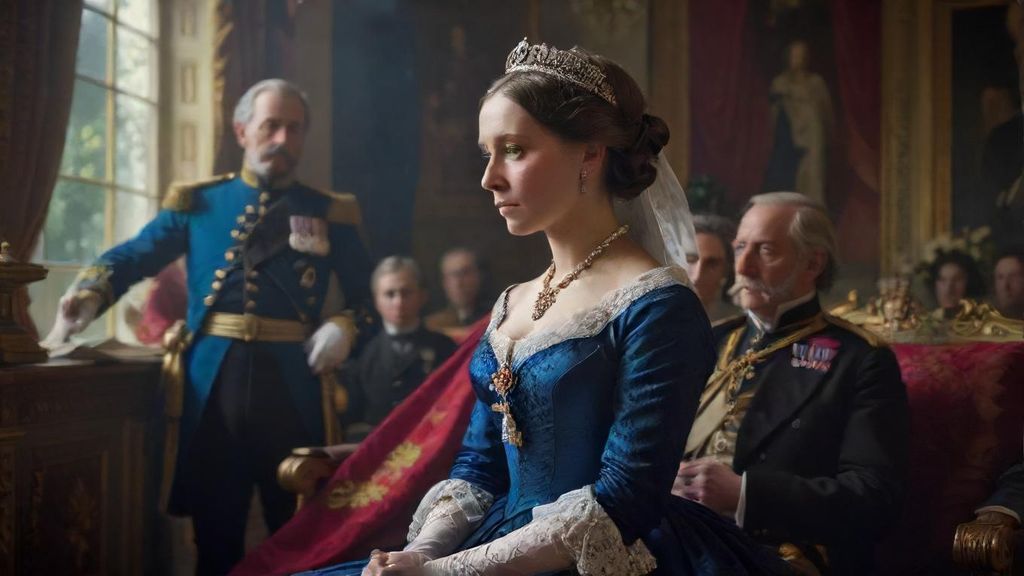
Imagine a country’s leader or a famous CEO suddenly losing their life partner and then just disappearing from public life for years, maybe even decades. That’s essentially what happened to Queen Victoria after the death of her beloved husband, Prince Albert, in December 1861. The simple answer to why her grief lasted so long and affected her rule is that Albert was not just her husband; he was her political partner, her closest advisor, and the driving force behind her time as queen. His death left a huge hole in her life that she never really filled. This personal heartbreak quickly turned into a problem for the whole country.
For Victoria, losing Albert wasn’t just about losing a husband. It was like losing half of herself, the person who made her job feel manageable and even enjoyable. Historians say Albert was Victoria’s rock, just as smart as she was, and the main reason for many good, forward-thinking changes early in her reign. You could say he was her essential right-hand man, her top advisor, and a co-leader all wrapped into one. When he died suddenly, probably from typhoid fever, Victoria was completely devastated. Her diary entries from the period are heart-wrenching. For instance, she wrote:
My life as a happy wife is over! The world is gone for me.
She wasn’t exaggerating; this was the raw feeling of a woman whose entire identity was deeply linked to her life with Albert.
How did Victoria’s grief change her public role?
Her deep sadness made her pull away from public life right away and very dramatically. Victoria left London, avoiding royal duties, Parliament openings, and even regular social events. She started wearing deep black mourning clothes, which she kept on for the rest of her life, earning her the famous nickname ‘the Widow of Windsor.’ For years, she chose to stay on her private estates like Windsor, Osborne, and Balmoral, barely showing herself as queen. She even ordered Albert’s rooms to be kept exactly as he left them, with his shaving kit and clothes laid out every day – a powerful, private habit that showed just how much she still missed him.
This sudden retreat, however understandable on a personal level, created a significant problem for the British government and the public. Unlike today, where leaders have big teams and clear rules, the monarch’s visible presence was really important back in the mid-1800s. Her absence left a vacuum. Prime Minister Lord Palmerston, and later Benjamin Disraeli, had to handle government business through someone else, often using written messages and rare, difficult meetings with the Queen. This made running the government slow and much less efficient.
The initial public sympathy for the grieving Queen quickly turned into frustration and even anger. People felt abandoned by their monarch. Imagine a beloved public figure or a country’s head of state simply disappearing from their duties for years, only communicating through memos. That’s essentially what happened. This lack of a visible leader sparked a strong push for a republic in Britain – meaning many people wanted to get rid of the monarchy. Pamphlets and newspapers openly questioned the necessity of a monarchy whose sovereign refused to perform her duties. Why pay for a Queen who wouldn’t even show her face?
It turned out that this long stretch of the Queen staying out of sight, even though it came from her deep personal grief, accidentally paved the way for a whole new way of thinking about the monarchy. It also forced the government to take on more responsibility than ever before. This big change, though tough at first, would eventually shape how Britain showed its power and presented itself across its huge Empire – a story we’ll dive into next.
How did Queen Victoria’s private grief actually strengthen the British Empire?

Imagine if your country’s leader suddenly stepped away from public life, hardly ever seen, always in mourning. You’d probably think that would make the nation weaker, right? But with Queen Victoria, the real story is much more surprising. Her deep, personal sadness after losing her beloved husband, Prince Albert, didn’t break the British Empire. Instead, it strangely helped to make it stronger, even sparking its growth and making it more solid. The simple truth is that her decision to stay out of public view gave clever politicians a unique chance to reshape what it meant to be British and part of the Empire, turning Victoria herself into a powerful, almost legendary symbol.
So, what actually happened? When Victoria stepped back from the public eye, a gap in leadership naturally opened up. This wasn’t bad news for everyone, though! It set the perfect stage for important politicians to take charge. The main reason this strategy worked so well was thanks to the clever moves of one man: Benjamin Disraeli, who was the Prime Minister.
Think of it like a big company where the CEO steps back from daily tasks. A brilliant second-in-command might then grab the opportunity to make bold decisions, shaping the company’s future in new ways. This often happens with the CEO’s quiet approval, or simply because the CEO isn’t there to stop them. Disraeli, an expert at playing politics, skillfully used the Queen’s absence to his advantage. He kept her informed and respected her mourning. But, crucially, he also pushed forward with big plans for the Empire without her constant public involvement.
One of the clearest examples of this new approach happened in 1875. That’s when Britain bought shares in the Suez Canal. The Suez Canal was a huge deal, a shortcut connecting the Mediterranean Sea to the Indian Ocean. Owning part of it meant Britain had a direct route to its richest territory, India, saving huge amounts of time and money on travel.
When the Khedive (the ruler) of Egypt suddenly needed cash and offered his shares for sale, Disraeli acted incredibly fast. He snapped up the massive deal without asking Parliament first, using money borrowed from the Rothschild banking family. This bold, almost secret move, made while Victoria was still largely out of public view, showed the world a powerful, decisive Britain that could act quickly and successfully on the global stage.
Keeping this going, Disraeli made another huge symbolic move in 1876: he declared Victoria the ‘Empress of India.’ This wasn’t just a fancy new title; it completely changed how people thought. By directly connecting the grieving, strong-willed monarch to the immense size and splendor of India, Disraeli created a powerful new image for the Empire.
It made her seem like an almost holy figure, a distant, mourning mother watching over a vast global family. Her very absence from public life seemed to make her even more important. She became a symbol less about daily government and more about the timeless strength and wide influence of the British Empire itself. Historians say this move wasn’t just about controlling more land; it was about how people felt, making the Crown’s emotional and symbolic grip over its distant lands and peoples much stronger.
What Evidence Supports This Unexpected Outcome?
We know this really happened thanks to a lot of historical evidence. Disraeli’s own letters from that time show his clear plan: to make the Empire stronger while carefully handling the Queen’s withdrawal from public life. For example, he’d send her regular updates and charming notes, making her feel involved without asking for her constant presence.
Parliamentary debates from the 1870s also reveal heated talks about how the Empire should be run. Disraeli often presented these expansions as crucial for the nation’s reputation and wealth. He quietly connected them to the steady power that the Crown represented. Think about how a modern brand might use an iconic, almost legendary founder’s story to show it has lasting quality and can be trusted – that’s similar to what Disraeli did with Victoria’s public image.
Historical records also show that the public, even though they were at first unhappy with Victoria staying out of sight, eventually came to accept and even look up to her as the ‘Widow of Windsor.’ Her apparent quiet strength in sadness, combined with the new grandeur of the Empire, created a powerful story. It suggested that even in sorrow, Britain’s monarch and its Empire were unbreakable. This calm toughness became a key part of the Empire’s image, making its symbolic and emotional hold much stronger – not despite her reclusiveness, but largely because of it.
So, the truth is more fascinating than you might imagine: Victoria’s private sorrow, instead of weakening her rule, surprisingly cleared the path for a more energetic and confident approach to running the Empire under Benjamin Disraeli. This change, turning the monarch into a distant but powerful imperial figure, set the stage for more growth and a stronger feeling of national pride. Next, we’ll explore how this fresh imperial image began to affect the lives of ordinary people around the world.
What made Queen Victoria become the enduring ‘Mother of the British Empire’?

Most of us picture Queen Victoria as a serious, little old lady, always in black, deep in mourning for her dear Prince Albert. After he died in 1861, that was exactly how she was for a long time. She disappeared from public life so completely that some even wondered if the monarchy would survive. But here’s the really interesting part: her deep, lasting sadness didn’t make her weaker. Instead, it surprisingly turned her into the famous ‘Mother of the British Empire’. The secret was how she, or at least her public image, changed through smart public events, especially her Golden and Diamond Jubilees. These events turned her personal grief into a strong symbol that brought millions together.
How Did Grief Become a Symbol of Strength?
It turns out Victoria’s long time spent mourning didn’t make her seem weak at all. Actually, it made her deeply relatable to people all over the huge Empire. Think about it: if a famous person today lost someone very dear, then stepped away, but later came back not broken, but showing quiet strength and steady commitment. That’s pretty much what happened with Victoria. Her sadness became proof of her strong spirit, a way for everyone who had ever lost someone to feel connected to her. People saw a queen who knew what hardship felt like, but kept going. This dignified way of handling pain really spoke to them.
The first big moment showing this change was the Golden Jubilee in 1887. This wasn’t just a regular party. It was a perfectly planned public relations event, much like when a big company today relaunches its brand worldwide. After spending decades mostly out of sight, Victoria finally appeared before her people as a respected, elder figure. The celebrations aimed to show off her steady rule and how long she had been Queen. A massive parade through London included people from every part of the Empire – soldiers, governors, princes. It all showed a united, powerful empire, overseen by her calm, sorrow-marked look.
Records from that time tell us people’s reactions were huge. They didn’t just see a Queen; they saw a grandmotherly figure, someone who represented stability in a world that was changing fast. Her private sadness, which used to keep people away, now became something everyone could connect with. It helped create the identity of the British Empire, linking different peoples together through their shared respect for this lasting figure. They weren’t just loyal to the government or system; they were loyal to her.
What Did the Jubilees Show the World?
This whole change reached its peak ten years later with the even bigger Diamond Jubilee in 1897. This was a massive show for the Empire. Just imagine: a parade six miles long, with soldiers from India, Canada, Australia, Africa, and many other places. It clearly showed how huge the Empire was and Victoria’s important, almost magical, place in it. She sat on her throne in her carriage, a small, proper figure, but giving off huge symbolic power. Her being there proved stability, duty, and good morals, broadcast for the whole world to see.
This jubilee wasn’t just a party; it was a strong statement. It firmly set her image as the clear ‘Mother of the Empire’. She was a leader whose own journey through sadness had somehow made the huge Empire’s shared identity stronger. The monarchy under Victoria, instead of holding direct political power (which had mostly gone to Parliament), found its lasting impact in this symbolic, emotional strength. Her long-lasting grief became a story that brought people together, hinting that even in sadness, you could find strength and things would carry on.
What’s truly amazing is how a personal tragedy, usually something that weakens someone, was skillfully turned into a huge source of public strength and unity for the Empire. Her Jubilees showed everyone that the monarchy wasn’t just about grand ceremonies; it was about representing the spirit of the nation and even the Empire itself. We know this because reports from that time and later historical studies often point out the strong emotional bond people had with her, frequently mentioning her long time as a widow as proof of her steady dedication and good character.
This created a lasting impact for the monarchy. Its power wasn’t so much about direct control, but more about its ability to represent stability, tradition, and shared values. It set up how future kings and queens would connect with their people. Next, we’ll look at how this symbolic power would face new tests as the 20th century began.