
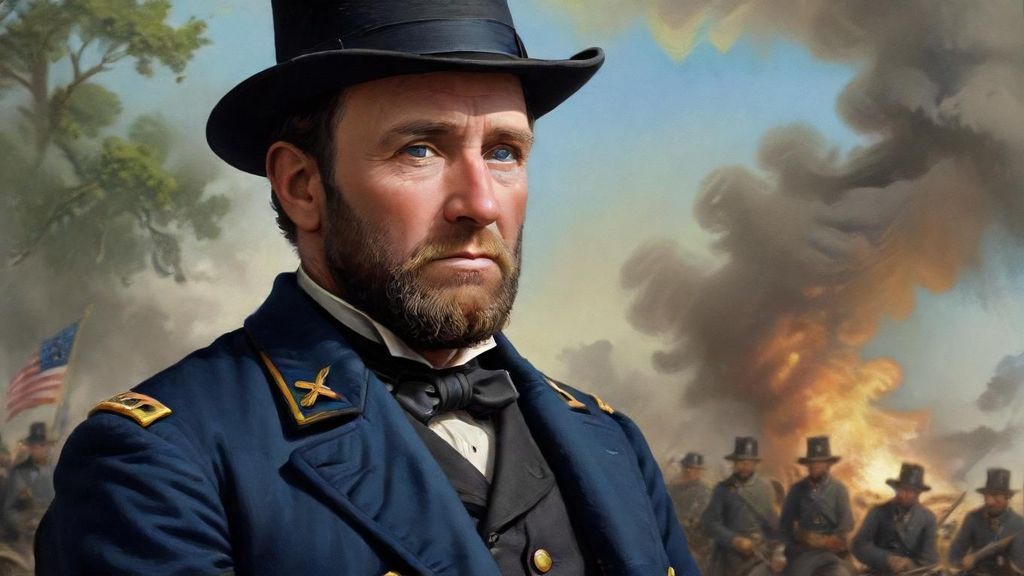
Most people picture Ulysses S. Grant as the calm, unstoppable general, the quiet victor of the Civil War. But what if the very qualities that made him a legendary commander weren’t born on a battlefield, but forged in the harsh reality of deep personal failure and hardship? The truth is, Grant’s surprising path from being an unknown with constant setbacks to a great military leader is one of history’s most compelling transformations. Before the war, his life often seemed like a string of bad luck. Yet, these tough times actually gave him special skills and a never-give-up attitude that few of his peers possessed. It turns out that his lowest points were his greatest teachers.
Grant’s early military career showed glimpses of his potential, but also his struggles. After graduating from West Point in 1843, he served with distinction in the Mexican-American War. There, he learned about strategy and logistics firsthand under generals like Zachary Taylor and Winfield Scott. These were important years, teaching him the realities of command and the practical side of war. However, the following years stationed at lonely frontier posts, far from his family, began to wear him down. Historians suggest that being isolated and living in a harsh environment contributed to his reliance on alcohol, a problem that would affect him for years.
Here’s what’s really interesting: his personal struggles led to a huge career collapse. Accused of drinking too much, Grant resigned from the army in 1854, still just a captain, rather than face a formal trial. This wasn’t just a career change; it was a deeply personal failure for a man who had known little else but military life. Imagine losing your entire career in your mid-thirties, not because you were bad at your job, but because a personal struggle got completely out of hand. This period marked the beginning of nearly seven years of civilian life where Grant seemed unable to find his footing.
What lessons did Grant learn from repeated failures?
Historical records show us that Grant tried almost everything to support his growing family, and nearly all of it fell apart. First, he tried farming on land near St. Louis, a property he famously called “Hardscrabble.” He literally built the house himself, working the land with his own hands. But the farm barely produced enough to feed his family, and eventually, he was forced to sell it. Think of today’s entrepreneurs who put all their time and money into a startup, only for it to fail, leaving them with just the lessons learned.
After that, Grant tried selling firewood in St. Louis. It was a desperate move, and it barely kept his family going. He then ventured into a real estate partnership, but the business soon went bust during a financial panic in 1857. Next, he tried being a real estate agent on his own, but his quiet, unassuming personality just wasn’t right for the tough world of sales, and he failed yet again. Finally, in 1860, almost broke, he put his pride aside and took a simple clerk’s job at his younger brothers’ leather goods store in Galena, Illinois. It must have been incredibly embarrassing for a West Point graduate and former army officer.
All these tough times – being broke, lonely, and feeling like a failure – weren’t for nothing. They built in him a special kind of toughness and a practical, no-nonsense way of thinking. Grant learned firsthand the crushing weight of failure and the desperation it could create. In his memoirs, written much later, he explained how he came to deeply understand that everyone makes mistakes, including himself. This time taught him to hate backing down, not just in a battle, but from any challenge he started. This quiet stubbornness, probably fueled by a desperate need to avoid failing again, became his biggest strength. He knew exactly what it felt like to hit rock bottom, which made him surprisingly understanding, but also incredibly determined.
What’s truly amazing is how these painful lessons directly shaped his leadership later on. His tough pre-war life got rid of any fake airs, leaving him with a straightforward, practical mindset. He wasn’t scared to take chances or handle long, difficult times, because he had already been through much worse in his own life. This ability to stick it out, to just refuse to quit even when things looked terrible, would soon become his trademark as a wartime general. It completely changed how he tackled the massive challenges of the Civil War.
Imagine a smart but struggling business person who keeps trying, learning from every mistake, until they finally hit it big. That’s a lot like Ulysses S. Grant’s early journey in the Civil War. His amazing stubbornness, built from tough times before the war, became his secret weapon. It helped him win big for the Union in the West. He simply refused to lose, which completely confused and annoyed his Confederate enemies.
Before the war, Grant struggled with money and people often thought he drank too much. But these hard times actually taught him something vital: how to never give up. He learned to keep going no matter what. This habit became super important when war broke out. Soon after, he became a brigadier general and started making his mark in the West. Right away, he secured important spots like Paducah, Kentucky, and key points along the Tennessee and Cumberland rivers in early 1862. These early wins, though small, showed he was ready to act decisively, unlike the hesitant Union generals in the East.
What made “Unconditional Surrender” such a turning point?

His real test came when he captured Fort Henry and then Fort Donelson in February 1862. After taking Fort Henry easily, Grant quickly moved on to Fort Donelson, a strong Confederate fort. The fighting was brutal and lasted for days, made even worse by terrible winter weather. When the Confederate generals asked to discuss surrender terms, Grant famously shot back, “No terms except an unconditional and immediate surrender can be accepted.” This bold statement, showing he meant business, quickly earned him the nickname “Unconditional Surrender” Grant. It wasn’t just a cool name; it was his entire battle philosophy. He simply wouldn’t budge, like someone totally determined to finish a tough project, no matter what got in the way. Historians say this tough approach really boosted Union spirits and made him known as a general who got results.
But Grant learned some hard lessons along the way. Just two months later, in April 1862, came the horrific Battle of Shiloh near Pittsburg Landing, Tennessee. Confederate forces launched a surprise attack, pushing Union troops back on the first day. It was a chaotic, bloody fight, and many called for Grant to retreat. Here’s the kicker: Grant refused. He wouldn’t admit defeat. Instead, he famously promised to attack again the next morning. He stayed up all night, rallying his men and organizing fresh troops. His stubbornness paid off; the Union forces, stronger and better organized, counterattacked on the second day and pushed the Confederates back, winning a very costly victory. Shiloh taught Grant how important it was to dig in and be prepared, but it also cemented his belief that pure persistence, even when things looked terrible and many soldiers were lost, could still win the day. This knack for learning from his screw-ups but never losing sight of the main goal came straight from his earlier struggles, just like a skilled chess player who tweaks their strategy after a tough loss.
How did Vicksburg showcase Grant’s strategic genius and resolve?
The biggest win in Grant’s Western campaign was the nearly year-long Vicksburg Campaign, from late 1862 to July 1863. Vicksburg, a Confederate stronghold on the Mississippi River, was super important. Taking it would slice the Confederacy right in half. The challenge was huge; Vicksburg sat high on bluffs, surrounded by swamps and defended by powerful cannons. Early attempts failed, leading to lots of criticism and calls to remove Grant. But Grant, pulling from his own deep well of toughness, refused to give up. He tried out daring, unusual tactics, much like a modern innovator trying various solutions to a complex problem.
He tried digging canals, maneuvering around swamps, and even thought about a direct attack. Finally, he decided on a bold move: marching his army south, crossing the Mississippi River, and then attacking Vicksburg from the landward side. This involved a dangerous river crossing and cutting off his own supply lines, a calculated risk that few generals would dare to take. But Grant, who had lived life on the edge before, understood what was at stake. He pushed his army through the Confederate heartland, fighting and winning five separate battles in just 17 days, completely surrounding Vicksburg. After a long siege, the starving Confederate garrison surrendered on July 4, 1863. This victory, achieved through brilliant strategy combined with an almost stubborn resolve to overcome every logistical and tactical obstacle, proved Grant was the North’s most effective general. His directness and unwavering purpose, born from his own hard-won lessons, had paid off big time. This huge win didn’t just snag a campaign; it paved a clear road for the Union to eventually win the whole war. Next, we’ll see how this relentless general transitioned to the Eastern Theater, bringing his unique brand of warfare directly to Robert E. Lee.
How did Ulysses S. Grant’s unwavering determination secure Union victory in the Civil War?

Imagine running a huge business that’s losing money and customers, all while dealing with a competitor who just won’t give up. That’s pretty much what Ulysses S. Grant faced in early 1864 when President Lincoln finally put him in charge of all Union armies. Grant secured victory by bringing a constant, never-give-up attitude to the war. This led to a strategy of always pushing forward, a mindset he developed from his own life of refusing to quit. He knew the Union’s power came from its ability to take hits and keep fighting, and he made sure they did exactly that.
When Grant took over, many generals still preferred clever movements and avoiding big battles. But Grant, who had battled his own personal “demons” and learned tough lessons about never giving up, saw the war for what it truly was: a brutal struggle of willpower. His strategy, starting with the Overland Campaign in May 1864, was surprisingly straightforward. Instead of pulling back after fierce fighting, like earlier Union commanders might have, Grant kept going. He moved his army to get around Robert E. Lee’s forces, pushing them back. This was a totally new way of thinking for the Union army.
What Made Grant’s Strategy So Different?
Unlike earlier wars that often meant long breaks to rest and reorganize, Grant pushed for constant, grueling combat. He realized that while the Union could bring in new soldiers, the Confederacy was quickly running out of men and supplies. It was a simple numbers game, and Grant was ready to play it all the way through. He took huge losses, like at the Battle of the Wilderness and Cold Harbor, but instead of retreating, he just shifted his army to go around Lee, always heading south. Think of a football team that keeps running the ball straight ahead, even when it’s hard. They know every bit of ground gained tires out the other team’s defense, even if it hurts them too.
Historians often highlight Grant’s famous message during the Overland Campaign:
“I propose to fight it out on this line if it takes all summer.”
This wasn’t just showing off; it was a deep promise of his strategy, shaped by his own struggles. He understood what it felt like to be knocked down and have to get back up, and he brought that same tough spirit to his army. This constant push was new in the Eastern war zone, where Union generals usually pulled back after a bad defeat. Grant didn’t retreat; he just changed direction and attacked once more.
This determined approach eventually led to the Siege of Petersburg, a tough nine-month struggle. Here’s what’s important: Grant didn’t just try to smash through Lee’s fortified defenses. Instead, he carefully cut off the city’s supply routes. He stretched his own lines further and further, forcing Lee to spread his already weak forces to their absolute limit. It was like a long, slow chess game where Grant made small, steady moves that gradually trapped his opponent in an impossible spot. He never got discouraged by the long wait, knowing that time and wearing down the enemy were on his side.
Finally, in April 1865, the Confederate defenses around Petersburg crumbled. Grant’s personal toughness and practical, steady approach – shaped by his past struggles and eventual wins – proved to be the key factor. He immediately started a strong chase of Lee’s retreating army. This was more than just following; it was a constant hounding. His horse soldiers and foot soldiers pushed Lee so hard that the Confederate army couldn’t rest or get fresh supplies. The real story is more interesting than you might imagine: Grant wasn’t only a brilliant general; he was a man who understood how constant pressure could break an enemy’s spirit.
The chase ended at Appomattox Court House on April 9, 1865, where Lee finally had no choice but to surrender. Grant’s strategy of never-ending pressure had worn out the Confederacy, crushed its spirit, and left it with no other option. His leadership, forged by a life of battling personal hardships, proved that winning often doesn’t come from one amazing move, but from simply and stubbornly refusing to give up. This changed how military leaders thought about warfare forever.
So, Grant’s steady determination, shaped by his personal tough times and a strong desire to make things right, directly became the Union’s winning plan. He simply wouldn’t accept defeat. He was ready to take heavy losses while making the Confederates suffer even more. And his constant pressure finally broke the Confederacy’s will. But what happened next for this determined leader, and how did his experiences during the war get him ready for the challenges of peace?