
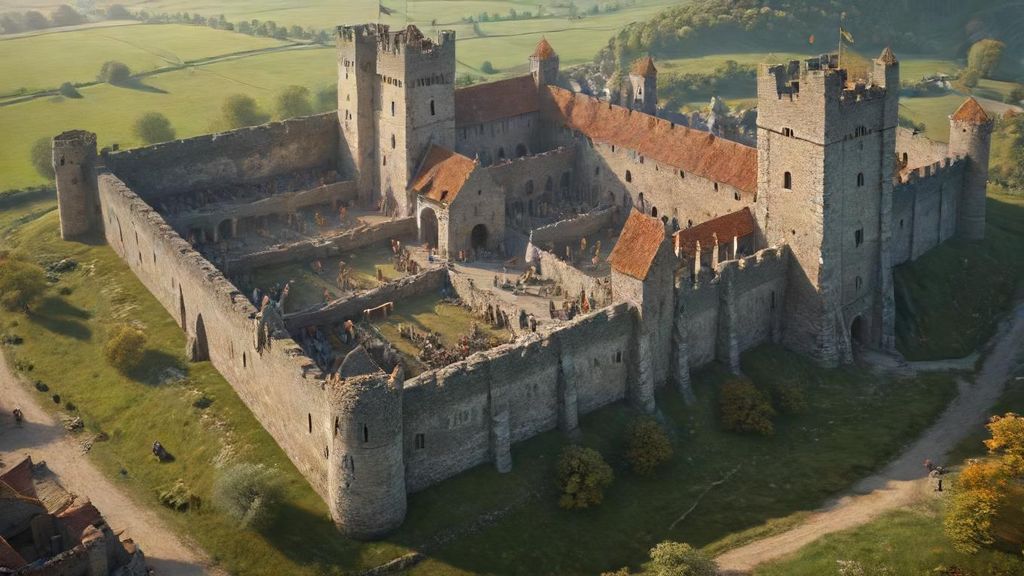
Imagine building a modern skyscraper without steel, cranes, or even proper blueprints. That’s a bit like the huge challenge medieval builders faced when they started constructing their first massive stone cathedrals. Many people think these buildings appeared through some sort of magic, but the real story is much more down-to-earth and exciting. The simple truth is, early medieval builders didn’t just invent building from scratch. Instead, they became clever students of the past, learning from ancient Roman engineering. They had to figure out, almost from nothing, how to make heavy stone buildings last for hundreds, even thousands, of years.
The key was looking at what the Romans had left behind: amazing ruins of aqueducts, bridges, and huge public buildings. These weren’t just old stones; they were real-life lessons in how to manage massive weight and build things that would last. As the first big cathedrals of the Romanesque period started to appear around the 10th and 11th centuries, their builders studied these ancient structures. They didn’t have instruction books, but they could see how Roman engineers handled heavy forces and tough materials. It wasn’t about fancy city plans or complex math; it was about strong, practical building ideas.
One of the first and most crucial challenges was building a foundation strong enough to hold up tons of stone. Think about all the work that goes into preparing the ground for a modern bridge or skyscraper. Early medieval builders faced a similar job, but with far fewer tools. They would dig deep, sometimes surprisingly deep, until they hit solid rock or firm earth. Then, they’d fill these ditches with layers of rough stones, broken bits, and strong mortar. This wasn’t just a quick fill; it was a carefully packed, rock-solid base, often many feet wide. Its job was to spread the enormous weight of the walls evenly across the ground. Without such a strong base, even the thickest walls would eventually crack and sink. We know this because digs, like those at Cluny Abbey III in France, have uncovered these huge hidden foundations, much bigger than you might expect.
Once the foundations were ready, the next big idea was surprisingly simple: thick walls. And when we say thick, we mean seriously thick – often six to ten feet deep! These weren’t just for looks. They were the main supports, working like solid stone props. Unlike modern buildings that hide a steel frame, these early cathedrals stood tall purely because of the sheer bulk of their walls. These walls needed to be strong enough to hold up their own heavy weight, the roof above, and, most importantly, the outward push from their stone ceilings.
And speaking of stone ceilings, during this time, they started using the barrel vault again, everywhere. Imagine taking a regular arch and stretching it out into a long tunnel – that’s basically a barrel vault. This was a huge shift from earlier wooden roofs, which were lighter but also a constant fire risk. Building with stone meant the structures would last and wouldn’t burn, but it brought new challenges. A barrel vault, even though it’s strong, constantly pushes outward on its supporting walls, much like a spring trying to uncoil. This outward push is why those incredibly thick walls were so vital. They acted as an unmoving force, hugging the vault tightly and stopping it from spreading apart.
What evidence supports this?
Recent discoveries show how these building methods were consistently used across Europe. For instance, historians often highlight early churches like the Abbey Church of Saint-Philibert de Tournus in France or Speyer Cathedral in Germany as great examples. These buildings, from the late 10th and early 11th centuries, clearly show these exact ideas: deep, wide foundations, super thick walls, and the common use of barrel vaults. Digs also reveal that the masons of the time carefully cut and fit stones, often using only simple plumb lines and levels, to achieve amazing accuracy even with their basic tools. Think of how a skilled carpenter today can build complex furniture with just hand tools; these builders worked with similar skill, but on a gigantic scale.
The real story is more fascinating than you might imagine: these buildings stood firm thanks to a deep, practical understanding of how things worked, gained from trying and failing over many generations. They weren’t just putting up churches; they were rediscovering and mastering the lost skill of building huge stone structures. This basic knowledge, carefully collected and used, prepared the way for everything that came after. These early builders proved that, even without a modern engineering degree, you could design buildings that would last for centuries.
This dedication to strong, grounded building methods set the stage for future generations. It proved that huge stones could be managed, not just stacked. Next, we’ll explore how these early ideas of sturdy foundations and thick walls slowly changed, as builders started to move beyond simply using sheer mass and began to find ways to open up their solid stone boxes.
What made Gothic cathedral engineering so revolutionary for its time?
Imagine trying to build a modern skyscraper today without any steel. You’d be stuck with thick, heavy walls, and you couldn’t go much higher than a few stories without the whole thing falling apart. Early medieval builders faced a similar problem, but with stone. Their massive Romanesque churches looked grand, but they needed incredibly thick, solid walls. This meant they couldn’t build very high, and the tiny windows made the insides dark and heavy. So, what made Gothic cathedral engineering so revolutionary? It was a complete change in thinking: they learned to turn solid stone walls into a delicate, yet incredibly strong, skeleton.
This wasn’t just about making things look pretty; it was a huge step forward in science and architecture. Gothic cathedrals could reach amazing heights and fill their spaces with light because four clever inventions worked together. These were the pointed arch, the ribbed vault, the flying buttress, and the way they turned walls into a stone skeleton. Think of it like a team of superheroes, each with a unique power, working together to defy gravity.
How Did These Cathedrals Get So Tall?
First, there was the pointed arch. Older, round arches pushed outward with a lot of force. But a pointed arch directed most of its weight straight down. This meant builders could create arches that were taller, narrower, and much more stable. It’s like standing with your legs wide apart versus standing with them closer together – you balance your weight much better over your feet. This simple change, first really used at places like the Basilica of Saint-Denis in France around 1140 AD by the clever Abbot Suger, suddenly meant buildings could go much, much higher.
The ribbed vault worked hand-in-hand with the pointed arch. Imagine a modern domed stadium roof, but made of stone. Earlier vaults were just heavy, solid stone roofs. Gothic builders, however, developed a system where stone ribs formed a structural frame, like the veins in a leaf. Lighter, thinner panels of stone then filled in the spaces between these ribs. This smart roof design not only made the ceilings much lighter, cutting down the total weight pressing down, but also helped spread the stress better to specific points. This made it possible to build even taller structures.
Now for the really clever part: the flying buttress. This famous feature, often what people think of when they picture Gothic cathedrals, was the key external support. Even though pointed arches and ribbed vaults pushed less weight outward than round ones, they still pushed some. The flying buttresses caught this outward push and sent it safely down to the ground. Imagine pushing a heavy door from the inside; a flying buttress is like someone on the outside pushing back to keep it steady. These elegant stone “arms” acted like an outside support system, letting the inside walls become much thinner and carry less weight.
Here’s something interesting: these weren’t just for show. Historians say builders came up with flying buttresses because early Gothic designs ran into structural problems. For instance, the tall walls of Notre-Dame de Paris, started in 1163, first had trouble with outward pressure until flying buttresses were added or improved over time to support them. Old building digs show that some of the first buttresses were inside the building, but builders soon learned how much better external supports worked.
This brings us to the last, game-changing invention: the skeletonization of walls. Since the vaults held up the vertical weight and the flying buttresses pushed back against the outward force, those huge, thick walls of Romanesque churches weren’t really needed for support anymore. Builders could “hollow out” the walls, filling big areas of stone with huge, bright stained-glass windows. This gave Gothic cathedrals their famous grandeur and stability, filling their insides with light and creating that almost magical, spiritual feeling. It’s like turning a heavy brick house into a bright greenhouse, but making it even stronger.
New findings show this wasn’t just guesswork. Medieval masons and master builders were incredibly skilled engineers. They used smart geometry and hands-on experience to build things nobody thought possible. They completely changed how people thought about and built huge projects. What’s really cool is how these different parts – the arch, the vault, the buttress, and the lightness they created – all worked together to make something much more amazing than any single part could.
So, the next time you look at a Gothic cathedral’s towering height and huge windows, remember it’s not magic. It’s a thousand-year-old reminder of human cleverness and a totally new way of thinking about how buildings work. This groundbreaking approach paved the way for builders to keep pushing limits, creating even bolder and more dramatic designs.
Why were the materials and craftsmanship in medieval cathedrals so crucial for their survival?
Imagine building something today that you expect to last a thousand years. That’s like designing a structure that would still be standing and working perfectly in the year 3024! Sounds impossible, right? But for medieval builders, this wasn’t just a grand idea; it was the whole point of creating their amazing cathedrals. The secret to how they made these huge buildings last so incredibly long wasn’t magic. It came down to two simple things: using the absolute best materials they could find and having incredibly skilled people do the work.
The truth is even more interesting than you might think. We often marvel at how beautiful these cathedrals are, but we rarely stop to consider the practical, hands-on work that made them endure. These massive buildings didn’t survive by accident. Their long life was a direct result of choices made centuries ago, involving everything from the stone they picked to the constant care they gave the structures.
How Did They Get Such Good Stone?
Let’s start with the very backbone of these buildings: the stone. Medieval builders weren’t just picking up any rocks; they were like geological detectives. They searched for stone that was incredibly tough, able to handle both the crushing weight of the building and the constant battering from the weather. Think of it like a chef choosing the perfect cut of meat – quality truly makes all the difference.
Often, the best quarries were far away. Famous ones near Caen, France, for example, supplied stone for cathedrals and castles all the way across the English Channel. Moving these huge blocks was a massive job, needing barges, carts, and an unbelievable amount of human and animal power. It’s like managing today’s complex international supply chains, but without any modern machines!
Once quarried, the stone wasn’t just stacked up. It was carefully “seasoned,” sometimes for years, meaning they let it dry out and harden slowly. This preparation reduced shrinking and cracking later on, which helped ensure a much more stable building. This deep understanding of natural materials is something we often overlook. They weren’t just building; they were nurturing the materials to perform their best for centuries.
Then there’s the mortar, the “glue” holding everything together. It turns out that medieval mortar was no ordinary mix. Recent discoveries show that many recipes included ingredients like volcanic ash, crushed brick, and even animal products. This created a super-strong, flexible bond that could actually “move” with the stone. It makes modern concrete look almost brittle by comparison! According to historians like Stephen Murray, this unique mortar, which often continued to get harder over time, was absolutely essential for preventing cracks and keeping the building strong.
And what about the roofs? Beneath the lead or tile, you’d find sophisticated timber framing, built like giant upside-down ship hulls. Master carpenters meticulously crafted these complex wooden skeletons, using joints that locked together without a single nail. The wood, usually oak, was carefully chosen, cut down at specific times of the year, and seasoned for years to make it as strong and rot-resistant as possible. We know this because studying tree rings tells us exactly when these timbers were cut down with amazing accuracy for buildings like Notre-Dame de Paris. This shows how deliberately they planned for the long term.
What About the People Who Built Them?
But even the best materials would crumble without the human touch. The master masons, carvers, glaziers, and blacksmiths were highly skilled professionals. They were often part of guilds, which were like early professional associations, that passed down secret techniques and knowledge through generations. For these guilds, quality control was incredibly important. A master mason’s plan, etched onto plaster floors in tracing houses, was like a modern architect’s blueprint, but it was made with a deep, personal understanding of every stone’s potential.
Building a cathedral was a multi-generational effort. A single cathedral could take hundreds of years to complete, meaning grandfathers started projects that their grandsons finished. This long-term commitment created a huge sense of responsibility and made sure that important building knowledge wasn’t lost. It’s like a massive family business where everyone is invested in the ultimate, long-term success of the “product.”
Finally, there was the ongoing commitment to maintenance. These weren’t “build it and forget it” projects. Cathedrals had dedicated staff for continuous repair, patching roofs, replacing weathered stone, and reinforcing structural elements. This wasn’t just about making them look good; it was absolutely vital for the building’s stability. This constant care, much like taking your car in for regular service, prevented small problems from becoming catastrophic failures.
So, the endurance of medieval cathedrals wasn’t a miracle. It was the direct result of amazing material science, clever engineering, profound craftsmanship, and a sustained, multi-generational commitment to building something truly designed to defy time. This deep dive into the practical aspects shows us just how much thought went into every single detail. Next, we’ll explore how the very act of building these massive structures transformed medieval society and its economy.