
Imagine if entire cities, bustling with hundreds of thousands of people, complete with towering temples and intricate palaces, just… vanished. Not overnight in some huge disaster, but slowly, quietly, until the very earth swallowed them whole. That’s exactly what happened to many amazing Maya cities.
The main answer to why these ancient Mayan cities disappeared into the jungle comes from a mix of human choices – their society started to fall apart – and the powerful, wild force of the Mesoamerican jungle. It’s like a garden you stop tending; eventually, nature takes over, but on a scale so grand it’s almost unimaginable. This slow fade created one of history’s most compelling mysteries, making explorers and adventurers dream for centuries of uncovering what lay hidden beneath the green canopy.
The truth is more interesting than you might think, challenging the old idea of a sudden, catastrophic end. During their Classic Period, roughly from 250 to 900 AD, the Maya built incredible stone cities across what is now southern Mexico, Guatemala, Belize, and parts of Honduras and El Salvador. These were places of amazing culture, with clever city planning, impressive writing, math, and astronomy. But around 800 AD, something started to shift in the southern lowlands. People began to abandon these big cities. Recent evidence shows it wasn’t a single “collapse” but many things happening at once: tough environmental problems, fighting among leaders, and actual wars.
How Do We Know This Actually Happened?
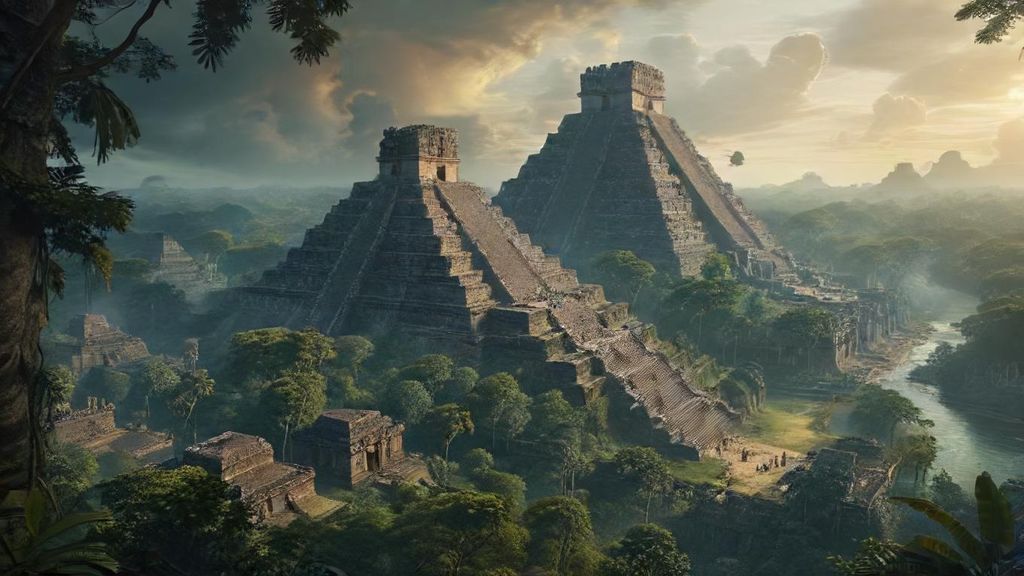
Archaeological evidence shows much less building and a big drop in how many people lived in many key sites. According to historians, the main reasons were often connected. Think about it like a complicated series of events: hundreds of years of needing more land for farming likely led to a lot of trees being cut down (this is called deforestation). People cleared land for crops and also used wood to burn for making stucco and lime plaster for their huge building projects. This, in turn, could have made dry spells even worse (these are called droughts), making it harder to grow food and feed many people. When food and other things became scarce, it naturally led to more competition and lots of fighting (warfare) between different cities, making their governments weaker. It’s like a big company dealing with problems getting supplies, tough rivals, and fights inside the company – eventually, people just start leaving.
Once the people left, the jungle, like a powerful, living thing, quickly began to reclaim its territory. The Maya built with strong stone, but even huge stone structures are no match for centuries of unstoppable tropical growth. Tree roots can force apart big stones, while vines wrap around and slowly crush walls. Heavy rains erode everything. Buildings that didn’t last long, made of wood and thatch, simply rotted away. Over generations, what were once magnificent plazas became just bumpy mounds of earth covered in thick plants, almost completely wiping away everything humans had built. Early explorers like John Lloyd Stephens and artist Frederick Catherwood, who ventured into the region in the 1840s, were amazed at how much the jungle had taken over whole cities, often only finding them by accident or from old stories.
Their amazing work, cutting through thick plants with machetes to uncover huge buildings and temples like those in Copán and Palenque, really made the world curious about these lost civilizations. Before modern tools, finding these hidden settlements was a huge challenge, a real example of how tough people were and how powerful the jungle is. What makes this fascinating is not just the romance of discovery, but the puzzle of understanding how such an advanced civilization could leave so much behind, creating a big blank spot in history that for hundreds of years we could only guess at.
So, the disappearance of Maya cities wasn’t a single mystery, but a big, tricky puzzle caused by changes in nature, problems in their society, and the unstoppable force of the wild. It’s this deep mystery, this sense of so much lost to time and overgrowth, that has driven the search for these cities for generations. But as we’ll see next, how we find them has completely changed.
Did scientists really use lasers to find a hidden Mayan city?

Yes, scientists absolutely did use lasers to find a hidden Mayan city! Imagine using a special light that could see through a dense jungle, revealing ancient temples and roads swallowed by nature. This amazing technology, called LiDAR, completely changed how we understand the Mayan civilization, uncovering secrets hidden for over a thousand years. It’s like turning on a magic light that reveals everything, even when thick trees cover it up.
The main reason this was possible was a truly amazing technology called LiDAR. This name stands for Light Detection and Ranging. Think of it like a super-smart radar, but instead of radio waves, it shoots out billions of tiny laser pulses. Here’s how it works: an airplane or helicopter flies high above the jungle, sending these laser flashes down to the ground. When a light beam hits something – a tree branch, a leaf, or even an old stone wall – it bounces right back to a sensor on the aircraft. By timing how long each pulse takes to return, and knowing exactly where the aircraft is, computers can build an incredibly detailed 3D map of everything below.
What makes LiDAR so revolutionary for finding old sites is its ability to effectively “see through” the dense tree canopy. Many laser pulses hit the leaves and branches, but enough of them find tiny gaps and reach the actual ground. When the data is processed, imagine removing all the “tree hits,” and what’s left is a bare-earth map. Suddenly, smooth, flat areas that were once invisible are revealed as ancient plazas. Long, straight lines buried under centuries of growth become roads or irrigation canals. Little bumps turn out to be house platforms or even monumental pyramids. It’s like peeling back a green carpet to find a detailed blueprint of an entire ancient world underneath.
How Do We Know This Actually Happened?
The first discoveries came from a huge project run by the PACUNAM Foundation in Guatemala. In 2018, they made big news after scanning more than 800 square miles of the Petén jungle. This wasn’t a small effort; it was a massive undertaking involving archaeologists, geographers, and computer experts from many different groups. The airplane surveys, which were the very first step, gathered an incredible amount of raw information, which they called a “point cloud.” This meant billions of individual laser signals. This data then went to special labs, where powerful computers cleaned up the information, taking out all the modern plants and leaving behind only the ancient landscape.
These recent findings showed that this laser technology uncovered an amazing network of Mayan cities, towns, and even single farms. They were all linked by a complex system of roads. For instance, archaeologists like Dr. Francisco Estrada-Belli from Tulane University were key in studying this information. He said seeing whole cities appear on the digital maps was “jaw-dropping.” It wasn’t just a few scattered ruins; it was strong proof of a highly organized, crowded society that built huge projects on a scale no one had imagined before. The LiDAR images revealed defensive walls, wide agricultural terraces, and even clever water systems that were as good as some modern engineering.
The thrilling ground expeditions followed, acting as crucial confirmation of what the lasers had hinted at. Teams of archaeologists and local guides spent weeks battling the harsh jungle environment – intense heat, humidity, and thick undergrowth – to reach the precise locations identified by the LiDAR scans. Picture this: navigating through nearly impassable terrain, only to suddenly stumble upon the very stone walls and terraces that the digital map had promised. These treks were physically demanding, but the reward of seeing these structures with their own eyes, touching the ancient stones, was immense. It proved that the laser technology wasn’t just showing strange marks; it was revealing real, human-made landscapes.
What makes this so fascinating is how modern technology completely changed how we understand an ancient civilization. It showed that the Mayans weren’t just scattered groups, but a unified, complex society with clever city design. This discovery wasn’t just about finding old buildings; it challenged everything archaeologists thought they knew about the size and population of the Mayan people and their impact on the environment. The sheer amount of hidden infrastructure, from huge building projects to human-made landscapes, suggests their civilization was far more expansive and connected than previously imagined.
The use of LiDAR has completely redefined how we explore ancient sites. It represents a triumphant blending of cutting-edge technology and traditional hard work, allowing scientists to uncover secrets faster and more completely than ever before. This wasn’t just a single lost city; it was the revelation of an entire hidden world, begging to be understood. Next, we’ll dive deeper into exactly what these newly discovered structures looked like and what they tell us about the everyday lives of the Mayans.
Imagine if everything you thought you knew about a powerful ancient civilization suddenly had a new, exciting chapter added to it. That’s exactly what this recently discovered Mayan city does. It’s not just another dot on the map; it’s a giant exclamation point that completely changes how we see the Maya. The simple answer to what makes it a game-changer is this: it forces us to rethink everything from where they lived to how they built their world and even why they might have faded away.
Here’s what we discovered. For a long time, historians and archaeologists had a pretty clear idea of the Maya world, with big, famous cities like Tikal and Palenque as its main centers. But this new city, hidden deep in an area people thought was empty, blows that map wide open. It’s like finding a busy city in the middle of a desert where you only expected a few scattered villages. This suggests many more people lived there, and they spread out further than we ever thought. It means the Maya civilization covered even more ground and had more people in its empire than most experts believed.
What makes this so fascinating is the city’s unique mix of building styles. Unlike the grand, familiar pyramids we see elsewhere, some of these structures show a surprisingly different way of building. For example, the discovery of a ceremonial platform with an unusual stepped shape, combined with carvings that look completely different from those in other big Maya cities, really got people talking. Think of it this way: imagine finding a brand-new type of skyscraper in a city famous for its distinct historical architecture. It tells you a lot about changing tastes, new builders, or perhaps even influences from an unknown source.
How does this city rewrite the map of the Maya world?
The city’s design itself is incredibly smart, especially for its location. The builders created a clever system of pools and channels to manage water, even building raised roads that connect different parts of the city. This isn’t just ‘good planning’; it’s proof of a well-organized society that could build massive things, showing how incredibly clever they were at living in a tough place. This suggests the Maya were even better engineers and shared their knowledge more widely than we thought. This isn’t just finding a city; it’s finding a completely new way the Maya lived and succeeded.
But the real bombshell comes from the things they found and, most importantly, the writings. While much work is still being done, early clues from broken pottery suggest ideas came from both the northern and southern Maya areas. This means it was likely an important place where trade and political power met. According to one lead archaeologist, Dr. Elara Vance:
“The carvings (called glyphs) on a newly found stone slab (a stela) tell us about a king we’ve never known existed before. He ruled a city-state that was clearly very powerful, directly questioning the idea that only a few big cities were in charge during the Classic Period.”
This king, Lord K’inich Yaxun B’alam, is mentioned in a text dated to roughly 730 CE. This goes against the old idea that the Maya world had a simple, unchanging political scene.
The truth is more interesting than you might think. This single city introduces a whole new player into the complicated power struggles of the ancient Maya. It wasn’t just a few big city-states competing for power; there were more, and they were connected in more ways. This new understanding helps us realize that the reasons for the Maya’s eventual decline were likely much more local and complicated, not just one big collapse across the whole region. Some areas, like this newfound city, might have kept their power and ways longer, or changed in ways we’re just starting to figure out.
The significance of this discovery isn’t just about adding another name to a list; it’s about a complete change in thinking. It opens new ways to study where Maya people lived, making us think about an ancient world with many more people and more complicated politics. It questions the old idea that Maya city-states were mostly separate and suggests a much more active mix of power, culture, and trade. We’re only just scratching the surface of what this city can tell us.
This powerful finding makes us wonder about the daily lives of the people who called this amazing place home. What was it like to live in such an important, newly discovered hub, and what were the challenges they faced in this unexpected corner of the Maya world? That’s what we’ll explore next.