
What if the real reasons the FBI started targeting Martin Luther King Jr. were far more complicated than you ever imagined? It turns out the true story isn’t just about simple disagreements over civil rights. According to newly released secret documents and decades of careful research, the answer lies in a powerful mix: one man’s deep personal fears, a powerful government agency’s extreme worry during the Cold War, and a major clash of ideas. It was much more complex and personal than most people realize.
The simplest way to explain why the FBI went after King starts with J. Edgar Hoover, the Bureau’s long-time director. Hoover saw threats everywhere and loved being in total control. He deeply mistrusted anyone who challenged the way things were. King, with his growing influence and strong calls for change, represented everything Hoover feared. Imagine a CEO of a huge, old-school company watching a charming, disruptive startup leader suddenly get massive public support, challenging the very core of their business. Hoover saw King not just as a civil rights leader, but as a dangerous force that could throw American society into chaos.
This personal dislike was made much stronger by the intense atmosphere of the Cold War. In the 1950s and 60s, the fear of communism wasn’t just political talk; it was a real and widespread worry. The FBI, under Hoover, often believed that communists were behind any movement for social change, especially one as important as the Civil Rights Movement. They truly, though mistakenly, suspected that communists were secretly pulling King’s strings. For Hoover, linking King to communism was the perfect excuse for spying on him and causing trouble. It gave him a convenient, publicly acceptable reason to go after someone he personally disliked and saw as a threat to his traditional view of America.
This suspicion quickly led to early spying efforts. Initially, Attorney General Robert F. Kennedy approved the FBI’s monitoring in 1963. But he gave permission only if they targeted people within King’s inner circle who were suspected of communist ties, not King himself. However, Hoover quickly twisted this limited authorization. It became like the “camel’s nose under the tent,” letting the Bureau rapidly expand its wiretaps and listening devices to King directly. This move was easier to make because of the widespread fear of communism, which blurred the lines between genuine security worries and harassment motivated by politics.
How Do We Know This Happened?
We know this because of an incredible amount of documented evidence, much of it kept secret for decades. One of the strongest pieces of proof comes from internal FBI memos and reports that historians and journalists have worked hard to uncover. These documents show the real reasons behind the Bureau’s actions, often completely contradicting what they said publicly at the time. For example, shortly after King’s famous “I Have a Dream” speech in August 1963, a top FBI official, William C. Sullivan, wrote an internal memo that said:
“We must mark him now, if we have not done so before, as the most dangerous Negro of the future in this nation from the standpoint of communism, the Negro and national security.”
This harsh language tells us a lot. It wasn’t just about finding communists; it was about “marking” King as a threat, viewing his entire movement through the lens of national security and communism. This memo, dated just days after one of the most powerful speeches in American history, shows how quickly Hoover and his top assistants moved to paint King as evil. It’s strong proof that the FBI’s focus was shifting from simply looking into possible communist ties to actively trying to weaken King’s influence.
This early spying and the growing fear of King’s influence created the perfect conditions for what became known as COINTELPRO – short for Counterintelligence Program. COINTELPRO wasn’t just about gathering information; it was designed to “expose, disrupt, misdirect, discredit, or otherwise neutralize” groups the FBI considered dangerous. While it had existed in different forms before, King became a primary target, marking a significant expansion of its reach into domestic political activism. It was a complete shift in strategy, moving from just watching to actively trying to sabotage. This was fueled by Hoover’s personal anger and the widespread paranoia of the Cold War. The clash of ideas was clear: the FBI, largely a conservative, white institution, saw King’s fight for racial equality as a radical threat to the existing power structure, rather than a just cause.
The real reasons the FBI started targeting Martin Luther King Jr. weren’t just about civil rights. They were a complicated mix of personal hatred, Cold War paranoia, and a deep difference in how people saw the world. The Bureau’s first steps into spying and causing trouble, born from these motivations, would quickly grow into a full-blown secret war against King. Next, we’ll explore how this war truly began to take shape, moving from mere surveillance to active attempts to destroy King’s reputation and leadership.
How did the FBI try to undermine Martin Luther King Jr.’s leadership?
Most people imagine the FBI as a law enforcement agency, focused on catching criminals. But what if I told you that, for a significant period, its primary target was not a criminal enterprise, but a revered civil rights leader? The truth is wilder than you might guess. Under its long-time director J. Edgar Hoover, the FBI launched a secret, relentless attack to discredit and silence Dr. Martin Luther King Jr. and the Southern Christian Leadership Conference (SCLC). This wasn’t about solving crimes; it was a hidden war meant to tear down King’s reputation and stop his voice.
So, how did they do it? They used a disturbing mix of tricks, starting small and growing much bigger. Imagine every private moment, every phone call, every hotel room chat being recorded. That’s exactly what happened to King. Starting around 1963, the FBI secretly bugged his phones and hotel rooms. They weren’t just looking for security threats; they wanted to dig up anything at all they could use against him. It was like having a secret government spy following you constantly.
Here’s what we found out: the FBI didn’t just listen. They actively tried to cause trouble. They planted secret informants within the SCLC, turning trusted friends into their eyes and ears. This isn’t just a rumor; historical records prove these operations were well-planned. These informants sent information back to the FBI, giving them inside details about King’s plans and his personal life. Think of a company today hiring someone to secretly join a rival business – this was a similar, but far more intrusive, strategy.
What’s truly shocking is how personal these attacks became. The FBI gathered every single piece of information they could about King’s private life. They especially focused on his relationships outside of marriage. This wasn’t for legal reasons; it was pure blackmail. Their goal was to make these private details public. They hoped to destroy King’s good name and, with it, the entire Civil Rights Movement’s standing. It’s like finding a public figure’s private messages today and threatening to leak them to ruin their career.
How Do We Know This Actually Happened?
We know all this thanks to strong evidence. Much of it comes from government documents that were later made public, and from the famous Church Committee investigation in 1975. This Senate committee pulled back the curtain on how government intelligence agencies had misused their power, including the FBI’s actions against King. The proof shows these tactics weren’t just a few bad apples; top officials at the FBI approved them.
The campaign hit its most chilling point with the infamous “suicide letter” in November 1964. After building a secret file about King’s alleged private life, FBI Assistant Director William Sullivan wrote an anonymous letter to King. This letter was full of hidden threats and deeply personal accusations. It urged King to kill himself before the public found out these details. The shocking part? It came with an audio tape, supposedly recordings from his hotel rooms. It was a cruel, psychological attack meant to break him. Imagine getting an anonymous package today with damaging personal information and a note telling you to end your life – that’s the kind of evil King faced.
The mental and public damage to King and the SCLC was huge. King knew he was constantly being watched. This created an atmosphere of fear and distrust within the movement. His personal life was under a spotlight, always threatening to overshadow his important public message. This wasn’t just political disagreement; it was an attempt to completely destroy him as a person. The FBI hoped that by ruining King, they could crush the movement he led.
Looking ahead, the next chapter will explore the deep and lasting effects these secret operations had. It wasn’t just on King’s legacy, but also on the trust between people and their government. We’ll see how this hidden war shaped the future of American civil rights and how the government is watched today.
What new evidence reveals the true extent of the FBI’s covert war on MLK?
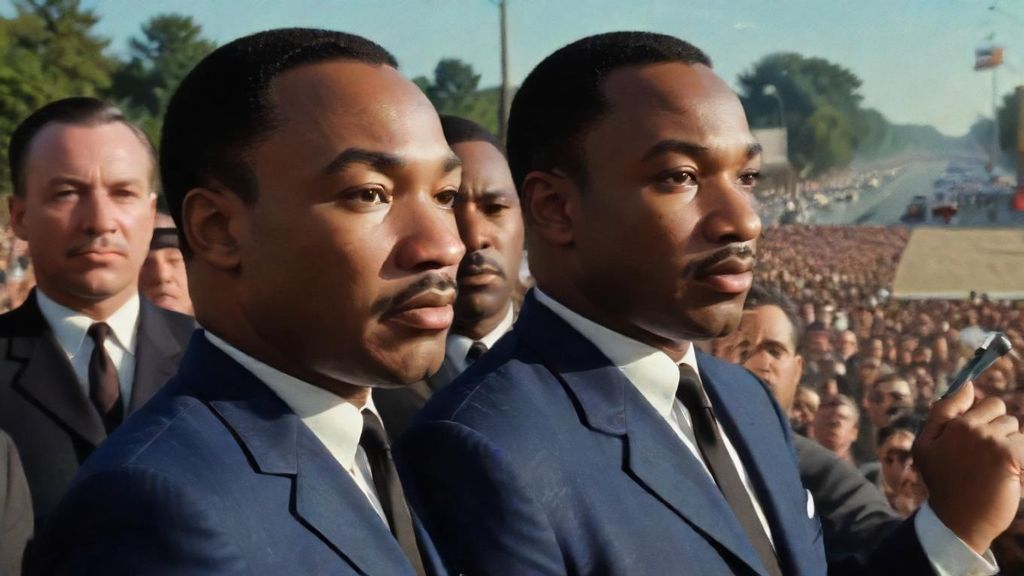
Imagine if one of today’s biggest social media influencers, someone recognized globally for pushing for positive change, was secretly targeted by a powerful government agency. Picture their every move watched, every conversation listened to, and every weakness exploited. That’s pretty much what new evidence reveals about the FBI’s hidden battle against Martin Luther King Jr. The truth is far more invasive and troubling than most people ever imagined, confirming that the FBI waged a deliberate, years-long campaign not just to watch MLK, but to actively discredit and destroy him.
What makes this story so fascinating is how we finally got to pull back the curtain on this secret war. The answer lies in a slow, determined uncovering of official documents, often brought into the light only after a fight. It started with brave congressional investigations, then continued with regular citizens and persistent historians using special laws. These efforts brought out strong proof, bit by agonizing bit, that completely changes how we see a crucial part of American history.
How Did We Uncover This Secret History?
The first major crack in the FBI’s wall of secrecy came in the mid-1970s. Think of it like a huge public audit of a powerful company that everyone suspected was up to no good. This was the Church Committee, led by Senator Frank Church in 1975. This group of senators looked into the wrongdoing by U.S. intelligence agencies, and what they found was shocking. They revealed a top-secret FBI program called COINTELPRO, which was short for “Counterintelligence Program.” Simply put, this wasn’t just about collecting information; it was about disruption. It was like finding out a company wasn’t just doing market research on its competitor, but actively trying to sabotage their products and spread rumors about their CEO.
What the Church Committee found completely changed how people thought. Before then, many probably pictured the FBI as simply keeping an eye on potential threats. But these investigations showed that the Bureau, under its powerful director J. Edgar Hoover, saw MLK and the entire civil rights movement as a dangerous threat to the American way of life. The evidence proved they weren’t just observing; they were deeply involved in trying to mess up MLK’s work, damage his reputation, and weaken his influence. It was a targeted, aggressive attack by the government against one of its most prominent citizens.
What Exactly Did the New Papers Show?
Building on the Church Committee’s discoveries, the true depth of the FBI’s efforts came out through the Freedom of Information Act (FOIA). This law allows citizens to request documents from the government, and historians and journalists used it like a digital shovel, digging through mountains of papers. What we discovered was an unbelievable level of detail in the FBI’s spying and harassment. We’re talking about extensive wiretaps, hidden microphones in MLK’s homes and hotel rooms, and endless monitoring of his phone calls and private life. This wasn’t just occasional spying; it was a constant, suffocating watch.
One of the most disturbing revelations was the so-called “suicide letter.” In 1964, the FBI sent an anonymous package to MLK. It contained a compiled tape of his alleged extramarital affairs and a letter urging him to kill himself before accepting the Nobel Peace Prize. It was an incredibly cruel and personal attack, designed to break him down mentally. According to historians, this horrifying incident, now clearly documented in declassified memos, is strong proof of how far the FBI was willing to go. It wasn’t about law enforcement; it was about psychological warfare. It turns out that the FBI had an entire strategy aimed at humiliating MLK and pushing him out of public life.
More recent findings also reveal just how widespread this effort was. Internal memos show Hoover personally directing agents to find “derogatory information” on King. They even tried to stop him from receiving awards and speaking engagements. Even though the full surveillance tapes won’t be made public until 2027, the memos about them and the detailed strategies outlined in recently released documents paint a picture you can’t argue with. They show a never-before-seen effort to tear down a public figure, solidifying MLK’s status as a victim of constant government spying and harassment.
All this evidence — from the Church Committee’s initial findings to the steady stream of documents released through FOIA — confirms and deepens what we understand. They show a deliberate, unprecedented abuse of government power against a civil rights leader. This makes us question not just the past, but the mechanisms that allowed such actions, and makes us wonder about the lasting impact on our freedoms.