Imagine living somewhere your basic human dignity is slowly taken away, piece by painful piece, every single day. The air is stale, the food makes you sick, and those in charge seem to enjoy your suffering. This nightmare was the harsh reality for the men held at Attica Correctional Facility in 1971. The Attica uprising wasn’t a random explosion of anger; it was a desperate cry from men pushed past their breaking point due to years of terrible conditions, severe overcrowding, and deep racial tension.
The Terrible Conditions Inside Attica
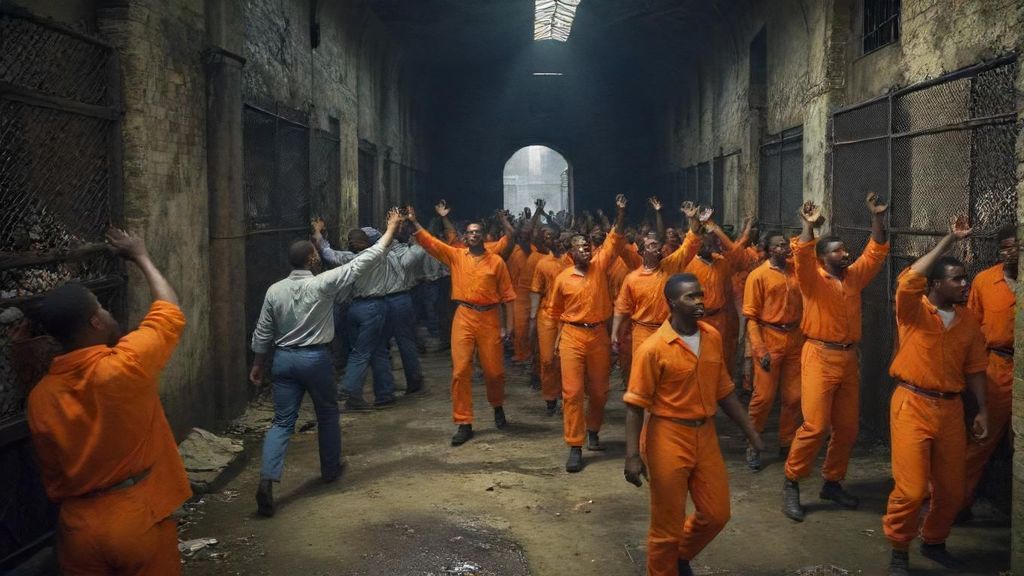
So, what really caused that fateful September day? It was years of neglect, shocking overcrowding, and a deep, growing racial tension that turned the prison into a ticking time bomb. Attica, meant for about 1,600 men, was packed with over 2,200 by 1971. This wasn’t just uncomfortable; it meant less of everything for everyone, from clean water to basic human respect.
Imagine a big company where the bosses and workers barely understand each other or their lives. Attica was similar, but with far more serious consequences. Most of the men held there were Black or Latino—about 54% of the prison population. But here’s the stark truth: almost all the guards, a shocking 98%, were white, many from nearby rural towns. This huge difference wasn’t just a number; it sparked strong racial tension and mistrust, turning everyday interactions into potential explosions. Historians say this deep racial divide was a main reason for the harsh environment inside.
Life inside Attica was brutal, to say the least. The conditions were so bad they would shock anyone today. Medical care was almost nonexistent, with only one doctor for thousands of prisoners and often untrained staff trying to help. Sanitation was horrifying: imagine overflowing toilets, filthy cells, and a constant terrible smell everywhere. The food was often rotten, not enough, and served in dirty conditions. As inmate Frank “Big Black” Smith famously said:
They put catsup on rotten meat and give it to us to eat.
On top of the awful physical conditions, the guards’ treatment was a constant source of pain. Racism wasn’t just there; it was a daily occurrence, with hateful insults thrown around casually. Guards often used physical abuse, unfair punishments, and would deny basic rights like mail and visits. There were hardly any educational programs or chances for real work, leaving most men feeling like their lives were stuck, constantly being stripped of their humanity. In Attica, the idea of getting better or changing for the good was a far-off, forgotten dream.
How a Minor Incident Turned into a Full-Blown Uprising
The spark that finally set off this explosion happened on September 8, 1971. Two prisoners were caught fighting, a small scuffle that usually meant solitary confinement. But officials decided to move them to a different prison, which the men saw as a very harsh and unfair punishment. Tensions were already sky-high; just weeks earlier, George Jackson, a well-known Black Panther leader, had been killed in a California prison. His death had deeply shaken prisoners across the country, including those at Attica.
The very next morning, on September 9, 1971, as men walked back to their cells after breakfast, a guard spotted a group gathering in a tunnel. What began as a minor clash quickly erupted. The years of bottled-up frustration, anger, and desperation burst open. Prisoners quickly overpowered the guards, taking control of Cell Block D with astonishing speed. They then grabbed 39 hostages, including guards and other staff, moving them into the recreation yard called “D Yard.”
In that chaotic moment, the men, brought together by their shared pain, started to clearly state what they wanted. They weren’t just reacting; they were making a strong statement, creating a powerful, single voice. They weren’t asking to escape Attica, but for basic improvements to their living conditions and, most importantly, for their human rights to be recognized. This wasn’t just about getting out; it was about being treated like human beings.
What’s amazing is how quickly a shared purpose grew out of such terrible circumstances. They turned a desperate act into a political statement, setting the stage for negotiations that would grab the world’s attention. The uprising had truly begun, and the world was about to watch as these men tried to force the state to see them as human.
Why Did Negotiations Fail at Attica, Leading to a Deadly Standoff?

The Attica Prison Uprising in 1971 ended in a terrible, bloody standoff, but it didn’t have to. Negotiations failed because of a difficult mix of strong disagreements, especially over one critical demand: amnesty for the prisoners. This, combined with the tough political climate of the time and a breakdown in trust, made a peaceful solution impossible. One side wanted complete forgiveness, and the other saw that as an absolute deal-breaker – this was the heart of the tragedy.
When the prisoners took over D Yard on September 9, 1971, there was a small chance for a peaceful resolution. The men, incredibly organized and led by figures like the clear-speaking L.D. Barkley, quickly shared a list of 30 demands. These weren’t just angry complaints; they were thoughtful requests for basic human rights. They asked for things like better living conditions, fair pay for prison jobs, improved medical care, and the freedom to practice their religion. But out of all these, one demand truly worried the authorities: total and unconditional freedom from being charged with any crimes they committed during the takeover.
How Did Trust Break Down During the Negotiations?
To everyone’s surprise and initial relief, a mixed group called the Citizens Observer Committee (COC) quickly came together. You can think of them as an urgent, makeshift team of peacemakers, made up of lawyers, reporters, politicians, and civil rights leaders. They were the key messengers, passing information back and forth between the prisoners and the state officials, who were led by New York State Corrections Commissioner Russell Oswald. For a short time, there was real hope. Oswald even went into the yard himself, listened to the men directly, and at first, agreed to many of their requests. It felt like a careful back-and-forth, with both sides cautiously trying to find common ground.
But this is where things went wrong, and trust started to fall apart. While Commissioner Oswald was there in person and seemed open to talking, the true decision-making power belonged to New York Governor Nelson Rockefeller. Rockefeller, from his office far away, held a very firm position. The prisoners absolutely demanded total amnesty. For them, this wasn’t just about avoiding charges for taking over the prison; it was about protecting themselves from punishment for speaking up. It was their one essential condition, a way to feel safe. However, for Governor Rockefeller, granting amnesty was something he simply would not do. He believed it would set a bad example, showing weakness that might encourage other uprisings. It’s like when a company refuses to promise no punishment to employees even after they’ve settled a big internal protest – it feels unfair, especially when trust is already low.
The COC members, tired and growing more and more frustrated, begged Rockefeller to come to Attica himself to see what was happening. They thought his presence could ease the tension and help them get past the stuck point. But historians say Rockefeller famously refused, stating:
Political decisions should not be made at the point of a gun.
This distant, stubborn stance, along with pressure from police who wanted a quick and forceful end, destroyed any hope of a peaceful agreement. When Oswald had to take back the amnesty offer because Rockefeller ordered him to, talks completely stopped. The men in D Yard felt cheated; their bargaining power, their only chance at safety, had vanished.
So, the failure to agree on that one crucial demand – amnesty – plus Rockefeller’s refusal to get involved directly, sealed the fate of the negotiations. What’s truly interesting is that many people watching believed a deal was very close if only that one issue could have been sorted out. Instead, a final warning was issued, and everything was tragically set for a violent confrontation, not a peaceful solution.
This collapse of talks wasn’t just a simple mix-up; it clearly showed a system unwilling to give up what it saw as its main power, even when human lives were at stake. And this failure pushed Attica, and everyone caught up in it, towards a horror no one could have truly imagined. Next, we’ll look at the terrible assault that came after.
What Really Happened When Attica Prison Was Retaken, and What Was Its Legacy?
Imagine waking up to the deafening roar of helicopters, the chilling crackle of bullhorns, and then, a sickening cloud of tear gas filling every breath. This wasn’t some movie scene; it was the brutal reality for everyone inside New York’s Attica Correctional Facility on the morning of September 13, 1971. That day, state forces violently retook the prison, leading to a tragic loss of life and immediate attempts to hide the truth. What really happened was far more shocking than initially believed, leaving a legacy of questions that still echo today.
Here’s what happened: After four tense days of talks following the uprising, New York Governor Nelson Rockefeller ordered a full attack. At 9:46 AM, a helicopter flew low over the prison yard, dropping canisters of CS gas – a powerful tear gas so thick it covered everything. As the men inside D Yard coughed, choked, and stumbled, state troopers and prison guards, many wearing gas masks and armed with shotguns, rifles, and pistols, stormed in. It was a terrifying, close-up fight where no one could see clearly, and everyone panicked.
The first official story was truly awful: it claimed the prisoners had slit the throats of the hostages. But what really happened was much worse and more shocking. It turned out that during the wild attack, state forces fired their weapons everywhere, aiming into the tear-gas-filled yard and at places where they knew both prisoners and hostages were. When the smoke cleared, 29 prisoners and 10 prison guard hostages lay dead. Later autopsies and investigations showed that every single one of the 10 hostages, along with many prisoners, died from bullets fired by the state police and prison guards. This wasn’t just an accident; it was what happened because of a poorly planned and overly aggressive operation.
How Do We Know This Actually Happened?
Right after the events, officials worked hard to control what people believed. State officials quickly blamed the prisoners for all the deaths, especially pushing the false story about the hostages’ throats being cut. But medical examiners, led by Dr. John Edland, quickly said these claims were wrong. His findings, which showed that all the dead hostages had gunshot wounds, were super important proof. This strong evidence directly went against the official story, completely revealing the first cover-up. It was like a huge company scandal where people inside expose the truth, making everyone responsible.
But the horror didn’t end with the shooting. For the prisoners who were caught again, the time right after the prison was retaken was a brutal, organized attack of revenge. Men were stripped naked, made to crawl through broken glass, beaten with clubs, burned with cigarettes, and sexually assaulted. Old records show guards making prisoners run through lines of attackers, suffer hours of beatings, and face endless threats. This wasn’t about getting things back to normal; it was purely about revenge.
Attica left a huge mark that lasted for a long time. It kicked off many intense investigations, including the very detailed McKay Commission Report, which gave a completely honest look at how the prison was retaken and what happened next. This led to decades of legal fights for justice, including lawsuits that finally resulted in a $12 million settlement for the victims and their families in 2000 – almost 30 years later. What makes this so interesting is how Attica became a strong symbol not just for brutal prisons, but also for unfairness based on race and government power that wasn’t held in check. Most of the prisoners were Black and Latino, and many believed their calls for basic human rights were ignored because of their race.
Attica deeply changed the American prison reform movement. It made the whole country talk about prison conditions, what rights prisoners have, and how much force guards should use inside prisons. It was like a moment in history that totally changed how we think about treating people behind bars. The questions and disagreements that still surround Attica – especially about what Governor Rockefeller and other state officials did – continue to make it one of the most important and saddest events in U.S. prison history. It reminds us why we desperately need openness and responsibility in our justice system. The next chapter will look at the big changes in how prisoners were defended and how prison rules were made after this tough time.