
Imagine being the United States just after the devastating attack on Pearl Harbor in December 1941. The whole country felt shocked, heartbroken, and most of all, helpless. Japan seemed unstoppable, quickly taking over huge parts of the Pacific. American spirits sank, and everyone wondered if the US could even fight back. The Doolittle Raid was so daring and secret because America desperately needed to hit back hard. It was a risky plan designed to lift American spirits and tell Japan they weren’t safe.
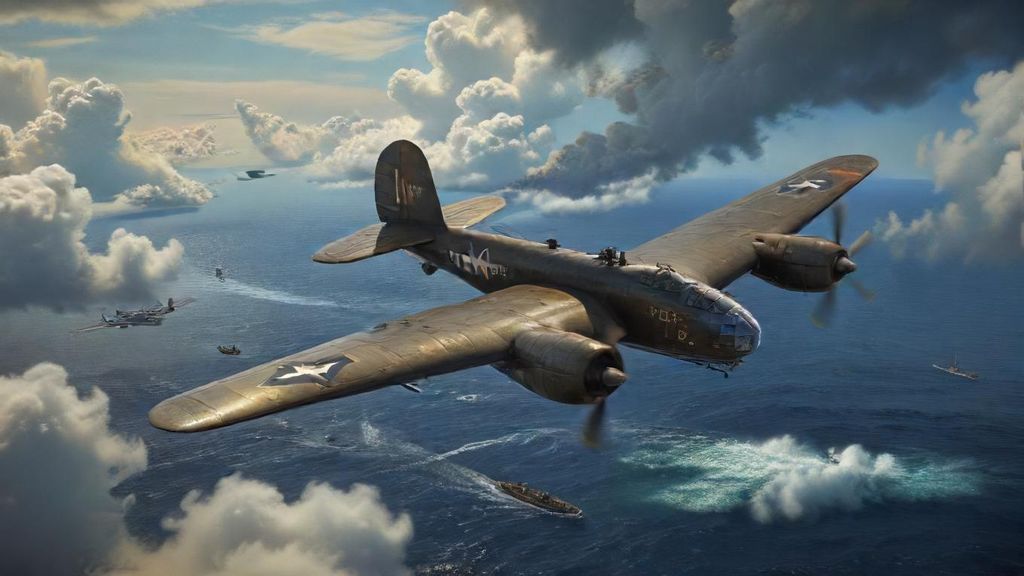
The truth is more interesting than you might think. Since the Pacific Fleet was badly damaged, attacking Japan directly by sea was impossible. The military urgently needed a way to strike Japan itself. Not just for revenge, but to show everyone, especially Americans, that they could fight back. The challenge? How do you get bombers close enough to strike a heavily defended island nation when your carriers are vulnerable and your airfields are too far away?
The answer came from an almost unbelievable idea: launching land-based bombers from aircraft carriers. This seemed almost suicidal, a nightmare for engineers. Big bombers like the B-25B Mitchell were heavy planes made for long runways, not the short, rocking deck of a ship. Think about trying to park a large semi-truck in a small parking spot that’s also moving! But when things are desperate, people get creative. This wild idea found its leader in Lt. Col. Jimmy Doolittle, a famous pilot and flight engineer.
Doolittle took this mission that seemed impossible and started turning it into a real, though incredibly risky, plan. They kept everything about the plan completely secret, not letting out any details. This wasn’t just to surprise the enemy; it was to stop any information from leaking out and warning the Japanese about such a strange and bold attack. Imagine trying to run a huge, complex project today without social media or even phones that could be tapped—that shows how paranoid and careful they were. It’s amazing how they pulled off such a massive project right under everyone’s nose.
To make the plan work, the team chose B-25B Mitchell bombers. These planes had the right range and could carry enough bombs, but they needed a lot of changes. To get the best performance for a carrier takeoff, they removed everything that wasn’t absolutely needed. They stripped out heavy radios, waist guns, and even the lower gun turret. To fly far enough across the huge Pacific, they added extra fuel tanks wherever possible—in the bomb bay, the main body of the plane, and even in rubber bags in the crawlway. It’s like taking your family car and turning it into a stripped-down race car with extra fuel canisters duct-taped inside. The rear guns, which were too heavy, were replaced with broomsticks painted black to look like machine guns, a clever bluff against enemy fighters.
The challenges didn’t stop there. Volunteer crews, picked carefully from all over the country, went through intense, high-risk training at Eglin Field, Florida, and other places. They practiced incredibly short takeoffs, using painted lines on runways to act like a carrier deck. They learned to fly very low to avoid radar, and how to land in the dark with almost no navigation tools. This was because they’d be landing in China, in unknown areas, likely facing enemy fire. Historical records show that these pilots had to learn skills no bomber crews had ever needed before, pushing themselves and their planes to their absolute limits. It was a brand new, intense training program for extreme flying, turning an impossible-looking mission into reality through sheer determination and clever solutions.
This amazing transformation—from a desperate, wild idea to a carefully planned mission—shows the incredible mix of cleverness, bravery, and careful planning behind the raid. We know this because detailed reports and old documents carefully record every change and training step. The huge challenges, like engineering a heavy bomber to launch from a carrier and the tough training for the crews, were overcome by a military desperate to fight back.
Next, we’ll see how these modified planes and highly trained crews embarked on their fateful journey, confronting the Pacific’s unforgiving waters and the ever-present threat of discovery.
Imagine being on a secret mission, far from home, when suddenly everything goes sideways before it even really starts. The truth is, Doolittle’s Raiders didn’t bomb Japan exactly as they planned. Instead, they pulled off one of the most incredibly daring moves in military history by launching their bombers hundreds of miles too early from an aircraft carrier battling rough seas. This wasn’t just a small change of plans; it was a desperate, risky bet that turned an already impossible mission into a true miracle. Here’s what actually happened when those B-25s roared off the deck of the USS Hornet.
The answer comes down to a mix of intense secrecy, unexpected encounters, and a commander’s gut feeling. Sixteen B-25B Mitchell bombers, stripped down for extra fuel and specially changed to take off from a ship, were packed onto the deck of the USS Hornet. This massive aircraft carrier, along with its escort ships, had been quietly sailing across the huge Pacific Ocean for weeks in April 1942. Their target: the Japanese homeland, a place thought to be completely safe from American attacks. The original plan was to get within 400 miles of Japan before launching the planes under the cover of darkness. This would give the crews a better chance of reaching friendly airfields in China after their bombing runs.
What Happened When They Were Spotted So Early?

The big moment arrived on April 18, 1942, much sooner than anyone expected. Early that morning, while still over 600 miles from Japan, the task force was spotted by several Japanese patrol boats. These small fishing trawlers, acting as early warning lookouts, quickly radioed their discovery. The secret was out. The element of surprise, which was super important for the whole operation, was completely gone.
What makes this story so fascinating is the immediate choice faced by the raid’s leader, Lieutenant Colonel James “Jimmy” Doolittle. He knew that waiting for the planned launch point meant risking his entire fleet to a Japanese counterattack. The simple answer to how they bombed Japan from carriers is this: Doolittle made the quick, brave decision to launch right away. Imagine if your entire carefully planned trip got completely messed up, and you had to figure it out on the spot. That’s exactly what happened. The conditions were really dangerous; the ocean was choppy, and the deck of the Hornet pitched and rolled. Launching a heavy, twin-engine bomber from a carrier deck had never been done before, let alone in rough weather, and with an extra 200 miles to fly.
The planes, taking off one after another very quickly, ran into trouble right away. Their flight paths took them through heavy clouds and strong headwinds, burning through their precious fuel even faster. They flew low, just above the waves, to avoid radar detection, finding their way only with a compass and their best guess. There was no turning back. Every pilot and crew member knew how high the stakes were, fueled by a strong desire to strike back after Pearl Harbor.
Despite all these hurdles, all sixteen planes reached the Japanese mainland. They hit targets in major cities like Tokyo, Nagoya, Kobe, and Yokohama. These targets included factories, oil storage facilities, and military bases. The bombs themselves didn’t cause a huge amount of physical damage; this wasn’t a mission designed to destroy everything, but rather to deliver a sharp, psychological blow. Pictures show smoke rising over Tokyo, a sight that had been unthinkable just hours before. The sheer bravery and skill needed for these crews to complete their bombing runs under such extraordinary circumstances was incredibly impressive. They were flying into the unknown, knowing that even after dropping their bombs, their chances of survival were slim.
Historical records tell us that the raid’s biggest impact wasn’t measured in concrete and steel. It was the huge shock of bombs falling on the Japanese capital, especially Tokyo, which had been thought nobody could ever touch. For the first time, ordinary Japanese citizens felt the direct threat of war. This unexpected attack forced Japan’s military leaders to move their forces around for homeland defense, unknowingly helping to set the stage for future Allied victories.
This daring, unplanned execution of the Doolittle Raid not only dealt a surprise blow to Japan but also gave a much-needed morale boost to the American public. The truth is more interesting than you might think; this pivotal moment unfolded not by sticking strictly to a plan, but by bold, on-the-spot decisions. But what happened to these brave airmen after they completed their runs, and how did they manage to escape the enemy? That’s where the story gets even more incredible.
After their daring bombing mission over Japan in April 1942, the Doolittle Raiders faced an incredibly dangerous aftermath. Instead of a hero’s welcome, most of the American airmen ended up parachuting or crash-landing in enemy territory. What happened next for these brave men was a mix of desperate survival, brutal capture, and a huge cost paid by an unexpected ally.
After dropping their bombs, the sixteen B-25 bombers couldn’t make it back to safety. They were low on fuel and ran into a sudden, violent storm. Most of the 80 raiders crash-landed or parachuted over Japanese-occupied China, often hundreds of miles from safety. Incredibly, the vast majority of these airmen got lucky. Their survival was thanks to the amazing bravery of Chinese civilians and resistance fighters. Even with Japanese patrols everywhere, local villagers and guerrillas risked their lives. They sheltered the Americans, cared for their injuries, and guided them through enemy lines to friendly areas. It was like a huge, natural underground railroad, bringing strangers together in a shared fight for freedom.
But not all the raiders were so lucky. Eight of them were captured by Japanese forces. What makes their story even more gripping is the sheer brutality they faced. These men were starved, tortured, and kept in isolation. We now know that some were even put on unfair “trials” for war crimes, a truly shocking act that ignored all international rules. Of the eight, three—Lts. William Farrow, Dean Hallmark, and Sgt. Harold Spatz—were executed by firing squad. Another, Lt. Robert Meder, sadly died from illness and starvation while imprisoned. The remaining four spent the rest of the war in brutal prison camps, showing incredible strength and survival.
What Were the Hidden Costs of the Doolittle Raid?

While the raid hugely boosted American morale and became a powerful symbol of defiance after Pearl Harbor, its immediate impact on China was disastrous. The Japanese government was furious that China had helped the raiders. In response, they launched a brutal campaign of revenge called the Zhejiang-Jiangxi Campaign. History shows this wasn’t just a military operation; it was a horrifying way to punish an entire population. The Japanese specifically targeted areas where Doolittle crews were thought to have landed. They burned villages, killed innocent civilians, and committed terrible acts that are almost impossible to believe. Estimates suggest that anywhere from 10,000 to 250,000 Chinese civilians, including women and children, sadly died in this brutal revenge. It’s a sharp reminder of the huge human cost paid by those who offered help.
Beyond the direct human cost, the Doolittle Raid also had a major strategic impact on the Pacific War. The main reason was the mental shock it gave Japan. Even though the attack was small, it proved that Japan itself could be hit by American planes. This shocked both its leaders and its people. This feeling directly changed how they made decisions. Japan’s top military leaders felt they had to push their defenses further out. This led them to seek a major sea battle, which became the Battle of Midway, just a month later. Simply put, the raid showed Japan’s weakness and pushed them into a strategic trap they never truly escaped from.
The legacy of the Doolittle Raiders lives on as a powerful symbol of American courage, cleverness, and a willingness to take huge risks when everything is on the line. They became instant heroes, inspiring a nation that was struggling after early losses in the war. What we discover through their stories, and the often-overlooked Chinese efforts to save them, is a complex tale of bravery, sacrifice, and surprising consequences. This mission wasn’t just about bombs dropped; it was about the ripple effect of human actions in the heat of war.
Next, we’ll explore the incredible story of the Battle of Midway itself. This was a turning point where the strategic changes sparked by the Doolittle Raid would reach their peak, forever altering the course of the Pacific War.