
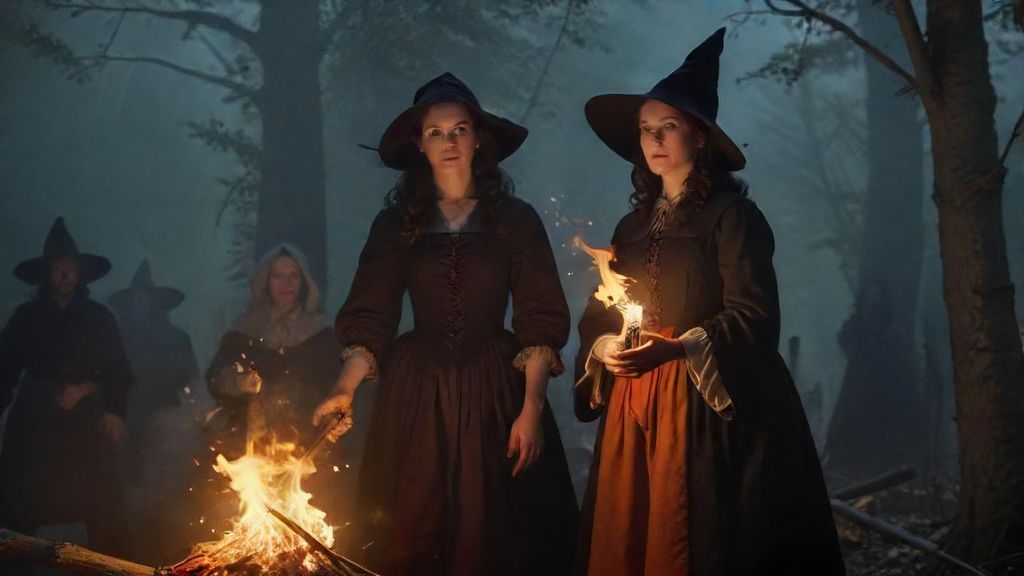
Imagine living in a small, isolated town today where everyone truly believes in a real, active devil, constantly trying to trick and harm them. Now, add economic struggles, dangerous neighbors, and unexplained illnesses. That intense feeling of fear and suspicion? That’s closer to what really set things off in Salem Village in 1692. The simple answer to what caused the Salem Witch Trials isn’t just one thing. Instead, it was a dangerous mix of very strong religious beliefs, worries about living on the edge of the wilderness, deep arguments within the community, and some sick, scared young people.
The real story is actually way more interesting than the usual images of pitchforks and pointy hats. According to historians, Salem was just waiting for something to spark a panic. The main reason for the outbreak lies in the strict way the Puritans who settled New England saw the world. They were super religious, truly convinced they were building a special “city upon a hill” for God. But this deep faith had a scary side: an unshakeable belief that the Devil was a real person, hiding everywhere, just waiting to ruin their souls and destroy their holy mission. It’s like living in a really strict, isolated community where breaking any rule is seen as a sign of evil, and everyone literally fears an unseen enemy trying to tear them apart from the inside.
What Was Life Really Like in Salem Village?
Life in Salem Village, Massachusetts, wasn’t quaint and peaceful at all; it was harsh and full of challenges. This was a true frontier settlement, always fighting against the wild, untamed land around them. Think of it like a remote community today facing constant threats—maybe a deadly new virus, or frequent attacks from a dangerous rival group. In Salem, they battled diseases like smallpox, which often swept through, killing people quickly and without any explanation. They also lived in constant fear of attacks from Native American tribes. King William’s War, especially, had led to terrifying raids and kidnappings in nearby towns, making everyone feel incredibly scared and unsafe. This wasn’t just something they heard about; it was their everyday reality.
On top of these outside pressures, the community itself was breaking apart from the inside. Salem Village was a smaller, countryside part of the richer Salem Town, and there were fierce arguments about land, money, and who should be in charge. It’s like a modern-day neighborhood feud that’s gone on for generations, where every small disagreement gets magnified into a huge fight. The local minister, Reverend Samuel Parris, was not popular, and his arrival had only made these problems even worse. People were constantly taking sides, holding grudges, and harboring deep resentments.
This mix of fear, hard times, and internal fighting created the perfect setup for disaster. People had believed in witchcraft for hundreds of years, all over Europe and America. It was just a common way to explain bad luck, sickness, or things they couldn’t understand. But in Salem, their Puritan faith cranked this belief up to eleven. They didn’t just see the Devil as an idea; they saw him as a real force, actively working in the world. And they believed he could recruit people—witches—to do his evil work. History shows us that this fear was absolutely real; people genuinely thought the Devil was walking right there among them.
Then, in late 1691 and early 1692, something happened that lit the fuse. Reverend Parris’s nine-year-old daughter, Betty Parris, and her eleven-year-old cousin, Abigail Williams, started acting very strangely. They’d have violent fits, scream, throw things, make weird noises, and say they felt like they were being pricked or bitten. Other young girls in the village soon started showing similar strange behaviors. Today, we might call this mass hysteria, or maybe even a physical illness like ergot poisoning – a theory historians have talked about. But back then, for a terrified, super religious community, there was only one answer: witchcraft. They saw these fits as clear proof that the Devil was active in Salem, torturing their children through human witches.
Right away, people focused on a few outsiders. Reverend Parris’s enslaved woman, Tituba, became one of the first people accused. Tituba, Sarah Good, and Sarah Osborne were easy first targets. They were already on the edges of society, so it was simple to blame them. It’s amazing how quickly a few strange behaviors could unleash generations of fear and suspicion. It turned a struggling town’s worries into a full-blown crisis.
So, the Salem Witch Trials weren’t just a random event. They were the sad outcome of a community under huge pressure. Their fierce faith made them see the Devil everywhere. All of this exploded when a few young girls started showing troubling symptoms. This dangerous mix set the stage for one of the darkest chapters in American history. It makes us wonder what happened next as these accusations spun completely out of control.
Imagine if a rumor, started by a few stressed-out teenagers, suddenly took over your entire town. What if it led to arrests, public accusations, and even executions? That’s pretty much what happened during the Salem Witch Trials of 1692. These trials didn’t just appear out of nowhere. Instead, they snowballed at an incredible speed, turning a small cluster of accusations into a widespread panic across Massachusetts. The simple answer to how this escalation happened lies in a dangerous mix of fear, strong community pressures, and a legal system that accepted some truly bizarre forms of “evidence.”
Here’s how it all began: once the first accusations started, involving girls like Abigail Williams and Betty Parris, the town leaders in Salem took them very seriously. These initial claims were fueled by fear and possibly some genuine hysteria among the accusers. Ministers and local judges, like John Hathorne, stepped in. But their goal wasn’t to question the accusers; it was to find out who was tormenting them.
These weren’t formal trials with lawyers and solid proof. They were more like intense questioning sessions called “examinations.” During these sessions, the accused individuals had no one to speak for them. They faced a flood of questions designed to make them confess.
What Exactly Was ‘Spectral Evidence’?

The most shocking and damaging type of proof accepted was called spectral evidence. Simply put, this meant that if an accuser claimed to see the “specter”—the ghostly shape or spirit—of an accused person tormenting them, that testimony was considered good enough evidence. Picture this: a young girl in court would suddenly scream, fall to the floor, or claim to be pinched. Then, she would declare that the spirit of the person sitting right there in the courtroom was doing it.
How do you defend yourself against an invisible attacker that only the accusers can see? It was practically impossible. This type of evidence changed everything. It’s like someone today claiming your online avatar is spreading viruses on their computer, and the court believes them without any actual computer evidence. The accused could be sitting calmly, not doing a thing. But if the accusers claimed their specter was flying around and causing harm, it was taken as absolute truth. Historians agree that this spectral evidence was the single biggest reason why so many innocent people were found guilty.
Why Did People Confess to Witchcraft?
Another major reason for the escalation was the intense pressure to confess. This led to many forced confessions. It turns out that if you confessed to being a witch, even if you weren’t, you had a much better chance of staying alive. If you denied the charges, you were almost certainly found guilty and faced execution. However, if you confessed, you were seen as having repented, or turned away from evil. Often, your life was spared, at least for a while.
This created a terrible problem. People were essentially forced to lie and name other people as witches just to save themselves. We know this because historical records tell us that the first person to confess was an enslaved woman named Tituba. She did so after severe questioning and likely physical threats. Her confession, where she described riding on broomsticks and signing the devil’s book, made the entire nightmare seem real to the authorities. It proved, in their minds, that witchcraft was truly happening in Salem, pushing the panic even further.
The consequences were devastating. Before the hysteria finally cooled down, 19 people were hanged. One man was pressed to death, and many more died in jail. The legal procedures, the controversial roles of judges and ministers, and the terrifying acceptance of spectral evidence and forced confessions turned Salem into a place of extreme injustice.
This rapid escalation shows how easily fear and flawed legal practices can lead to tragedy. Next, we’ll dive into who finally stepped in to stop the madness and how the trials eventually came to an end.
What Was the Aftermath of the Salem Witch Trials and Their Lasting Impact?

The Salem Witch Trials collapsed surprisingly fast in late 1692 when common sense finally took over from widespread fear. This intense panic quickly faded as public opinion shifted dramatically. What followed was a slow, difficult process of recognizing a terrible mistake, which led to official apologies, money paid to victims’ families, and a deep, lasting change in American law. It forever shaped how we think about justice and the dangers of mass hysteria. Imagine if a huge public scare today led to quick, life-changing punishments for many innocent people, only for everyone to admit they were wrong just months later—that’s exactly what happened in Salem.
Things changed surprisingly quickly, mainly because important leaders had a change of heart. The whole nightmare started to fall apart in late 1692 when Governor William Phips came back to Massachusetts. His own wife, Lady Mary Phips, had been accused of witchcraft, so he knew this madness firsthand. He was very upset by all the wild accusations and how many people were being jailed. It seems that seeing the craziness up close and having his own family involved pushed him to stop it urgently.
How Did the Change of Heart Happen?
The biggest reason the trials stopped was that people started doubting something called “spectral evidence.” This was a strange idea: accusers claimed that invisible spirits of the accused were attacking them, and their stories about these spiritual attacks were used as proof in court. The problem was, this kind of ‘evidence’ was incredibly hard to challenge, which meant people were convicted without any real, physical proof. Critics, like the well-known Boston merchant Thomas Brattle, began to speak out forcefully, highlighting how crazy it all was. He famously argued:
It is an undeniable, and a notorious truth that there are poor and innocent people condemned, and executed, for the supposed crime of witchcraft.
This kind of strong statement from respected community members began to change what both the public and officials thought.
Governor Phips paid attention. In October 1692, he ordered a new, more powerful court to be created, called the Superior Court of Judicature. Most importantly, he banned the use of “spectral evidence” completely. Without this imaginary “proof,” the trials had no leg to stand on. When the new court met in January 1693, it almost immediately found 49 of the 52 people still in jail not guilty. The three others who had been convicted by the older court were later forgiven and set free. The witch hunt was finished.
But the journey to make things right wasn’t over. It was a long, difficult path of feeling sorry and dealing with what had happened. In 1697, the General Court, which was like the local government, announced a day of public fasting and prayer to make up for the terrible events. One of the judges from the trials, Samuel Sewall, openly admitted his mistake. He stood before his church in Boston as a minister read his statement of guilt and regret. For someone in his high position, this was an incredibly humble and powerful act.
For many decades afterward, official apologies continued, along with something called “reversals of attainder.” To understand that, “attainder” was a harsh legal penalty where victims lost all their rights and their good names, making them and their families outcasts. So, these “reversals” were like officially clearing someone’s name and giving them back their legal status. Then, in 1711, the General Court approved financial payments, or “reparations,” for the victims and their families. This was a real attempt to make things right, offering money for lost homes, jobs, and the terrible pain they suffered. For many, it came too late, but it was an official admission that a grave wrong had been done.
The Salem Witch Trials left a deep and lasting mark, still influencing American laws even today. It strongly taught us the importance of real, solid evidence, the idea that someone is innocent until proven guilty, and everyone’s right to a fair trial. These lessons completely changed how our justice system works. Just think about how carefully evidence is checked in court today, and how a judge might dismiss testimony that can’t be directly proven—all of that comes straight from what happened in Salem.
What’s truly fascinating is how this event became a warning story that still matters today. For example, the phrase “witch hunt” is still used to describe when people are unfairly picked on and punished without good evidence. It’s a clear reminder of the dangers of widespread panic, extreme religious beliefs, and power that no one can control. This isn’t just an old story from a history book; it’s a powerful, living lesson about human nature and how easily justice can be broken. But what were the bigger reasons in society that allowed such a terrifying event to happen? Next, we’ll explore the specific culture and religious atmosphere that set the stage for this burst of fear in Salem.