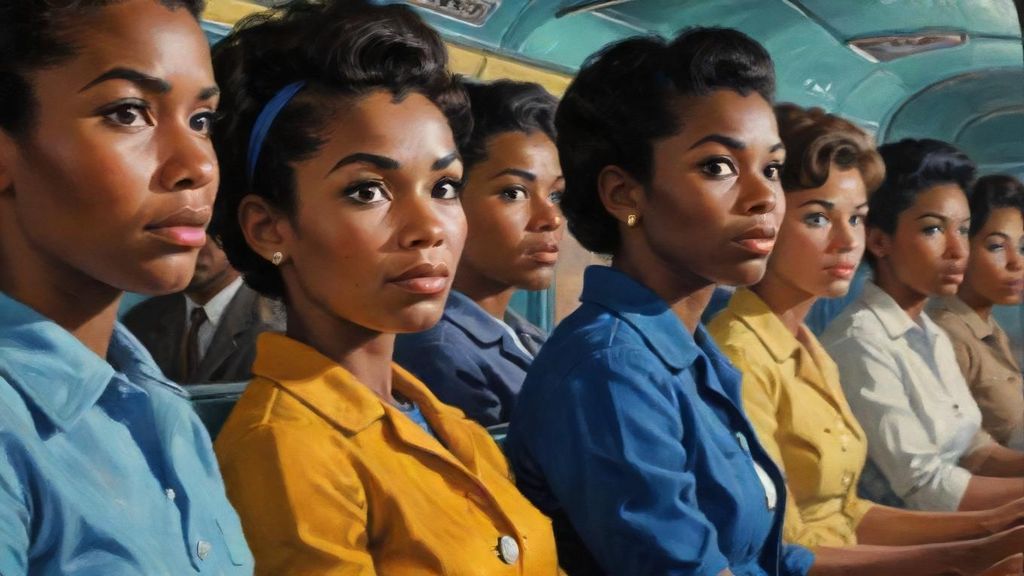
The first Freedom Riders were driven by a powerful mix of frustration and hope: they wanted to force the government to actually enforce its own laws against segregation. Imagine, for a moment, that you’ve bought a ticket for a long bus trip across several states. You expect to sit where you like, use the restroom, and grab a bite to eat at the terminal restaurant. Now, picture doing all that in 1961, traveling from Washington D.C. into the Deep South. Here’s the terrifying difference: your skin color decided where you could sit, which water fountain you could use, and even if you could eat a sandwich inside the station. This wasn’t just a small problem; it was a daily, humiliating reality that people endured.
The simple truth is, despite Supreme Court rulings like Morgan v. Virginia (1946) and Boynton v. Virginia (1960) that had officially outlawed segregation on interstate buses and in waiting areas, these decisions were mostly ignored across the American South. It was like having a new law passed but knowing no one would actually uphold it. This meant Black travelers, and anyone with them, still faced “white only” signs, separate waiting rooms, and outright refusal of service. These rulings, though legally important, were just words on paper if no one dared to test them. The main reason for the Freedom Rides was to make the federal government finally uphold its own laws.
The Congress of Racial Equality (CORE) started the first ride, aiming to directly challenge these broken promises. They knew that if Black and white people rode together, sitting wherever they chose, they would expose how openly segregationist states were defying the law. This direct action, it turned out, was seen as the only way forward. Later, the Student Nonviolent Coordinating Committee (SNCC), full of young, energetic activists, joined and expanded these efforts. They were driven by a deep moral belief and a strong sense of urgency. These weren’t just students; they were pioneers, ready to risk their lives for justice.
How did they prepare for such danger?
Here’s what we learned about their preparation: it was incredibly thorough. The volunteers, a diverse group including college students, ministers, and everyday citizens, weren’t just told to be brave; they went through intense training. Think of it like a sports team preparing for a championship game, but instead of physical combat, they were building their emotional and mental strength. They held workshops focused on nonviolent resistance, practicing how to endure verbal abuse, physical shoves, and even spitting without fighting back. Role-playing sessions acted out the real dangers they would face, teaching them to protect their heads during a beating, to maintain eye contact with attackers if possible, and to never, ever retaliate. This psychological training was vital, as they knew violence was not just possible, but highly likely.
According to historian Raymond Arsenault’s book, Freedom Riders: 1961 and the Struggle for Racial Justice, these training sessions taught them strong discipline and a deep understanding of their mission. They knew that their non-violence was their most powerful weapon. It showed the world the clear difference between their peaceful protest and the brutal attacks of their opponents. This commitment to non-violence wasn’t about being passive; it was an active, strategic choice designed to grab national attention and stir moral outrage.
The initial journey through the Upper South was a mix of excitement and anticipation. On May 4, 1961, seven Black and six white Riders boarded two buses – a Greyhound and a Trailways – departing from Washington D.C. What makes this fascinating is the strong feeling of hope among the participants. They shared meals, talked politics, and sang freedom songs, believing they were on the verge of truly changing America. Their expectations were that the law, at least in some places, might offer them some protection, or that simple appeals to fairness would work.
However, the reality of their first encounters with Jim Crow laws quickly shattered some of that initial optimism. While they faced relatively minor resistance in Virginia and North Carolina, the deeper they moved into the South, the uglier things became. In Rock Hill, South Carolina, Riders faced their first physical assault. This was a stark reminder that their commitment would be severely tested. White riders trying to use “colored” facilities, and Black riders daring to sit at “white only” lunch counters, immediately met with hostility. The local authorities often did nothing to protect them, sometimes even encouraging the violence. This immediate, often brutal, pushback set the stage for the increasing confrontations that would define the rest of their journey.
This chapter reveals that the Freedom Rides weren’t just spontaneous acts of bravery but a carefully planned campaign sparked by legal failures and a deep belief in what was right. The volunteers, prepared for the worst, had already faced violence, showing just how much their mission was needed. Next, we’ll see how these confrontations grew more intense and what unimaginable dangers awaited them deeper in the heart of the segregated South.
How did Freedom Riders endure the brutal violence and intimidation in the Deep South?

Imagine being trapped on a bus, smoke filling the air, a mob roaring outside, and the sickening smell of burning rubber and gasoline getting closer. This wasn’t a movie; it was the terrifying reality for the Freedom Riders in Anniston, Alabama, on May 14, 1961. So, how did they endure such brutality? They did it with an incredible mix of strong beliefs, a firm commitment to non-violence, and incredible courage. What’s truly amazing is that they faced this terror knowing that local police often didn’t protect them, and sometimes even helped their attackers.
Here’s what really happened: The first bus, carrying Black and white Riders together, was surrounded by an angry mob and firebombed just outside Anniston. As the bus turned into a blazing inferno, the Riders barely escaped, only to be beaten by the waiting crowd. Imagine the chaos and fear. The second bus, right behind, was also brutally attacked. They faced violence that could have killed them, simply for daring to sit together and challenge the deeply unfair rules of Jim Crow segregation. This horrific event was a clear warning, but it didn’t stop them.
How did they keep going after such brutal attacks?
The truth is even more shocking. Just hours later, in Birmingham, another mob waited. Historians say this attack was planned with the chilling help of the police. Birmingham’s infamous Public Safety Commissioner, Bull Connor, supposedly promised the Ku Klux Klan 15 minutes to attack the Riders without any police getting in the way. What’s surprising is just how much officials were involved in organizing this violence. Riders like James Peck, already shaken from Anniston, faced a furious assault at the Birmingham bus terminal. They were beaten badly with chains, pipes, and fists, simply for being in a place where segregation said they didn’t belong.
Sticking to non-violence when provoked so badly was incredibly hard. It took a kind of mental strength you rarely see, like an athlete pushing through unbelievable pain. The Riders were trained to take hits without fighting back, a tactic that often confused and even angered their attackers more. Diane Nash, a key organizer, was crucial in sending more waves of Riders into the Deep South. She refused to let the violence stop the movement, famously declaring:
We cannot let violence overcome nonviolence.
This commitment showed deep faith, not just in their cause, but in a powerful moral principle.
The journey then continued into Montgomery, Alabama. There, a federal escort promised by the Kennedy administration turned out to be surprisingly unhelpful. On May 20, another mob attacked the Riders at the Greyhound bus station. This time, the beating was so savage that even federal officials, like John Seigenthaler, an aide from the Department of Justice, got hurt trying to protect the activists. It was a scene where the very people sent to help became victims themselves.
The terror felt by Riders like Bernard Lafayette and Jim Zwerg was clear to everyone. Zwerg, a white Rider, was beaten so badly his face was hard to recognize, yet he still stuck to non-violence. These personal stories of courage, toughness, and faith showed the brutal truth of challenging Jim Crow head-on. The Riders found strength in their shared purpose and their belief that their cause was absolutely right, transforming their personal fear into a powerful group resolve. It was this strong inner belief, combined with their disciplined non-violent actions, that allowed them to keep going.
The shocking failure of local police to protect the Riders, and their active involvement in the attacks, showed the entire nation the ugly truth of segregation. This widespread violence, though horrifying, rallied public support and eventually made the federal government step in. The Riders’ incredible endurance through this hell of fire and fists didn’t end the fight, but it certainly pushed it into the next, equally tough stage.
What was it like for Freedom Riders to be jailed and how did their actions change America?

Imagine sitting in a stuffy church basement, your skin still stinging from the latest attack, and deciding that the bravest thing you could do next was to willingly go to jail. That’s exactly the powerful choice the Freedom Riders made, especially the young students from SNCC (Student Nonviolent Coordinating Committee). When the first Riders were brutally beaten in Alabama and then arrested in Mississippi, they could have just paid bail. But they didn’t. Instead, they made a profound decision: ‘jail, no bail.’ This wasn’t just a smart move; it was a loud message that shook America. It forced everyone to face an uncomfortable truth and changed the Civil Rights Movement forever.
Here’s what happened: instead of paying the fine, which would have put money into the very system that supported segregation, the Riders chose to stay locked up. They had a simple but brilliant idea: if enough people did this, the jails would overflow. The state would then have to pay to keep them there, and the sheer number of activists in jail would make it impossible for officials to ignore them. This strategy quickly made Jackson, Mississippi, the unwilling main spot for the Freedom Rides. As new Riders poured into the city, wave after wave, trying to use the segregated facilities, they were immediately arrested and sent straight to the local jails.
What makes this story so fascinating and truly tough to hear is the incredible strength these young people showed in awful conditions. City jails were cramped, dirty, and often violent. But the real horror began when Riders were transferred to the notorious Parchman State Penitentiary. This was a maximum-security prison farm made for hardened criminals, not peaceful protestors. Think of it like a remote, old-school chain gang system, but for people who had only tried to sit on a bus because of the color of their skin. Guards stripped them of personal items, forced them into prison uniforms, and made them do grueling manual labor under the scorching Mississippi sun. Often, guards would take away mattresses, shut off fans in the sweltering heat, or even hose down cells. This wasn’t just physical discomfort; it was a deliberate attempt to break their spirits, to make them give up.
Yet, they refused to break. They sang freedom songs, held secret meetings, and organized study groups, turning the prison cells into impromptu classrooms. James Farmer Jr., a key CORE leader, famously declared from his Parchman cell,
“We are prepared to die for our freedom!”This unwavering commitment, this sheer stubbornness in the face of systematic dehumanization, became a powerful symbol. It built trust among themselves and showed the world that their cause was deeply important and non-negotiable.
What was the immediate impact of their sacrifice?
The huge number of arrests – over 300 Freedom Riders ended up in Parchman by summer’s end, and more than 400 others were jailed elsewhere in Mississippi – was impossible to hide. News reports, often secretly sent out of the South, began to spread across the country and even internationally. The world watched as America, which prided itself on freedom, jailed its own citizens for daring to exercise basic rights. This growing pressure, combined with the worsening crisis, finally made the federal government step in. Unlike some earlier protests, the Freedom Rides couldn’t be ignored.
In simple terms, President John F. Kennedy’s administration, which didn’t want to get directly involved at first, realized the country’s image was taking a serious hit. The Attorney General, Robert F. Kennedy, asked the Interstate Commerce Commission (ICC) for help. And here’s what happened: on September 22, 1961, the ICC issued regulations that effectively made segregation illegal in interstate bus terminals, trains, and related facilities. This wasn’t just a suggestion; it was a legally binding order that had to be followed. Within months, ‘Whites Only’ signs began to come down across the South, marking a concrete victory for the Riders.
The truth is more interesting than you might think: the Freedom Rides did more than just desegregate bus stations. They fundamentally changed the Civil Rights Movement itself. The strategy of ‘jail, no bail’ inspired countless future campaigns, teaching activists that direct action and showing their moral strength could force change when polite negotiations failed. It really fired up a whole generation of young people, showing them the power of non-violent resistance and how effective it was when lots of people got involved. Think about how a viral trend today can quickly change public opinion or company policy; the Riders created that kind of undeniable momentum, but with far greater personal risk.
This direct action built confidence and momentum, setting the stage for even larger movements like the 1963 March on Washington and the Selma to Montgomery marches. The Riders’ willingness to endure such suffering for justice strongly proved that segregation was not only unfair but also couldn’t last. Their sacrifice made it clear that America would have to live up to what it said it believed in. This chapter of history reminds us that progress often comes not from polite requests, but from brave, unwavering defiance.
What makes this so fascinating is how a small group’s strategic endurance in jail created a ripple effect, slowly dismantling segregation and pushing a nation towards justice. The Riders’ journey from bus to cell block not only forced federal action but also forged a new path for the Civil Rights Movement. Their story, however, is just one thread in the rich tapestry of the movement’s broader fight for equality…