
Getting into Leonardo da Vinci’s workshop in Renaissance Florence was a big deal, much like getting into a top-tier school today where the headmaster is a world-famous genius. It wasn’t as simple as just asking to join. Aspiring artists, usually young boys, became apprentices through formal contracts and long-term commitments, much like a serious internship with a brilliant but demanding boss.
Joining wasn’t just for artists; it was part of a strict system that managed all jobs back then. Young boys, often between 10 and 14 years old, joined a master’s workshop as apprentices. This wasn’t a casual thing; it was a serious contract, usually signed by their parents. It set the course for their entire youth and future job. Think of it like a pro sports contract for a talented young player, but instead of playing, they were signing up to learn to paint, sculpt, or build for a master artist.
What Kind of Contract Did They Sign?
At the heart of this whole process was the indenture contract. This legal paper tied the apprentice to the master for many years, usually for about 7 to 12 years. Old records show these weren’t just casual promises. They were carefully written agreements, often with an official witness, like a public notary, making them legally binding. These papers spelled out what the master had to do – give the boy a place to live, food, clothes, and training. They also listed the apprentice’s duties, which meant obeying absolutely and putting all his effort into learning. Imagine a corporate training program today, but it lasted over a decade and you lived with your boss!
Money was a big part of it too. Often, the boy’s parents would pay a hefty fee to the master right away. This payment, sometimes a lot of money, covered the boy’s living costs and the excellent training he would get. If a family could afford this, it showed they had some money, or at least truly believed their son could become a great artist. Sometimes, instead of a direct payment, the apprentice’s work in the studio counted as payment, especially as he got older and better at his craft. It was like investing in a specialized college degree today, hoping for a great career later.
What Was a New Apprentice’s First Day Like?
So, imagine a young boy, maybe someone like Francesco Melzi joining Leonardo later in his career, arriving at the busy studio with his contract ready. What was it actually like? Picture walking into a loud, active factory, but instead of metal and grease, you’d smell linseed oil and turpentine. The studio wasn’t just for painting; it was a busy workshop, always making something. And here’s the surprising part: a new apprentice definitely didn’t start painting on his very first day.
His first days were filled with basic, often boring, chores. These were the essential jobs that kept the whole workshop going. He’d spend his mornings cleaning brushes, washing paint palettes, and sweeping floors. A major part of his work also involved grinding pigments – literally crushing rocks and minerals – into super fine powders to mix with oil. This was hard, dusty physical labor. But this wasn’t punishment; it was the bedrock of his training. Learning about the materials and how they worked was the very first step to truly becoming a master artist. It’s like a chef learning to clean vegetables and perfectly chop onions long before they ever prepare a main dish.
Slowly, the young apprentice would move on to basic drawing practice. He’d copy the master’s drawings, carefully tracing lines over and over. This helped him develop his hand-eye coordination and learn about shapes and forms. The pecking order in the workshop was very clear: Leonardo was at the top, then came his skilled assistants or experienced journeymen, followed by older apprentices, and finally, the new boys at the bottom. This often meant that the first lessons came from the older apprentices, not Leonardo himself. The studio buzzed with activity, always having many projects at different stages, from stretching canvases to carving intricate frames. This constant exposure, even to jobs they couldn’t do yet, was incredibly important.
And what about Leonardo himself? Sometimes his presence was super intense. He might focus on one tiny detail for days, carefully observing everything around him. Other times, he’d be totally lost in scientific experiments, studying the human body, or designing complex machines, almost forgetting about the paintings he was supposed to be doing. This unpredictable way of working meant apprentices learned in different ways. They didn’t just get direct lessons; they learned by watching, by adjusting, and by figuring things out when the great master’s focus shifted. This created a truly unique and sometimes tough learning experience, giving us a hint of the amazing stories about how these young artists truly learned from one of history’s greatest minds.
How Did Leonardo da Vinci’s Apprentices Actually Learn Art and Science?
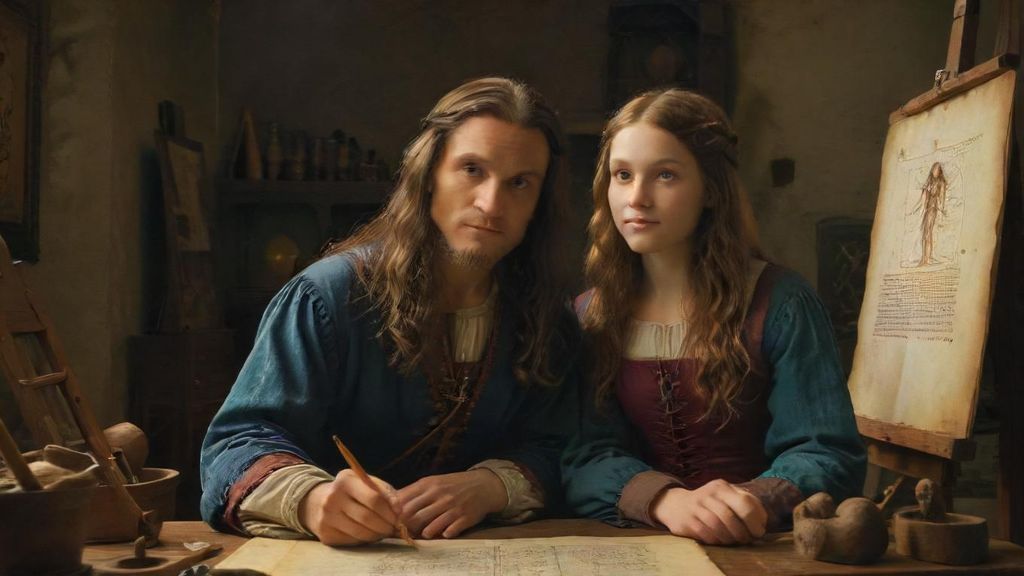
Imagine an art school where you didn’t just paint, but also drew human organs and designed war machines! Sounds wild, right? That’s exactly the kind of incredibly broad and often surprising education apprentices received in Leonardo da Vinci’s workshop. It wasn’t your typical art apprenticeship. Instead, it was a deep dive into both artistic mastery and scientific discovery, all guided by a true visionary. The simple answer to how they learned is this: through a unique, hands-on mix of traditional studio practice and groundbreaking scientific investigation, making them much more than just painters.
Their journey began with the basics, much like any art studio during the Renaissance. Young apprentices, some as young as twelve, first learned to get materials ready. This meant grinding minerals into fine powders for pigments, stretching canvases, or prepping wooden panels for painting. Then came the drawing. They started by copying simple lines, then moved on to intricate details from master drawings, and finally tackled plaster casts of classical sculptures. This taught them fundamental skills like proportion, how light falls, and creating shadows. It was a strict, repetitive process designed to give them a solid artistic foundation.
But here’s what made Leonardo’s workshop truly different: his apprentices didn’t just copy. They were pushed to observe the world directly. Leonardo would often send them out to sketch cityscapes, natural forms, or even people in various poses. These weren’t just practice exercises; they were assignments that demanded a scientific eye. As apprentices got better, they’d tackle more complex artistic ideas like perspective – that fascinating trick that makes a flat surface look like it has depth. Leonardo, a master of this, would teach them the math behind it, showing them how to construct believable three-dimensional spaces on canvas.
What Evidence Supports This Unique Training?
So, how do we know all this actually happened? The answer lies in old documents and, most convincingly, in Leonardo’s own notebooks and the artwork of his students. These invaluable resources give us a peek into his teaching methods. For instance, in one of his famous notebooks, often called the Codex Atlanticus, we find detailed instructions and diagrams on everything from painting techniques to observations of nature. We also see the clear influence of his studies of the human body in the works of his more talented students, suggesting he taught them directly.
One of the most amazing parts of their training was in human anatomy. While dissecting bodies was rare and often seen as wrong, historical records tell us that Leonardo himself performed many dissections. It turns out he likely involved his most trusted apprentices in these studies. Imagine learning about the human body not just from books, but by carefully drawing bones, muscles, and organs right next to your master! This was an unmatched opportunity, giving them an understanding far beyond what other artists had. It’s like learning surgery today directly from a pioneering surgeon, not just a textbook.
Beyond art and anatomy, Leonardo was interested in everything, so his apprentices were exposed to a mind-boggling array of subjects. They might learn about engineering principles by helping with designs for new inventions, or study botany by observing and sketching plants for a painting. Optics, the study of light and vision, was also super important, as understanding how light worked was key to making realistic art. This was a collaborative environment where apprentices contributed to Leonardo’s major artistic and scientific projects, learning by doing, experimenting, and often failing forward.
This complete, often experimental, way of teaching meant Leonardo’s apprentices became more than just painters. They grew into critical thinkers, keen observers, and versatile creators. They were equipped with a broad scientific understanding that few artists of their time could boast. This foundation prepared them not just for a career in art, but for a world of inquiry and innovation, reflecting the boundless curiosity of their extraordinary master.
This unique blend of artistic and scientific education shaped a generation of artists and thinkers who carried Leonardo’s innovative spirit forward. But what was it actually like day-to-day for these young minds in such an intense, brilliant, and sometimes chaotic workshop? That’s a story for our next chapter.
How Did Leonardo da Vinci’s Training Influence His Apprentices’ Later Careers?
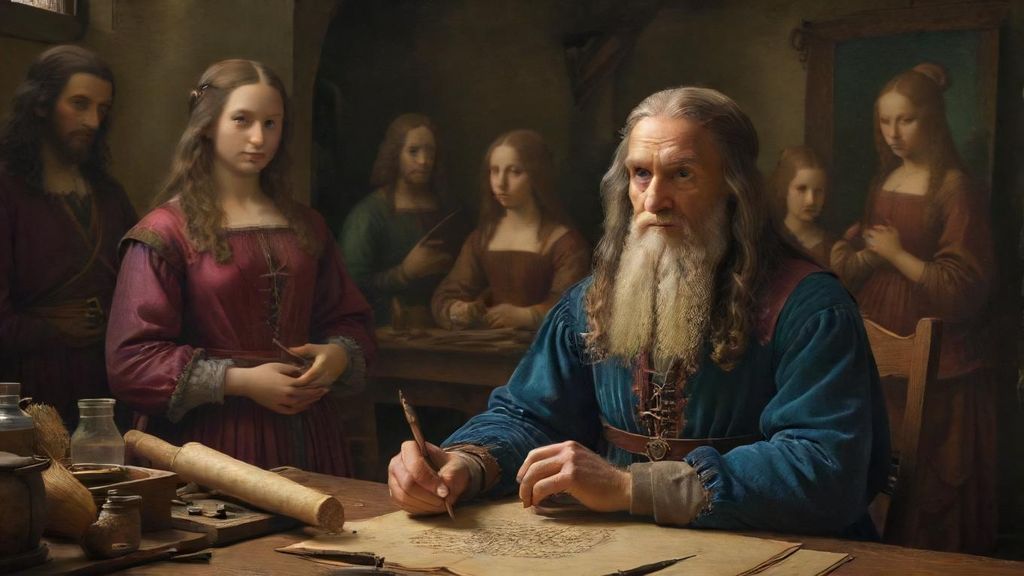
Imagine spending years learning from one of history’s greatest minds, soaking up every trick and technique. What happens when you finally go out on your own? For Leonardo da Vinci’s apprentices, the truth is more interesting than you might think. Their paths after leaving his studio were incredibly varied, like different brushstrokes on a masterpiece. But one thing is clear: Leonardo’s amazing teaching left a deep mark. It shaped not just their own careers, but the direction of Renaissance art itself. His training taught them not just how to paint, but how to see and how to think. This set them on paths from opening successful art studios to helping spread Leonardo’s groundbreaking ideas across Italy.
When these young artists finished their training – often called an “indenture,” kind of like a really intense, hands-on internship today – they had several options. Some wanted to open their own workshops, hoping to capture some of the magic their master had. Others found jobs helping other famous artists, continuing to learn while working on bigger projects. And then there were those who became like guardians of Leonardo’s legacy, carefully copying his paintings and protecting his important notebooks. What makes this so fascinating is seeing how much each apprentice took in, and what they did with that incredible knowledge.
How Did Different Apprentices Carry Forward Leonardo’s Legacy?
Let’s dive into a few specific apprentices to see how this all played out. First up is Salaì (Gian Giacomo Caprotti). He joined Leonardo’s home as a young boy, around 1490. Historians often describe him less as a serious artist and more as a charming, playful assistant and a model for Leonardo’s paintings, like the famous St. John the Baptist. While Salaì did create some paintings, often copies of Leonardo’s work, his own artistic style wasn’t exactly revolutionary. His importance isn’t so much about his own masterpieces, but more about his close, long relationship with Leonardo. He was a personal friend and the person who kept many of Leonardo’s works safe after the master died in 1519. Salaì helped make sure some of these treasures weren’t lost, even if he didn’t expand on them artistically.
Next, we meet Marco d’Oggiono, who started his training with Leonardo in Milan around the 1490s. Marco was a different kind of apprentice. He truly excelled as a dedicated copyist – like someone today making highly accurate reproductions of famous products, making them accessible. He wasn’t inventing new styles, but he was incredibly important for spreading Leonardo’s compositions far and wide. His most famous works are his many loyal copies of Leonardo’s iconic Last Supper, painted in the early 1500s. These copies, some of which you can still see today, were vital because they let people who couldn’t travel to Milan experience the original fresco’s revolutionary design and powerful emotions. He was a crucial way Leonardo’s ideas about dramatic stories and realistic human feelings spread through art.
But perhaps Leonardo’s most important artistic successor was Francesco Melzi. Melzi joined Leonardo’s studio around 1508 and became his most loyal student and friend during Leonardo’s last years. He didn’t just learn to paint; he absorbed Leonardo’s entire scientific and artistic philosophy. Melzi’s own works, like Vertumnus and Pomona, clearly show he mastered Leonardo’s sfumato technique – that soft, smoky blending of colors – and his elegant figures. What truly makes Melzi stand out, however, is his role as the careful record-keeper. After Leonardo died, Melzi inherited all of Leonardo’s notebooks and drawings. He took on the monumental task of organizing these scattered papers, which contained everything from studies of the human body to designs for machines. Historians credit Melzi’s careful work with saving these priceless documents from being lost, compiling them into what we now know as the Codex Atlanticus and other collections. This monumental act of intellectual stewardship ensured future generations could study Leonardo’s complete brilliance.
The combined impact of these apprentices was enormous, even if their individual talents varied. They were like early adopters of a new technology, spreading a complete change in thinking about art and observation. Through their work – as artists, copyists, or archivists – they ensured Leonardo’s revolutionary methods (from his understanding of light and shadow to his scientific curiosity) didn’t die with him. This powerful legacy significantly contributed to the ongoing vibrancy of Renaissance art and scientific inquiry across Italy and beyond.
So, the impact of Leonardo’s training wasn’t just about creating more artists; it was about laying the groundwork for how his radical vision would continue to shape the world. His apprentices became the conduits, carrying forward the flames of his genius. This vital transmission of knowledge begs the question: how did these individual artistic styles then evolve further, sometimes mixing with or even challenging the very foundations Leonardo laid?