
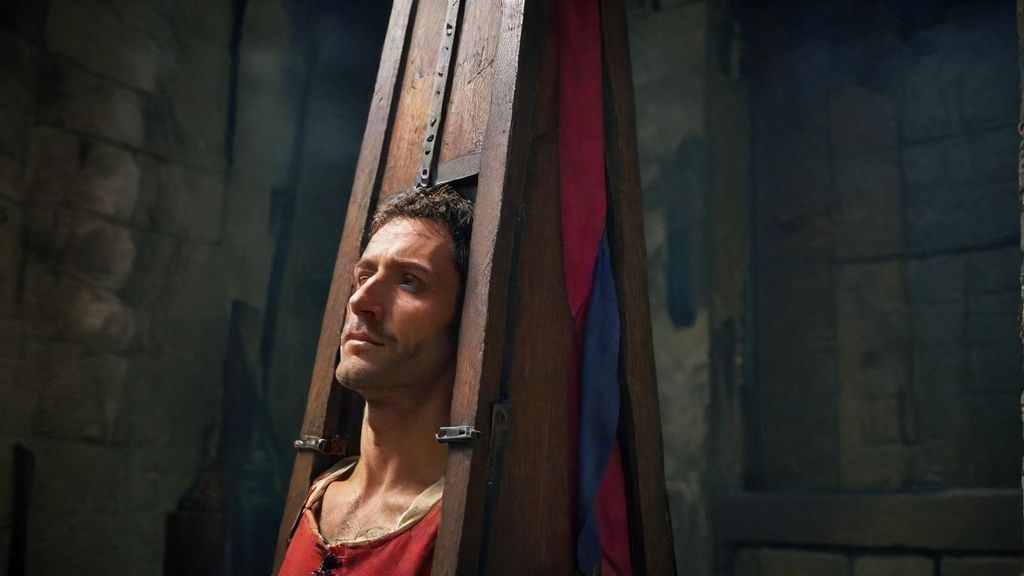
Imagine your neighbor, or even just someone you know, accusing you of something vague. Within days, you’d be in prison, facing a quick trial that almost always ended in a death sentence. This wasn’t a bad dream; it was the terrifying reality for countless people during the French Revolution’s darkest time, known as the Reign of Terror.
The simple, brutal answer to how someone ended up facing the guillotine back then is this: a system was created to quickly get rid of anyone seen as an “enemy of the Revolution,” no matter if they were truly guilty. It was a fast, cruel process that didn’t start with strong proof, but often with just a suspicion and a fearful accusation.
What Could Make You a “Suspect”?
The real story is even more chilling than you might think. During the Terror, anyone could find themselves accused. It wasn’t just wealthy nobles or priests; ordinary people from all walks of life were targeted. A big reason for this widespread fear was a law passed in September 1793, called the Law of Suspects. Simply put, this law cast a wide net, describing who a “suspect” was in incredibly vague ways. You could be called an enemy because of how you acted, who you knew, what you said, or even if you said nothing at all. It’s like today if a vague social media post could instantly brand you a criminal, leading to immediate arrest without any warning.
Here’s what happened next: an accusation, often from a very passionate citizen or a local revolutionary group, would lead to your immediate arrest. There was no ‘innocent until proven guilty’ here. Instead, you had to prove your loyalty, which was an almost impossible task. History books tell us of people arrested for small things, like feeling sorry for the old king, not cheering enough for the Revolution, or even saving bread, which could be seen as hurting the war effort. Think about how easily misunderstandings or personal grudges could be used against people in such an environment. Historians say these unfair arrests made prisons overflow.
Once arrested, the grim reality of prison life began. Conditions were terrible: too many people packed in, poor hygiene, and a constant, gut-wrenching uncertainty. Prisoners often waited for weeks or months, never knowing when their name would be called for trial. The mental strain was huge. It was like being stuck in a never-ending line for a terrifying, unknown fate, unable to prepare or argue your case until it was too late. This uncertainty, this lack of information, took away people’s last bit of control and hope.
Eventually, a prisoner’s name would appear on a list, sending them to the Revolutionary Tribunal in Paris. This wasn’t a fair court like we understand it today. It was, essentially, a quick and brutal conveyor belt straight to the guillotine. Trials were swift, often lasting only minutes, and the accused had little to no chance for a proper defense. The prosecutor, a notorious figure named Antoine Quentin Fouquier-Tinville, famously declared that “proof of guilt depends on the conscience of the jurors” – meaning they could judge people based on their gut feeling, not hard facts. It’s shocking how completely this threw out all traditional legal principles, creating a truly revolutionary and terrifying form of “justice.”
The dehumanizing process was complete once a person faced the Tribunal. All rights were stripped away, their fate often already decided. Many simply accepted their inevitable end, worn down by prison life and the sheer pointlessness of resisting. From a random accusation to a rapid guilty verdict, the journey to the guillotine during the Terror was a chilling example of how quickly a society can abandon justice for a radical idea.
This systematic way of breaking down legal norms – from vague accusations to quick convictions – ensured a steady supply of victims for the guillotine. But what actually happened in those final moments, after the verdict was delivered? Next, we’ll explore the immediate aftermath of a death sentence, delving into the journey from the courtroom to the scaffold itself.
What Was the Last Journey Like for Those Condemned to the Guillotine?

For those condemned to the guillotine, the last journey was a public and often silent procession from their prison cell to the scaffold. It began the moment their cell door opened, turning their final moments into a chilling psychological ordeal witnessed by the streets of Paris. This wasn’t always the roaring, bloodthirsty spectacle history sometimes portrays; often, it was a haunting parade of quiet terror.
So, here’s how it went: A guard would show up, read the death sentence, and soon after, the person condemned would be taken out to carts waiting outside. These weren’t fancy rides; they were plain, open wooden carts known as tumbrels. Imagine a basic farm cart, open to the weather, often with rough wooden benches. There was nowhere to hide. You were completely visible to everyone, your face and destiny on full display for the entire city to witness. This immediate exposure was a key part of the terror, a calculated move by the leaders to turn the punishment into a public warning.
What Did the Crowds Actually Do?
The journey itself was slow, moving through the narrow, busy streets of Paris. We often hear stories of angry mobs, shouting for blood. And yes, sometimes, especially early in the Terror and for famous people like Marie Antoinette, the crowds were indeed mean. They would throw jeers, insults, and even garbage at the tumbrels. Records from people who were there, including police reports and private diaries, show that some citizens definitely enjoyed seeing the downfall of those they saw as enemies of the Revolution.
But, newer evidence paints a different picture. It shows that not every street corner exploded into a riot. Many reports suggest that as the Terror continued, people grew tired. They became used to it, or maybe just numb. Often, the crowds were quiet, a sea of serious, curious, or even scared faces. Imagine how people today might react to a terrible accident – you see a mix of curious stares and quiet horror. Sometimes, the only sounds breaking the silence were the rumble of the carts and the occasional shouts of street vendors, a stark and eerie contrast to such a serious event. Historians, after looking through many personal letters and official documents, have found countless stories about shocked bystanders, not just wild, cheering crowds.
The people condemned to die showed all sorts of reactions. Some, like the powerful speaker Georges Danton, stayed defiant, trying to speak to the crowds or even yell insults at his executioners. Others, like the scientist Antoine Lavoisier, met their end with quiet grace, appearing deep in thought. For many, it took incredible strength to stay calm under such immense mental pressure. Imagine being paraded for an hour or more, knowing exactly where you’re going and what will happen, with thousands of eyes watching you. It’s like being the unwilling star of a very slow, very public, and utterly fatal reality show, with the entire city as your audience.
The simple truth is that this final journey was a relentless attack on a person’s feelings and spirit. The squeaky tumbrel, the slow clip-clop of the horses, the changing looks on people’s faces in the crowd, the constant feeling of being watched – all of it piled up into a huge mental challenge. It was designed to strip away all dignity right before that last, brutal moment. It wasn’t just about the execution itself; it was about watching someone fall apart in public before it happened.
This awful parade, whether people booed or stayed quiet, made sure the condemned’s final public moments were unforgettable for them and for everyone in Paris. It was the ultimate display of power. Next, we’ll look at what it felt like to stand at the foot of the scaffold and how those very last seconds played out.
What Really Happened on the Scaffold During a Guillotine Execution?

During a guillotine execution on the scaffold, the condemned faced a shockingly swift and brutal public spectacle. The French Revolution’s government carefully staged these events not just for efficient killing, but to instill fear and display its absolute power. It was far from the clean, humane act many imagine; instead, it was a raw, visceral show of force, unfolding in front of thousands.
Imagine the person condemned to die, often after spending days or weeks in grim, dark prisons, taking their final journey through the streets of Paris. They rode in open carts called tumbrels, sometimes facing jeers, sometimes pity, on their way to spots like the Place de la Révolution (which we now know as the Place de la Concorde). Crowds would gather early, sometimes even having picnics, treating the gruesome event almost like a public holiday. It’s fascinating how quickly society got used to this constant stream of death, a huge difference from how we see public executions today.
What Did the Executioner Actually Do?
Once they arrived at the scaffold, a tall wooden platform, the condemned would be met by the famous executioner, Charles-Henri Sanson, or one of his helpers. Sanson came from a long line of executioners. He wasn’t just a violent person; he was a professional, often seen in respectable clothes, carrying out his terrible duty with a grim efficiency. His team, known as “the valets,” were responsible for securing the prisoner.
The guillotine’s design looked simple, but it was terrifyingly effective. It featured two tall wooden posts, held together, with a heavy, angled blade hanging at the top. Below, around waist height, was a hinged board called the bascule. The person being executed would be forced onto this board, sometimes struggling, sometimes having given up. Their neck would then be placed into a wooden neck-brace, or lunette. This brace had two halves that clamped shut, holding the head firmly right under the blade. Imagine it like a very rough, old-fashioned car wash conveyor belt, but instead of getting clean, you were set up for your last moment. Historical records tell us that the whole process, from stepping onto the scaffold to the blade dropping, could take mere seconds for an experienced team.
Once the head was secured, Sanson would pull a lever or rope, letting the heavy blade go. It would fall with incredible speed, severing the head in an instant. The main goal was to be quick and, supposedly, painless—a “humane” improvement over a clumsy axe or sword. However, what happened right after was anything but humane. The body, still twitching for a few moments, would drop into a large basket or chest.
According to observers like Dr. Antoine Louis, who helped design the guillotine, the whole point was to prevent long suffering. But the truly shocking part came next: an assistant would often grab the severed head, dripping with blood, and hold it up for the crowd to see. This wasn’t a private act at all; it was a public announcement, a brutal trophy displayed to affirm the government’s power. One chilling story from a witness in 1793 described the crowd roaring their approval, a stark reminder of how numb people had become during the Terror.
The bodies, now without heads, were casually dumped into waiting carts. These carts would then take the remains to common graves, often unmarked, like those at the Madeleine Cemetery or Picpus Cemetery, where thousands were buried during the Revolution. With so many executions, proper burials were impossible; it was more like a disposal operation. Recent archaeological evidence shows these mass graves were just deep pits, packed with bodies, highlighting how systematic these killings truly were.
This brutal ritual left a lasting impact. For those who witnessed it, it made extreme violence seem normal, creating both fear and a grim fascination. For the history of the French Revolution, the guillotine became its most powerful and horrifying symbol. It perfectly shows the radical, uncompromising spirit of a time that aimed to build a new society using more violence than ever before. This immediate, public, and swift “justice” carved a deep scar into everyone’s minds, shaping how future generations would understand power, revolution, and the ultimate price of extreme political passion. Next, we’ll explore how this machinery of death actually impacted the Revolution’s leaders themselves, and if they ever questioned its grim effectiveness.