
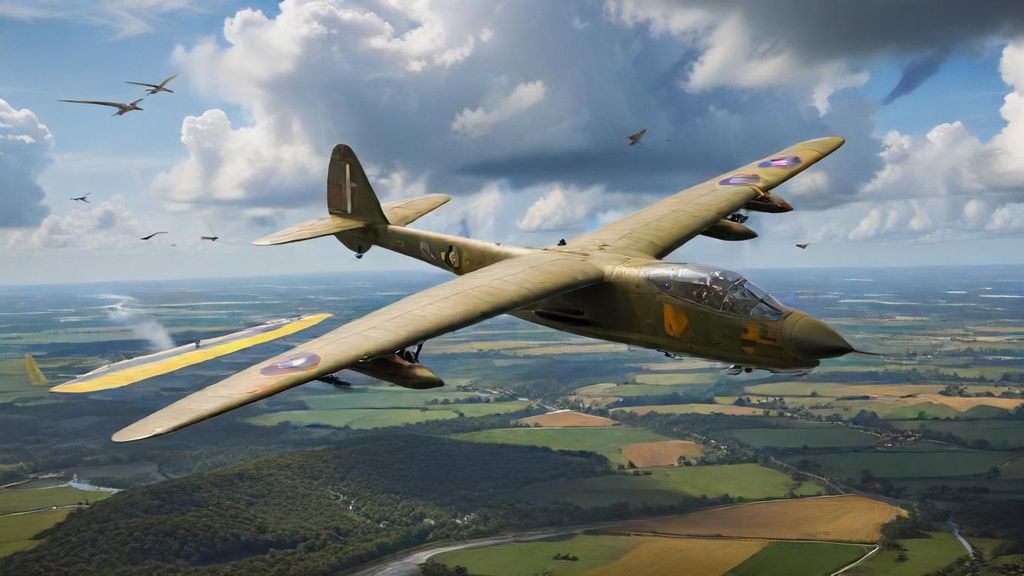
Imagine trying to sneak a small army, complete with jeeps and anti-tank guns, behind enemy lines in the dead of night, hoping to surprise them completely. This was the incredible challenge the Allied forces faced before D-Day. Their clever, but slightly terrifying, solution involved using unpowered aircraft: gliders. The simple answer to why they chose gliders for the Normandy invasion comes down to two main things: silence and heavy lifting. Unlike noisy powered planes, gliders could float down quietly, giving paratroopers a much better chance to achieve surprise. They could also deliver equipment that was far too bulky and heavy for parachutes.
These weren’t small, simple gliders for a weekend hobby. They were massive, powerful aircraft built specifically for war. The British mainly used the Horsa glider, a huge plane made mostly of wood. It was big enough to carry a small truck, a jeep, or an anti-tank gun, along with up to 28 fully equipped soldiers. American forces primarily used the smaller but just as important Waco CG-4A. This glider was covered in fabric and could carry 13 troops or a jeep with a few men. What’s truly fascinating is that these gliders were designed for a one-way trip. There was no plan to fly them back. Once they landed, their mission was over, and the pilots often joined the fighting as infantry.
How Did They Prepare for Such a Dangerous Mission?
Getting ready for such a daring, one-way mission required really tough and specific training for everyone involved. Glider pilots, often volunteers, weren’t just good pilots; they were incredibly brave people. The training was intense because flying a glider into a dark, enemy-held field was completely different from landing on a smooth runway. It was like trying to park a huge truck in a specific, pitch-black alleyway, blindfolded, after being towed at high speed, knowing you couldn’t hit the brakes hard or back up. They practiced flying in formation, sometimes with dozens of gliders connected by tow ropes to transport planes. They had to keep perfect distance in the dark, dodging clouds and enemy fire.
Learning what to do in emergencies was a huge part of their training. This covered everything from what to do if a tow rope broke mid-flight to how to crash-land safely into fields, ditches, or even forests. Historians tell us that training grounds in places like North Carolina for the Americans and Wiltshire in England for the British saw countless practice landings. Pilots would fly low, practicing putting down their delicate planes in the dark, sometimes using bonfires to mark landing zones, just as they might do in Normandy.
Captain L. J. H. “Tommy” Gammage, a British glider pilot, described the experience of a rough landing during training as “like being thrown downstairs in a tea chest.”That really tells you how hard the impact could be!
The soldiers they carried, the glider infantry, also underwent specialized training. They learned how to quickly get out of a glider after a rough landing, ready to fight immediately. They often had to get their equipment ready in seconds. This wasn’t just physical training; it was also about getting mentally ready for a mission where they knew their chances of survival were low, and there was no plan for getting home. New information shows that the bond between glider pilots and the troops they carried was incredibly strong. This was a really important factor in their shared, dangerous journey.
The truth is even more interesting than you might think. These brave men flew what were essentially fancy wooden boxes into the heart of battle, relying on pure skill and courage. This incredible sacrifice and clever planning helped clear the way for the ground forces, causing a lot of trouble and confusion behind German lines. Next, we’ll dive into the terrifying moments of the actual journey, flying silently through the night skies towards Normandy.
How did glider pilots navigate the dangerous skies to reach Normandy?

Imagine flying a fragile wooden aircraft with no engine, pulled by a rope across a dark, enemy-filled sky. That’s exactly what D-Day glider pilots did. So, how did they navigate those dangerous skies to reach Normandy? They relied on an incredible mix of bravery, careful planning, and pure gut feeling, all while being towed quickly into a war zone. It wasn’t just flying; it was a heart-pounding journey that demanded extreme precision and courage.
Their incredible journey started long before they even took off from England. Gliders, like the British Horsa and American Waco models, were pulled by powerful C-47 transport planes. This tow across the English Channel was terrifying. Picture yourself in that glider cockpit, often at night, with only the faint navigation lights and exhaust flames of the tow plane visible. Staying in formation was like trying to keep a kite perfectly lined up with a speeding car in heavy traffic, but in the dark, high in the sky, with strong winds and thick clouds making it even harder.
Bad weather was one of their biggest nightmares. Pilots often flew through thick fog or turbulent air, which made it almost impossible to see their tow plane. If they lost sight, it meant a terrifying, early release over the Channel – a sure death sentence for most on board. History tells us that several gliders did cut loose too soon, their crews and vital cargo disappearing into the cold sea. Inside the glider, the journey was incredibly tough. The tow rope was always under immense strain, causing the glider to bounce and sway violently, pushing the pilots’ physical and mental limits for hours.
What Was It Really Like Up There in the Dark?
Then came the enemy. As they got closer to the French coast, German anti-aircraft fire became a terrifying reality. Imagine seeing bright tracer rounds streak across the night sky, knowing they were coming right for you and your tow plane. The C-47s sometimes had to swerve sharply to dodge the flak, sending a sudden, powerful jerk through the tow rope that could easily snap it. Glider pilots had to react instantly, trying to keep their flimsy aircraft steady through all the chaos. It was like trying to make a careful delivery in a busy city while someone is actively trying to run you off the road.
Once they cut loose, the sudden, deep silence inside the unpowered glider was perhaps the most unsettling part. After hours of loud engine noise and the wind whistling past the tow rope, the quiet became almost deafening. This moment, often happening miles from their target landing zone, meant they were no longer being pulled. Now, they were truly alone, exposed, and gliding down into enemy territory. Glider pilot Sergeant Jim Wallwork, who landed one of the first gliders near Pegasus Bridge, described it simply:
a silence you could almost taste.
In that quiet, every creak of the aircraft seemed incredibly loud.
Navigating during this silent glide down was incredibly risky. Under immense pressure, often in complete darkness, pilots had to use any faint light available to spot their landing zones. They depended on paper maps, compasses, and precise timing. They searched for specific landmarks below, like bends in a river, road junctions, or even special marker lights that friendly forces might have placed on the ground. It was like trying to land a modern cargo plane in moonlight with only a paper map to guide you, all while people were shooting at you.
Their training was tough, involving countless practice flights and landings, but nothing could truly prepare them for the sheer terror and chaos of D-Day. What’s amazing is how these men, flying such simple aircraft, managed to hit their targets with incredible accuracy, often landing just minutes apart. This wasn’t just luck; it showed their unbelievable skill even while under attack.
The careful planning for these missions—from the tow routes to the exact landing patterns—marked a completely new way of thinking about airborne attacks. It was a huge risk, but one that was absolutely vital for capturing key targets before the main invasion forces landed. In the end, their navigation wasn’t about fancy technology; it was all about human toughness and the ability to stay focused even when facing unimaginable danger.
The amazing accuracy of these landings, carried out in chaos and darkness, truly shows a side of D-Day gliders that many might not realize. These weren’t just people being carried; they were expert pilots doing one of the most dangerous and crucial jobs of the whole invasion. They landed troops and equipment exactly where they were needed, against all odds. Next, we’ll explore what really happened when those gliders finally hit the ground and how the pilots faced the ultimate challenge of their mission.
What happened to glider pilots and troops immediately after landing in Normandy?

Imagine this: you’ve just had a terrifying, quiet flight across the English Channel, speeding toward a landing spot you didn’t know in the dark. Now, the ground rushes up alarmingly fast, and the glider you’re in doesn’t land smoothly; it’s more like a planned crash. This harsh landing was the immediate reality for thousands of Allied glider pilots and the soldiers they carried into Normandy on D-Day. The true story is more interesting than you might think, showing incredible bravery and quick, crucial decisions.
Right after a glider landed, it was total chaos, a fight to survive, and sudden battle. These weren’t soft touchdowns. Gliders, made of wood and fabric, slammed into fields, often hitting the famous Norman bocage – thick hedgerows crisscrossed with old trees. Picture trying to land a giant paper airplane into a brick wall; that’s often what it felt like. Sergeant Major Stanley Hollis, who received the Victoria Cross, described his glider hitting so hard it snapped in half, throwing men and equipment violently.
The glider was built to absorb the crash itself, hopefully protecting the important cargo inside. But injuries were common: broken bones, concussions, and men being thrown against equipment. Yet, the clock started ticking the moment the glider shuddered to a halt. The simple answer to what happened next is: get out, quickly, and fight. Soldiers, often stunned, had to get out fast, sometimes through broken pieces of their glider, all while the enemy might be shooting at them. This urgent dash was vital for staying alive and completing their mission.
Here’s what we discovered from countless personal stories and historical records: these glider-borne forces had very clear goals they needed to achieve right away. Take the British 6th Airborne Division’s mission to capture the Orne River Bridge and Ranville Bridge (later famously known as Pegasus Bridge and Horsa Bridge). This was perhaps the most famous glider attack, a bold daytime operation on D-Day itself, June 6, 1944. The goal? Stop German tanks from crossing and attacking the main beach landings. Gliders had to land just a few feet from their targets.
The commander of the lead glider for Pegasus Bridge, Major John Howard, famously told his men, “Gentlemen, you have the honour of being the first to land in France.” His glider, along with five others, landed with astonishing precision, just feet from the bridge. Landing so precisely was incredible, especially given the tough conditions. It’s like trying to land a jumbo jet on a tennis court, in the dark, with no lights. Being so close meant fighting began the moment they left their gliders.
How Did They Turn Crashes into Combat Readiness?
The change from crashing at high speed to becoming a fighting unit happened incredibly fast. As soldiers poured out, often facing machine gun fire or mortar attacks, they immediately took up defensive positions. Weapons and gear, from jeeps to anti-tank guns, were quickly unloaded. The gliders often served as quick cover, even if they were flimsy. What makes this fascinating is the mental switch required: from just riding along to actively fighting in mere seconds, all with adrenaline surging.
Injuries and deaths were bound to happen. Some landings were fairly gentle, but others were total disasters. Gliders hitting trees, ditches, or even crashing into each other led to instant deaths or serious wounds. According to historians like Stephen Ambrose in his book Pegasus Bridge, the first attack on the bridge had few casualties mostly because it was a surprise. But other landing spots, especially deeper inland, faced fierce German opposition right away. We know this from detailed reports written after the fighting and from what survivors said.
For example, some American glider units landing behind Utah Beach found themselves deep behind enemy lines, isolated and often battling small German patrols or even fortified positions. Their objectives included cutting off enemy messages, blowing up bridges, and putting up roadblocks to slow German counterattacks. Think of it like a modern special forces raid, but delivered in a fragile wooden plane and without the luxury of being truly hidden.
These men truly showed how clever and brave they were. Glider pilots, after delivering their cargo, often joined the ground troops, grabbing a rifle and fighting alongside them. They weren’t just pilots; they were soldiers fighting alongside everyone else. This instant fight quickly turned the airborne attack into a drawn-out ground battle, a tough struggle for every bit of French land. New information shows that the surprise often didn’t last long, leading to intense, close-up fights.
This first small fight was just the start. The survival of these glider soldiers, often facing more enemies and fewer weapons, depended on their ability to quickly get organized, meet up with other units, and hold their positions until more help arrived. The bravery shown in those first few hours set the stage for the hard fighting that marked the Normandy campaign.
The experience of crash-landing a glider into enemy territory and immediately engaging in combat needed amazing discipline and courage. It wasn’t just about the landing; it was about turning that moment of impact into a strong fighting force. This quick change from being dropped from the sky to fighting on the ground paved the way for future missions, showing how crucial these fragile planes were. Next, we’ll look at the brave ways some glider pilots escaped and hid after their missions were done.