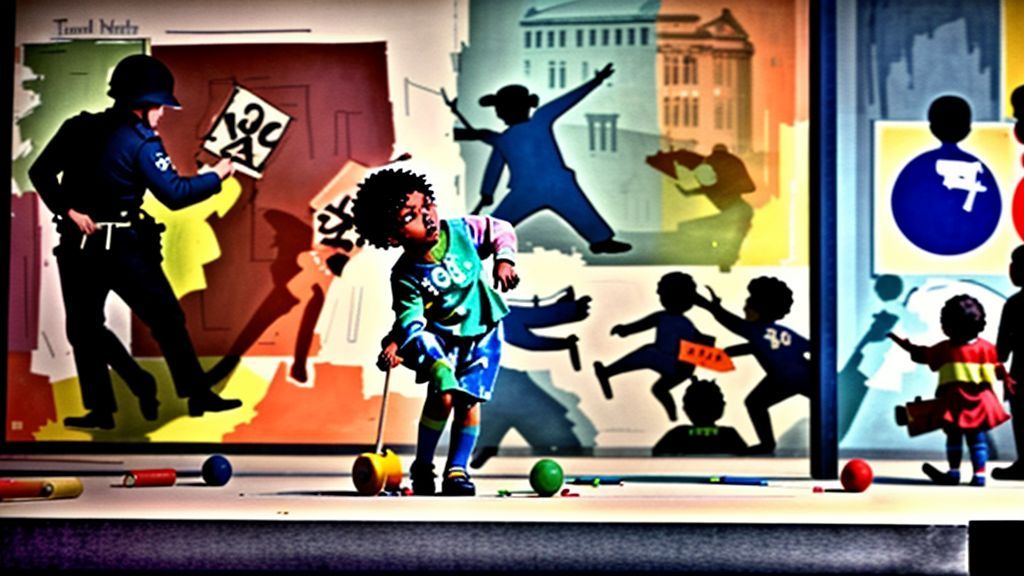
Children played a pivotal role in the 1963 Birmingham Protests because they offered a unique way to pressure city leaders for civil rights. When adult protests stalled and leaders like Dr. Martin Luther King Jr. needed a new approach, they turned to students. Unlike adults, children didn’t have jobs to lose, and their arrests and encounters with police brutality created a shocking national media spectacle, forcing America to confront the harsh reality of segregation. Imagine living in Birmingham, Alabama, in 1963, a city so dangerous people called it ‘Bombingham‘ because the Klan regularly bombed Black homes and churches. In this fearful and unjust place, the idea of children marching against segregation might seem unbelievable, yet it became a defining moment in American history. So, how did these young people step up?
Here’s the simple truth: the civil rights movement in Birmingham had hit a wall. Adults had been protesting for months, facing brutal arrests and economic pressure, but the city’s powerful leaders, especially the notorious Public Safety Commissioner Bull Connor, refused to change. Connor’s police and fire departments were ready to crush any protest with overwhelming force. As more adults became hesitant to risk their jobs, homes, and lives by going to jail, leaders like Dr. Martin Luther King Jr. and strategists like Reverend Wyatt Tee Walker realized they needed a new, drastic plan. They needed to fill the jails and force the whole country to pay attention. This new approach involved the city’s youngest citizens.
Why Did Leaders Decide to Involve Children in the Movement?
The story behind this decision is more complex than you might expect. It wasn’t a casual choice; it was a controversial, carefully planned strategy called ‘Project C‘ – with ‘C’ standing for confrontation. The main goal was to put so many people in jail that the city’s system would completely stop working and overwhelm Connor’s forces. But who would volunteer to go to jail when adults had so much to lose? Many Black workers, for example, were already struggling to get by, and losing a job meant losing everything.
Here’s what leaders saw: Reverend James Bevel, a key figure behind the idea, believed children were a uniquely powerful, and somewhat protected, group. Unlike adults, children usually didn’t have jobs to lose or entire families depending on their income. Their arrests would also be far more shocking to the public, especially when they faced the brutal tactics Bull Connor was famous for. It was like a high-stakes game of chess, and the children were the unexpected, game-changing move.
According to historians, this decision caused a lot of debate, even within the civil rights movement itself. Some worried a great deal about the children’s safety, and for good reason. Others, however, felt the stakes were too high to hold back. They argued that these children were already living every single day under the crushing weight of segregation. As one young participant later said, they weren’t being ‘used’; they were choosing to act for their own future.
“Our parents and grandparents had been doing things for years that hadn’t worked. We knew that we needed to make a change, and we were willing to do whatever it took.”
This strong belief among the young people was crucial. They understood how terrible the situation was. Imagine if your whole future, your right to learn, or even where you could simply walk in your own town, was decided by the color of your skin. These children lived that reality. They got ready for the marches by going to non-violence training sessions, learning how to react to insults, arrests, and even violence without fighting back. They knew exactly what they were signing up for.
So, the strategy had two main parts: first, fill the jails and stop the city from running normally; and second, create a media event so big that the federal government would have to step in. The children, with their innocence and bravery, had the power to show the ugly truth of segregation in a way that adult protests, after so many years, no longer could. Their actions became a mirror, reflecting America’s deepest prejudices back at itself. The stage was set for a powerful clash that no one, especially Bull Connor, saw coming.
This important choice to involve children was more than just a tactic; it was a desperate cry for justice from a community pushed past its breaking point. It showed the grim reality of life under Jim Crow laws and the unstoppable spirit of those determined to change it. Next, we’ll explore the remarkable day these young people took their first brave steps into history.
What Did Child Marchers Really Experience When Facing Birmingham’s Police?

For thousands of children in Birmingham, Alabama, on May 2nd and 3rd, 1963, school was replaced by something far more urgent: a protest for their basic human rights. What did these young marchers truly go through? They faced a rollercoaster of feelings, from soaring hope and friendship to pure terror and incredible bravery. All of this happened under the watchful, harsh eyes of a city dead-set on keeping segregation alive. It was an experience that changed their lives forever, making them stand up to unfairness in a way most adults never have to.
On Thursday, May 2nd, a mix of excitement and worry filled the air around Birmingham’s 16th Street Baptist Church. Children, some as young as six, poured out of schools. They wore their best clothes, ready to march. Holding hands, they sang freedom songs and chanted slogans, their young voices strong and united. This first burst of excitement was clear to everyone. It felt like a huge pep rally, but for something much more serious than a football game. They marched with a real sense of purpose, knowing they were doing something important. People who study history say this first wave felt like a mix of joy and strong will, a feeling of being part of something much bigger than themselves.
But this hopeful feeling quickly crashed into a harsh reality. As they neared downtown, they faced Public Safety Commissioner Bull Connor’s police force. The police were ready with everything: barking dogs and powerful fire hoses. The mood instantly changed from a happy protest to a scary showdown. Suddenly, friendly faces of classmates turned pale. Snarling police dogs, like attack dogs from a movie, leaped forward, barking wildly. Imagine being ten years old and seeing a trained German Shepherd with its teeth bared, ready to attack. That deep, gut-wrenching fear was something every child felt.
How Did They Prepare for Such Fear?
It turns out these children didn’t just walk into danger unprepared. People who were there, and history books, tell us that many had gone to workshops. These were led by civil rights leaders, like those from Dr. Martin Luther King Jr.’s Southern Christian Leadership Conference (SCLC). There, they learned about nonviolence, how to protest peacefully, and how to stay safe. They practiced dropping to the ground when fire hoses appeared, curling into a ball, and staying silent if arrested. This training didn’t take away the terror, but it helped them find their incredible courage. Think of it like a sports team practicing drills for a big game, but here, the prize was freedom and safety, not just a trophy.
Then, the fire hoses blasted. People who saw it said the water was so strong it could rip bark off trees. For the children, it felt like a physical punch—a sudden, huge force that knocked them off their feet and sent them tumbling across the pavement. It left them confused, hurting, and terrified.
One young marcher, Wash Booker, remembered, “The water just hit us like a ton of bricks.”
The sheer power of that water felt like a weapon, changing a simple protest into a fight just to stay alive. The streets filled with the screams of children, the barks of dogs, and the loud roar of the water, creating a terrifying, noisy mess.
Even with all the terror, an amazing sense of togetherness often grew. Children helped each other up, held onto one another, and whispered words of encouragement. When the police finally moved in to arrest hundreds of them, the children often went willingly. They still held hands as they filled the paddy wagons and police buses.
The truth is, many children saw being arrested not as losing, but as a badge of honor, a sign of how deeply they believed in their cause. The jails quickly filled up. But even there, the young activists kept singing freedom songs, turning their cells into makeshift protest spots. This incredible strength they showed together, facing such huge challenges, is what makes their story so powerful.
The immediate effect of their peaceful resistance was huge. News photos and TV footage of these events—showing children attacked by police dogs and fire hoses—shocked people across the nation and around the world. These strong images, seen everywhere, made people face the ugly truth of segregation. So, how did such bravery, born out of fear, end up changing what people thought?
In our next chapter, we’ll look at the lasting impact of these young heroes. We’ll explore how their actions echoed through the civil rights movement and far beyond.
How Did the Children’s Crusade Fundamentally Change the Civil Rights Movement?

The Children’s Crusade dramatically changed the Civil Rights Movement by overwhelming Birmingham’s segregation system and forcing a national response. In May 1963, thousands of children, through their peaceful protests and willingness to be arrested, created an unmanageable crisis in Birmingham. This relentless pressure, combined with shocking media images, made it impossible for the nation to ignore the brutal reality of segregation, directly leading to federal intervention and key civil rights legislation.
Here’s how it all unfolded: as thousands of children marched, sang, and prayed, Birmingham’s jails, which were already full, simply couldn’t hold everyone. On the first day, over 600 children were arrested. By the second day, that number shot up to more than a thousand. Within just a few days, about 2,500 children, some as young as six years old, were locked away. This wasn’t just a small problem; it was a total breakdown of the city’s power to enforce its segregation laws. Think of it like a computer system getting flooded with too much traffic – everything just stopped working. The city literally ran out of places to put people, pushing officials into a desperate situation.
The pictures and videos from Birmingham were just as powerful, maybe even more so. Photographers and TV cameras caught every terrifying scene: children being knocked down by strong fire hoses, their clothes torn off; police dogs snarling, showing their teeth, and attacking young protestors. These weren’t blurry, faraway photos. These were clear, close-up images shown on evening news reports all over America and in newspapers across the globe. Many Americans, especially those in the North who had been able to ignore the harsh truth of segregation, were suddenly confronted with its brutality. The struggle was brought right into their homes.
How Did the World React to What They Saw?
The media coverage, both in America and around the world, truly changed everything. What’s amazing is how fast people’s opinions changed. Those who hadn’t cared much, or even secretly supported segregation, were now faced with the undeniable truth of children suffering just to have basic human rights. This put huge pressure on President John F. Kennedy’s administration. Records show that Kennedy understood these images were hurting America’s image worldwide, especially during the Cold War. He knew he had to do something. The problem was no longer just a local issue; it was making the whole nation look bad.
This led to the federal government getting directly involved. President Kennedy sent Assistant Attorney General Burke Marshall to Birmingham to help find a solution. The ongoing protests, driven by the children’s courage, along with intense media attention, pushed Birmingham’s business leaders to sit down and talk. The city, suffering financially from boycotts and dealing with a huge public relations disaster, finally agreed to start desegregating public places. This wasn’t a full win, but it was a critical first step in breaking down Jim Crow laws right in their stronghold, showing a new way of thinking for many people.
Simply put, the children’s brave actions directly led to the federal government stepping in. What happened in Birmingham created unstoppable energy that pushed the Civil Rights Movement forward faster than ever before. Suddenly, the idea of a major federal law to protect civil rights, which once seemed impossible, now felt totally necessary and achievable. The anger caused by the upsetting images, the overflowing jails, and the incredible moral stand the children took directly cleared the path for the biggest civil rights law of the 20th century: the Civil Rights Act of 1964. This groundbreaking law banned discrimination based on race, color, religion, sex, or national origin. It was a huge step that truly wouldn’t have happened without the children of Birmingham showing the world the real face of injustice. Their courage didn’t just change their city; it changed all of America.
The Children’s Crusade made it clear to America and the world that fighting for civil rights was something that absolutely had to happen and couldn’t be overlooked any longer. Their actions turned a local fight into a national emergency, demanding that the federal government step in and eventually leading to the end of legal segregation. As we’ll explore in the next chapter, this major shift in what people and politicians wanted wasn’t the end of the fight, but it gave the movement the crucial legal tools needed for the challenges still ahead.