
Artemisia Gentileschi’s early life in 17th-century Rome was unique for a woman: she grew up immersed in art, trained directly by her famous painter father, Orazio Gentileschi. Despite her extraordinary talent, she faced immense barriers as a female artist who couldn’t attend formal academies. Her promising path was brutally interrupted by a pivotal event—a sexual assault by Agostino Tassi—which led to a scandalous public trial.
Artemisia was born in Rome in 1593. Her father was Orazio Gentileschi, a famous painter who even knew legends like Caravaggio. This meant Artemisia’s childhood wasn’t typical for girls back then. Instead of only learning how to run a household, she lived surrounded by art: the smell of paints, artists talking, and new masterpieces coming to life. This special family setting was key to her development. Her mother died when Artemisia was only twelve, leaving Orazio to raise his children. This might have given Artemisia more freedom to follow her artistic passion than she would have otherwise had, giving her a huge advantage.
How did she become such a skilled painter so young?
Artemisia got her first art lessons straight from her father, and they were intense. Orazio quickly saw her natural talent, realizing she was more than just his daughter; she could be a real apprentice in his busy art studio. Think of it like this: if your mom or dad was a famous chef, you’d probably learn to cook really well and much earlier than your friends. That’s exactly what happened with Artemisia and painting. She didn’t just watch; she was fully involved, mixing colors, getting canvases ready, and eventually painting right beside her father. We know this because old records show her signing her own finished pieces, like the powerful Susanna and the Elders, as early as 1610. She was only 17 years old then. Finishing such a difficult and impressive painting at that age truly shows how incredibly skilled she was.
Still, being a female artist in 17th-century Italy came with huge problems. Unlike male artists, Artemisia couldn’t go to formal art schools; those were only for men. She also couldn’t easily study anatomy from nude models – a really important part of art training – without ruining her good name. Her connection to the art world depended almost completely on her father. She was basically an apprentice in his studio, which was both rare and super important. While this reliance on her father opened doors, it also left her in a risky situation.
As Artemisia got older, her reputation grew, even if it was just among her father’s artist friends. Orazio was proud of her talent and wanted her to learn more and meet new people. So, he invited Agostino Tassi, another painter and a colleague, to work in their studio. Tassi was known for painting landscapes and perspective, and Orazio arranged for him to teach Artemisia, focusing on perspective—a tricky skill. Imagine a trusted expert coming in to teach a super-talented student a special technique. At first, this seemed like a great chance for Artemisia to sharpen her skills and learn from another well-known artist.
But the truth turned out to be far darker. What started as a working relationship quickly went terribly wrong. Historians say Tassi had a bad reputation; he was known for his violent temper and had been in trouble with the law before. He completely betrayed the trust Orazio had placed in him. In May 1611, while Orazio was away, Agostino Tassi sexually assaulted Artemisia Gentileschi in her own home. The events that followed were devastating. In 17th-century Rome, a woman’s honor meant everything. An unmarried woman who had been sexually assaulted was seen as “damaged goods.” She faced huge public shame, lost all hope of marriage, and had a ruined reputation that would also affect her entire family.
Here’s how it unfolded: Tassi lied, promising to marry Artemisia to lessen the scandal, misleading her for months. But when it became clear he had no plans to marry her—he was secretly married already—her father Orazio took a huge step. He decided to seek justice, a choice that was both incredibly brave and super risky given how society worked back then. Starting a public trial wasn’t just about justice for Artemisia; it was also an attempt to restore her honor and her family’s name. This decision would forever connect her name not only to art but also to defiance. This tough choice set the stage for the famous court case that followed, changing her life forever and deeply influencing the powerful art she would create.
How did Artemisia Gentileschi’s traumatic trial shape her early art?
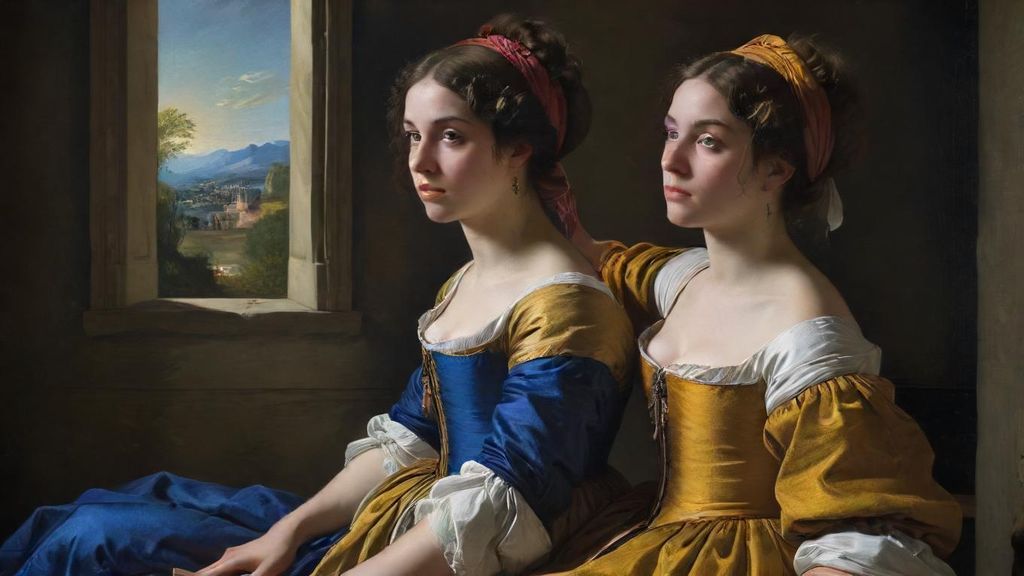
Imagine going through something horrific, then being dragged into court, forced to tell your story in public, and even having your words literally tortured out of you. That, in short, is what Artemisia Gentileschi experienced during the terrible trial of Agostino Tassi in 1612. This trial didn’t just affect her; it deeply changed her early art. It was fueled by the awful unfairness she faced and her incredible refusal to give up. This wasn’t just a legal fight; it was a public show meant to silence her with shame. Instead, it lit a defiant fire within her that burst onto her canvases.
Here’s what happened: Artemisia, only 19 years old at the time, accused her painting tutor and a family friend, Agostino Tassi, of rape. The trial took place in Rome and quickly became a huge scandal. This wasn’t a quiet, private matter; it was like a major news story today, playing out for everyone to see, with court scribes carefully writing down every word. Agostino, who had powerful connections, tried to turn the tables on Artemisia. He claimed she was promiscuous and had made up the whole story.
How Do We Know About This Brutal Trial?
We know these difficult details because the complete court records from that time still exist. They give us a chilling look into the legal system of the 17th century. These documents show how Artemisia, not Agostino, was actually put on trial. What’s both fascinating and infuriating is that to “prove” her testimony was true, the court used a device called the sibille, or thumbscrews, on her. Picture this: her fingers were slowly crushed in a vice-like tool, all to make sure she wasn’t lying. This was a common practice back then, especially for women, whose word was often doubted. But here’s the powerful part: while enduring this torture, she famously cried out,
“This is the ring you give me, and these are your promises!”
She pointed right at her attacker, confirming her story even as her body was brutalized. Her courage was absolutely amazing; she never took back her accusation.
The emotional pain from this trauma was huge. It wasn’t just physical suffering; it was a deep emotional wound, a betrayal by someone she trusted, followed by public shame and legal torture. But instead of being broken, Artemisia poured her anger, pain, and demand for justice straight into her art. She grabbed a brush and channeled her experiences onto the canvas, turning her suffering into powerful paintings about women’s strength and their fight for revenge.
Her famous painting, Judith Slaying Holofernes (she made two versions, one in the Uffizi and one in Naples), became a powerful symbol of this transformation. In these paintings, Judith, a heroine from the Bible, is shown violently beheading the Assyrian general, Holofernes. The sheer power, the blood, and the determined faces of Judith and her maidservant are incredibly intense. It’s like watching a raw, unfiltered act of payback. Many art historians, including Mary Garrard, strongly believe that Holofernes’s face in these works looks a lot like Tassi. This isn’t subtle; it’s a powerful, almost revolutionary, message of female strength and righteous revenge, showing women in a completely new way than they were usually painted.
Another important early work, Susanna and the Elders, also painted around this time, shows a young woman being bothered by two greedy old men. Even though the story comes from the Bible, Artemisia’s version feels deeply personal. Susanna isn’t just a passive figure; her distress and vulnerability are clearly visible. Her body language perfectly shows disgust and fear, not an invitation to flirt. This challenged how such scenes were typically painted and offered a sympathetic view of the woman’s difficult experience. It’s strong proof of her deep empathy for women in tough situations.
Right after the trial, despite the scandal, Artemisia took practical steps to build her professional career. She married Pietro Antonio di Vicenzo Stiattesi, an artist from Florence. This was common for women to gain legal independence and respectability. She quickly left Rome for Florence, a city known for its lively art scene, determined to create a life and career on her own terms. This move was more than just a change of scenery; it was a clear choice to redefine herself, stepping out from the shadow of her past. Next, we’ll explore how Florence became a crucial stepping stone in her journey to becoming one of the most celebrated artists of her time.
How did Artemisia Gentileschi become a celebrated master painter and leave her lasting legacy?
Imagine facing huge public attention, a shocking trial, and betrayal. For most people, such a terrible experience would crush their spirit. But for Artemisia Gentileschi, these challenges just made her stronger, helping her become a defiant master. She became a celebrated painter and left her lasting mark because of her amazing determination, incredible talent, and a journey that took her across Europe’s main art cities. She didn’t just survive; she thrived, proving her paintbrush was as mighty as any man’s.
Right after her trial in Rome, Artemisia made a brave decision. She moved to Florence around 1612. This wasn’t just a new place to live; it was a smart career move. In Florence, she found important supporters, including the powerful Medici family. Here, she did something no other woman had done before: in 1616, she was officially accepted into the highly respected Accademia del Disegno (Academy of Design). This was a huge accomplishment, like being the first woman allowed into a very exclusive professional group today. It officially recognized her not just as a painter, but as a master, opening many doors and cementing her place in an art world mostly run by men.
During her years in Florence, Artemisia’s painting style kept changing and growing. At first, she learned a lot from her father Orazio and from Caravaggio’s dramatic use of light and dark. But soon, she began to create her own clear, unique painting style. She stopped just copying Caravaggio. Instead, she developed her own special way of using chiaroscuro—the play of light and shadow—that felt incredibly personal and full of emotion. Her paintings became even stronger, pulling viewers right into the story unfolding on the canvas. She didn’t just paint scenes; she made experiences come alive, with her figures often seeming to leap out of the frame with powerful feeling.
What makes her work so interesting is how she always painted women. Many male artists often showed women as helpless or as victims. But Artemisia presented them as complicated, smart, and strong individuals. Think of her women heroes from the Bible, like Judith Slaying Holofernes. She showed them not just getting revenge, but making incredibly brave choices. She painted symbolic stories and even self-portraits that went against the typical ideas of women. She showed women who were strong, thoughtful, and able to make strong decisions. This wasn’t just about her own past; it was a purposeful artistic choice to lift up and give power to the women in her paintings.
What were Artemisia’s career moves after Florence?
After ten years in Florence, Artemisia went back to Rome in the 1620s. Everyone already knew how good she was. She kept getting important painting jobs and mixed with the city’s most important people. Her travels then took her briefly to Venice, a city famous for its vibrant colors and long history of great art. But perhaps her most important career step was moving to Naples in 1630. Here, she set up and ran a successful art studio, an amazing achievement for any artist, especially for a woman back in the 1600s. Imagine it like managing a successful design studio or a popular art collective today, overseeing assistants and creating lots of paintings. It turns out that Naples offered her the perfect mix of support and freedom to work.
In the late 1630s, Artemisia made another bold move: she traveled to London to work for King Charles I, and even worked with her father, who was ill. This was real proof of how famous she was around the world. Her time in London made her reputation even stronger as a very skilled and adaptable painter. She kept creating stunning works, often filled with her usual dramatic style and focus on powerful stories about women.
Here’s what happened next: even though she was incredibly successful during her lifetime, people mostly forgot about Artemisia over the centuries. This happened for a few reasons: art styles changed, art historians often ignored women, and she was, after all, a woman in an art world run by men. Her work was often wrongly credited to men or simply forgotten. The truth is more interesting than you might think: she became barely a footnote in art history, with her dramatic personal life often overshadowing how brilliant her art truly was.
Then, in the 20th century, a big change happened. Feminist art historians, who wanted to find forgotten women in art history, rediscovered Artemisia Gentileschi. Recent findings show that her powerful art and amazing life story really spoke to people today. She became more than just a painter; she emerged as a symbol of strength, rebellion, and a trailblazer for women in art. Her legacy isn’t just about beautiful paintings; it’s about breaking down walls and proving that talent has nothing to do with gender.