

Imagine a sunny day in the Alps. On September 19, 1991, two hikers, enjoying the fresh mountain air, took a path less traveled. What they found wasn’t a lost item, but something far more incredible: a human body appearing from the melting ice. At first, it looked like a recent accident. But soon, they realized they had stumbled upon Ötzi the Iceman, a perfectly preserved person from the Copper Age. This amazing discovery would completely change what we knew about life thousands of years ago, offering an incredible glimpse into a world over 5,000 years old.
The hikers were a German couple named Helmut and Erika Simon. They were exploring the Ötztal Alps, right where Austria and Italy meet today. They saw a head and shoulders poking out of the ice in a narrow ditch. When police and mountain rescue teams showed up, they first thought it was a sad, recent climbing accident. Think about the difficulties: a distant, icy spot, strong winds, and weather that could change in a flash. It was like trying to carefully pull something fragile from a freezer during a power cut – a race against time and nature, with no clue how delicate the discovery truly was.
To be fair, the first attempts to get Ötzi out were quite rough. People used ice axes and even a jackhammer to free the body. No one knew they were handling something more delicate and ancient than the Egyptian pyramids! Sadly, this rough removal damaged some of his precious belongings and even his body. The simple truth of how he was found is that a melting glacier, thanks to warmer weather, had finally given up its frozen secret after more than five thousand years.
What really made Ötzi special was how incredibly well-preserved he was. Most ancient finds are just skeletons or scattered bone pieces. But Ötzi still had his skin, hair, and even many internal organs. His clothes, tools, and weapons were all right there with him, frozen exactly as they were. The first big clues to his age were clear to everyone who saw him: a special axe with a copper blade, a well-made bow, and a bag full of arrows. These clearly weren’t modern things. They practically shouted “ancient!” to anyone, immediately sparking huge interest.
What Were the First Clues About His Age?
The unique items found with him gave scientists strong hints. For example, the copper axe immediately showed that Ötzi lived before people widely used bronze, a time historians call the Copper Age. Simply put, this was a big change when people began moving past just stone tools and started trying out metal. This discovery was much more than just a body; it was a full picture of a Copper Age person, ready for life in the high mountains, giving us an amazing look into his everyday world.
Scientists say finds like Ötzi are almost unheard of. Most human remains from such an old time are just bones, which don’t tell us much about daily life, clothes, or exact tools. But Ötzi was different. His body naturally mummified in the extreme cold and dry air, then got wrapped in ice. This protected him from rotting and from animals eating him. It’s like finding a perfectly kept time capsule from a world we thought we could only guess at from broken pots and stone tools, suddenly made crystal clear.
Once Ötzi was moved to an institute in Innsbruck, Austria, scientists immediately got to work. One of the first and most important methods they used was radiocarbon dating. This technique measures how a certain type of carbon breaks down in old living things. It quickly proved what the objects had suggested: Ötzi lived around 3300 to 3100 BC. This put him squarely in the Copper Age, making him more than 5,300 years old. You can imagine the excitement in the labs! It completely changed how they thought about what could possibly survive from such a distant past.
Beyond just dating him, early studies involved a deep dive into his body, clothes, and gear. Scientists carefully wrote down every tiny detail. This included the layers of clothing he wore—made from animal skins and woven grasses—and even what was inside his small leather bag. They figured out the kinds of wood used for his bow and arrows. They even found mosses and pollens stuck in his clothes, which told them about the plants and seasons he saw. All this early information helped us clearly understand his world and what he did every day.
What makes this so amazing is how much information scientists could gather just from these first observations and dating methods. It showed that Ötzi wasn’t just old; he was like an incredibly detailed history book, still readable after thousands of years. The truth is, it’s more interesting than you might imagine: every small detail, from a piece of leather to a tiny speck of pollen, told a part of his incredible story.
Finding Ötzi the Iceman wasn’t just about discovering a body; it was like uncovering a perfectly sealed letter from the Copper Age, written in a language we could suddenly understand. His icy tomb, along with quick scientific work, immediately showed his amazing age and how incredibly well-preserved he was. This first information painted a clear picture of a Copper Age mountain traveler, setting the stage for deeper questions about his life and, most importantly, his death.
What Can Ötzi’s Body and Belongings Really Tell Us About Life in the Copper Age?
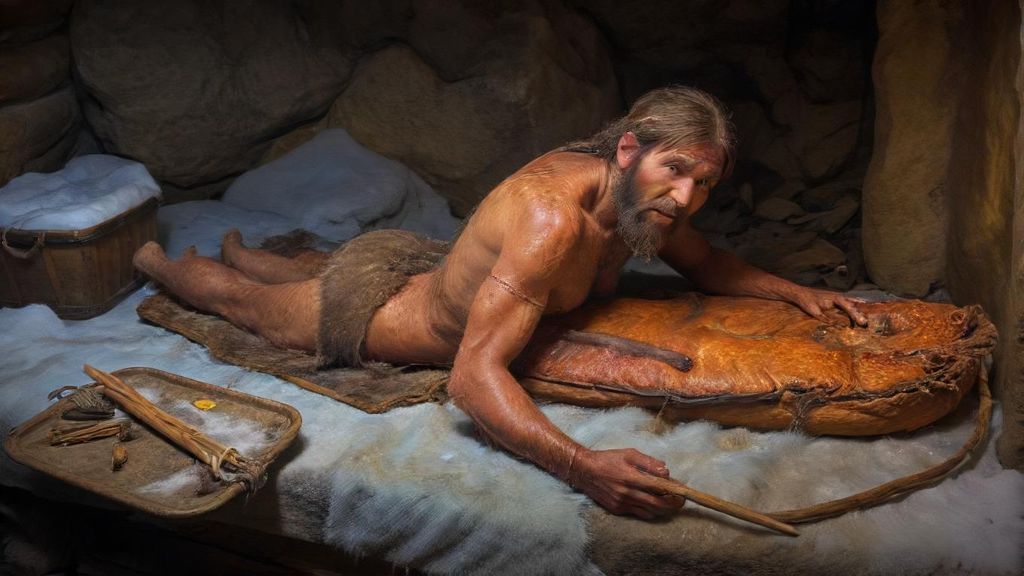
Imagine archaeologists digging up your perfectly preserved body and all your stuff thousands of years from now. What could they learn about your life, your health, and even your last meal just by looking at your phone, clothes, and remains? That’s exactly what happened with Ötzi the Iceman, but on a much bigger scale. His incredibly well-preserved body and the items he carried aren’t just old artifacts; they’re like a real-life time capsule. They give us an amazing look into daily life in the Copper Age, around 3300 BCE. So, what can Ötzi’s body and belongings really tell us? Pretty much everything about one man’s life, offering us a direct window into a long-lost world.
Thanks to some amazing science, we’ve learned a lot! Scientists didn’t just glance at Ötzi; they used every modern tool available. For instance, DNA analysis showed he was related to people from the Middle East. This hints at an interesting story about how early Europeans moved around. It also told us he had brown eyes, dark hair, and couldn’t digest milk – traits many people still have today! His bones, carefully scanned with CT machines, revealed he was about 45 years old when he died. He had arthritis in his knee and hip, and surprisingly, very worn-down teeth, probably because his diet was rough. What’s even more fascinating is that he showed signs of Lyme disease, making him the oldest known human case ever discovered.
How Do We Know All This Happened?
The real story is even cooler than you might guess, all thanks to tiny clues. For example, Ötzi’s last meal wasn’t a secret. Scientists looked inside his stomach and found bits of wild goat (ibex), red deer, and an ancient grain called einkorn wheat. This wasn’t just whatever food he could find; it was a well-prepared meal, which he probably ate just hours before he died. The type of pollen found in his gut—like hop-hornbeam pollen—told us he died in the spring. That’s when those trees bloom in the area. This gives us solid proof about both his diet and the time of year he met his end. Even his 61 tattoos, simple lines and crosses, aren’t just for show. Many are on spots that match traditional acupuncture points. This makes some experts think they might have been an early form of pain relief for his joint problems. Can you imagine? Ancient medical treatments tattooed right onto his skin!
His clothes and tools also tell a strong story. He wore a thoughtfully made outfit: a hat from bearskin, a coat sewn from goat and sheep leather, and shoes packed with grass for warmth, much like today’s hiking boots. This shows really clever design in his clothing choices, perfectly suited for the chilly Alpine mountains. His most famous item, a highly valued copper axe, wasn’t just a tool; it was a sign of his high social standing. Copper was rare and precious back then, kind of like owning a luxury car today. He also carried a sharp flint dagger, a bow with arrows that weren’t quite finished, a quiver made from deer hide, and even containers made of birch bark that he used to carry glowing embers. This proves how resourceful he was for staying warm and cooking.
New findings suggest Ötzi was a skilled traveler of the Alpine mountains, moving often between valleys and high grazing lands. The stuff he carried came from many different places, showing he knew the land well and could get various resources. His gear wasn’t quickly thrown together; it was top-notch. This shows he had a deep understanding of how to survive and be clever in a tough environment. All this information together helps us understand not just Ötzi himself, but also the advanced skills, social structures, and how people adapted to their surroundings during the Copper Age.
So, Ötzi’s body and all his possessions truly are like an incredible time capsule for archaeologists. Every single item and every scientific discovery links together to paint a detailed picture of a man from over five thousand years ago. But knowing so much about who he was and what he carried just makes the biggest question even more pressing: how did this extraordinary man actually die?
How Did Ötzi the Iceman Really Die and What Do the Latest Clues Suggest?
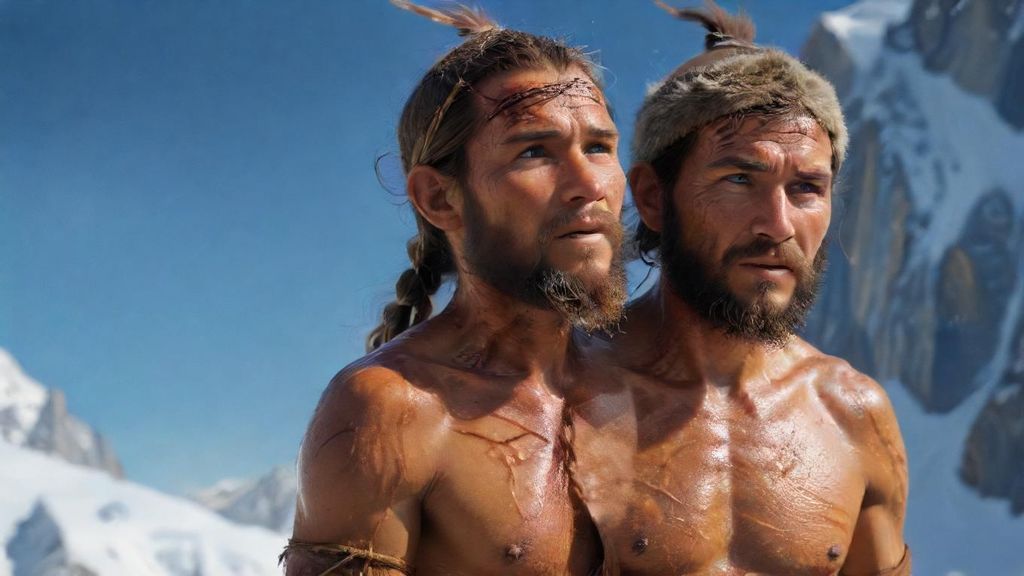
Most people think Ötzi the Iceman just froze to death in the harsh mountains. But years of scientific detective work tell a much more dramatic—and disturbing—story. The simple truth is, Ötzi didn’t just get lost and die; he was ambushed and violently killed. It wasn’t a peaceful end, but a brutal fight, making his death one of history’s oldest unsolved mysteries. Experts are still putting together the clues, revealing a shocking tale of ancient conflict.
So, what really happened in his final moments? For years after his body was found, Ötzi’s cause of death was a total mystery. Then, in 2001—a decade after he was discovered—a simple X-ray scan revealed the smoking gun: a small, flint arrowhead stuck deep in his left shoulder. You couldn’t see it on the surface because his skin was so incredibly well preserved. The arrow, fired from behind, had torn through a major artery, causing him to bleed out quickly and fatally. Imagine it like a modern-day sniper shot; it was meant to be quick and deadly. This discovery completely changed everything, turning what seemed like a tragic accident into a clear case of murder.
What Other Clues Tell Us He Was Murdered?
But the arrowhead wasn’t the only clue. Ötzi’s body showed a terrifying collection of other injuries that clearly painted a picture of a violent fight. Experts who studied his bones and skin found serious head trauma—a hard blow to the back of his head. This likely happened right around the time he died. It suggests he might have been hit after the arrow struck, or even knocked out by the blow. What’s more, he had defensive wounds on his hands and wrists—cuts and bruises that show he tried to block an attacker. Think of someone trying to protect themselves in a street fight today—these were similar injuries. He also had a deep, fairly fresh cut on his right hand, possibly from a fight a few days earlier. This hints that he might have been caught up in some ongoing trouble.
So, what were Ötzi’s last days really like? New evidence shows that Ötzi had eaten a big meal of ibex and deer meat, plus ancient grains, not long before he died. This tells us he wasn’t starving or just wandering aimlessly. He was probably moving with a goal in mind. Scientists have actually recreated his last few days, and it’s quite a story. They believe he was initially on the run, or at least moving very fast, even dropping some of his equipment. Then, he seemingly rested and ate before starting his climb again, perhaps thinking he was finally safe. But he was wrong. The ambush likely happened quickly, high in the mountains where he might have hoped to find safety. The arrow shot from behind, hitting him, and then came the deadly blow to his head.
What makes this whole story so fascinating is the big question: “Why?” Was it a robbery? Ötzi carried really valuable tools, including a copper axe, which was super high-tech for his era—like someone owning the latest smartphone today. Was it a fight between different groups? Or was it revenge? While we don’t know the exact reason, most experts agree Ötzi was the victim of a targeted killing. Archaeologists and forensic scientists note that most of his expensive gear was still with him, so robbery seems less likely. This points more towards a personal grudge or a dispute between ancient tribes. He was probably killed by someone who either knew him or was tracking him, ending his life suddenly in the lonely, harsh mountains.
This amazing reconstruction of Ötzi’s death helps us see that life in the Copper Age wasn’t just about surviving against nature. It was also about dealing with human violence and conflict. His sudden, brutal end offers a rare, frozen peek into the dangerous reality of ancient human societies. It proves that even 5,300 years ago, people faced the very real threat of murder. His story isn’t just about an ancient man; it’s about a crime scene kept perfectly for thousands of years, still giving up its secrets.
Who killed Ötzi? That, of course, remains a mystery. But the evidence of his violent death makes us wonder about the bigger picture for his community and the people of his time. This discovery doesn’t just solve one ancient murder. It opens up a whole new set of questions about how society worked during the Copper Age, which we’ll dive into more in the next chapter.