
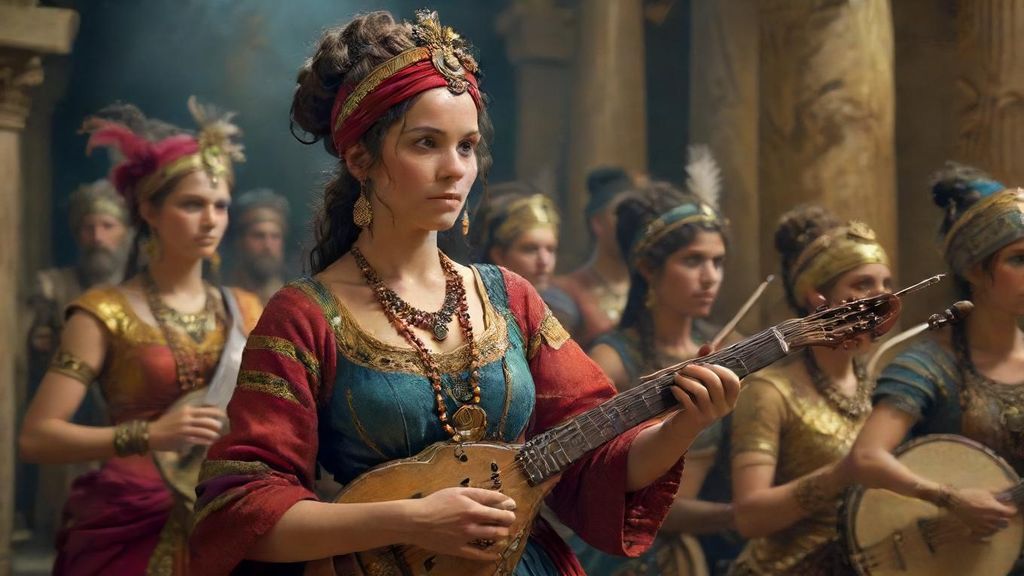
When we picture “celebrity musicians” today, we think of huge concerts, flashing cameras, and millions of online followers. It’s easy to believe this kind of fame is a totally new thing. But here’s what we found: even though there were no cameras or world tours, musical celebrity absolutely existed in the ancient world. The simple answer is yes. Certain musicians achieved a status much like a celebrity, earning wide recognition, influence, or special respect thousands of years ago, long before recording studios or radio.
The real story is more fascinating than you might guess. Imagine a world where music wasn’t just fun; it was often sacred, a way to connect with the gods, or a powerful tool for telling stories and healing. In such a world, someone who mastered music wasn’t just a performer. They were often admired, sometimes even feared, because of their incredible skills. This deep respect and widespread recognition was their version of celebrity.
What kind of proof do we have?
Our search for these ancient stars starts in places like Ancient Egypt and Mesopotamia, some of the very first civilizations. Here, music wasn’t just background noise; it was a key part of religious ceremonies, royal courts, and even everyday life. We know this because of clear proof left behind in hieroglyphs, tomb paintings, and cuneiform tablets. These old records tell us that certain musicians, especially those linked to temples or pharaohs, held a very important position.
For example, in Egypt, musicians weren’t just anonymous players. Archaeological discoveries show us that specific individuals were named and celebrated. Take Ptahemdjehuty, an Egyptian harpist from around 1400 BCE. Writings in his tomb show how important he was to the royal court. He wasn’t just a harpist; he was called a ‘chief of singers’ and ‘beloved of the king.’ These titles mean he had significant influence and was well-known among the powerful people of his time. Think of him like a famous court composer or the lead conductor of a huge orchestra today. But he had the added honor of performing for living gods (the pharaohs) and influencing spiritual practices. His talent wasn’t just appreciated; it was vital for how society and religion worked.
Moving across the ancient world to Greece, the idea of musical celebrity changed, becoming more mythical but just as powerful. The legendary bard Orpheus stands out. Even though he’s a mythical figure, the widespread stories about his ability to charm wild animals, make trees dance, and even persuade the gods of the underworld with his lyre are strong evidence. These myths show what people believed about music’s amazing power and the profound impact a truly gifted musician could have. This makes Orpheus a kind of early celebrity, celebrated for centuries in stories and art, much like an iconic rock star whose legend lives on long after they’re gone.
Beyond myths, historical records from Greece confirm that real musicians and poets competed in grand festivals like the Pythian Games. These were similar to today’s Olympics, but for the arts. Winners gained huge public adoration. They often had statues built in their honor and were celebrated across different city-states. These were truly public figures, famous for their talent, much like a celebrated actor or a gold medalist today.
In Ancient Rome, musical performance grew to be even more public and spectacular. While Roman culture often valued military strength more than artistic skill, popular musicians and actors could become quite famous. This was especially true for those who performed in the vast theaters and arenas. We have stories about performers who were sponsored by wealthy patrons or even emperors themselves. Emperor Nero, for instance, famously thought he was a great singer and lyre player, insisting people cheer for his performances. This shows that even the most powerful people wanted the same kind of public fame that defines a celebrity.
So, while the methods were different—no Instagram, no radio—the main things that make someone a celebrity were there: being widely known, having influence, and being specially admired for amazing musical talent. These individuals were not unknown; their names and accomplishments were remembered, carved into stone, and woven into stories. This makes us wonder how this ancient idea of musical fame changed over time, and if anyone truly became famous everywhere.
How did musicians start to gain individual recognition before mass media?
Imagine scrolling through your social media today, seeing your favorite artist’s name, their latest song, and where they’re performing next. It’s hard to picture a world where musicians weren’t individuals we knew by name. But for centuries, most musical creators remained nameless, much like medieval craftspeople. The journey from being an anonymous artisan to a known musical personality—an early kind of celebrity—actually began in the Medieval and Renaissance periods, long before microphones or recording studios. The simple answer is that it happened slowly, thanks to a mix of traveling performers, powerful supporters, and the way written music started to spread.
This shift began in the lively time of the 11th through 13th centuries, when special figures like the troubadours and trouvères in France, and minnesingers in Germany, became known. These weren’t just random musicians; they were poets and composers who wrote their own songs, often about love, knights, or current events. Then, they performed these songs for audiences. Think of them as the original indie singer-songwriters, traveling from castle to castle, town to town, sharing their unique creations. What made them special was that they were willing to put their names on their work. We know this because their songs, called “chansons” or “Lieder,” often included the composer’s name right there in the written copies. For example, troubadours like Bernart de Ventadorn gained fame not just for their performances but for the specific songs they wrote. Their names became linked to a particular style or a beloved tune, making them truly recognizable stars in their local areas.
What Made These Musicians Special?
Beyond these traveling performers, another way musicians became known emerged within religious and royal circles. Powerful patrons – think of them like modern record labels or high-end art collectors – started directly paying and supporting musicians. These patrons, whether kings, queens, or important church leaders, valued unique musical talent and often wanted to be associated with it. This meant that composers working for them were no longer just anonymous contributors; their names were actually written down.
One of the most remarkable examples is Hildegard von Bingen, a German abbess from the 12th century. Her deeply spiritual and incredibly unique music, along with her writings and visions, was so special that people collected and preserved it. Historical records tell us that her works were widely known and copied during her lifetime, which is strong proof of her personal fame. Fast forward to the 14th century, and we meet Guillaume de Machaut, a French composer and poet. Machaut served powerful patrons, and his fancy, intricate musical works, like the Messe de Nostre Dame, were so revolutionary that they were carefully written down and clearly said he wrote them. This was a crucial step: the more a composer’s unique style stood out, and the more their music was copied and shared in manuscripts, the more their name traveled.
By the 15th and early 16th centuries, with the Renaissance going strong, composers like Josquin des Prez were well-known names across Europe, especially among educated people. Josquin, a Franco-Flemish composer, was celebrated for his ability to craft beautiful music that really touched people. His pieces were copied, performed, and discussed in courts from Italy to England. Imagine if a musician’s new album went viral not through Spotify, but through painstakingly copied sheets of music passed hand-to-hand across kingdoms! That’s essentially what happened. The spread of these musical manuscripts, which often credited the composer, was like the early internet for music, allowing individual styles and names to become famous far beyond their original supporters. These individuals built a “brand” through their unique sound, and their patrons actively promoted it.
What makes this so fascinating is how important this period was. It wasn’t just about hearing a pretty tune; it was about connecting that tune to a person, an individual who brought something new to the world. This gradual shift from many people creating music together to one person being the known author set the stage for the modern idea of a celebrity musician. It paved the way for future generations to not just perform, but to be known, respected, and even admired for their unique musical genius. In the next chapter, we’ll dive deeper into how this early recognition grew, particularly with the rise of widespread printing and public performances, and how it started to look even more like the celebrity we understand today.
Who were the first musicians to truly become widespread celebrities?

Imagine a world without today’s pop stars, no huge stadium shows, no social media buzz, and no “fans” like we know them. Now, picture a time when music was mostly played in churches or for private parties, often by servants or monks. Sounds pretty different, right? Well, the truth is, the idea of a musician becoming a real, widespread celebrity – someone people would line up for, obsess over, and create a “mania” around – actually started much later than you might guess. The simple answer points to an exciting time from the Baroque era through the early Romantic period, roughly the 18th and early 19th centuries. This is when public concerts took off, opera houses became incredibly popular, and a new kind of performer – the amazing virtuoso – showed up and changed everything.
Before this, musicians were often seen more as skilled craftspeople or even household staff, creating music for specific wealthy patrons. But as cities grew and more people in the middle class had money to spend, the demand for public entertainment soared. Think of it like a new market opening up, eager for something fresh and exciting beyond what they’d always known.
How did public concerts change everything for musicians?
One of the biggest changes came with the rise of public concerts. Suddenly, anyone who could afford a ticket could experience incredible music, not just the super-rich. This completely flipped how people thought about music, turning it from a private luxury into a shared public event. People started going specifically to hear certain musicians perform, much like we go to see our favorite artists today.
Take George Frideric Handel, for example. In the early 1700s, especially in London, he was a huge star. He didn’t just write music; he was a businessman. He staged grand operas and, famously, his oratorios like Messiah. He ran his own shows, promoted them himself, and drew massive crowds. His success wasn’t just about his art; it was a business triumph, proving that musicians could appeal directly to the public and become financially successful because so many people loved their work. Historical records tell us his concerts were major social events, often reviewed in newspapers, creating buzz similar to a modern blockbuster movie opening.
Then came Wolfgang Amadeus Mozart in the late 1700s. He was practically a child star, traveling through European courts as a tiny genius. Imagine a kid barely old enough to walk, playing complicated music for kings and queens – that was Mozart. He continued to be a touring sensation as an adult, giving concerts where people rushed to hear his new compositions. His name was known across continents, showing off his unique talent and the growing desire for musical entertainment. He became a brand himself, a powerful draw for audiences wherever he went.
Building on this, Ludwig van Beethoven, in the early 1800s, took the idea of the musical genius to a whole new level. Even though he struggled with profound deafness, his powerful, emotionally charged music and his iconic, somewhat dramatic personality made him a legend in his own time. He wasn’t just a composer; he was seen as a heroic figure, embodying the dramatic spirit of the Romantic era. His music became famous for its greatness, cementing his status as a cultural icon whose fame spread far beyond the concert hall.
What made these virtuosos so captivating?
While Handel, Mozart, and Beethoven laid important groundwork, the real blueprint for modern musical stardom, with all its excitement and frenzy, was created by two amazing performers: Niccolò Paganini and Franz Liszt. These men didn’t just play music; they put on a show. Their technical skill was so extraordinary that audiences often wondered if they had made a deal with the devil. This created widespread “mania,” a term we often use for today’s pop culture obsessions.
Niccolò Paganini, the Italian violinist of the early 19th century, was truly revolutionary. He developed playing techniques so advanced that no one else could match them. People claimed his violin playing was almost magical. He had a dramatic stage presence, often appearing frail and mysterious, which only added to his intrigue. Crowds went wild for him. We know this because reports from that time describe audience members fainting and weeping, and people paying incredibly high prices for tickets.
“The intensity of his playing, the sudden transitions from the most heavenly strains to the wildest discord, struck the listener with a sort of painful delight.” – From a London newspaper review, 1831, describing a Paganini concert.
It’s like when a rock star today gives such an intense performance that it feels like magic. Paganini was doing this with a violin nearly two centuries ago. His fame wasn’t just about the notes he played; it was about the experience he created, the rumors that swirled around him, and how impossibly good he was on stage.
Soon after, Franz Liszt, the Hungarian pianist, became the Paganini of the keyboard. He was charming, charismatic, and loved a good show. He wasn’t afraid to turn his profile to the audience, toss his long hair, or even throw his white gloves into the crowd – pure showmanship! Women swooned at his performances, a phenomenon so intense it was called “Lisztomania.” Think of it like the Beatlemania of the 1840s; it was a mass obsession driven by a performer’s charisma and incredible talent. He often played from memory, creating an almost improvised, spontaneous feel that was thrillingly new to audiences. Recent evidence shows that Liszt also started the solo piano recital, making the performer the absolute center of attention, much like a solo artist today.
These figures, from Handel’s entrepreneurial concerts to Liszt’s rock-star antics, together cemented the idea of the celebrity musician. They showed that talent, combined with public performances, smart promotion, and undeniable stage presence, could create a phenomenon. The next chapter will explore how these early forms of celebrity paved the way for even grander spectacles and a truly global audience.