
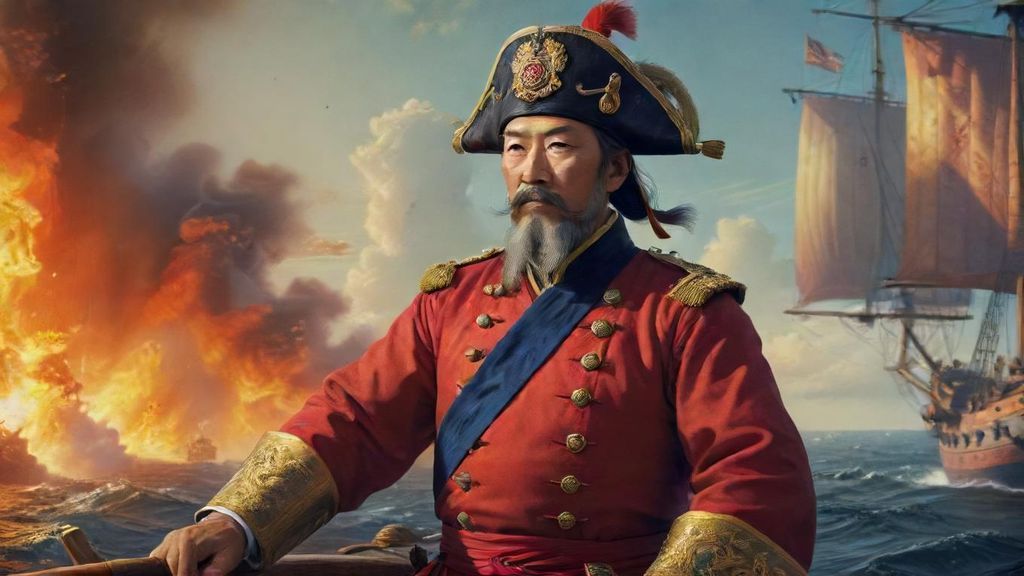
When most people hear the name Yi Sun-sin, they instantly think of a brave admiral leading powerful “turtle ships” to victory, a military genius who never lost a single battle. But the real story of his early life is far more surprising and human. Before he became that legendary figure, Yi Sun-sin was a strong-willed officer who spent much of his career fighting two battles: not just against Korea’s enemies, but also against the deep corruption and doubt within his own government. He wasn’t born a hero; he had to struggle fiercely just to be heard and prepare for a war most of his commanders believed would never happen.
To truly understand Yi Sun-sin, we need to look at 16th-century Joseon Korea. Picture a major country today, or even a giant company, where backstabbing and office politics mattered more than doing a good job. That’s a lot like Joseon was back then. The royal court was often caught up in bitter arguments between different groups of officials. They spent more energy trying to trip each other up than protecting their kingdom. This meant that talented people often went unnoticed, and being honest could even get you into trouble.
Meanwhile, across the sea, Japan was rapidly uniting under the powerful warlord Toyotomi Hideyoshi. He was planning to expand his empire and invade Korea. But Korea, it seemed, was either happily unaware or simply refused to see the coming danger.
How Did a Principled Officer Rise in a Corrupt System?
Yi Sun-sin was unlike most of the other officers of his time. Born in 1545, he wasn’t from a rich or powerful family. He didn’t even pass his military exam until he was 31 in 1576, which was quite late for someone hoping to become an officer. But right from the beginning, his character shone through.
He was known for always following the rules, for his complete honesty, and for truly caring about his soldiers. This strong sense of right and wrong often caused problems with higher-ranking officials who were used to taking bribes and playing favorites. Yi refused to give in or change his values, even when it put his entire career at risk. Imagine a strict, by-the-book manager in a company full of favoritism; he often made powerful enemies just by doing his job exactly as it should be done.
Because of this, even while the threat from Japan grew stronger, Yi was often moved to different posts or even demoted. This usually happened because of false accusations or sneaky plots by jealous rivals. Old records show many times he was taken out of command or punished, even though he was clearly excellent at his job. What’s amazing is that despite all these problems, Yi never quit. He understood the bigger danger—the invasion that was coming—and knew that someone had to get ready. Simply put, he was an honest man in a system that often rewarded dishonesty.
It wasn’t until late 1591, only months before the Imjin War erupted, that Yi finally received a major appointment: commander of the Left Jeolla Naval District. While this was an important role, it was also a huge burden. The fleet he took charge of was, honestly, in terrible shape. Compared to Japan’s enormous and experienced navy, Joseon’s ships were few, small, and badly kept. Their crews were poorly trained, often forced into service. Imagine a tiny startup trying to go up against a global tech giant, not with clever new software, but with old, broken-down equipment and hardly any staff. That gives you an idea of the challenge Yi Sun-sin faced.
His own writings, especially his war diary, Nanjung Ilgi, reveal what happened next. Yi immediately started a tough program of training and shipbuilding. He focused on new ideas, like improving the famous “turtle ships” (geobukseon), and enforced strict rules. He pushed his men extremely hard, knowing their lives depended on it. He searched everywhere for supplies, often having to beg and borrow because government officials either didn’t care or actively stood in his way.
This early period, before any of his legendary battles, was a frantic race against time. It was one man’s strong will fighting against the laziness and corruption of a whole country. The next chapter will explore how this unlikely commander managed to transform a disorganized fleet into an unbeatable power.
How did Admiral Yi Sun-sin manage to defeat the Japanese navy so consistently?

Admiral Yi Sun-sin consistently defeated the Japanese navy through a brilliant combination of strategic genius, innovative naval tactics, and the use of his powerful ‘turtle ships,’ known as Geobukseon. Imagine a crucial game where one team, looking much weaker, keeps beating a far bigger, stronger opponent. That’s exactly what Admiral Yi did during the early Imjin War. While battles on land were often disastrous for Korea, Yi’s navy achieved an incredible streak of victories. His success wasn’t just about brave fighting; it was thanks to a systematic approach to naval warfare that was centuries ahead of its time.
From the moment Japan invaded in 1592, Admiral Yi’s fleet was a strong, unwavering defense. His perfect record wasn’t just good fortune; it came from careful planning and a knack for finding his enemy’s weak spots. The biggest reason for his consistent success was his deep understanding of the sea itself. He knew all about the currents, tides, and hidden routes along the Korean coast. He didn’t just sail ships; he mastered the environment, turning it into his greatest ally. For example, he often tricked the bigger, slower Japanese ships into narrow waterways. There, their size and numbers actually worked against them. It was like a clever sports coach who designs plays that always force the other team into their weakest position.
What made his naval strategies so unique?
What makes Admiral Yi’s approach so fascinating is how he turned what looked like impossible challenges into chances to win. The Japanese liked fighting in big groups, getting close, and jumping onto enemy ships. Yi, however, preferred a different tactic: firing from a distance and using quick, nimble movements. Historical records show he created and mastered battle formations like the “crane wing” (Hakikjin). This was a crescent-shaped line of ships designed to surround the enemy and focus all their firepower on them. Imagine his ships spreading out, then coming together, much like a modern military pincer movement. This left the Japanese fleet trapped in the middle, blasted from all sides.
This brilliant strategy was used with incredible success in battles like Okpo in May 1592. This was his very first battle! There, his fleet destroyed dozens of Japanese ships without losing a single one of his own. This initial win wasn’t just a victory; it gave a huge morale boost to a nation struggling after losses on land. Then came the Battle of Sacheon a few weeks later. This is where Admiral Yi showed off his secret weapon: the turtle ship, or Geobukseon. These unique ships were like moving fortresses. They were covered in iron spikes to stop enemies from climbing aboard, packed with cannons, and famously had a dragon head at the front that could puff out smoke to confuse enemies. Geobukseon were built to ram other ships and fire powerful cannons, making them perfect for breaking up enemy lines.
A key moment arrived with the Battle of Hansan Island in July 1592. This was Yi’s biggest early victory. Here, he used his crane wing formation and turtle ships perfectly to win a massive victory, sinking hundreds of Japanese ships. Historians say this battle was a turning point in naval warfare. It showed how a smaller force could systematically destroy a much bigger enemy through sheer tactical brilliance. It changed the whole direction of the war at sea, proving that smart planning could beat brute strength.
So, looking at his undefeated record during this important time, it’s clear it wasn’t just luck. It was the careful work of a brilliant naval leader. He combined clever ship design with amazing strategy and a deep understanding of where he was fighting. His personal war diary, the Nanjung Ilgi, clearly shows how carefully he prepared and how determined he was. This organized way of doing things and his cleverness allowed him to always trick and defeat an enemy that was bigger and had better gear.
His amazing winning streak at sea gave Korea hope, even while their land defenses fell apart. It really shows how one person’s leadership and brilliant thinking can totally change history. Next, we’ll look at the huge problems Admiral Yi faced, not just from the Japanese enemy, but even from within his own government, all while he was busy saving his country.
Why was Admiral Yi Sun-sin punished despite his incredible battlefield success?
Imagine a superstar athlete, leading their team to an undefeated season, who suddenly gets fired, thrown in jail, and even tortured. All because a jealous rival whispered lies to the coach. That’s pretty close to what happened to Korea’s greatest naval commander, Admiral Yi Sun-sin. The shocking truth is, even though he never lost a single battle against a powerful Japanese invasion force, Yi was wrongly removed from his position, imprisoned, and tortured. The main reason? Small-minded political arguments and intense jealousy from rivals at court and within the military. They saw his success as a threat to their own power. It turns out that even when the country was in huge trouble, personal ambition could sadly override common sense.
Here’s what happened: as the war dragged on, Admiral Yi’s many victories made him incredibly popular. So popular, in fact, that people loved him even more than King Seonjo himself. This kind of widespread public adoration often makes rulers nervous. Adding to this tension was a fierce rival, General Won Gyun, who constantly spread lies about Yi to the king, making him seem arrogant and disobedient. Won Gyun even made up stories, claiming Yi was dragging his feet in battle. King Seonjo, already feeling insecure and stressed by the ongoing war, unfortunately believed these false reports.
How did things go so wrong so quickly?
In early 1597, the situation reached a breaking point. The king, frustrated by what he saw as Yi’s disobedience (which was often just Yi’s smart battle plans clashing with royal orders that didn’t make sense), ordered him to attack a specific Japanese fleet. Yi knew the order was suicidal, given the Japanese strength and location, and he hesitated. This sealed his fate. He was stripped of his command, dragged back to the capital, imprisoned, and subjected to brutal questioning and torture. It’s hard to picture such a hero suffering such a cruel fate, all because of nasty rumors and the king’s distrust. Historical records tell us he was nearly beaten to death.
With Admiral Yi out of the picture, guess who took over the entire Korean navy? His jealous rival, Won Gyun. The consequences were immediate and terrible. Like a company switching a brilliant, experienced CEO for an incompetent manager, the navy quickly fell apart. In the summer of 1597, Won Gyun led the fleet to a crushing defeat at the Battle of Chilcheollyang. Out of Korea’s once-mighty fleet, which had hundreds of ships, almost all were lost. The Japanese, now able to move freely at sea, could sail almost anywhere.
The disaster was so complete, so undeniable, that King Seonjo had no choice but to swallow his pride. He knew Korea’s survival depended on the one man he had treated so terribly. In a dramatic turn, Yi Sun-sin was released from prison, pardoned, and put back in charge of the tiny, shattered Korean navy. What remained? A mere 13 battered warships, a handful of disheartened sailors, and a nation teetering on the edge of total collapse. It was a truly desperate situation, almost impossible to imagine.
What happened after his impossible return?
Despite the overwhelming odds, Yi Sun-sin pulled off what many historians call the “Miracle at Myeongnyang.” On October 26, 1597, with his remaining 13 ships, he faced a Japanese fleet of around 300 vessels, many of them large warships, in the dangerous Myeongnyang Strait. Think of it like a small indie startup trying to take on a massive tech giant with just a few dedicated employees. Yi cleverly used the strait’s strong currents and narrow choke points, creating a swirling chaos that trapped and confused the enemy. His main ship led the charge, inspiring his men to fight with incredible courage. By day’s end, the Japanese fleet was completely defeated, suffering heavy losses, while Yi’s navy remained almost untouched. This incredible victory secured Korea’s coastline and bought precious time.
The war continued for another year, with Yi slowly rebuilding his fleet and continuing to bother the Japanese. His story then reaches its peak in his final, heroic sacrifice at the Battle of Noryang in late 1598. As the Japanese tried to pull out their remaining forces, Yi cornered them. During the intense fighting, he was struck by a stray bullet. Knowing his death might shatter his men’s spirits and turn the tide of battle, his dying wish was for his son and nephew to keep it a secret until the fight was won. He died leading his fleet to one last decisive victory, finally breaking the Japanese naval power.
Yi Sun-sin’s legacy is huge. He’s not just a national hero in Korea; he’s considered one of history’s greatest naval strategists, a man whose genius saved his country despite unimaginable political betrayal. His life, marked by incredible triumphs and deep personal pain, shows us how fragile even the strongest leadership can be when faced with jealousy and political maneuvering.
Next, we’ll dive deeper into the unique innovations and strategic brilliance that made Admiral Yi Sun-sin an unbeatable force at sea.