
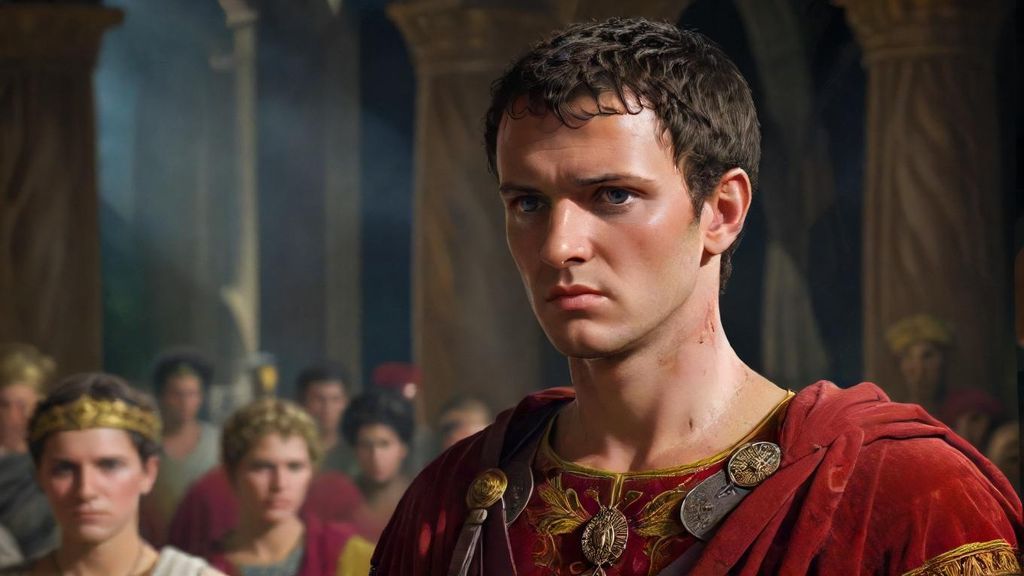
When you hear the name Caligula, you probably picture a crazy emperor, famous for being cruel and strange. You might even imagine him making his horse a senator. But what if there’s a huge part of his story that most people miss? The real tale is far more interesting than you might think. Before he became the emperor everyone talks about for all the wrong reasons, Caligula—or Gaius, as his family called him—was actually Rome’s favorite son. The public and military loved him. His first years as ruler showed a popular and promising leader, completely different from the tyrant he would become. This early time, especially his rise to power and a major change after a serious illness, is key to understanding his later outrageous actions.
Imagine this: a little boy, hardly old enough to walk, dressed in a tiny soldier’s uniform, complete with little boots. That’s how Gaius Julius Caesar Germanicus got his famous nickname, Caligula, which means “little boot” in Latin. He was the son of Germanicus, a super popular general, and Agrippina the Elder, who was Emperor Augustus’s granddaughter. Growing up among the soldiers, Caligula was like a living good-luck charm, a child who won over the hearts of Rome’s military and its people. This early life gave him a massive amount of public support, which would become super useful later. When his great-uncle, the very private and often cruel Emperor Tiberius, died in 37 AD, everyone in the Roman world breathed a huge sigh of relief. People desperately wanted a change, and Caligula, a relative of the much-loved Augustus, seemed like the perfect person for the job.
And for a brief, glorious time, he was exactly that. Here’s how it went down: Caligula started his reign with a burst of popularity almost unmatched by any other emperor. People saw him as a fresh start, a charming leader who immediately undid many of Tiberius’s unpopular decisions. He forgave political exiles, stopped the feared treason trials that had troubled Rome, and handed out generous cash gifts to both the Roman people and the military. Imagine if a new leader today suddenly wiped out all your debts or gave everyone a big tax refund—that’s the level of excitement Caligula created! Historians like Suetonius, who gave us much of what we know, say Rome celebrated him becoming emperor with offerings all over the empire, a clear sign of how happy people were. He even brought back public games and shows that Tiberius had ignored, which made people love him even more.
What Caused Caligula’s Dramatic Change?
But that “honeymoon period” didn’t last long. Just a few months into his rule, around October 37 AD, Caligula became extremely sick. Doctors who study history think it might have been a brain fever, possibly encephalitis—a serious swelling of the brain. The whole Roman Empire held its breath, grieving for their promising young emperor, with many convinced he would die. But he didn’t. He slowly got better, but his recovery left him completely changed. The popular Gaius who got out of bed was a totally different man. The simple truth is, this illness seems to have completely changed his mind and personality, turning him from Rome’s beloved leader into the scary, over-the-top figure we often hear about.
We now know that after he got better, Caligula’s behavior grew more and more unpredictable, cruel, and obsessed with his own power. He started to become incredibly paranoid, seeing enemies everywhere, and his spending became outrageously wasteful. He ordered the killing of family members, embarrassed senators, and even demanded that people worship him as a living god. Think of a popular tech CEO who, after something terrible happens, suddenly starts making weird demands and pushing everyone away, convinced they’re a genius while others just see someone having a breakdown. This huge change is vital for understanding the emperor who later thought about making his favorite horse, Incitatus, a senator. What’s truly fascinating is that this wasn’t a slow slide; it was a sudden, massive change right after a major health crisis, turning a loved leader into someone people feared. Historical accounts tell us this period truly marks the start of the Caligula whose name is forever linked to over-the-top imperial behavior.
So, before he became known for being completely out of control and strange, Caligula was truly popular. He was a symbol of hope for a tired Rome. His early rule showed moments of capability and charm, but this was tragically cut short by an illness that completely changed his mind and personality. This sudden switch from a beloved leader to a cruel tyrant sets the scene for the wild actions that came next, especially the famous story about his horse and the Roman Senate. Next, we’ll explore how this changed personality played out in his public decisions and his increasingly odd way of handling power, going beyond anything Rome had ever seen.
Did Emperor Caligula Actually Make His Favorite Horse a Senator?

Imagine a powerful leader today deciding to appoint their pet to a top political job, like a seat in Congress. It sounds completely ridiculous, right? Well, that’s exactly the kind of wild story we hear about Roman Emperor Caligula and his favorite horse, Incitatus. The popular tale claims Caligula, famous for his strange and unpredictable ways, actually made his horse a Roman Senator. But the real story, as it often is with history, is a little more complicated—and perhaps even more fascinating than the legend.
So, the simple answer is no, Caligula likely didn’t officially make Incitatus a Roman Senator in the formal way we imagine. However, he definitely went to incredible lengths to honor his horse. He also loved threatening to do something so ridiculous, specifically to annoy and anger the Roman elite.
What Does the Evidence Actually Say?
Most of what we know about Incitatus and the Senate comes from ancient historians like Suetonius and Cassius Dio. Suetonius, for example, wrote a collection of biographies called The Lives of the Caesars. These writers lived soon after Caligula’s time, but they weren’t always fair or neutral. They often liked to make emperors like Caligula seem as wild and sensational as possible, sometimes even exaggerating to criticize imperial power.
So, what did these historians say? Incitatus, whose name fittingly meant “swift” or “impetuous,” wasn’t just any horse. He was Caligula’s absolute favorite, a stunning Spanish racehorse famous for winning many chariot races. Caligula treated Incitatus like royalty, far better than any human courtier could hope for. Historical records tell us Incitatus lived in a super fancy stable built from marble. He ate from a feeding trough made of ivory. He was even dressed in purple blankets, a color typically only for emperors and top officials, and wore necklaces of precious jewels.
It gets even crazier: Incitatus even had his own house, complete with servants, and was often invited to dinner parties! Think of it like a modern celebrity influencer showing off their fancy pet gear on social media. Caligula did it on an emperor’s scale, in real life, with all the grand displays of ancient Rome. This wasn’t just about loving his horse; it was about showing off his total power and, quite frankly, making fun of Rome’s traditional noble families.
The strongest proof for the Senate claim comes from Suetonius, who famously wrote:
“He also planned to give Incitatus a consulship.”
A consulship was the highest political job in the Roman Republic. Even though the emperor later held more power, the consulship still had a lot of importance. Appointing a horse to such a role would have been a huge slap in the face to the Senate. The Senate, even under imperial rule, still had a lot of sway and represented Rome’s old, powerful families.
So, Caligula probably didn’t actually plan for Incitatus to sit in the Senate chambers and vote on laws. Instead, his threats to make Incitatus a consul, and maybe even a senator, were a clever and cruel political move. It was his way of showing total disrespect for the Senate, proving his limitless power, and making furious anyone who might dare to challenge him. It’s like a CEO today announcing they’re putting their cat on the board of directors just to annoy their human executives. The message would be crystal clear: “I can do whatever I want, and your positions mean nothing to me.”
What makes this story so fascinating is how such an over-the-top symbolic insult has lived on through history. It tells us a lot about Caligula’s time as emperor and his rocky relationship with the Roman Senate. The Senate was often a place where plots and resistance brewed against the emperor’s power grabs. Even recent findings don’t change the main story. Instead, they help us understand why an emperor would use such crazy displays: to show he was in charge, and perhaps even to challenge the very foundations of Roman tradition.
This chapter has looked closely at a truly wild historical claim. It revealed an emperor’s dramatic style and the political messages he sent through his favorite horse. But Caligula’s story is much more complicated than just a horse in the Senate. It’s a tale of total power, personal revenge, and an ancient empire struggling with a leader who became more and more unpredictable. Next, we’ll look at the wider impact of Caligula’s reign and how his strange and cruel actions ultimately led to his downfall.
Why Did Caligula Consider Making His Favorite Horse a Senator?

Imagine a world leader today announcing their pet cat or dog was being appointed to a top government position. Sounds crazy, right? Well, that’s pretty much the shock Emperor Caligula sent through ancient Rome when stories started spreading about his beloved horse, Incitatus. The popular tale paints Caligula as a madman, ready to put a horse in the Roman Senate. But the real story, as often happens with history, is much more complicated and interesting than just a simple claim of insanity.
The easy answer isn’t just “Caligula was crazy.” While he certainly did odd things, the idea of Incitatus as a senator probably came from a mix of clever political insults, an incredible show of imperial power, and possibly some wild stories from ancient writers who wanted to ruin his reputation. Here’s what we’ve discovered about what was really going on.
How Do We Know This Actually Happened?
The main reason we know about Caligula and Incitatus is thanks to ancient historians like Suetonius. He wrote a biography of Caligula called The Lives of the Twelve Caesars. Suetonius, who wrote several decades after Caligula died, described Incitatus living in unbelievable luxury. Picture this: a stable made of marble, an ivory manger, fancy purple blankets, and even a golden necklace. The horse also had its own house with servants and expensive furniture, where Caligula would invite guests. It turns out that Incitatus even had an entourage, much like a modern celebrity.
According to Suetonius, Caligula planned to go even further. He wanted to make Incitatus a consul – the highest elected job in Rome – and possibly even a senator. These weren’t just casual rumors; these detailed accounts suggest Caligula was deliberately and publicly doing these things. The question isn’t whether Caligula gave Incitatus lots of honors, but why.
Was It Just a Joke, or Something More?
One strong idea is that Caligula’s actions were a deliberate, sharp insult aimed directly at the Roman Senate. Think of it like a political cartoonist today drawing something ridiculous to make fun of government officials. By suggesting he would make his horse a senator, Caligula was basically telling the actual senators: “You are so useless or spineless that a horse could do your job just as well, or even better.”
At the time, the Senate had lost a lot of its power under the emperors. It had become more of a group that just approved whatever the emperor wanted, rather than a true governing body. Caligula, a young emperor who wanted absolute power, might have used Incitatus to show just how little real influence the Senate had. It was a power play, a way to publicly shame and belittle the very institution that was supposed to have some say over the empire.
Another way to look at it is as a clear demonstration of absolute imperial power. Caligula, like many emperors, wanted to make it known that his word was law, no matter how absurd it seemed. Making a horse such a high-ranking official would be the ultimate “because I can” statement. It’s like a powerful CEO today making a strange, unnecessary purchase just to show they have endless money and authority to do whatever they want. This act would have made people both fearful and impressed, reminding everyone who was really in charge.
However, it’s also important to remember where these stories come from. Suetonius and other ancient writers like Dio Cassius often wrote with a bias, especially against emperors they didn’t like. Caligula was certainly not popular with the Roman elite or many later historians. It’s entirely possible that the stories of Incitatus grew bigger over time, becoming more dramatic with each telling. A simple act of spoiling his pet or making a controversial joke could have turned into the tale of a horse senator, designed to paint Caligula as completely mad and tyrannical.
The truth is probably a mix of these ideas. Caligula’s fascination with Incitatus was real, and he did treat the horse lavishly. Whether he truly intended to appoint his horse to the Senate, made a serious threat, or just told a dark joke, it all served to highlight his absolute power and his disrespect for Rome’s old institutions. It challenges what most people think they know about this emperor, showing a shrewd, yet harsh, political player hidden beneath the appearance of madness.
This whole episode makes us wonder just how much power one person can have and how far they’ll go to prove it. Next, we’ll explore how these interpretations shaped public opinion and what impact they had on Caligula’s controversial rule.