
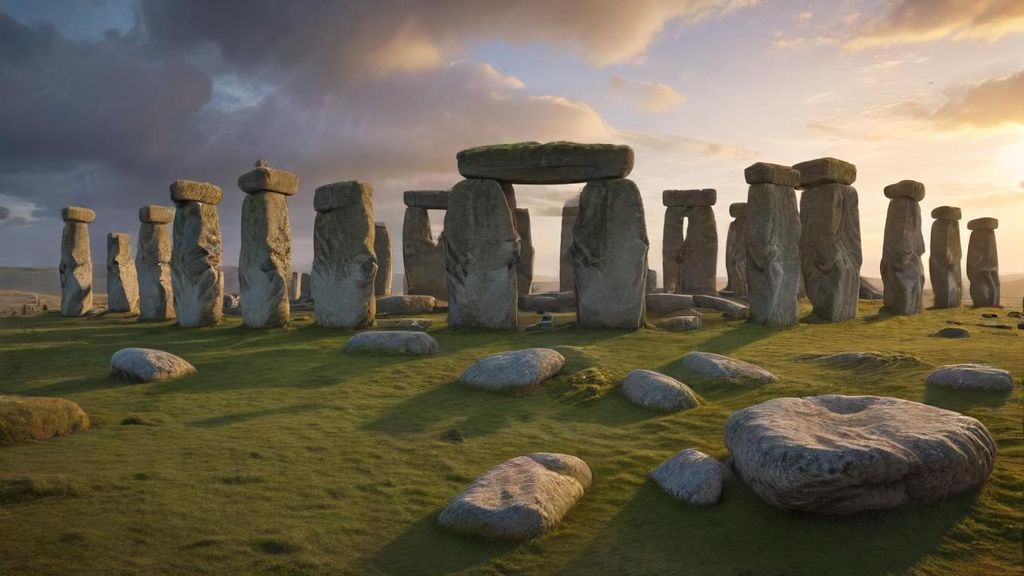
The real story of why ancient Britons started building at Stonehenge is far more fascinating than you might imagine, stretching back thousands of years before the iconic giant stones even appeared. They didn’t just wake up and suddenly decide to move huge rocks. Instead, people were drawn to this particular spot on Salisbury Plain for a very long time, almost as if it had a special pull. For hundreds, even thousands, of years, this area was seen as sacred. Early communities felt a deep connection here – to their world, to their ancestors, and to the rhythm of the seasons. They began simply, with basic wooden structures and earthworks, slowly setting the stage for one of the world’s most famous monuments.
How Do We Know This Actually Happened?
Well, fresh evidence shows that people were active here much earlier, all the way back to the Mesolithic period, around 8000 BC. Picture Britain covered in huge forests, with people living as hunter-gatherers, moving with the seasons. Archaeologists, like those led by Professor Mike Parker Pearson, have found exciting hints right near the modern-day Stonehenge car park. They uncovered several large holes dug for massive timber poles, which date back to this ancient time. These weren’t just random holes; they likely held giant wooden posts, perhaps forming a huge entrance or a kind of towering display. You can think of it like an ancient community meeting spot or a special landmark, a natural gathering place that families returned to for generations.
Unlike their farming descendants, these early Mesolithic people didn’t build permanent homes. So, the fact that they put so much effort into these big wooden structures tells us this place was already hugely important. It could have been a seasonal meeting spot, a place for ceremonies, or even where different groups traded goods, shared stories, and formed partnerships. It’s similar to how people today gather annually for a big music festival at a specific, chosen location – even if they only visit once a year, that place holds deep meaning.
Then, around 3000 BC, a major shift happened across Britain. People stopped hunting and gathering and started farming – this was the Neolithic era. This new lifestyle meant settling down, owning land, and creating lasting marks on the landscape. Farming brought a much stronger connection to the land itself and to the yearly cycles of planting and harvesting. The very first big community project at Stonehenge wasn’t about moving stones; it was about moving earth. They dug a massive circular ditch and bank enclosure, stretching about 110 meters (or 360 feet) wide. This wasn’t for protection; it was more like drawing a giant circle to show that this was a special, sacred place.
Inside this impressive earthwork, we find another fascinating puzzle: the Aubrey Holes. These are 56 circular pits, named after John Aubrey, a historian from the 1600s who first noticed them. What makes these holes so intriguing is that many of them held human cremations – the burnt remains of people. It turns out that Stonehenge, in its first official stage, was mainly a burial ground. These pits strongly suggest that people here deeply respected their ancestors. It’s like a community choosing to dedicate their most important public space to remembering those who came before them, a place where the living could feel connected to their past. As archaeologist Tim Darvill explains:
Stonehenge was a place for the dead. It linked the living with the ancestors.
So, why this exact spot? The answer seems to be a mix of reasons. It was a place that hunter-gatherers already considered special. When farming arrived, it naturally became a central gathering point where people could mark their land and honor their ancestors. The horizon, with its clear views of the rising and setting sun at important times of the year, probably also played a part in early observations of the sky. This blend of history, spiritual meaning, and a unique landscape created a strong pull. It made communities want to put huge collective effort into marking and changing this specific place.
This strong connection to the land and their ancestors turned Stonehenge into a powerful center. It set the scene for even bigger plans. These early builders weren’t just putting up a structure; they were embedding their beliefs and community ties right into the landscape, getting everything ready for something truly monumental to rise.
Imagine organizing a massive construction project today without any heavy machinery – just brute strength, clever thinking, and a clear vision. That’s pretty much what the ancient Britons did to build Stonehenge, especially when they set up the huge Sarsen stones and the mysterious Bluestones. But why go to all that trouble?
What was the main purpose of Stonehenge after its giant stones were erected?

The simple answer is: it probably wasn’t just one thing. Think of it like a grand cathedral or a national monument today; it served many important roles for its community. For ancient Britons, Stonehenge likely grew into a clever mix of a spiritual center, a giant calendar, and a special gathering place, all rolled into one amazing structure.
Here’s what we’ve learned about the huge effort involved. First came the enormous Sarsen stones, those massive grey giants you picture when you think of Stonehenge. These came from about 20 miles away, at a place called the Marlborough Downs. Moving stones weighing up to 30 tons each, without wheels or modern roads, was an incredible feat. Picture hundreds, maybe even a thousand people, dragging these huge rocks over logs, using sledges, and working ropes and levers. It was like a whole community coming together to build a skyscraper using only hand tools, but for a sacred reason that united everyone.
Then there were the famous Bluestones. These are smaller, but their journey is even more amazing. They came all the way from the Preseli Hills in Wales, over 150 miles away! The truth is more interesting than you might think: proof from archaeological digs shows these stones were likely moved by a mix of river, sea, and land transport. This huge journey suggests the Bluestones held a deeper importance, much more than just their size. Some historians believe they were valued for their supposed healing powers, making Stonehenge a kind of ancient pilgrimage site, much like people today might travel to a natural spring or a special spiritual spot for wellness. These stones, some researchers argue, were believed to have a kind of natural magic, a link to the earth’s life force that could bring health and renewal.
How Do We Know This Actually Happened?
Archaeologists have found ancient tools, grooves in the landscape from stone dragging, and studies of the stone types match those found in distant quarries. It’s strong proof of a well-organized, incredibly determined effort that lasted for generations. Recent discoveries show that the main stone circles, especially the Sarsen structures, were built between 2500 and 2400 BC. This relatively short time for such a massive job highlights how focused and united the builders were.
So, what was it all for once it was standing? One main idea is that Stonehenge was a clever sun-tracker or a giant calendar. What makes this fascinating is its perfect lineup with the sun on the summer and winter solstices. On the longest day of the year, the sun rises directly over the Heel Stone when viewed from the center of the monument. On the shortest day, the sunset perfectly aligns with the main entryway. This wasn’t accidental; it was like a colossal, human-made instrument designed to track the turning of the seasons, super important for a farming society to know when to plant and harvest. It was their ultimate seasonal clock, predicting nature’s cycles with amazing accuracy.
Another strong idea is that Stonehenge was a grand temple for ancestor worship and an important burial ground for special people. We know this because hundreds of human burials, some from earlier times and many around when the big stones went up, have been found in and around the monument. The answer lies in the strong spiritual bond ancient people had with those who came before them. It was a place where the living could connect with the dead, honor their family history, and perhaps even seek guidance. It was a special cemetery, a final resting place for important figures, possibly tribal leaders or powerful shamans, showing their importance even in death.
Finally, Stonehenge also served as a big gathering place for special events. Think of it like a modern-day stadium or a grand concert venue, but for religious festivals and community celebrations. Thousands of people would have traveled great distances to join in ceremonies, big meals, and important get-togethers tied to the solstices or other significant dates. Archaeological digs have found proof of big feasts, including lots of animal bones from cattle and pigs, showing huge shared meals took place there, particularly during winter. It’s like a national festival that drew people from across the land, making their community ties and shared beliefs stronger.
Ultimately, Stonehenge was probably a place that changed its uses and combined many of these functions over hundreds of years. It was a place of healing, a calendar for life and death, and a powerful symbol of community and connection to both the cosmos and the ancestors. Its complex design and the amazing effort put into building it tell us it was super important to who the people were and their spiritual beliefs – a mystery that continues to unfold.
Most people imagine Stonehenge as a monument built for just one thing, a single, grand purpose that never changed. But archaeologists are always finding new things, showing us that its story is actually much more exciting and complicated. The simple truth is this giant stone circle wasn’t a static monument; its purpose changed a lot over hundreds of years. Think of it like a community center that gets used for all sorts of new events over time. Ancient Britons kept finding new meanings for it, making it a living, breathing part of their world as it changed.
When it first started, around 3000 BC, Stonehenge was just a huge circular earthwork, like a giant ditch and bank. It was probably a meeting spot for big seasonal parties and maybe for watching the sun move. But as the Stone Age (or Neolithic period) ended and the Bronze Age began, around 2500 BC, the site completely changed. This is when the huge sarsen stones and smaller bluestones were dragged into place. Why go to all that trouble? It wasn’t just to make a giant calendar to track the stars. It was also about showing power, connecting with spirits of the dead, and marking their land.
Think of it like this: imagine a modern city rebuilding its main government building with super rare materials brought from hundreds of miles away. That’s not just practical; it’s a huge display of wealth, power, and how united a community is. During this huge building time, archaeologists believe Stonehenge became a vital center for ceremonies, attracting people from a large area. New findings show it had a strong connection to both the living and the dead.
For example, new discoveries near Stonehenge, especially at Durrington Walls – a giant ancient village just a couple of miles away – suggest a lively, busy community of builders and people attending events. Professor Mike Parker Pearson, a top researcher, found that this huge “superhenge” village was used seasonally by thousands for big parties and solstice gatherings. He famously said,
Stonehenge was for the dead, Durrington Walls was for the living.
This clear difference helps us see its two main jobs: a sacred place for ancestors and a site for massive community parties.
Here’s what changed: earlier burials happened around the first ditch, but later, around 2300 BC, important findings like the “Amesbury Archer” and the “Boscombe Bowmen” – rich people buried with fancy items – show Stonehenge became a special burial ground for powerful families. This was a huge shift. What began as a community gathering place seems to have become a powerful symbol for specific, important families, much like a family crypt in a grand church. Even in death, people connected to Stonehenge had great power.
As the Bronze Age continued, around 1500 BC, the huge building projects at Stonehenge started to slow down. Society itself was changing. New religious ideas appeared, and political power moved to smaller, local leaders instead of one big authority managing such massive building efforts. The monument wasn’t just left behind suddenly, but its main use as a construction site or a central religious hub slowly disappeared. Instead, it seems to have become a sacred ruin, a place to remember ancestors. Think of how people visit an old castle today – not to live in it, but to feel its history and connection to the past.
Later generations, even if they didn’t fully know its first purpose, still felt Stonehenge was powerful. They kept visiting, leaving gifts, and even carving graffiti onto its stones, just like people do at Rome’s Colosseum today. This lasting connection shows how important it was culturally, a sacred landmark even as it fell apart. It’s like an old factory building that becomes a beloved landmark or art gallery, valued for its history and what it stands for, even though it doesn’t make anything anymore.
How Do We Know This Actually Happened?

Today’s archaeological discoveries, especially using clever tools like ground-penetrating radar and precise carbon dating, keep changing how we understand Stonehenge. Digs have recently found paths, pits, and smaller buildings around the main stone circle that nobody knew about, showing a much busier and more complicated area than we ever thought. These discoveries don’t just add new clues; they often make us question older ideas, leading to lively discussions among experts. For instance, the idea that Stonehenge was mainly for watching the stars is now seen as just one small part of its many uses, not the entire reason. The real story is more interesting than you might guess, a mix of spiritual beliefs, how people stuck together, and ways to show off power.
So, Stonehenge was never just one thing. It showed how the hopes and beliefs of ancient Britons kept changing, a truly complex site. From a place for everyone to gather, to a giant statement of powerful families and respect for ancestors, its meaning changed with every age. This lasting mystery, always getting clearer with new archaeological discoveries and ongoing talks, means Stonehenge stays an exciting topic to study. Next, we’ll look at how these powerful meanings eventually faded, leaving Stonehenge to face the weather and become a long memory in a changing landscape.