Many people believe a huge storm, sometimes called the “Protestant Wind,” was the only reason the Spanish Armada failed so terribly in 1588. But historians now show us the real story is much more complicated – and even more interesting! The truth is, King Philip II’s big plan was set up for disaster from the start. It wasn’t just bad weather, but a series of huge problems built right into his strategy. Long before the first English cannonball was fired, the Armada was already headed for a collision with failure. This was thanks to a deeply flawed strategy, huge logistical problems, and a complete misjudgment of his enemy.
Imagine planning a massive international sporting event today. You’d have to coordinate thousands of people and incredibly complex details, all from a spreadsheet – without any modern communication tools! Now, picture that for a war, spread across an entire continent. Then, imagine a king who insisted on micromanaging every tiny detail from hundreds of miles away in Madrid. This shows you just how complicated and fragile Philip II’s big plan really was.
What were the biggest flaws in King Philip II’s strategy?
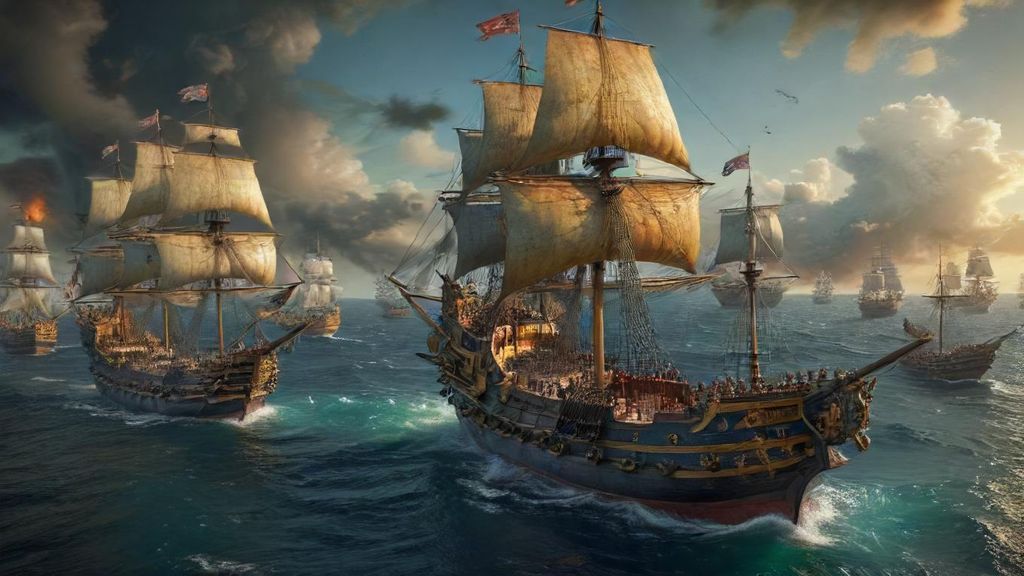
On paper, Philip’s invasion plan seemed simple enough: Sail a huge fleet, called the “invincible” Armada, from Spain. It would go through the English Channel and meet another large Spanish army, led by the Duke of Parma, waiting in the Netherlands. The Armada would clear the way, Parma’s experienced soldiers would cross the Channel, and then England would be invaded. The big problem? Almost every part of this plan was weak and likely to fail.
First, there were simply enormous challenges with logistics. Getting together more than 130 ships, over 30,000 men (including sailors, soldiers, priests, and servants), plus enough supplies for months, was a gigantic job. But from his palace, Philip wanted to personally approve everything – from the kind of biscuits stored to the exact number of rosaries. This intense micromanagement led to massive delays.
The Armada was originally supposed to sail in 1587, but it didn’t leave until 1588. This delay was partly due to English raids, like Sir Francis Drake’s daring attack on Cadiz. This attack famously “singed the King of Spain’s beard” by destroying vital supplies and ships.
These delays weren’t just annoying; they were deadly. Food went bad in the ships’ storage areas. Fresh water ran out. And diseases like typhus and dysentery started spreading before the fleet even left port. Many men were already sick and weak, basically sailing into a fight they probably wouldn’t survive, let alone win.
Then came a basic misunderstanding of how naval battles worked. Many of the Armada’s ships, especially the biggest ones, were actually converted merchant ships, called ‘naos.’ They were tall, slow, and built to carry cargo or act as floating forts. They were packed with soldiers ready to jump onto enemy ships and fight hand-to-hand. Philip thought his larger fleet and his famous infantry – the best in Europe back then – would easily overpower the English. He pictured a huge sea battle quickly becoming a land fight on the water.
But the English had been changing how they built their ships. Unlike the Spanish “floating castles,” English warships were smaller, faster, and could turn more easily. Most importantly, they were designed as platforms for cannons. They were built to stay back and bombard enemy ships with heavy cannon fire, not to get close enough for boarding. Philip totally missed this huge change in naval battle strategy. You could say he was bringing knives to a gunfight, even if his knives were really fancy ones.
Maybe the clearest sign of the plan’s built-in problems came from the leader Philip chose. The first admiral, the very experienced Alvaro de Bazán, the Marquis of Santa Cruz, died right before the fleet was supposed to leave. Philip then picked the Duke of Medina Sidonia. This Duke was great at managing things on land, but – and this is key – he had absolutely no experience at sea. Medina Sidonia knew how bad this choice was. He even wrote to Philip,
“I am without experience of the sea… I foresee the ruin of all.”
He begged the king to change his mind, but Philip, stubborn as always, said no. Putting such a critical and complicated mission in charge of someone who didn’t want the job and wasn’t qualified was an astonishing mistake. It practically guaranteed confusion and bad decisions.
Finally, there was a deadly flaw: the plan to meet Parma’s army in the Netherlands. Parma’s army of about 16,000 veterans was stuck in shallow harbors along the coast. Quick Dutch ‘flyboats’ were blocking them in. The Armada, with its big ships that needed deep water, couldn’t get close enough to these harbors to help. And here’s the kicker: there was no real plan for the two forces to talk to each other! Philip just expected Parma’s army to magically show up on the coast, ready to board ships, exactly when the Armada arrived. It’s like planning a huge joint military practice with two separate teams and forgetting to give them radios or a shared timetable.
In short, Philip’s big dream was a house of cards. He had an old-fashioned strategy, logistics that were too difficult to manage, ships that weren’t right for the new kind of naval war, a leader who didn’t want the job, and a meeting plan that was totally broken. All these problems were building up long before the Armada even saw the English coast. They show that disaster wasn’t just possible; it was almost guaranteed. In the next chapter, we’ll see how these weaknesses started to cause trouble once the Armada finally set sail.
How did England’s smaller navy defeat the mighty Spanish Armada?

England’s smaller navy defeated the mighty Spanish Armada in 1588 not by luck, but through a total revolution in sea warfare. It was like a clever new company, armed with cutting-edge ideas, taking on a big, old corporation stuck in its ways. The English victory came down to smart ship design, brilliant tactics, and great leadership. The truth is much more interesting than you might think.
England’s win really came down to their amazing new ship design. Spanish galleons were typically big, slow ships. They were built to carry lots of soldiers, planning to get close and board enemy vessels for hand-to-hand combat. But English shipbuilders had a different idea. They created what we now call ‘race-built’ galleons. Imagine Spanish ships as huge, floating castles – impressive to look at, but clunky. The English ships, on the other hand, were sleek, low, and built for speed. Think of it like a heavy cargo truck compared to a fast, agile sports car today.
These English ‘race-built’ galleons, like the Revenge or the Ark Royal, had huge advantages. Their sleek shapes and better sails made them super fast and easy to steer, allowing them to sail better into the wind than the Spanish could. This design completely changed how sea battles were fought. The Spanish wanted to get close, hook onto enemy ships, and have their soldiers fight hand-to-hand, basically turning sea fights into land battles. But the English had a completely different plan.
They filled their ships with more (and often heavier) cannons, placed on special gun decks. This allowed them to fire powerful broadsides – meaning all the guns on one side could unleash an all-at-once blast. We now know these cannons also sat on improved mounts, which made them quicker to reload. That was super important in a long fight.
The English commanders, Lord Howard of Effingham (the Lord High Admiral) and his energetic second-in-command, Sir Francis Drake, knew exactly how to use this new fighting style. Their plan in the English Channel was never to get close for boarding. That would have been a death wish against a fleet packed with Spain’s best soldiers! Instead, they used their faster ships and better cannons for constant ‘hit-and-run’ attacks.
As the Spanish Armada sailed up the Channel in its strong crescent shape, the English ships would dash in, fire a storm of cannons, and then quickly pull back. They made sure to stay far from Spanish soldiers trying to board and from the Spanish ships’ weaker close-range guns. This constant harassment slowly wore down the Armada’s spirit and broke their tight formation.
What happened at Calais and Gravelines?
The turning point came when the Spanish Armada, beaten up but mostly together, anchored off Calais, France. They were waiting for more soldiers – the Duke of Parma’s army from the Netherlands. England saw this as their chance to strike a major blow. So, under the cover of darkness on July 28, 1588, the English launched eight old ships, filled with tar and gunpowder, directly into the crowded Spanish ships. These were the famous ‘fireships’. Their real success wasn’t about the direct damage they caused (which was actually tiny). It was the pure panic and chaos they created.
Fearing their ships would catch fire, the Spanish captains cut their anchor cables in a frantic dash to get away. This destroyed their neat defensive line, scattering them across the open sea. This led straight to the final, big battle: the Battle of Gravelines, the very next morning. The English fleet could now attack the scattered Spanish ships, one by one. They let loose a terrible cannon barrage.
Historians say the English ships, staying safely out of reach, hammered the Spanish for hours, firing an unbelievable number of cannonballs. The Spanish couldn’t get close enough to board, so they could do little but just take the pounding.
The English showed a brilliant example of how to use their advanced technology in sea battles. They focused on shooting from far away instead of fighting up close. This was a complete change in how people thought about naval warfare. It meant that even with fewer ships and definitely fewer soldiers, England’s strategy made the traditional Spanish strengths useless. We know this because old reports and proof from shipwrecks show how much better the English ships were at shooting and steering.
Think of it this way: the English had figured out how to fight from a distance when everyone else was still thinking about hand-to-hand combat. This gave them a huge advantage.
In the end, England’s smaller navy didn’t just defeat the ‘mighty’ Spanish Armada; they showed a totally new way to fight at sea. Their new ship designs, brilliant plans, and strong leaders turned what looked like an impossible defense into a huge win. To make things worse, the Armada then faced even more dangers that sealed its catastrophic failure. Next, we’ll see how nature itself played a final, harsh role in destroying the Spanish fleet.
The Spanish Armada’s retreat became a catastrophe because of a deadly mix of severe storms, running out of essential supplies, widespread illness, and trying to navigate dangerous, unknown coastlines. Imagine being stuck on a massive, damaged ship, hundreds of miles from home, with the compass pointing the wrong way and the weather turning violently against you. That was the terrifying reality for the Spanish Armada after intense fighting off Gravelines. This wasn’t just a tough journey; it turned a bad situation into a huge catastrophe that changed how naval battles were fought and who held power in Europe.
Following the English attack at Gravelines, which scattered their ships, the Spanish commander, Duke of Medina Sidonia, had a terrible decision to make. His ships were battered, low on ammunition, and with no safe harbor nearby, he couldn’t regroup for another attack. The only way home seemed to be north, around the top of Scotland and then south past Ireland. This was more than just a long detour; it was a desperate gamble into waters known for their ferocious weather and hidden dangers. Think of it like a giant, wounded convoy trying to navigate a dangerous shortcut across an unfamiliar continent with no GPS, only old, fuzzy maps.
How do we know the scale of this disaster?

The true horror began as the Armada sailed into the open Atlantic, directly into a series of powerful autumn gales. These storms, which the English famously called the “Protestant Wind,” were relentless. Picture waves the size of houses crashing down on already weakened ships, pushing them dangerously close to jagged rocks along the Scottish and Irish coasts. Many ships, already leaky from battle or old age, simply couldn’t withstand the battering. The storms smashed them against cliffs, sucked them into whirlpools, or swallowed them entirely into the churning seas. Archaeological evidence shows countless wreck sites off the coasts of Ireland and Scotland, bearing silent witness to these maritime tragedies. Divers have recovered artifacts like cannons, coins, and personal items, grim reminders of the thousands who perished.
Adding to the terror of the storms was the dwindling supply of necessities. The Spanish had planned for a quick invasion, not a journey that would last for months. Food rotted, fresh water ran out, and the cramped conditions quickly led to sickness spreading everywhere. Imagine a ship packed with hundreds of men, many injured, all sharing the same stale air and contaminated water. Scurvy, dysentery, and typhus swept through the fleet like wildfire, killing more sailors and soldiers than the English guns ever did. It turns out that for every Spaniard killed in battle, several more died from starvation or illness during this agonizing retreat. Historical records tell us that when the first remnants of the Armada finally limped back to Spain in October 1588, entire ships had only a handful of living men left aboard, many too sick to stand.
The consequences for Spain were staggering. Losing such a huge fleet—about a third of their ships and perhaps 15,000 to 20,000 men—was a tremendous financial blow and left a deep psychological scar. It shattered the idea that Spain’s navy couldn’t be beaten. For England, it was a moment of national triumph and divine favor, boosting their confidence and paving the way for their own rise as a major sea power around the world. What makes this fascinating is how a defeat at sea, made worse by nature, completely changed the course of history for two mighty nations.
The devastating retreat of the Armada wasn’t just a naval failure; it was a stark lesson in the unforgiving power of nature and the limits of even the greatest empires. This massive failure set Spain on a path of decline and left England feeling strong and ready to secure its place on the world stage, which is precisely what we’ll explore next.